29 techniques
Optical effectsTricks the lens can play
Optical effects happen in the glass or on the sensor: focus that shifts, light that flares, two images laid on top of each other, a scale that lies. Used well, they turn a technical accident into meaning.
They need planning. A rack focus has a start and an end, a double exposure needs two images designed together, forced perspective needs exact positions. These pages show each effect and how to prepare it.

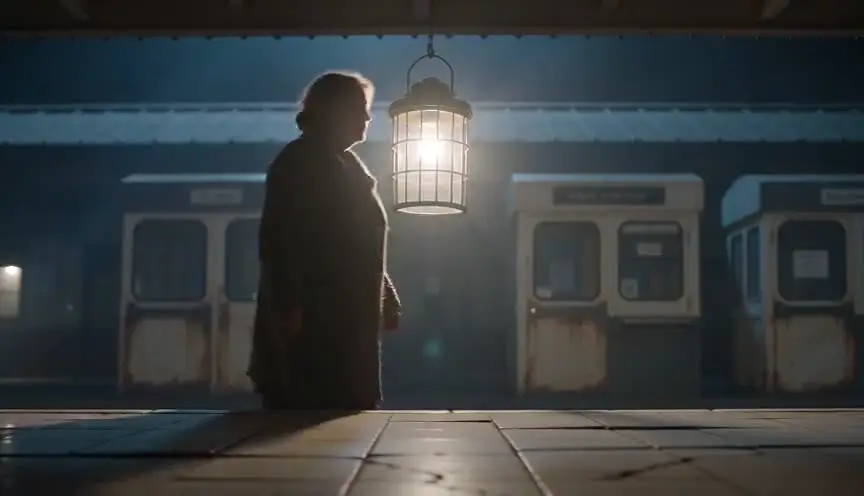
Lens flare
A lens flare appears when a bright light hits the lens directly and scatters inside it, leaving streaks, rings or spots across the image. The audience reads it as the presence of the camera in a real place, and often as heat, freedom or something overwhelming arriving.

Anamorphic flare
An anamorphic flare is a thin horizontal streak, often blue, that stretches across the frame when a bright point of light hits an anamorphic lens. The audience reads it as big-screen cinema: it adds scale, energy and a touch of science fiction or night-time glamour.
Halation
Halation is the soft, usually red-orange glow that forms around bright highlights on film, as light bounces back through the emulsion. The audience feels it as warmth and texture: the image seems remembered rather than recorded.
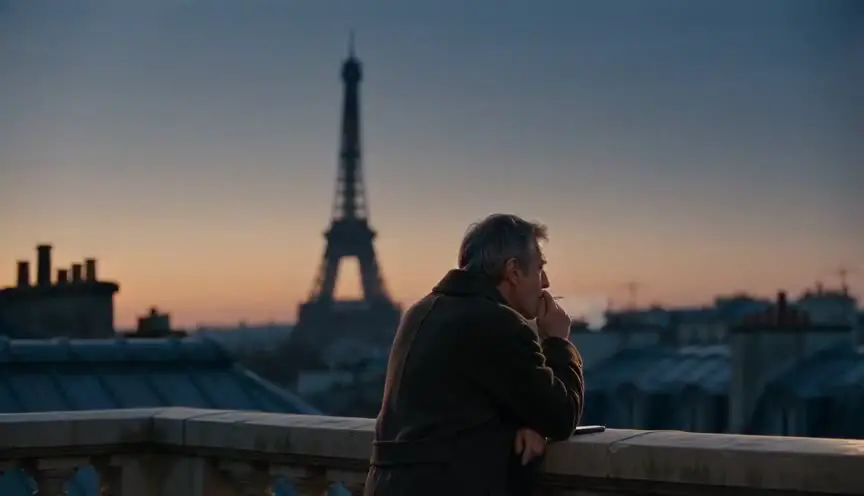
Film grain
Film grain is the fine, shifting texture of tiny particles that makes up an image on film, visible as a flicker across the frame. The audience feels it before they notice it: grain makes a picture feel physical, raw or intimate, and tells them how close to reality they are.

Bokeh
Bokeh is the quality of the blur in the out-of-focus parts of an image, most visible when small lights turn into soft discs of color. The audience reads it as intimacy and mood: the background stops being information and becomes atmosphere.

Double exposure
A double exposure layers two images in the same frame, so one shows through the other like a ghost. The audience reads the overlap as a connection that cannot exist in real space: a face filled with a memory, a person merged with a place, two identities blending.

Rack focus
A rack focus shifts the plane of sharp focus from one subject to another during a shot, so one blurs as the other becomes clear. The audience's attention follows the sharpness, and the change works like a cut that happens inside the frame.

Shallow depth of field
Shallow depth of field keeps only a thin slice of the image sharp, while everything in front of and behind it falls into blur. The audience's eye goes straight to what is in focus, and the character feels cut off from the world around them.
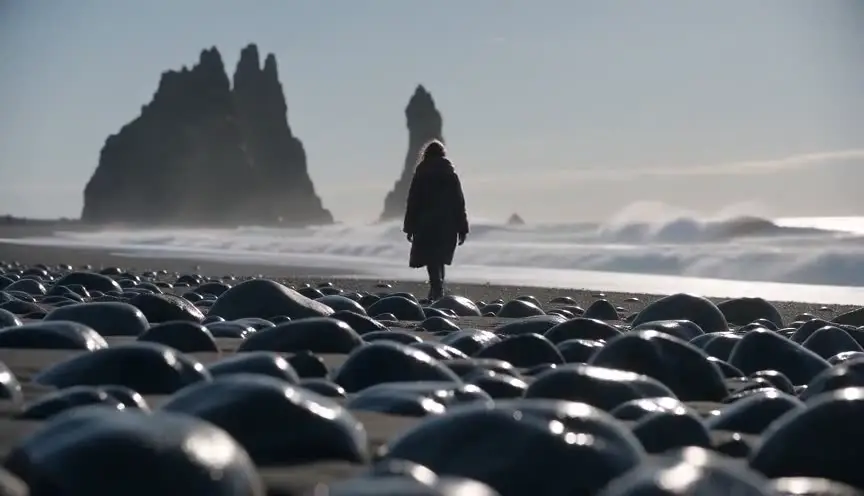
Deep focus
Deep focus keeps the foreground, the middle ground and the background all sharp at once, so several actions can play in a single shot. The audience chooses where to look, and the relationship between near and far becomes the drama.
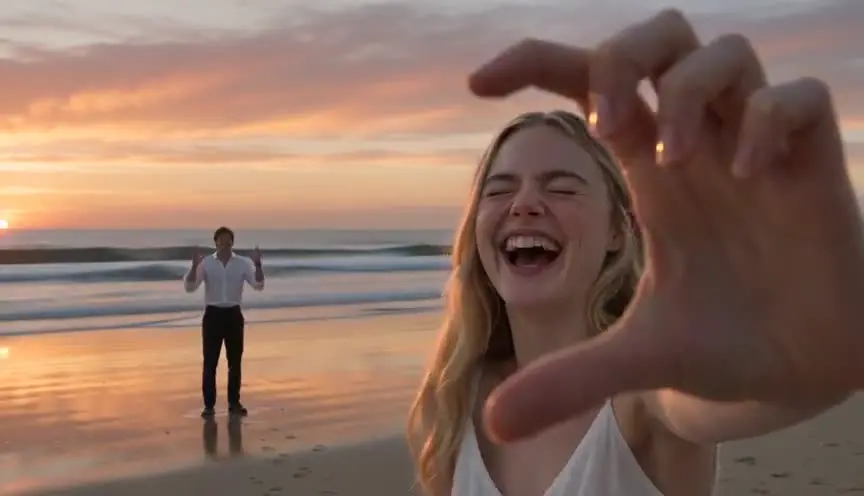
Forced perspective
Forced perspective places people or objects at carefully chosen distances from the camera so they appear bigger, smaller, closer or joined together in a way that is impossible in reality. The audience believes the illusion because the camera sees only one angle.
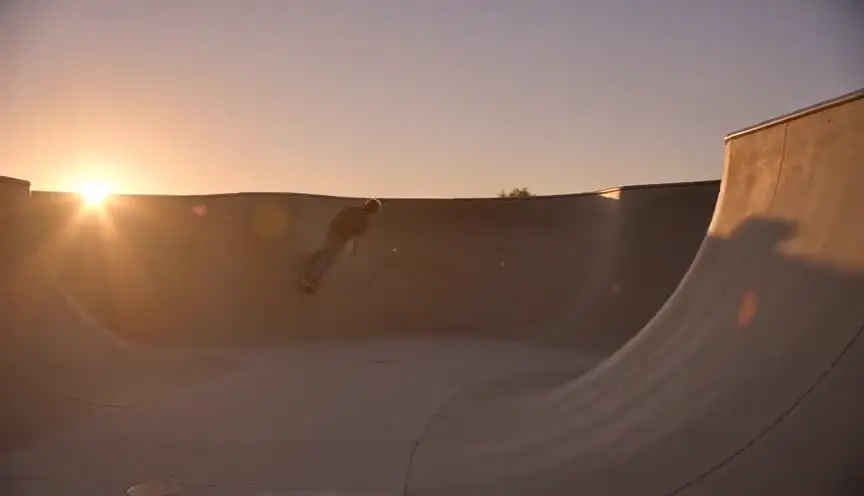
Light leak
A light leak is a burst of stray light, usually warm orange or red, that washes across part of the frame when light reaches the film where it should not. The audience reads it as a sign of an old camera, a home movie or a fragile memory.
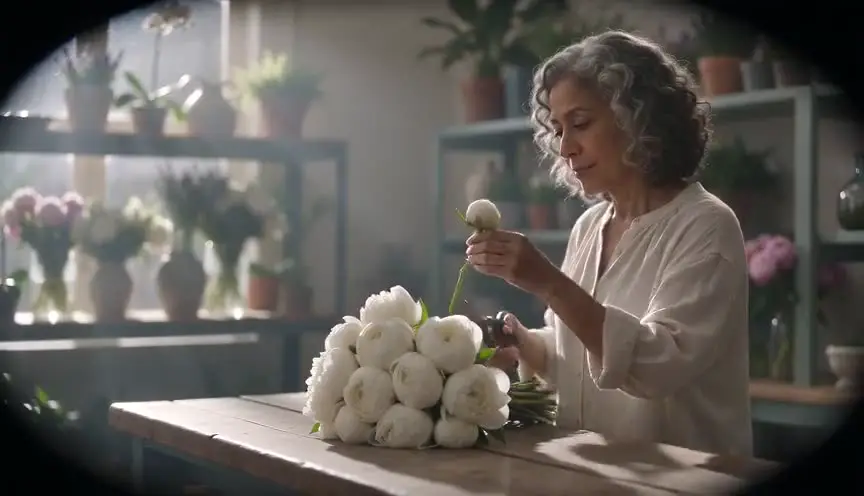
Vignette
A vignette darkens or softens the edges and corners of the frame, so the center stays bright and sharp. The audience's eye settles naturally on the middle, and the image takes on an intimate, storybook or remembered quality.
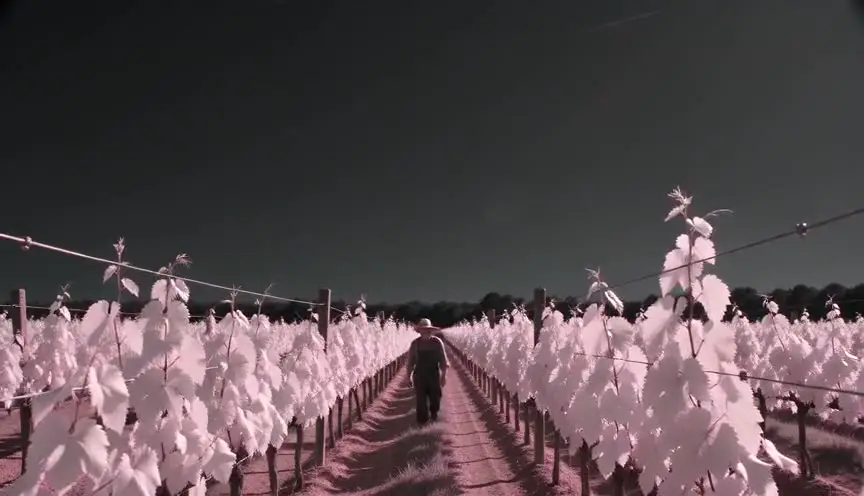
Infrared film look
The infrared film look records light just beyond what the eye sees, so leaves and grass glow white or pink, skies turn dark and skin looks pale and smooth. The audience recognizes the place but not its colors, and the world suddenly feels dreamlike, alien or haunted.
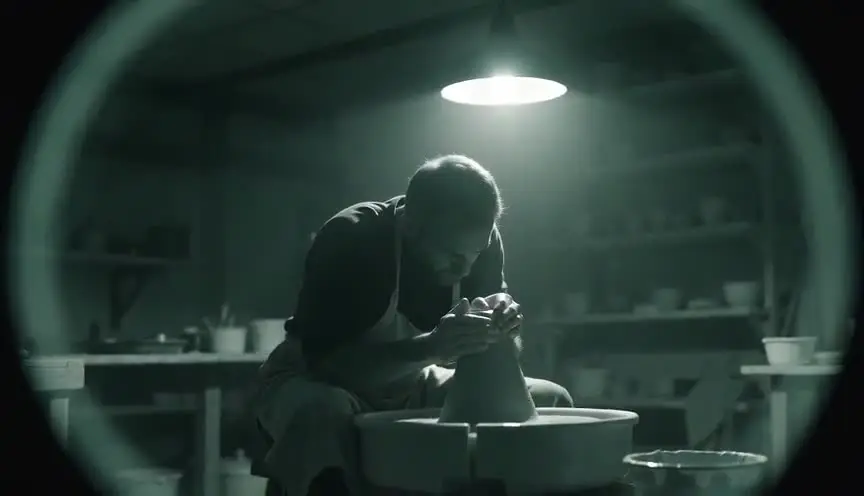
Night vision
Night vision shows the world as seen through an image intensifier: grainy green monochrome, glowing eyes, lights that bloom, a round frame around the view. The audience knows immediately that someone is seeing in the dark, and usually that someone else cannot.
Thermal vision
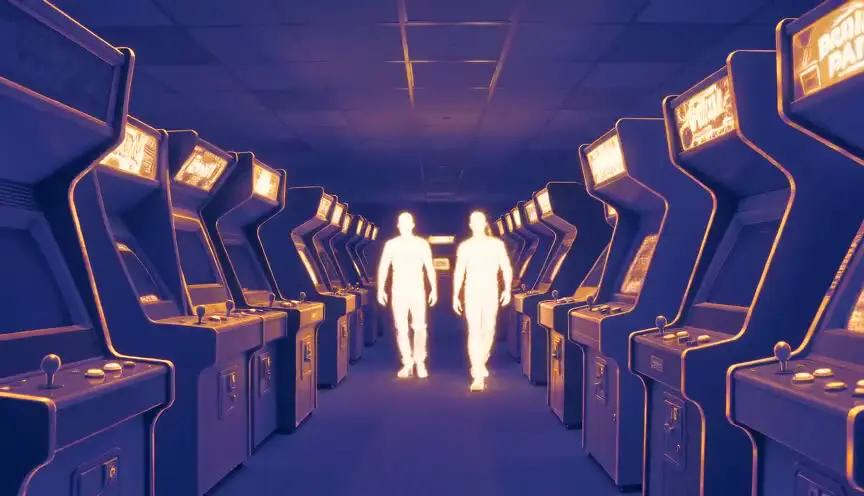
Thermal vision shows the world as a map of temperature, with warm bodies glowing in white, yellow and orange against cold blues and purples. The audience instantly understands they are seeing through a machine or a non-human eye that tracks life, not identity.

Slit-scan
Slit-scan builds an image by exposing it through a narrow moving slit, so shapes and lights stretch into long streaks that rush toward or past the viewer. The audience feels speed, transition and the passage through something beyond ordinary space or time.
Kaleidoscope effect
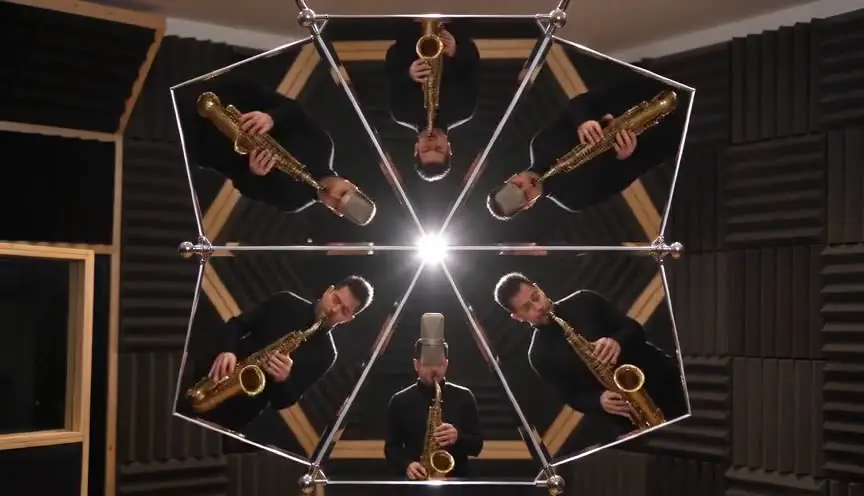
A kaleidoscope effect splits the image into mirrored segments that repeat around a center, often rotating, so a single scene becomes a symmetrical pattern. The audience feels normal space dissolve into something hypnotic, mystical or unhinged.

Morphing
Morphing transforms one image into another smoothly, warping shapes and blending surfaces so a face, a body or an object seems to flow into a new form without a cut. The audience watches a change happen, rather than seeing before and after.

Cinemagraph
A cinemagraph holds almost the entire frame still, like a photograph, while one small element keeps moving in a loop. The audience leans in, because the single motion feels alive against everything that has stopped.

Duplication
A duplication shot puts the same actor in the frame two or more times, as twins, clones or versions of one person. The audience accepts the copies as separate people and reads the scene through the differences between them.
Levitation
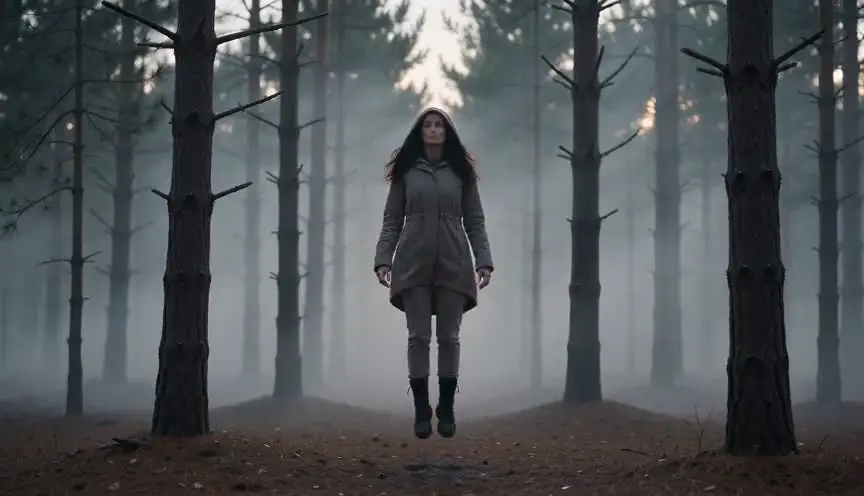
A levitation shot shows a person or object rising and hanging in the air with no visible support. The audience senses that the rules of the story world have changed, for wonder or for terror.
Mixed media
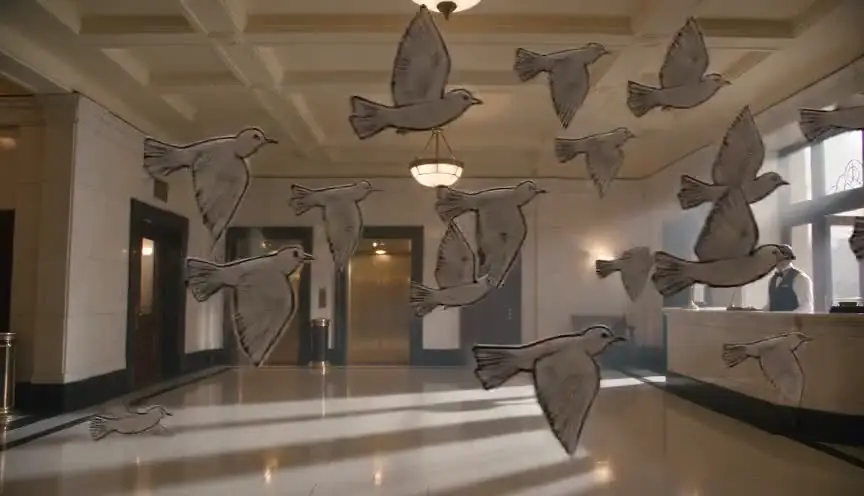
Mixed media combines different image materials in the same frame, such as live action with hand-drawn animation, collage, paint or graphic backgrounds. The audience sees two textures meet and understands they are watching two kinds of reality touch.

Object portal
An object portal pushes the camera into an object, such as a door, a lens, a drain or a glass, and comes out the other side in a new place. The audience travels with the camera and feels the passage instead of a cut.

Aspect ratio switch
An aspect ratio switch changes the shape of the image during a film, from square to wide, from wide to narrow, or between eras. The audience feels the world open up or close in, often before they notice the black bars moving.
Scale shift
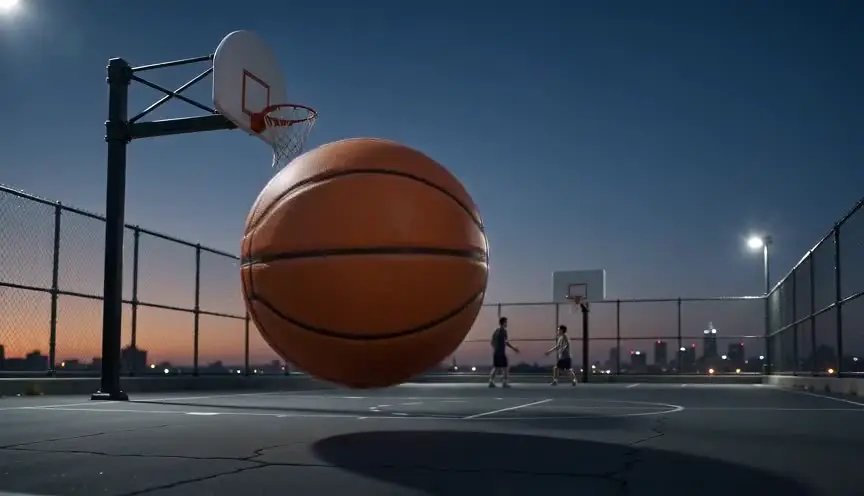
A scale shift makes a character or object grow or shrink against a world that keeps its normal size. The audience measures the change against things they know, a cup, a door, a cat, and feels the danger or wonder of the new proportions.
Wigglegram
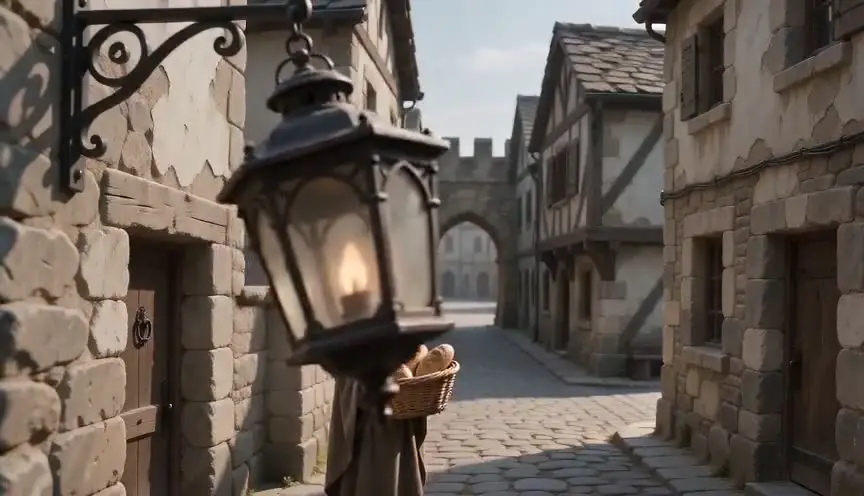
A wigglegram loops a few frames taken from slightly different viewpoints, so a frozen moment rocks back and forth and the depth pops out. The audience feels they are looking at a memory in three dimensions, suspended and handmade.
X-ray effect
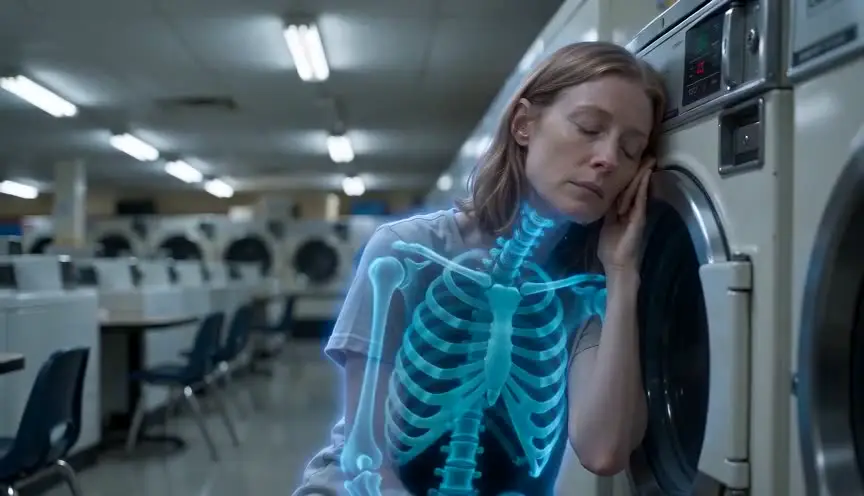
An X-ray effect shows the inside of a body or object, bones under skin, a weapon in a bag, wiring behind a wall, as if the image could see through matter. The audience gets access to something hidden and knows more, often before the characters do.
Zoetrope
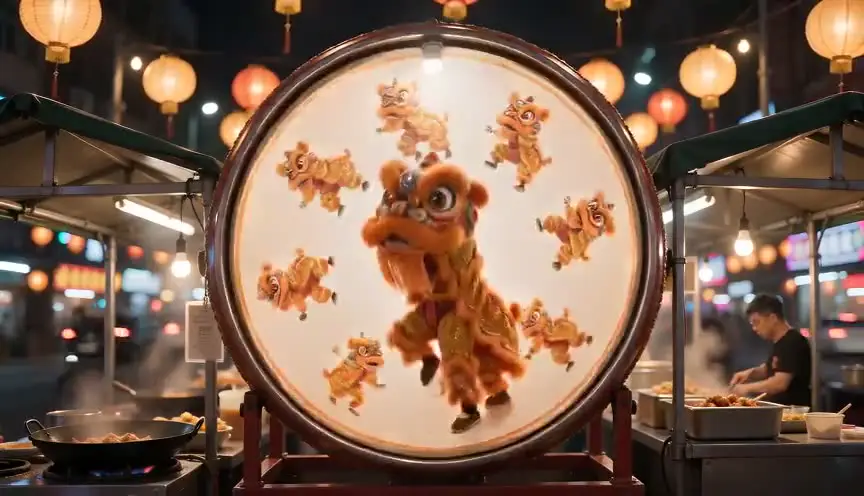
A zoetrope is a spinning drum of sequential images seen through slits, so the pictures blend into a short looping motion. On screen, it shows animation being born, and the audience feels the magic of stillness turning into life.
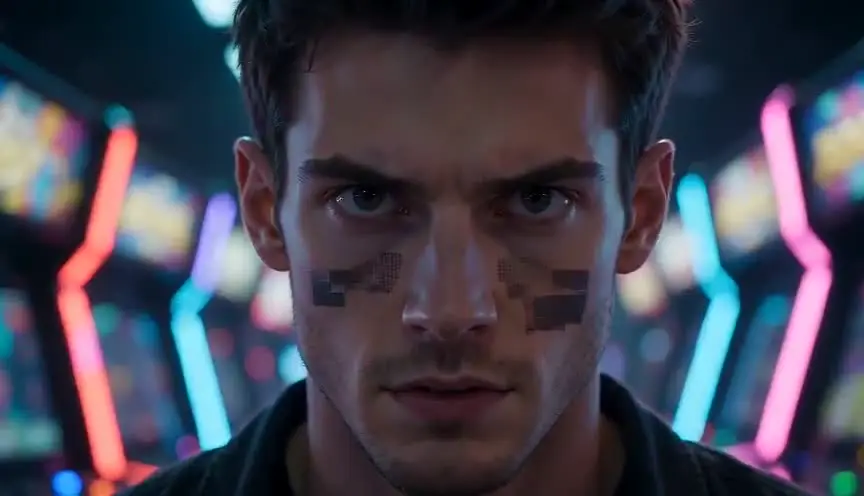
Glitch effect
A glitch effect breaks the image on purpose with stutters, pixel blocks, color splits, tearing or static. The audience reads it as a failure in the signal or in reality itself, and feels that something is wrong before any character says so.