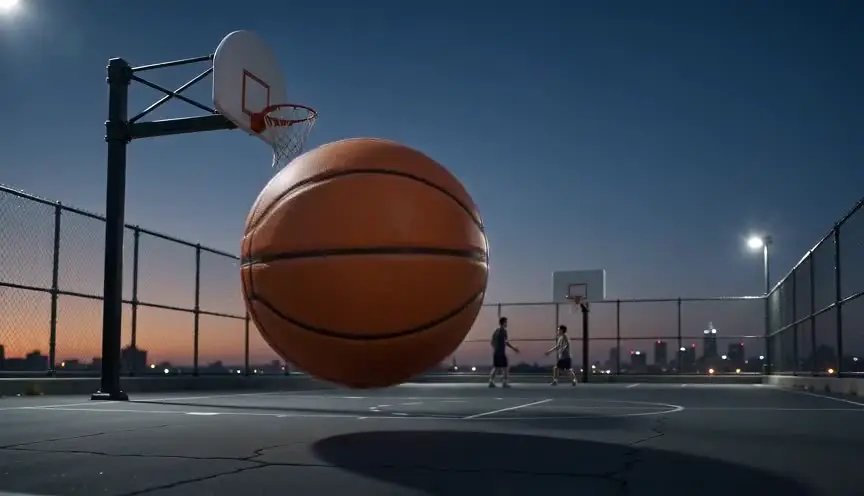
Forced perspectiveChange size with distance
Forced perspective places people or objects at carefully chosen distances from the camera so they appear bigger, smaller, closer or joined together in a way that is impossible in reality. The audience believes the illusion because the camera sees only one angle.
Also calledPerspective trick shotOptical scale illusionIn-camera scale trick
Optical effects
Why it works on screen
Use it when scale is part of the story. Forced perspective can make a giant among small folk, a child next to a monstrous toy, a traveler holding a whole mountain in her palm. It serves fantasy, comedy, fairy tales and moments of playful wonder, and it can also make a room feel oppressive or a corridor endless. Because it happens in camera, actors can react to each other for real, which keeps performances warm. A scene earns it when the size difference or the impossible connection matters to the characters. As a trick with no story weight, it becomes a postcard gag.
The shot list line
- Size
- Wide shot or medium wide shot
- Angle
- Eye level, camera height matched to the illusion
- Movement
- Static
- Lens
- 24mm to 35mm, small aperture for deep focus
- Duration
- 3 to 6 s
Lock the camera and measure every distance, then keep both subjects sharp with a small aperture so the eye cannot detect the gap.
Screenplay
On the page
The writer's job is to state the scale relationship clearly, not the method. Write that the innkeeper towers over the two tiny travelers, or that from the hilltop the girl seems to pinch the lighthouse between two fingers. The reader sees the image, and the director chooses forced perspective, compositing or oversized props. In the shot list, record the exact distances, the lens height and the actors' marks, since the illusion breaks with a few centimeters of error.
EXT. CLIFFTOP MEADOW, ISLE OF SKYE - DUSK
MAIRI (8, wellies, a jar with holes punched in the lid) closes one eye and holds up her hand.
Far below, her father rows a small boat into the bay.
She lines him up between her thumb and finger and squeezes gently.
MAIRI
Got you.
Down on the water, her father waves, tiny, not knowing he has been caught.
Storyboard
In the storyboard
Draw the frame as the audience will see it, with the two subjects apparently touching or at their false scale. Next to it, draw a top-down or side diagram showing their real positions, with measured distances from the lens and the camera height. Mark the lines that must align, such as a hand edge and a boat, and add a warning note: no camera movement unless a motion-control or sliding rig is planned.
Pairs well with
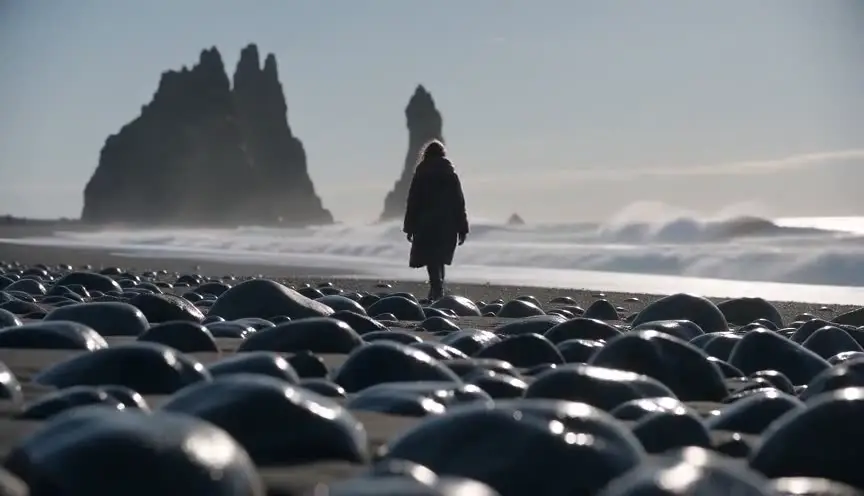
Forced perspective needs both near and far subjects sharp, or the difference in blur reveals the trick. Deep focus with a small aperture makes the two distances read as one plane.

Cutting to a reverse angle after the illusion shows the real distance and the true sizes, turning the trick into a joke or a gentle reveal of how the character sees things.
Reference
Watch it in
The Lord of the Rings: The Fellowship of the Ring (2001)
Raked sets, sliding platforms and exact camera alignment put hobbits and wizards at the same table while keeping their very different sizes.
Elf (2003)
Split sets and carefully spaced actors let a grown man look enormous among the North Pole elves, with no digital compositing in those shots.
ScreenWeaver
Set it up in ScreenWeaver
Write the scale relationship clearly in your screenplay, and ScreenWeaver breaks the scene into shots automatically. Open the illusion shot, set a wide framing at eye level, keep the movement static and give it three to six seconds. Characters and locations carry from shot to shot, so the two subjects keep their look when you cut to the reveal. Use the AI previsualization to test the composition, then record the real distances and lens height in your shot notes for the crew.
Start writing for freeThe prompt behind this clip
This is the exact prompt that rendered the clip at the top of the page. Keep the description of the camera and the light, change the subject and the place.
Forced perspective. On a beach at sunset, a woman in the foreground holds her hand up, and a man standing far away in the background looks tiny, so she seems to hold him between her thumb and finger. The camera is static and the illusion lines up perfectly, then she laughs and lowers her hand. Realistic, playful. No text.
Common mistakes
- 01
Mismatched focus
If the near subject is sharp and the far one soft, the audience senses the distance. Use a small aperture and plenty of light to keep both in focus.
- 02
Moving the camera
Any camera movement changes the alignment and breaks the illusion. Keep it locked, or plan a rig that moves one subject in sync with the camera.
- 03
Inconsistent light
If the near and far subjects are lit from different directions or colors, they look like two images glued together. Match the light on both.