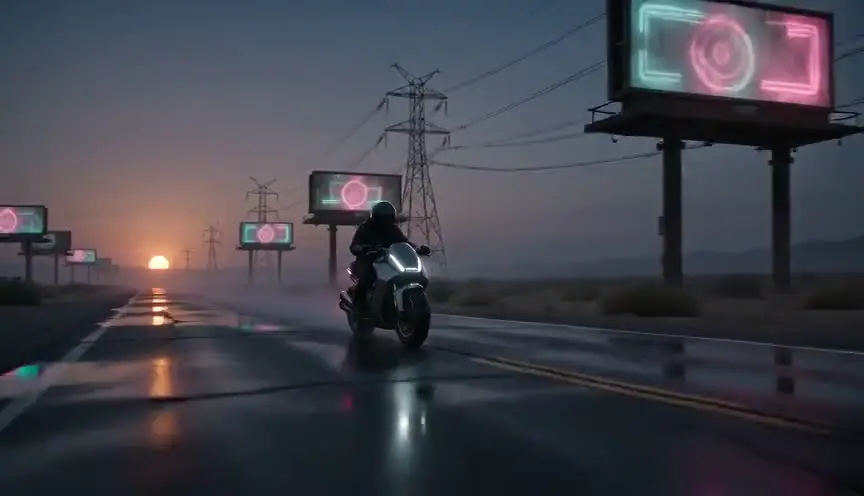
Anamorphic flareA line of light across the frame
An anamorphic flare is a thin horizontal streak, often blue, that stretches across the frame when a bright point of light hits an anamorphic lens. The audience reads it as big-screen cinema: it adds scale, energy and a touch of science fiction or night-time glamour.
Also calledBlue streak flareHorizontal lens flareAnamorphic streak
Optical effects
Why it works on screen
Use it when a scene needs the feeling of spectacle or of a charged night. The streak draws a line through the frame that links a light to a face, a car to a city, a ship to the dark. It serves adventure, wonder, nostalgia for classic blockbusters and the neon tension of a night drive. A scene earns it when practical lights are part of the story: flashlights in a search, headlights in a chase, an airlock light, a stage spot on a singer. Used sparingly, it gives a moment scope. Applied to every highlight, it flattens the image and signals style over story.
The shot list line
- Size
- Wide shot or medium shot
- Angle
- Eye level or slightly low, facing the light sources
- Movement
- Static or slow pan to slide the streak across frame
- Lens
- Anamorphic prime, 40mm to 75mm, 2.39:1
- Duration
- 3 to 5 s
Use small, hard point sources in frame, such as flashlights or bare bulbs, and keep the background dark so the streaks stand out.
Screenplay
On the page
Keep the term out of a spec script. Write the lights instead, and place them where the story needs them: flashlight beams crisscross the dark hangar, the stage spot finds her face. That tells the director that bright points of light matter here. If you direct your own project and want the look, put it in the camera notes: the lens family, the flare color and which shots should streak. Casting the lens is a production decision, not a screenwriting one.
INT. ABANDONED ICE RINK, WINNIPEG - NIGHT
Four teenagers with flashlights edge across the cracked ice.
THEO BEAUCHAMP (15, hockey jacket two sizes too big) sweeps his beam toward the scoreboard.
The light catches on something moving in the rafters.
Every flashlight swings up at once. Beams cut across each other in the cold air.
THEO
Tell me that was a bird.
Storyboard
In the storyboard
Draw the frame in a wide 2.39:1 ratio. For each light source, draw a bright point with a long thin horizontal line through it, extending across much of the frame, and label the color, usually blue. Keep backgrounds dark with hatching. Add a pan arrow if the camera moves, and note on the panel which sources must be in frame, such as three flashlights, car headlights or a stage light.
Pairs well with
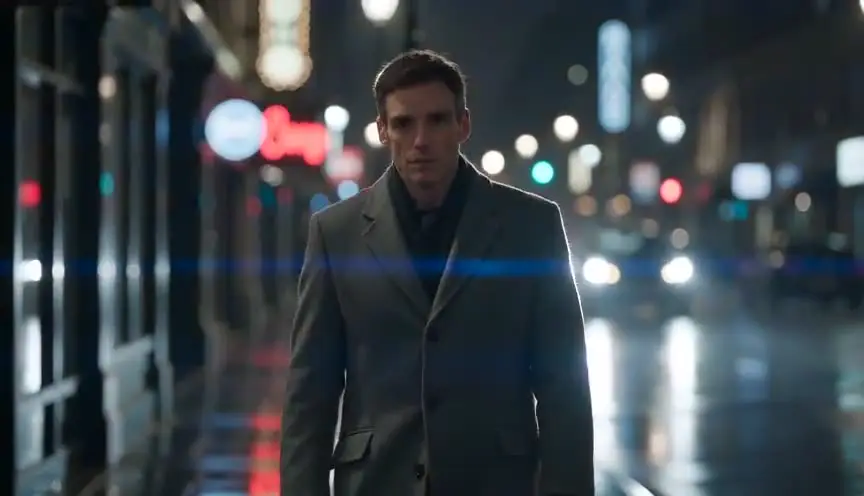
The flare comes from the lens itself. Choosing an anamorphic lens for the sequence gives the streaks, oval bokeh and wide frame together, so the look feels consistent instead of added in post.
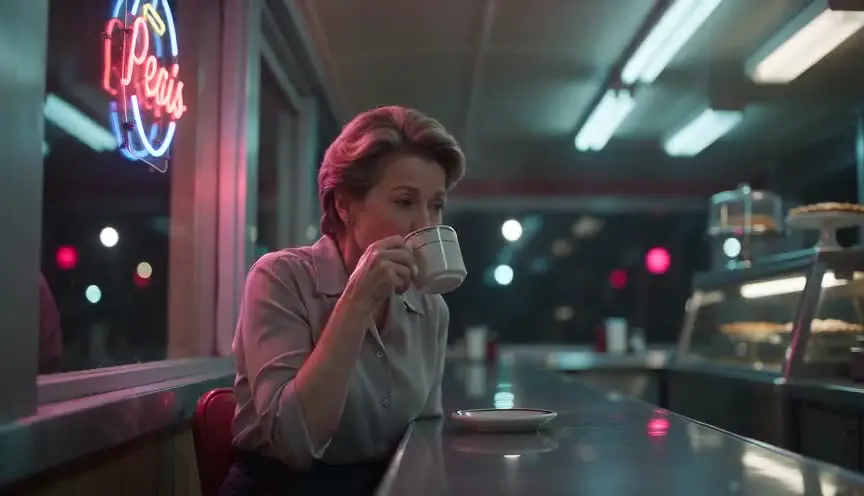
Neon and other bright practicals in a dark night scene give the anamorphic lens many points to streak from, and the colors of the tubes blend with the blue of the flare.
Reference
Watch it in
Star Trek (2009)
J.J. Abrams lets horizontal blue streaks cross almost every bright scene aboard the ship, tying the flare to the film's forward rush.
Super 8 (2011)
Flashlights, factory lamps and the lights of the train crash streak blue across the frame, recalling the adventure films of the director's youth.
Star Trek Into Darkness (2013)
Dan Mindel keeps the same heavy blue streaks in starship corridors and backlit scenes, carrying the look of the first film into the sequel.
ScreenWeaver
Set it up in ScreenWeaver
Write the key light sources into your screenplay's action lines, and ScreenWeaver breaks the scene into shots automatically. Open each shot where the lights matter, set a wide or medium framing, an angle facing the sources, and a static or slow pan movement, with a duration of three to five seconds. Locations and references carry from shot to shot, so the lights stay in consistent places. Use the AI previsualization to see where the streaks will cross the frame before choosing the lens package.
Start writing for freeThe prompt behind this clip
This is the exact prompt that rendered the clip at the top of the page. Keep the description of the camera and the light, change the subject and the place.
Anamorphic flare: a static wide shot of a rainforest river at midday, sunlight breaking through a gap in the dense canopy directly behind a kayaker paddling downstream. As the kayak drifts into the light gap, a horizontal blue-cyan streak stretches across the frame from the sun, background foliage turns into soft oval bokeh, water surface ripples stay sharp in the foreground. Shot on an anamorphic lens, wide 2.39:1 framing, shallow depth of field, humid haze in the air. No text.
Common mistakes
- 01
Streaks over faces
A long streak crossing an actor's eyes can hide the performance at the key moment. Position the source above or below the eye line, or change the angle.
- 02
Faking it badly
Filter or post-production streaks that do not move with the light look cheap. If you add them digitally, track them to the source and match their behavior.
- 03
Every highlight streaks
Too many flares crowd the frame and flatten depth. Choose which sources should streak and flag the others with black wrap or reposition them.