Save the Cat Genre Tester
Decision tree quiz · What genre is my script?
Blake Snyder categorized every story into 10 specific genres (Monster in the House, Golden Fleece, Dude with a Problem, and more). Screenwriters often want to know which box their script fits so they can structure it better. Answer 6 short questions and get your genre plus a short explanation.
Runs entirely in your browser. Simple conditional logic,no data is sent to any server. Fun to share on social media.
What is the main engine of your story?
About Save the Cat genres
Blake Snyder's Save the Cat! (2005) defines 10 story genres that go beyond comedy or drama. Each genre has its own expectations and beat structure. Knowing your genre helps you meet audience expectations and structure your script with confidence. This quiz uses simple conditional logic: your answers are combined to pick the best-matching genre. No data is stored,everything runs in your browser.
What are Blake Snyder's 10 story genres?
Save the Cat! groups every story into one of ten genres. Each has a clear premise and typical beat structure. Here is the full list with a short definition:
- Monster in the House. A monster (literal or metaphorical), a confined space, and a sin that brought the monster in. The stakes are primal: survive, don't get eaten. Examples: Alien, Jaws, Get Out, Fatal Attraction. Structure around confinement and escalation.
- Golden Fleece. A road, a team or buddy, and a prize,often the journey itself or what the hero learns. The external quest mirrors internal growth. Examples: Star Wars, The Wizard of Oz, Ocean's Eleven. Structure around waypoints and the team.
- Out of the Bottle. A wish, a genie, or a magical rule that changes reality. The fun is in the premise and the lesson learned when the magic ends. Examples: Liar Liar, Freaky Friday, Groundhog Day. Structure around the rule and its consequences.
- Dude with a Problem. An ordinary person in an extraordinary crisis. No superpowers,just grit, ingenuity, and survival. Examples: Die Hard, The Martian, Taken. Structure around escalating obstacles and a clear ticking clock.
- Rites of Passage. A life transition, ordeal, or coming-of-age. Illness, loss, divorce, growing up,the focus is on how the protagonist changes through the experience. Examples: Ordinary People, Kramer vs. Kramer. Structure around the stages of the ordeal.
- Buddy Love. Two people at the center: odd couple, romance, or friendship. The story is about the relationship,how they clash, bond, and change each other. Examples: Thelma & Louise, When Harry Met Sally. Structure around the relationship beats.
- Whydunit. A mystery to solve: who did it, or why did it happen? The audience follows the investigation and the twist. Examples: Chinatown, Se7en, Gone Girl. Structure around clues, red herrings, and the revelation.
- The Fool Triumphant. An underdog or "fool" whom everyone underestimates. They prove the world wrong and triumph. Examples: Forrest Gump, Legally Blonde, Rocky. Structure around the fool's growth and the moment they exceed expectations.
- Institutionalized. A group, family, or institution,and the cost of belonging. Stories about systems: joining, surviving, or escaping. Examples: One Flew Over the Cuckoo's Nest, The Godfather, Animal House. Structure around the group's rules and the price of loyalty.
- Superhero. A protagonist with extraordinary ability or responsibility. The weight of the gift (or curse) and how they use it defines the story. Examples: Gladiator, Batman, Schindler's List. Structure around the hero's code and the sacrifice they must make.
How to use this Save the Cat genre quiz
This free screenwriting genre quiz takes under a minute. Use it to clarify where your script fits before you outline or pitch:
- Answer the six multiple-choice questions honestly,think about the main engine of your story, not every subplot.
- At the end you get one of the 10 Save the Cat genres plus a short explanation and examples.
- Use the result to choose the right beat sheet and structure (e.g. our Beat Sheet Calculator) and to pitch your script in one clear genre.
- Share your result on social media if you like,the quiz is designed to be shareable and runs entirely in your browser.
Why knowing your script's genre matters
Readers, producers, and audiences have built-in expectations for each type of story. A Monster in the House script that wanders into a long road movie in the second act can feel broken; a Whydunit that forgets to plant clues will disappoint. When you know your genre, you can lean into its beats and avoid the pitfalls.
Blake Snyder's 10 genres are not the same as "comedy" or "drama",they describe the story engine (quest, relationship, mystery, survival, etc.). Pinning down your genre early helps you outline with confidence and pitch with clarity.
Your beats needa script attached.
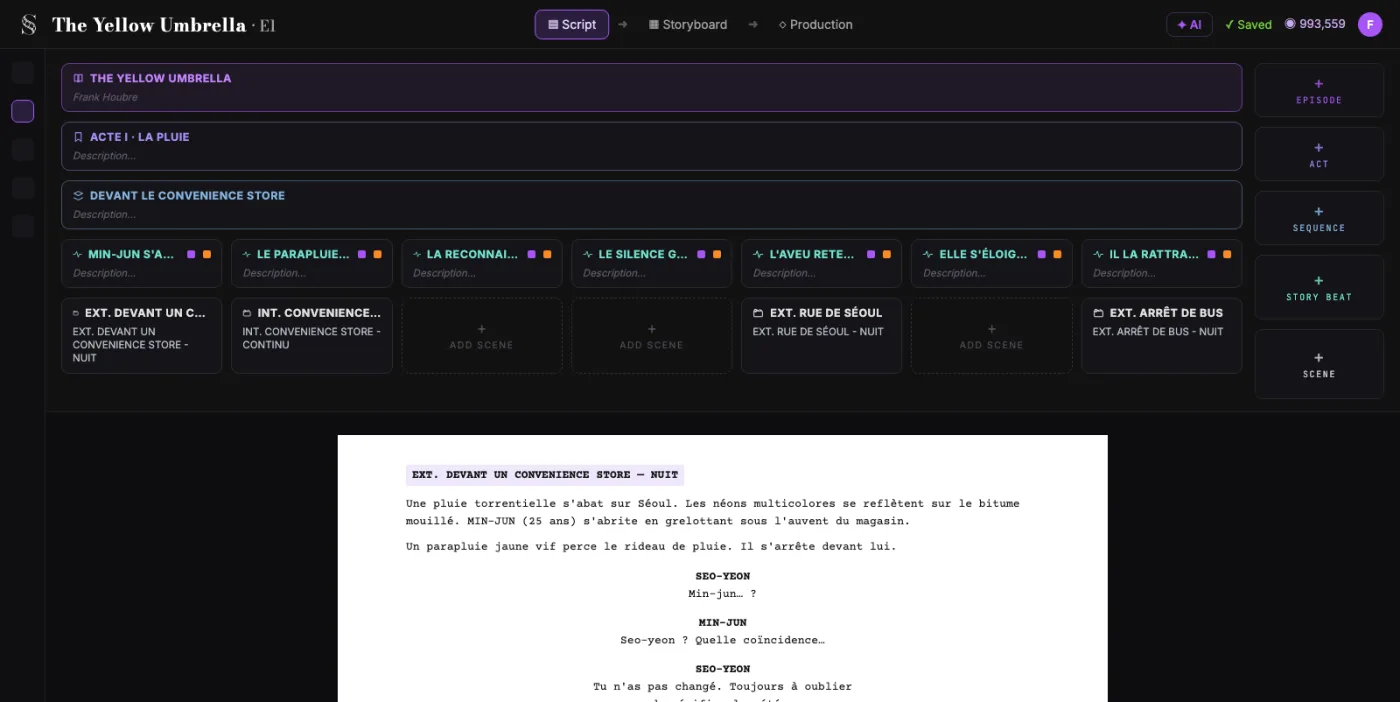
In ScreenWeaver, the outline and beats live in the same project as your screenplay. Structure and pages stay linked. Free.
- $0, does not expire
- PDF and Final Draft export
- Mac, Windows, Linux, iPad
Save the Cat Genre Tester: the complete guide
It helps identify your dominant story engine so structure and pitch language stop pulling in different directions.
For this workflow, the central problem is clear: genre confusion leads to mismatched expectations, weak positioning, and structural drift. Left unresolved, this creates downstream friction and slower decisions. The practical target is a clearer dominant genre engine that supports stronger beat choices and cleaner pitch language.
Limitation to keep in mind: It is a diagnostic helper, not a creative verdict; hybrid stories still need deliberate positioning choices.
Advanced workflow: Use the selected genre to validate midpoint/finale behavior and rewrite scenes that contradict the promised narrative engine.
Step-by-Step Workflow
- Answer prompts based on your A-story engine, not subplot flavor.
- Review the resulting genre rationale and compare with your midpoint/finale design.
- If torn between two genres, test both structures against your current draft behavior.
- Lock one primary genre for rewrite decisions and market-facing communication.
Use Cases By Profile
- Writer: choose one primary engine before outlining.
- Editor: diagnose why a script feels tonally confused.
- Pitch prep: simplify market-facing genre communication.
Common Mistakes To Avoid
- Choosing based on tone instead of dramatic engine.
- Overfitting to examples and losing project originality.
- Ignoring contradiction between chosen genre and current outline.
Professional Best Practices
- Use genre as a directional constraint, not a creative cage.
- Verify catalyst and climax against genre promise.
- Keep a short genre thesis in your development notes.
Treat this tool output as a decision support layer, not a replacement for authorship. Great scripts are remembered for specific choices, emotional precision, and clarity of dramatic movement. Tools help by removing noise so your energy can go where it matters: character, conflict, escalation, and payoff. If you review outcomes after each pass and keep an explicit log of accepted changes, your workflow becomes faster and more predictable from draft to draft. That consistency is exactly what professional collaborators value: fewer surprises, clearer rationale, and a script that evolves with intent.
Extended FAQ
Can one script fit multiple Save the Cat genres?
Hybrids exist, but one dominant engine usually drives A-story structure and pitch clarity.
Should I choose genre by tone?
No. Choose by narrative engine: what actually drives conflict and progression.
How does this improve rewrites?
It clarifies structural expectations so scenes align with the promised engine.
What if my midpoint contradicts chosen genre?
Re-evaluate either the genre choice or the midpoint design; contradiction usually causes drift.
Can this help with pitching?
Yes. A clear dominant genre improves communication with reps, readers, and producers.
When should genre be locked?
Before deep outlining, then revalidated after first full draft.
FAQ: Save the Cat genre quiz and screenwriting genres
Common questions about the Save the Cat genre tester and how to use it for your screenplay.
Blake Snyder's 10 story genres are: Monster in the House, Golden Fleece, Out of the Bottle, Dude with a Problem, Rites of Passage, Buddy Love, Whydunit, The Fool Triumphant, Institutionalized, and Superhero. Each describes a type of story engine (e.g. threat in a confined space, quest, relationship, mystery) rather than tone like comedy or drama.
Answer the six questions in this quiz based on the main engine of your story: the central threat, relationship, quest, or mystery. The quiz combines your answers to suggest the best-matching Save the Cat genre. If you're between two genres, use the one that fits your midpoint and climax best,structure follows genre.
No. Movie genres like horror, comedy, or thriller describe tone and audience expectation. Save the Cat genres describe story structure: what drives the plot (a monster, a quest, a relationship, etc.). Your script can be a horror movie that is also Monster in the House, or a comedy that is Buddy Love.
Most scripts have one dominant genre that drives the plot. Subplots might echo another genre (e.g. a B-story romance in a Golden Fleece), but the A-story usually fits one of the ten. If you're stuck between two, pick the one that best matches your catalyst, midpoint, and finale,that's your primary genre for structure.
About 30 to 60 seconds. There are six multiple-choice questions. Your result appears immediately at the end, with a short explanation and examples. You can retake the quiz or share your result. No sign-up required; everything runs in your browser.
Knowing your genre helps you choose the right beat sheet, hit the right structural expectations, and pitch your script clearly. Screenwriters often realize their script is "something like a buddy movie" or "a mystery" but haven't named the exact Save the Cat genre,this quiz gives you that label so you can structure and revise with confidence.