Rack focusMove attention without a cut
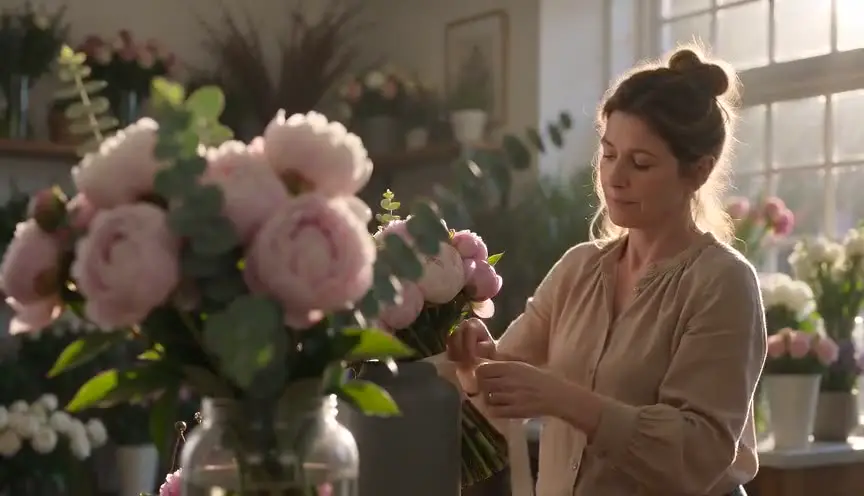
A rack focus shifts the plane of sharp focus from one subject to another during a shot, so one blurs as the other becomes clear. The audience's attention follows the sharpness, and the change works like a cut that happens inside the frame.
Also calledFocus pullPull focusFocus racking
Optical effects
Why it works on screen
Use it when the relationship between two things in the frame is the beat. A rack can reveal a figure behind a character who has not noticed them, shift from a clue to the person who realizes what it means, or move from a speaker to the listener whose reaction matters more. It serves reveals, suspense, irony and quiet shifts of power. A scene earns it when foreground and background carry different pieces of the story and the moment is about connecting them. Racking back and forth between two people talking, just for movement, only draws attention to the lens.
The shot list line
- Size
- Medium shot with a foreground element
- Angle
- Eye level
- Movement
- Static, with the focus shift as the only change
- Lens
- 85mm or 100mm, wide aperture for a thin focus plane
- Duration
- 3 to 5 s, the pull itself 1 to 2 s
Mark both focus distances with the focus puller, and cue the pull to a precise action or line so it lands on the beat.
Screenplay
On the page
Do not write "rack focus" in a spec script. Write the shift of attention through the order of your action lines: first the object, then the person behind it, or the reverse. The reader's eye moves the same way the focus will. That gives the director the cue. When you direct your own script, note the rack in the shot list with the two focus marks, the timing and the line or action that triggers it.
INT. PHARMACY STOCKROOM, MUMBAI - NIGHT
On a shelf in the foreground: a single pill bottle, lid off.
Beyond it, at the far end of the room, ANJALI DESAI (28, pharmacist's coat, lanyard) takes inventory by the light of her phone.
She counts. Stops. Counts the same shelf again.
She turns and sees the open bottle.
ANJALI
Who's been in here?
Storyboard
In the storyboard
Draw two panels of the same frame. In the first, the foreground element is in sharp line and the background figure is sketched loosely or shaded soft. In the second, reverse it. Add an arrow between the panels labeled FOCUS, and write the trigger under it, such as on her turn or on the line. Note the two distances and the time the pull should take.
Pairs well with

An insert shot of the object earlier in the scene tells the audience it matters. When a rack focus later pulls from that object to a character, the connection is instantly understood.

After a rack focus reveals someone or something, a reaction shot in clean focus lets the audience see how the character takes it, which completes the beat the rack opened.
Reference
Watch it in
The Graduate (1967)
Mrs. Robinson's leg fills the sharp foreground while Benjamin stands blurred behind it, then focus shifts to his stunned face.
Star Wars: The Force Awakens (2015)
During the snowy duel, the lightsaber in the foreground holds focus before the shot shifts to the two fighters, just before Rey calls it to her.
ScreenWeaver
Set it up in ScreenWeaver
Write the order of attention in your screenplay, object first, then person, and ScreenWeaver breaks the scene into shots automatically. Open the shot, set a medium framing with the foreground element, an eye-level angle, a static movement and a duration of three to five seconds, and describe the focus shift in the shot note. Characters and references carry from shot to shot, so the object matches its earlier insert. Use the AI previsualization to check the composition and the timing of the reveal.
Start writing for freeThe prompt behind this clip
This is the exact prompt that rendered the clip at the top of the page. Keep the description of the camera and the light, change the subject and the place.
Rack focus in a boxing gym: a static camera on an 85mm lens holds a locked-off medium shot with heavy shallow depth of field. In the foreground, a pair of red boxing gloves hang blurred on a hook; in the background, a shirtless middle-aged Black man wraps his hands and shadowboxes, soft and unrecognizable. Over four seconds the focus pulls smoothly from the gloves to the man, his face and motion sharpening while the gloves blur into soft red shapes. The camera never moves, only the lens focus ring turns, warm window light crosses the gym, dust drifts in the air. No text.
Common mistakes
- 01
Too much depth of field
With a wide lens or a small aperture, both planes stay nearly sharp and the rack barely shows. Use a longer lens and a wider aperture for a clear change.
- 02
Pulling on the wrong beat
A rack that lands before or after the key line or action feels lazy. Cue it to a precise trigger and rehearse it with the actors.
- 03
Racking for movement's sake
Shifting focus back and forth during ordinary dialogue makes the audience notice the lens. Use it only when the change of attention means something.