Logline Workshop & Tester
Fill-in-the-blanks logline builder · Test your pitch
The logline is the hardest exercise for a writer. Many look for formulas to make sure every element is there.
Use the four slots below: Protagonist, Trigger incident, Goal, and Antagonist/Stakes. The tool assembles the sentence, counts words (alerts if over 35), and checks that all conflict elements are present.
How it works
The template is: "When [protagonist] [trigger], they must [goal] before [stakes]." The tool concatenates your inputs, counts words with a simple split on spaces, and flags if any of the four slots are empty so you can ensure conflict and clarity. Everything runs in your browser,no data is sent to any server.
What is a logline?
A logline is a one-sentence summary of your story that presents the protagonist, the triggering incident, what they want, and what’s at stake if they fail. It’s the version of your idea that fits in an email subject line or on a tracking board.
Readers, reps, and executives use loglines to decide whether to read the script. A clear, conflict-driven logline makes the genre, engine, and emotional promise obvious in under 35 words.
Logline examples
Here are a few sample loglines built with this formula. Use them as inspiration, not templates to copy word-for-word.
- FEATURE · MYSTERY / HORROR
When a 1920s detective discovers the dark designs of an unspeakable cult, they must solve the case before losing their mind for good.
- FEATURE · CHARACTER DRAMA
When a burnt-out ER doctor is forced to supervise the intern who reported her for malpractice, she must salvage her career and conscience before one more mistake destroys them both.
- SERIES · CRIME THRILLER
When a rookie cop is assigned to an elite anti-corruption unit, they must expose their own mentor’s criminal network before it swallows their family and career.
Your beats needa script attached.
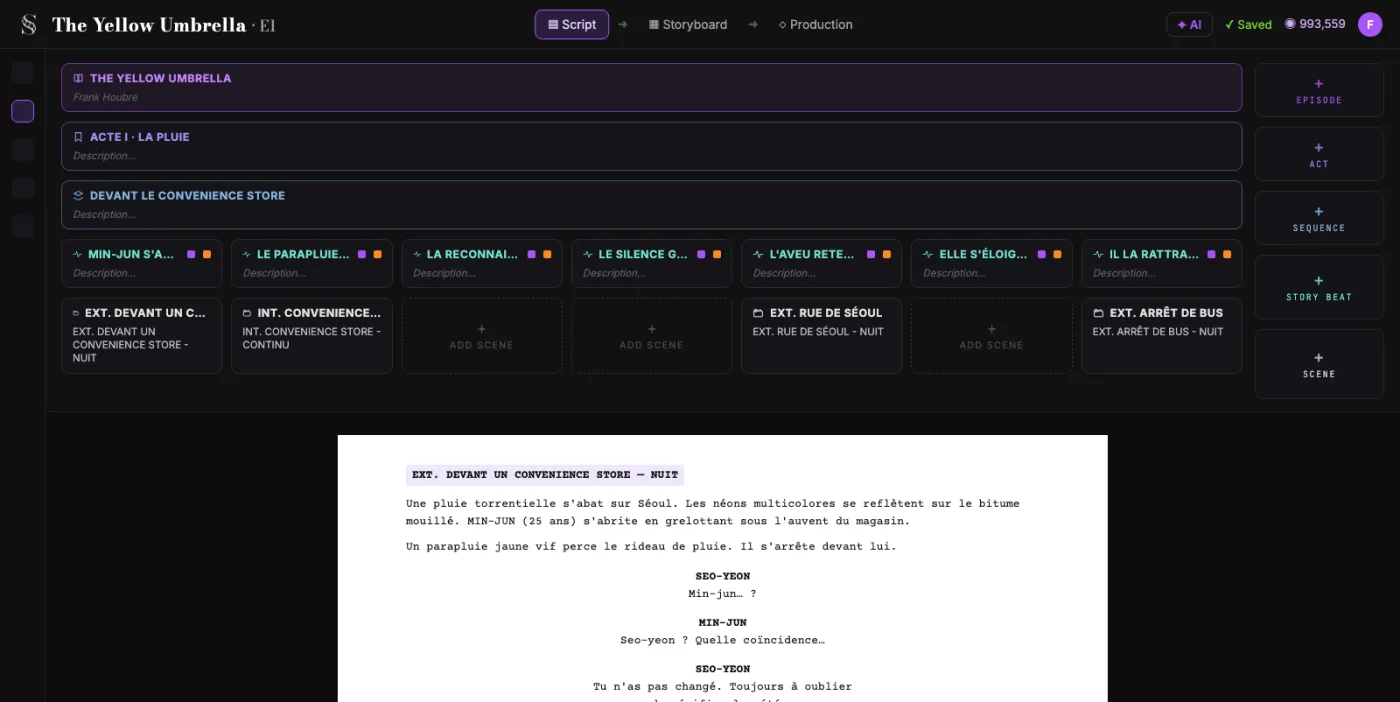
In ScreenWeaver, the outline and beats live in the same project as your screenplay. Structure and pages stay linked. Free.
- $0, does not expire
- PDF and Final Draft export
- Mac, Windows, Linux, iPad
Logline Workshop: the complete guide
It pressure-tests your premise sentence by forcing protagonist, trigger, objective, and stakes into one readable line.
For this workflow, the central problem is clear: many loglines miss one core element, producing vague concepts that fail to trigger a read request. Left unresolved, this creates downstream friction and slower decisions. The practical target is clear, conflict-driven loglines that communicate premise, motion, and stakes quickly.
Limitation to keep in mind: It does not judge market trends or script execution quality; it only exposes concept clarity.
Advanced workflow: Build multiple loglines by changing only one variable at a time, then test which version best predicts your actual scene engine.
Step-by-Step Workflow
- Draft your first pass with protagonist, trigger, goal, and stakes explicitly visible.
- Trim excess qualifiers and preserve only words that increase specificity or tension.
- Test multiple variants by shifting emphasis between external plot and emotional cost.
- Select the version that best matches your script's true engine, not just the most dramatic wording.
Use Cases By Profile
- Writer: turn abstract ideas into a concrete pitch spine.
- Manager/rep prep: quickly compare project positioning angles.
- Contest submission: keep synopsis and logline tonally aligned.
Common Mistakes To Avoid
- Using abstract language instead of concrete action.
- Confusing premise with theme and losing narrative clarity.
- Adding subplot clutter that weakens the main conflict line.
Professional Best Practices
- Read the logline out loud to check cadence and clarity.
- Validate whether someone can predict genre from one sentence.
- Keep one internal and one external version for different audiences.
Treat this tool output as a decision support layer, not a replacement for authorship. Great scripts are remembered for specific choices, emotional precision, and clarity of dramatic movement. Tools help by removing noise so your energy can go where it matters: character, conflict, escalation, and payoff. If you review outcomes after each pass and keep an explicit log of accepted changes, your workflow becomes faster and more predictable from draft to draft. That consistency is exactly what professional collaborators value: fewer surprises, clearer rationale, and a script that evolves with intent.
Extended FAQ
What is the minimum viable logline structure?
A specific protagonist, a triggering event, a clear objective, and meaningful stakes if they fail.
How many logline variants should I test?
Usually three to five high-quality variants are enough to reveal the strongest framing angle.
Should tone be explicit in the sentence?
Ideally yes, but through precise wording rather than extra adjectives or clutter.
Can one logline serve both pitch and contest forms?
Sometimes. Many teams keep a concise pitch version and a slightly expanded submission version.
Why do loglines feel generic?
Because they rely on abstract language. Specific verbs, constraints, and stakes create memorability.
When should I rewrite the logline?
After major structural changes. Your logline should always describe the current script, not a previous concept.
Logline generator FAQ
These answers cover the most common questions writers have about writing and testing loglines.
Most working writers aim for 20-30 words. Our tool flags anything over 35 words so you can trim modifiers and subplots. If you can’t express the core conflict in one tight sentence, the concept may still be too vague.
At minimum: a specific protagonist, a clear trigger (what changes their world), a concrete goal, and real stakes or opposition if they fail. Genre and tone are a bonus when they appear naturally in the wording. If any of those pieces are missing, the idea usually feels flat.
Yes. For features, focus on the single spine of the story from inciting incident to climax. For pilots or series, frame the engine: what happens every week, what the protagonist does, and what tension keeps the episodes going.
The formula is there to make sure you don’t forget story essentials,not to sand off what makes your idea unique. Once all four pieces are present, rewrite for voice, specificity, and surprise. The tool gives you a clear, conflict-driven draft you can then polish.