Screenplay Outline Builder
Create an editable screenplay outline template from core story inputs.
# Untitled Screenplay
Genre: -

## Core setup
Characters: -
Goal: -
Conflict: -

## Act 1
- Setup
- Escalation
- Turn

## Act 2
- Setup
- Escalation
- Turn

## Act 3
- Setup
- Escalation
- Turn

## Ending
-
Your beats needa script attached.
In ScreenWeaver, the outline and beats live in the same project as your screenplay. Structure and pages stay linked. Free.
- $0, does not expire
- PDF and Final Draft export
- Mac, Windows, Linux, iPad
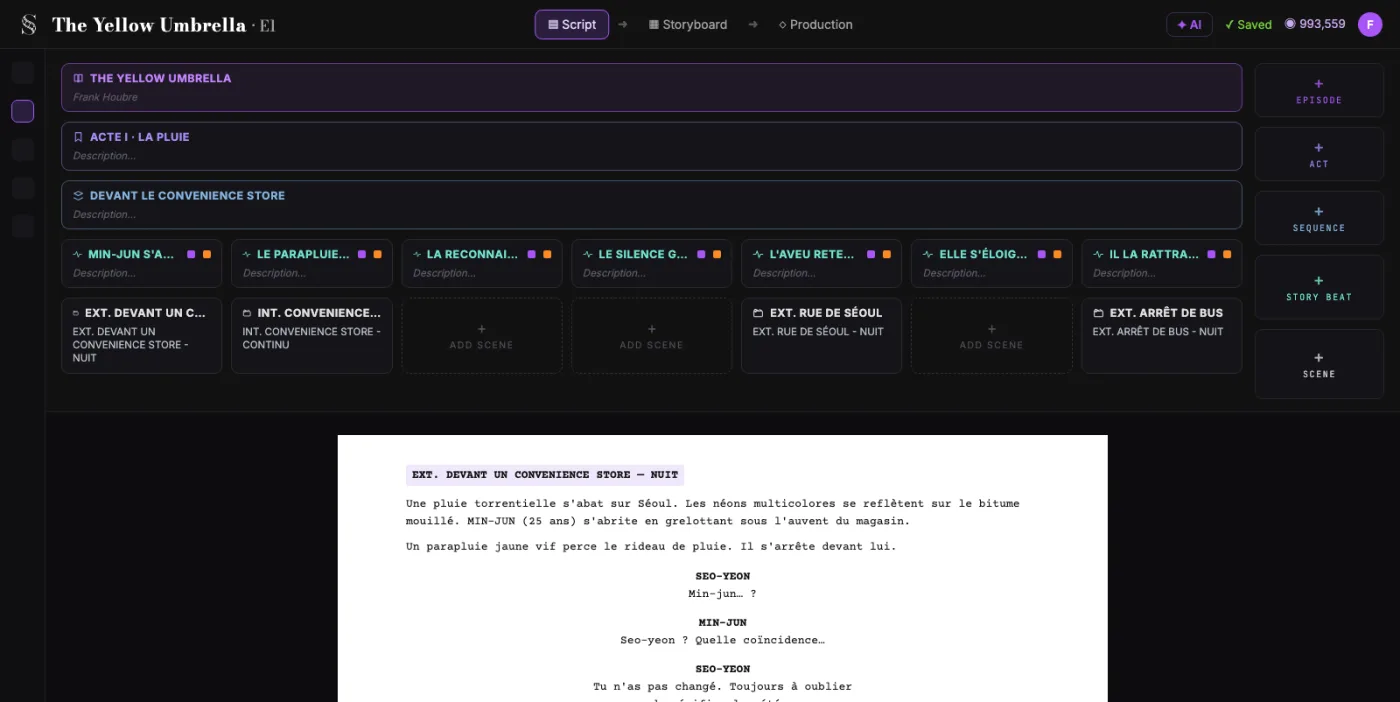
Screenplay Outline Builder: the complete guide
It structures core premise inputs into a usable multi-act outline scaffold you can iterate before page drafting.
For this workflow, the central problem is clear: many drafts collapse because scene order is explored too late and structural intent remains implicit. Left unresolved, this creates downstream friction and slower decisions. The practical target is a coherent multi-act outline that de-risks drafting and accelerates revision quality.
Limitation to keep in mind: It cannot replace deep scene invention or emotional nuance; it organizes direction, not final storytelling quality.
Advanced workflow: Lock high-level sequence intent first, then track outline changes against draft versions to prevent invisible narrative drift.
Step-by-Step Workflow
- Define act-level objectives first, then populate sequences with turning points.
- Pressure-test causality between beats so escalation feels inevitable.
- Add emotional progression alongside plot events to protect character depth.
- Use the outline as a living document during drafting, not a static artifact.
Use Cases By Profile
- Writer: avoid drafting scenes without clear structural purpose.
- Editor: compare alternate act strategies quickly.
- Development lead: evaluate concept viability before full draft investment.
Common Mistakes To Avoid
- Writing scene summaries without clear dramatic function.
- Overplanning details that should emerge in pages.
- Ignoring B-story integration until late drafts.
Professional Best Practices
- Keep each scene card tied to one decision or reversal.
- Track unresolved questions act by act.
- Re-outline after major feedback to avoid patchwork fixes.
Treat this tool output as a decision support layer, not a replacement for authorship. Great scripts are remembered for specific choices, emotional precision, and clarity of dramatic movement. Tools help by removing noise so your energy can go where it matters: character, conflict, escalation, and payoff. If you review outcomes after each pass and keep an explicit log of accepted changes, your workflow becomes faster and more predictable from draft to draft. That consistency is exactly what professional collaborators value: fewer surprises, clearer rationale, and a script that evolves with intent.
Extended FAQ
How detailed should an outline be before drafting?
Detailed enough to define scene purpose and escalation, but not so rigid that discovery is blocked.
What causes outline-to-draft mismatch?
Untracked scene additions and unresolved sequence intent during drafting.
Should I rewrite outline after notes?
Yes. Re-outline key sections before heavy page edits to avoid patchwork revisions.
Can this improve writing speed?
Significantly. Clear outline intent reduces dead-end drafting and rewrite churn.
How do I protect character depth in outlines?
Track emotional progression alongside plot progression in each act.
What is the best collaboration use?
Share outline versions with decision notes so teams align before scene-level rewrites.
FAQ
Yes.
No, deterministic templates only.
Copy to markdown and keep editing anywhere.
No account needed.