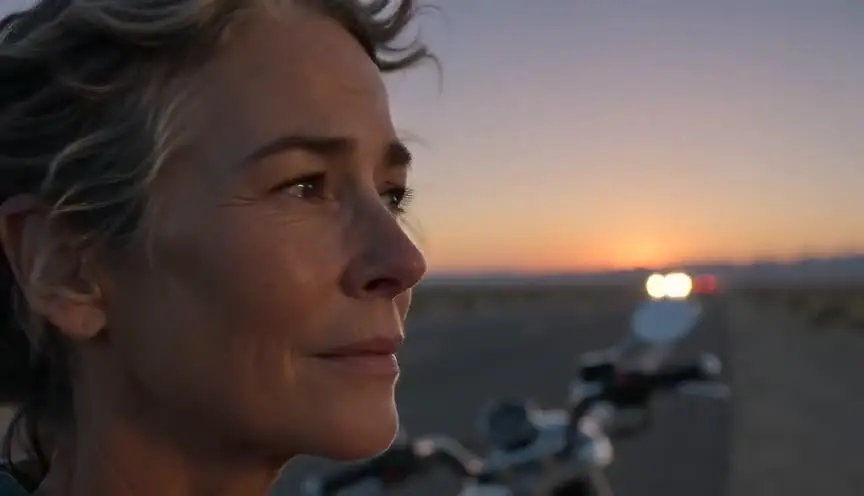
Shallow depth of fieldOne face, the rest falls away
Shallow depth of field keeps only a thin slice of the image sharp, while everything in front of and behind it falls into blur. The audience's eye goes straight to what is in focus, and the character feels cut off from the world around them.
Also calledShallow focusThin depth of fieldSelective focus
Optical effects
Why it works on screen
Use it when a scene is about someone's inner state. Shallow focus isolates a character in a crowded place, makes a quiet conversation feel private, or shows a person so absorbed that the room disappears. It serves loneliness, intimacy, obsession, grief and the dreamlike detachment of someone drifting through their own life. A scene earns it when the setting matters less than the feeling. It works against you when the audience needs to understand geography, see a threat in the background or follow several characters at once. A whole film in shallow focus can feel beautiful and airless, so vary it.
The shot list line
- Size
- Medium close-up or medium shot
- Angle
- Eye level
- Movement
- Static or very slow push
- Lens
- 85mm, aperture f/1.4 to f/2
- Duration
- 4 to 8 s
Separate the actor from the background by several meters, keep them close to the lens and mark their position precisely so focus holds.
Screenplay
On the page
Depth of field is a camera decision, so avoid naming it in a spec script. Write the character's perception: the noise of the office fades, the faces around her blur, only the phone screen matters. That tells a director this is a subjective, isolating moment. If you direct, specify it in the shot list with the lens, the aperture and the subject distance, and plan the focus marks with the camera team before blocking the actors.
INT. OPEN-PLAN OFFICE, SEOUL - LATE EVENING
Dozens of desks, most of them still occupied.
YOON HA-EUN (26, lanyard, cardigan over her shoulders) sits in the middle of it all, staring at an email she has not opened.
Colleagues pass behind her, laughing, carrying takeaway boxes. She does not hear them.
She clicks.
She reads.
She closes the laptop very gently.
Storyboard
In the storyboard
Draw the subject in firm, detailed lines and render the foreground and background with loose, shaded shapes without edges. Add a small side diagram under the panel: a line for the camera, a thin band for the focus plane on the subject and hatching before and after it. Note the lens, the aperture and the subject distance, plus a warning if the actor moves, so the focus puller plans for it.
Pairs well with
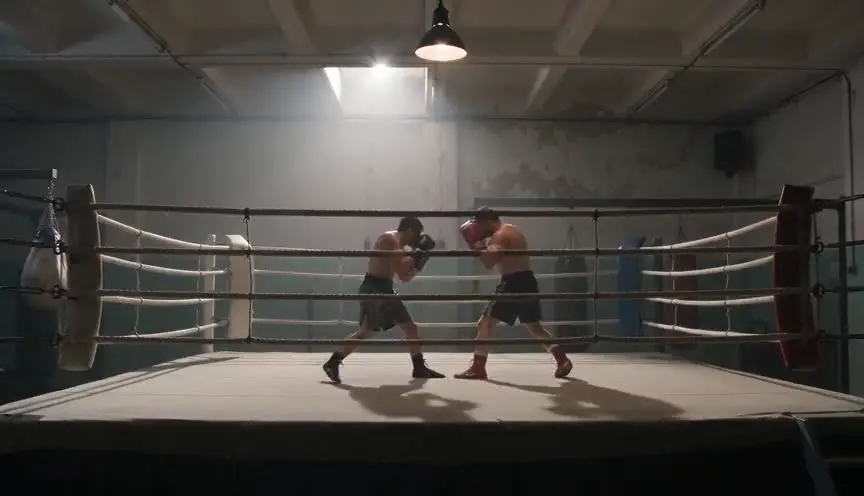
A wide shot before the shallow close-up shows the full room and its people. When the next shot blurs them away, the audience feels the character's isolation because they know what is being lost.

A rack focus inside a shallow shot moves the sharp plane from one element to another, letting the scene shift attention between the character and a detail without cutting.
Reference
Watch it in
Her (2013)
Theodore stays sharp against soft, warm backgrounds through most of the film, so he seems alone even in the busiest parts of the city.
Drive (2011)
The driver is often isolated in thin focus against smeared street lights, giving him a detached, almost dreamlike presence in his own story.
ScreenWeaver
Set it up in ScreenWeaver
Write the character's inward moment in your screenplay, and ScreenWeaver breaks the scene into shots automatically. Open the key shot, set a medium close-up at eye level, a static or slow push movement and a duration of four to eight seconds, and note the shallow focus in the shot description. Characters and locations carry from shot to shot, so the blurred background still matches the wide shot. Use the AI previsualization to judge the composition before planning lens and aperture.
Start writing for freeThe prompt behind this clip
This is the exact prompt that rendered the clip at the top of the page. Keep the description of the camera and the light, change the subject and the place.
Shallow depth of field, an astronaut in a gray flight suit walks slowly toward the camera along a curved space station corridor, her face and shoulders held in sharp focus while the ribbed metal walls, blinking control panels and distant hatch dissolve into soft circular bokeh only a few feet behind her. The camera holds still at chest height on a locked tripod, framed with an 85mm lens wide open at f/1.4, cool blue-white overhead light skimming her cheekbones as she moves, background lights smearing into round glowing orbs. No text.
Common mistakes
- 01
Missing focus
With a thin plane, a small movement by the actor pushes the face out of focus. Mark positions carefully, rehearse, and give the focus puller clear cues.
- 02
Only shallow shots
A film shot entirely wide open loses geography and variety. Alternate with deeper shots so the audience still knows where they are.
- 03
Background too close
If the background is right behind the actor, even a wide aperture will not blur it much. Pull the actor away from walls and furniture.