Anime script writing

Write the anime script.Then board every cut.

How an anime script really works, from (M) monologues to SE cues and cuts timed in frames. Then write yours for free and turn it into an anime storyboard.
  • Free writing plan
  • 16:9 series and 9:16
  • Used on award-winning anime
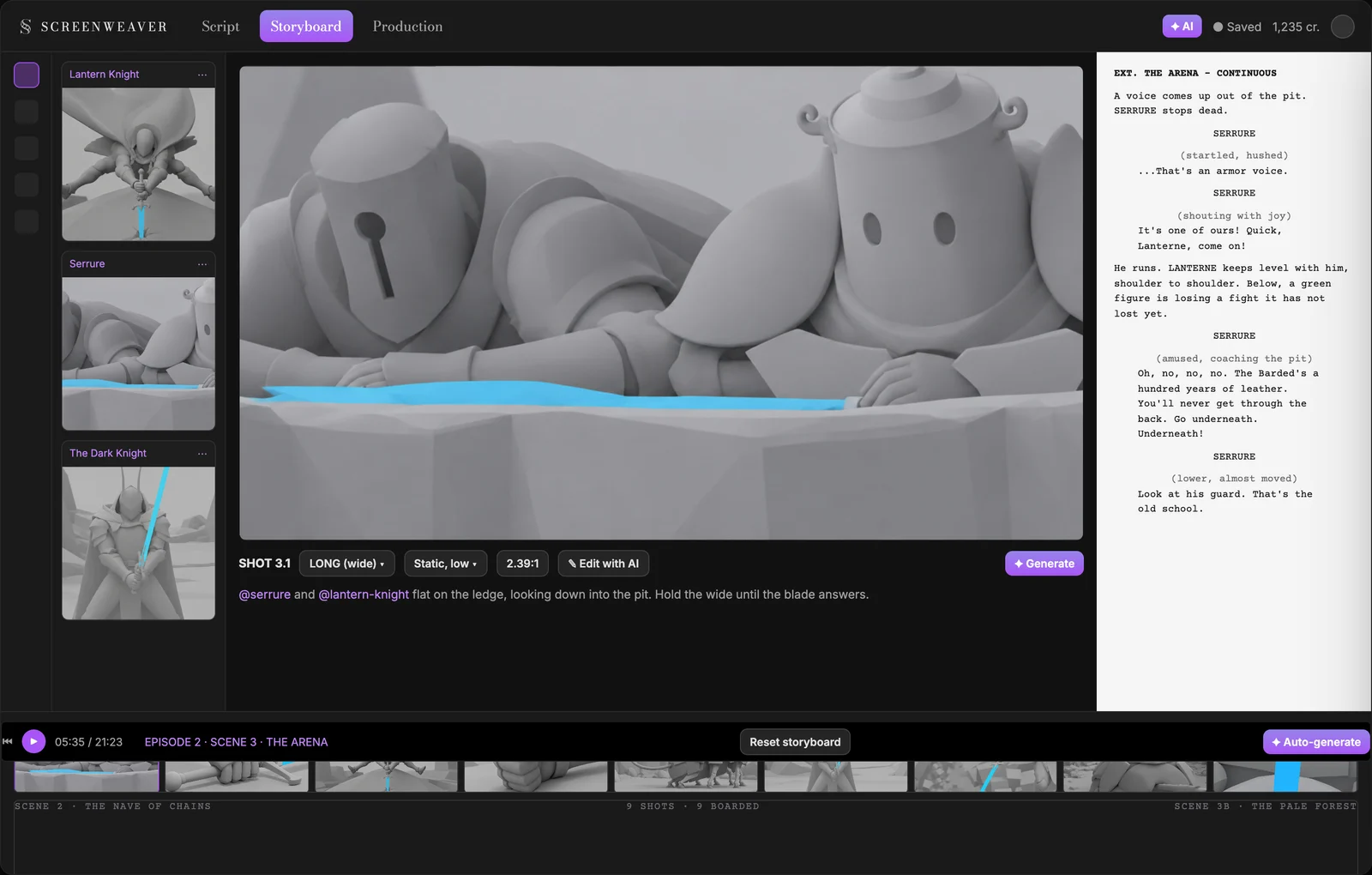
ScreenWeaver storyboard of the anime Lost Garden: shot 3.1, two armoured knights on a ledge, with the episode 2 script on the right
Lost Garden · EP 2

The format

One moment, written three ways.

Same rooftop, same two characters. The anime script leaves the camera out, the manga script places every panel, the screenplay counts pages as minutes.

Anime script

kyakuhon

○ School rooftop (sunset)

Akira leans on the railing. The wind takes her hair.

SE a train, far below

Kenji"I didn't think you'd be here."

Akira (M)"He knows. He always has."

× × ×

Night. Only the city lights. Akira hasn't moved.

BGM in
Sparse action, coded sound and voice. No camera: the e-konte decides.

Manga script

page · panel

Page 7 · 5 panels

Panel 1, full top tier. The rooftop at sunset. Akira at the railing, Kenji in the doorway.

SFX KA-CHAK, the door, drawn across the panel

KenjiI didn't think you'd be here.

Panel 2, close. Akira in profile. She doesn't turn.

Akira thoughtHe knows.

Panel 5, last of the left page: her hand grips the rail. Page turn.

The writer lays out pages and panels. The reader sets the pace.

Screenplay

US format

EXT. SCHOOL ROOFTOP - SUNSET

Akira leans on the railing. A train passes far below.

KENJI

I didn't think you'd be here.

AKIRA (V.O.)

He knows.

EXT. SCHOOL ROOFTOP - NIGHT

Akira hasn't moved.

About one page a minute. Every time jump needs a new heading.
What changesAnime scriptManga scriptScreenplay
UnitScene, then cuts on the e-kontePage and panelScene
CameraDecided by the storyboard artistWriter and artist, panel by panelDirector, on set
TimeFixed episode, cuts in seconds + framesSet by the reader and the page turnAbout one page per minute
Inner voice(M), used freelyThought balloonV.O., used sparingly
SoundSE and BGM cuesOnomatopoeia drawn into the artWritten into the action

The codes

Six marks you will meet in anime scripts.

Most have no equivalent in a Hollywood screenplay. Learn them and a Japanese script reads like any other.
  • Scene heading

    The hashira, the pillar. A circle, then place and time: ○ Rooftop (sunset).
  • (M)

    Monologue

    Inner voice over the image. The mouth doesn't move, and anime uses it far more than western TV.
  • (OFF)

    Off screen

    A real line, spoken out of frame. Unlike (M), the other characters hear it.
  • SE · BGM

    Sound cues

    Sound effects and music, marked where they start. The sound team builds them later.
  • × × ×

    Time jump

    Time passes inside the same scene, without a new heading.
  • A · B

    Episode parts

    A TV episode splits into an A part and a B part around the eyecatch, between the opening and the ending.

Script to cuts

The script gives the scene. The storyboard cuts it.

The episode director breaks each scene into numbered cuts. Each one gets a frame, an action note, its dialogue and a length in seconds plus frames. At 24 fps, (1+12) is a second and a half.

  • Write emotion and beats, not camera angles
  • Flag held silences: the board decides how long
  • Count early: 22 minutes at 4 seconds a cut is 330 cuts
CutPictureActionTime
01They watch from the ledge.(2+00)
02He leaps. Cloak first, blade second.(1+12)
03The guard. The old school.(2+06)
04The Barded goes down.(3+00)
Page total(8+18)
E-konte layout with Lost Garden boards · timings for illustration

In ScreenWeaver

From anime script to anime storyboard.

Write, break down, board and produce in one project. Nothing to retype between steps.

01 · Write

Write the script. For free.

Industry-standard formatting, outline and beats, PDF and Final Draft export. Type your (M), SE and BGM cues as you would anywhere. The free Screenwriter plan never expires.
  • Unlimited projects and pages
  • Acts, sequences and beats above the page
  • In the browser, even offline
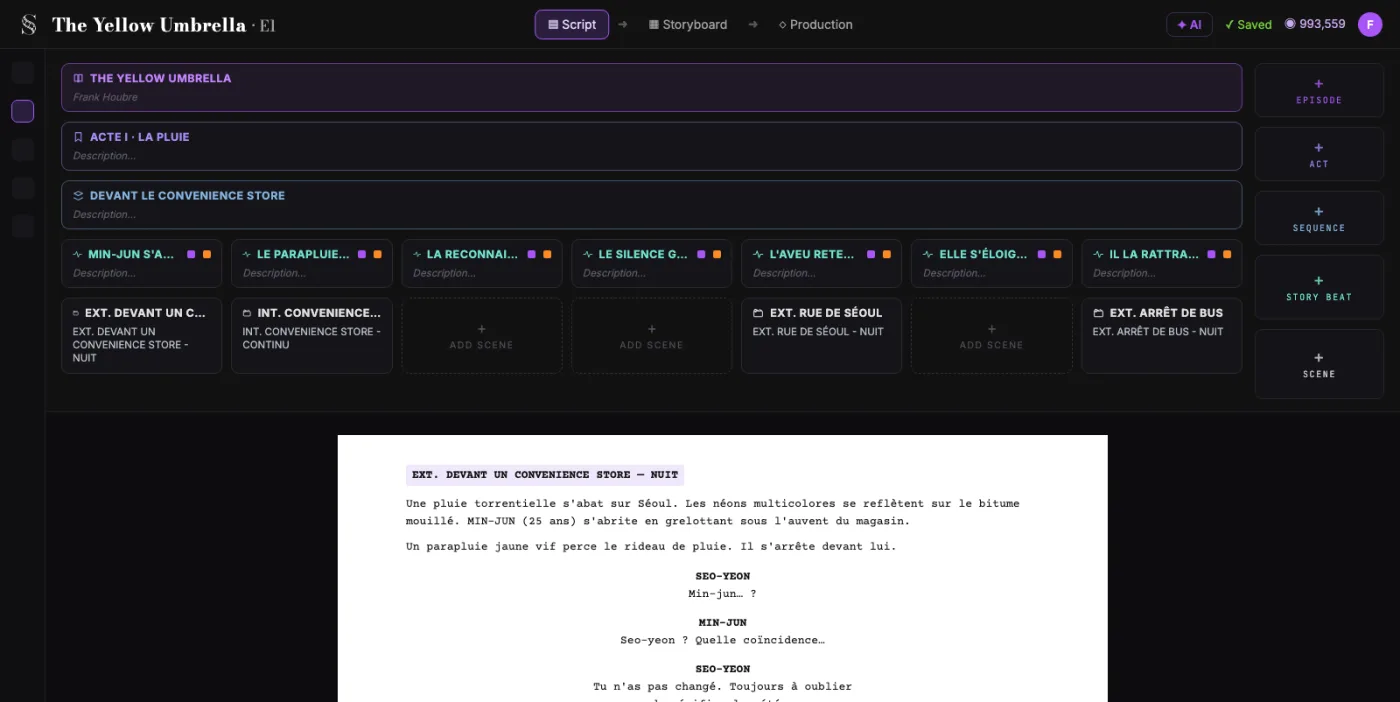
The ScreenWeaver screenplay editor with acts, sequences and beats above the script

02 · Break down

Every scene becomes a shot list.

ScreenWeaver breaks the screenplay into shots for you. You keep the last word on each one: framing, angle, movement and duration.
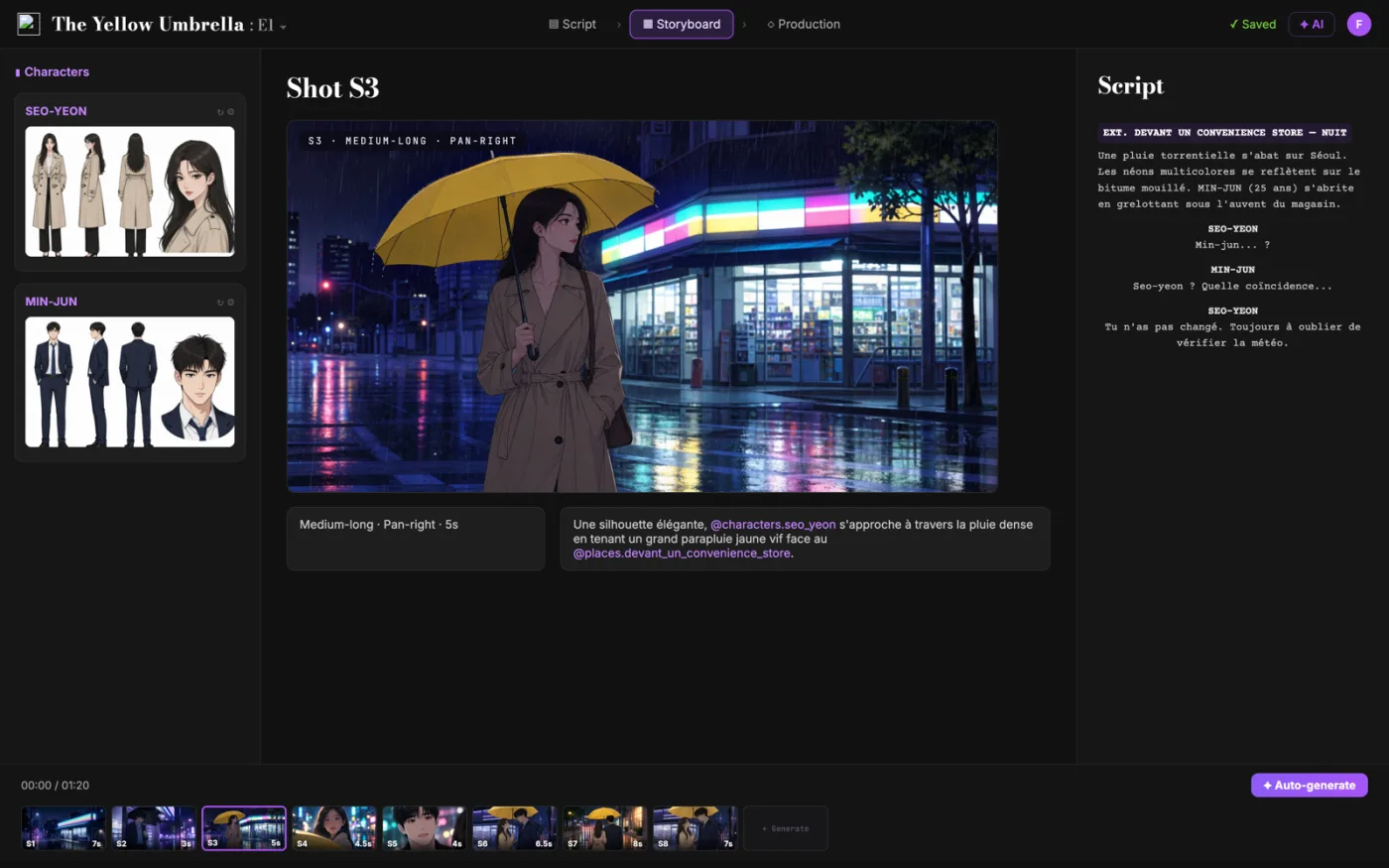
  • Storyboard generated from the screenplay
  • Frames linked to scenes and beats
  • Storyboard Beta: $9.99 a month during the beta
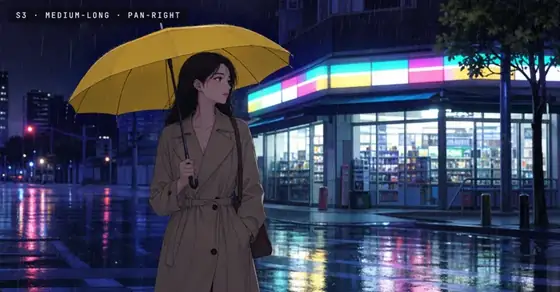
Anime-style storyboard in ScreenWeaver: shot S3 of The Yellow Umbrella, Seo-yeon under a yellow umbrella, with the character sheets and the script

03 · Characters

Characters stay on model.

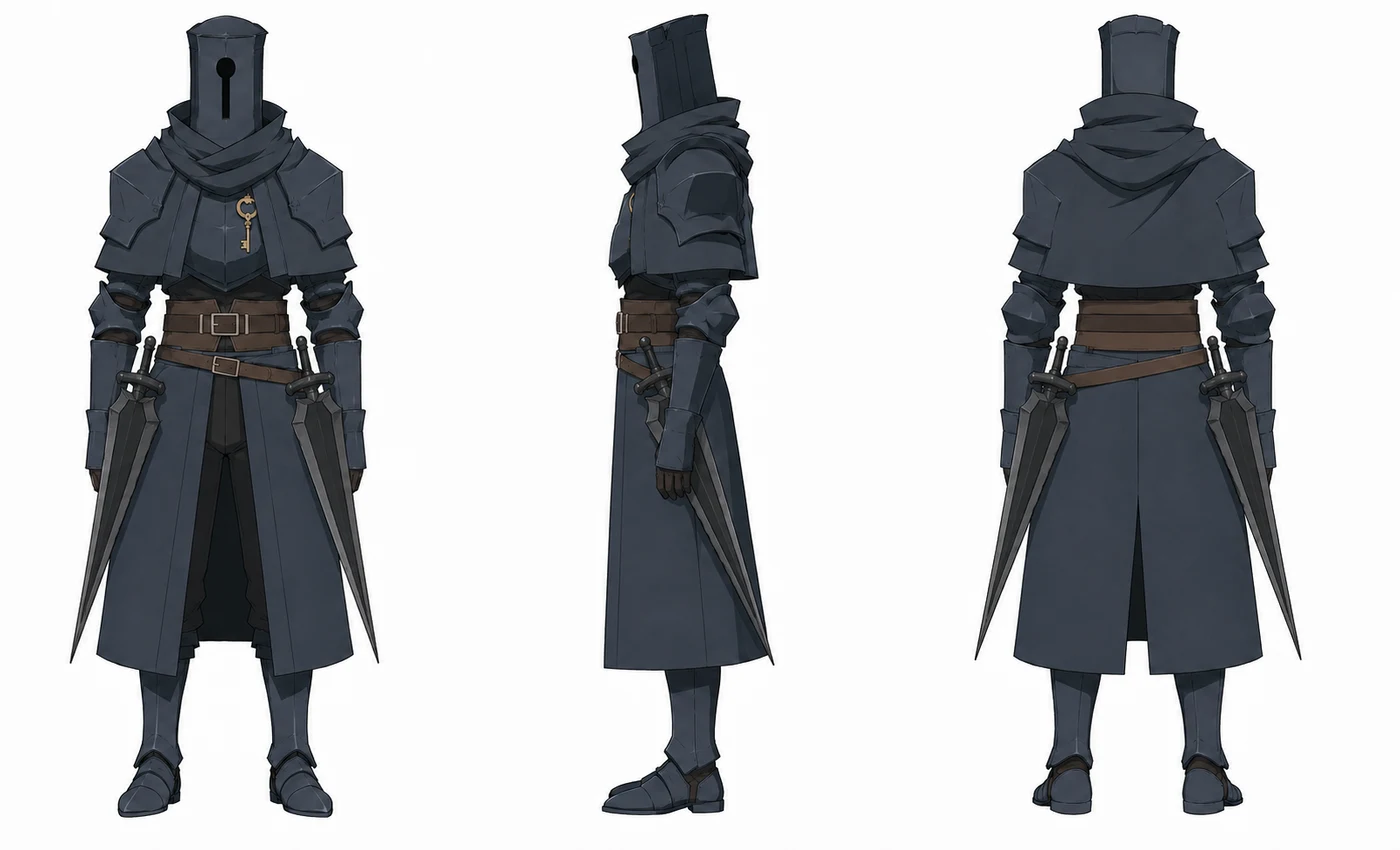
Each character gets a reference sheet. Characters, locations and references carry from shot to shot, so the knight in cut 380 is still the knight of cut 1.
  • Front, profile and back views
  • Tag a character with @ in the action line
Reference sheet for Serrure, a Lost Garden knight: front, profile and back views

04 · Produce

From board to final frame.

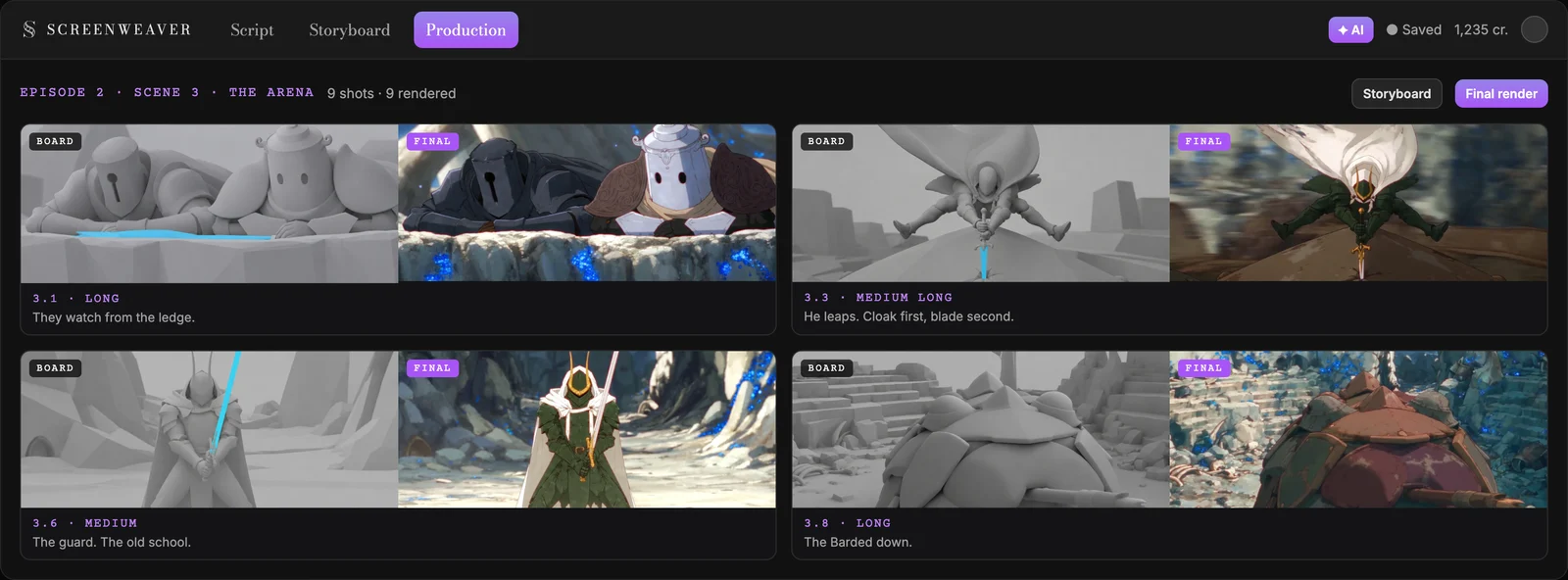
Approved boards feed footage pipelines connected to the script and storyboard, optimized out of the box and fully editable. Video generation comes with the Filmmaker plan, targeted for 30 September 2026. It is not part of the beta.

ScreenWeaver production view for Lost Garden: grey boards next to the final anime frames of the same shots

Formats

16:9 for series. 9:16 for vertical.

Pick the frame per project. The script, the characters and the pipeline stay the same.
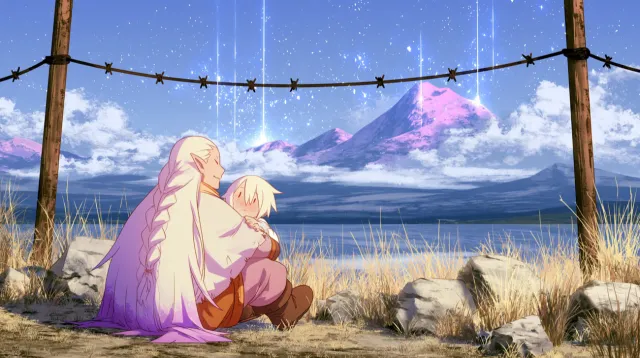
Anime frame in 16:9: two elves sitting before a snowy mountain16:9

Anime series and films

The classic 16:9 frame, for a pilot, an episode or a short.

Anime-style vertical frame: Seo-yeon under a yellow umbrella on a rainy night9:16

Vertical short dramas

9:16 episodes made for the phone.

Made with ScreenWeaver

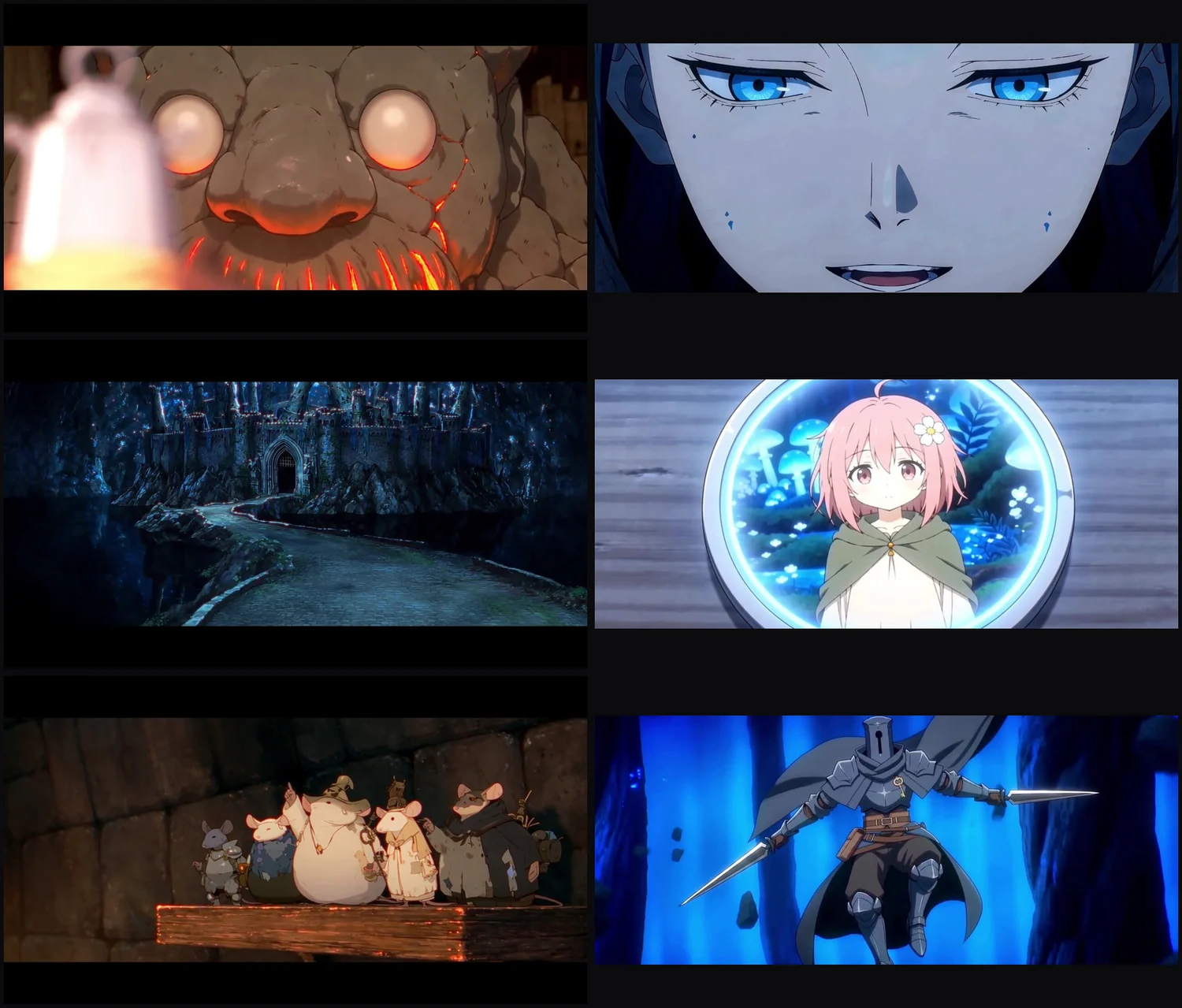
Lost Garden: an anime pilot, script to final.

Dark fantasy about empty suits of armour waking up twenty centuries after the end of the world. Written, boarded and produced in ScreenWeaver. Finalist at the AI London Festival.

Read how it was made
Six finished frames from the anime Lost Garden: a stone giant, a pale face, a castle, a girl in a medallion, mice on a shelf, a knight leaping
Two episodes
38 min
Two episodes
Shots in episode 2
≈ 400
Shots in episode 2
Per shot
2 to 3 s
Per shot
Workspace
1
Workspace
Real productions

International festival-recognized films have been written and produced with ScreenWeaver.

ScreenWeaver is already being used as a creative workspace for real AI film productions, from cinematic shorts to animated series pilots selected, nominated, and awarded by international festivals.

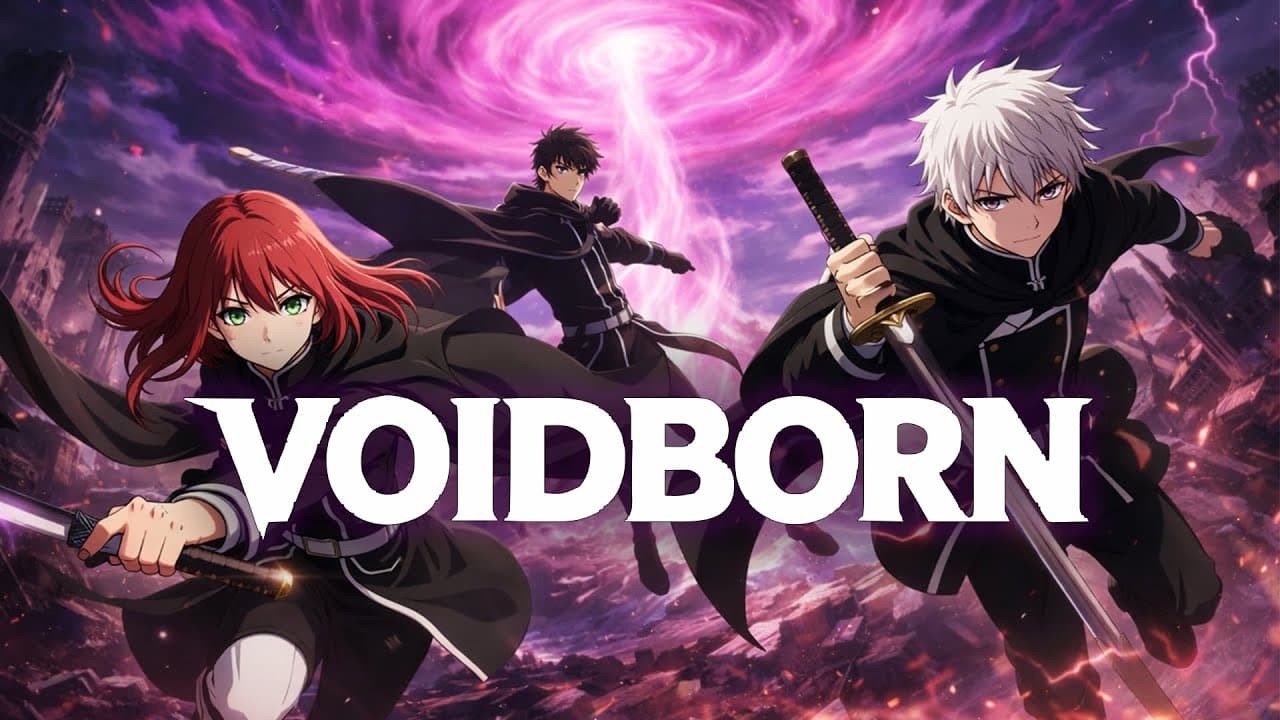
  • Video thumbnail for VOIDBORN

    VOIDBORN

    AI animated / cinematic short

    Festival recognition

    • 1st Place Silver

      Mondial Chroma Awards

    • 2nd Place Dreamina

      Mondial Chroma Awards

    • Award Winner

      Seoul International AI Film Festival

  • Video thumbnail for Les Fils du Vinnana

    Les Fils du Vinnana

    AI short film

    Festival recognition

    • Honorable Mention

      Top Quark Film Festival

    • People's Choice Nominee

      Illuminate Oneness of Humanity

    • Nominee

      ALTFF Supershort

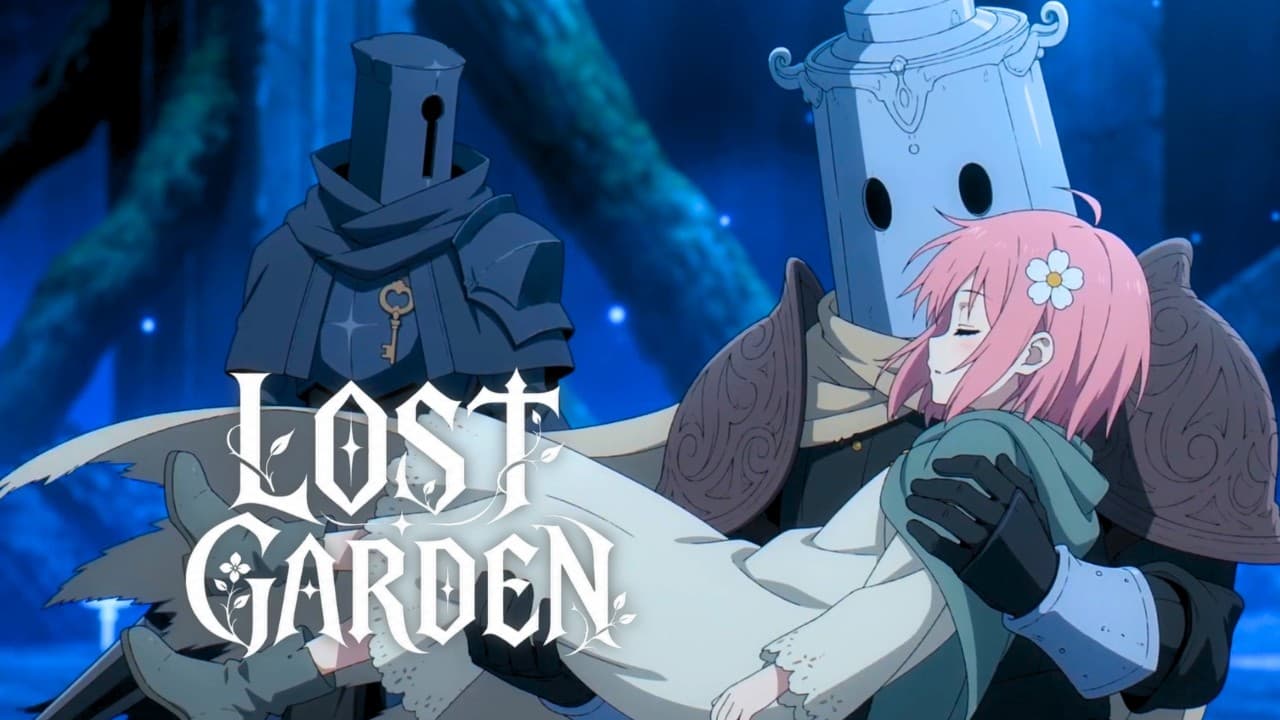
  • Video thumbnail for Lost Garden

    Lost Garden

    AI animated series pilot

    Festival recognition

    • Finalist

      AI London Festival

FAQ

Anime script questions

How is an anime script different from a screenplay?
An anime script gives the scene, the dialogue and the emotion, but leaves the camera out. Shots, framing and timing are decided later on the e-konte, the storyboard. It also uses its own codes: ○ for scene headings, (M) for monologue, SE and BGM for sound.
How is a manga script different from an anime script?
A manga script is built on pages and panels. The writer says what each panel shows, where the balloons go and which sound effects are drawn into the art. An anime script has no panels: it runs scene by scene, and time is fixed by the episode.
What do (M), OFF, SE and BGM mean?
(M) is monologue, an inner voice over the image. (OFF) is a line spoken out of frame that the other characters can hear. SE is a sound effect and BGM is background music, marked where they start.
Should I write camera angles in an anime script?
Mostly no. The episode director and the storyboard artist decide the cuts. Write the emotion and flag the moments that must breathe, such as a held silence. The board sets how long it lasts.
How long is a TV anime episode?
A standard episode fills a 30-minute slot: about 23 to 24 minutes with an opening and an ending of about 90 seconds each. The story splits into an A part and a B part around the eyecatch.
Can I write an anime script for free in ScreenWeaver?
Yes. The Screenwriter plan costs $0 and does not expire: unlimited projects and pages, industry-standard formatting, outline and beats, PDF and Final Draft export.
Can ScreenWeaver turn my script into an anime storyboard and video?
The storyboard, yes: it is generated from your screenplay in the Storyboard Beta plan at $9.99 a month, with manual control of every shot. Video generation comes with the Filmmaker plan, targeted for 30 September 2026. It is not available during the beta.
Has ScreenWeaver been used on real anime?
Yes. Voidborn, an animated short, won 1st Place Silver at the Mondial Chroma Awards. Lost Garden, an animated series pilot, was a finalist at the AI London Festival. Both were made with ScreenWeaver.

Your anime starts on the page.

Write the script for free. Board it when you are ready.