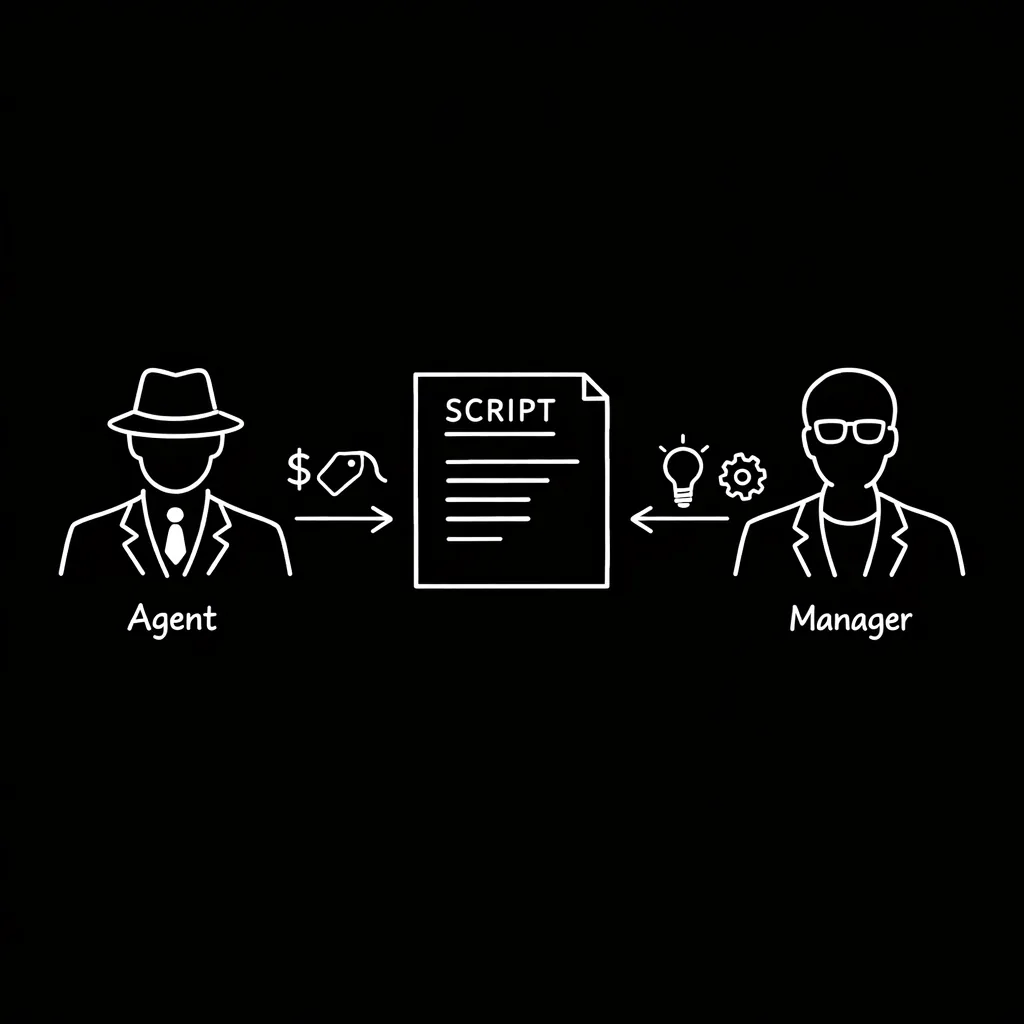

The short answer: a screenwriting career is built in a fixed order. Write samples that are ready, package them (logline, one-pager, treatment, deck), get them read through contests, fellowships, labs and targeted queries, land a manager before an agent, then protect yourself in the deal with copyright, a clear option agreement and, when money is real, an entertainment lawyer. This hub collects every career and industry guide we publish, grouped by the step you are on.
New to the business side? Start with Agent vs. Manager: who do you need first? and Are screenwriting contests worth the money?, then jump to the section that matches your next move.
Pitching materials
- Writing the perfect logline and logline vs tagline, the one sentence everything else depends on.
- The 30-second elevator pitch formula
- The one-pager: how to summarize your show
- Treatment, outline, and synopsis: what to send and when and how to write a feature film treatment
- The pitch deck: a slide-by-slide template for features, with storyboards for a pitch deck and concept art from your scene descriptions
- Comparative titles: picking the right "meets"
- The query letter in 2026
- Proof of concept: filming a short version, the rip-o-matic and writing a sizzle reel script
Free tool: build and pressure-test your logline with the Logline Workshop. Free, no signup.
In the room
- Pitch meeting: what to bring and what to say
- Zoom pitching etiquette: lighting, background, delivery
- How to pitch to Netflix in 2026 and streaming pitch: deck vs treatment
- Where to sell a short drama script in 2026
Contests, fellowships, and labs
- Are screenwriting contests worth the money?
- Top screenwriting fellowships for 2026 and the Nicholl: analyzing past winners
- Sundance Labs submission guide
- Genre contests for horror, sci-fi, and comedy
- Short film festivals as a route for new writers
- The Black List in 2026 and optimizing Coverfly and FilmFreeway profiles
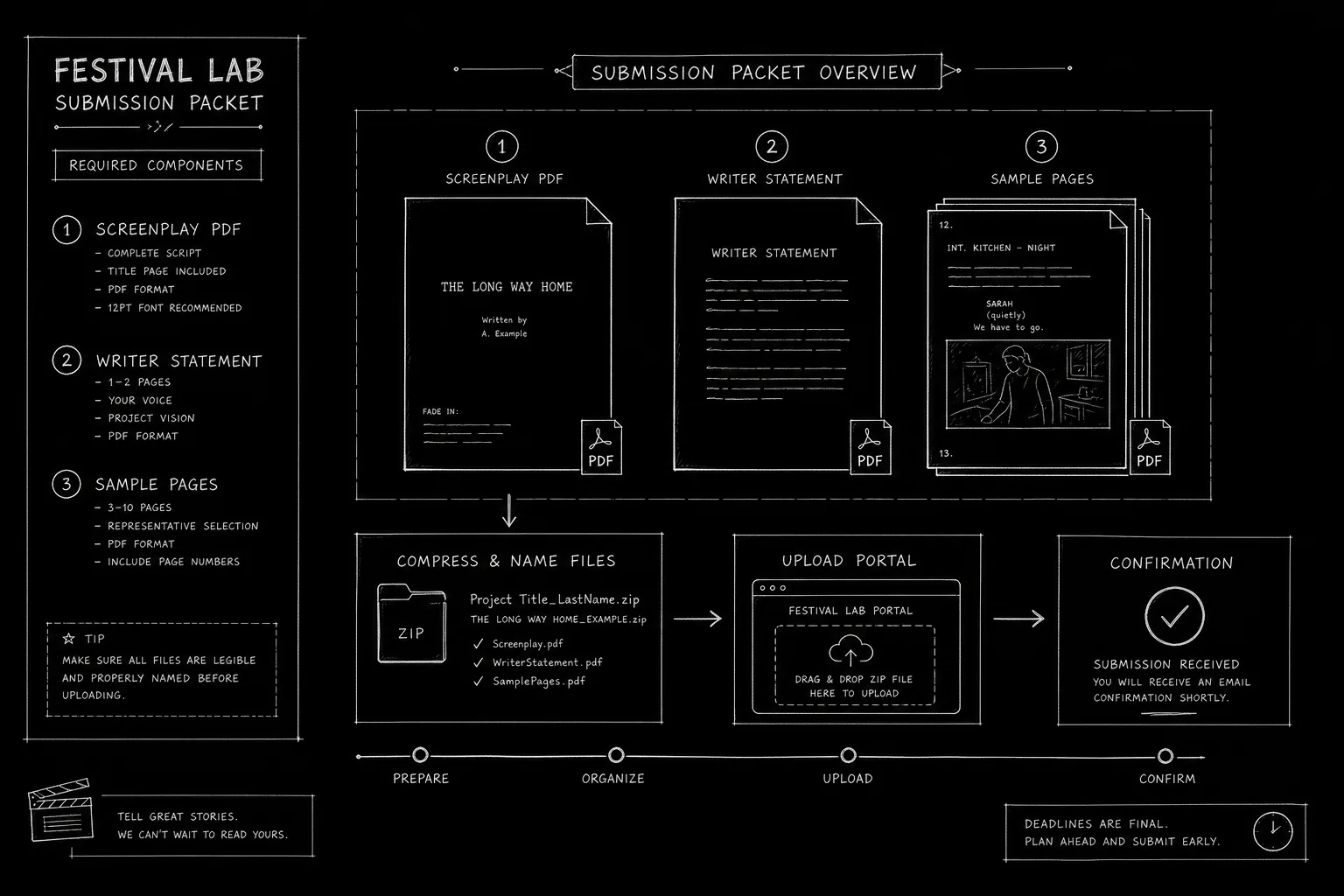
- Preparing your submission packet: essays and personal statements
Representation and networking
- Agent vs. manager: who you need first
- How to get a literary manager in 2026
- The hip pocket deal: what it means and the risks
- Networking in LA vs remote: breaking in from anywhere
Deals, rights, and money
- The option agreement explained and shopping agreements vs option agreements
- Understanding WGA minimums
- Co-writing credit: "Story by" vs "Written by" and collaboration agreements with a writing partner
- Entertainment lawyers: when you need one
- How to copyright your screenplay
- Copyrighting AI-assisted work
Try it free
Try ScreenWeaver for free on your script
It is free. Import your existing project, get a clearer view of your outline, and regain control of your story structure in minutes.
Start FreeNotes, coverage, and rewrites
- How to read script coverage and prioritize your rewrite
- 10 mistakes that get a script tossed by readers
- How to take notes from producers and taking criticism without crumbling
- Feedback fatigue: when to stop submitting and start rewriting
Working in TV and beyond features
- What a showrunner is and how you become one
- TV series bibles: essential components
- Casting sides format and the paper edit in reality TV
- Writing for animation vs live action
The writer's life
- Time management with a day job
- Dealing with imposter syndrome and the loneliness of the long-distance screenwriter
- Free screenwriting learning resources in 2026
- Writers and AI at work: why algorithmic assistance will not replace intuition, virtual assistants in remote writers' rooms and the future of the writers' room
FAQ
Do I need an agent or a manager first?
Most emerging writers need a manager first. A manager develops you and your material over the long run; an agent sells work that is already market-ready. The full sequence is in Agent vs. Manager.
Are screenwriting contests worth entering?
Some are, many are not. A career contest is one that can put your script in front of people who can change your career and has a track record of doing so. Our cost-benefit analysis shows how to tell career accelerators from expensive distractions.
Can I break in without living in Los Angeles?
Yes. Writers do it through contests, fellowships and labs, queries to managers, and relationships built over Zoom and email. LA still helps for staffing and last-minute meetings, but a ready script is what gets you read. See networking in LA vs remote.
How do I protect my script before sending it out?
Your copyright exists as soon as the script is written down. Registering it with the U.S. Copyright Office adds legal standing, while WGA registration is a dated record of authorship timing; the two are not interchangeable. The details are in WGA registration vs copyright, and the option agreement guide covers what to check before you sign anything.
Writing is free
Write your next script with ScreenWeaver
Write for free, export to PDF and Final Draft, and turn your scenes into a storyboard when you are ready.
Start writing free