
The title sounds like a job. It's actually a role that absorbed several. On set they ask the director. In the writers room they ask the staff. But who decides what the show is? Who answers to the network and the budget and the tone of episode seven? That's the showrunner. Not the creator who sold the pitch and walked away. Not the director who shoots one episode. The person who runs the show. Day to day. Season to season. They're the final voice on the script, the bridge between money and story, and the reason a series holds together,or falls apart.
If you want to get there, you need to know what the job is. Not the glamour. The decisions. The politics. The exhaustion. Then you need a path. There isn't one official ladder. There are patterns.
What a Showrunner Actually Does
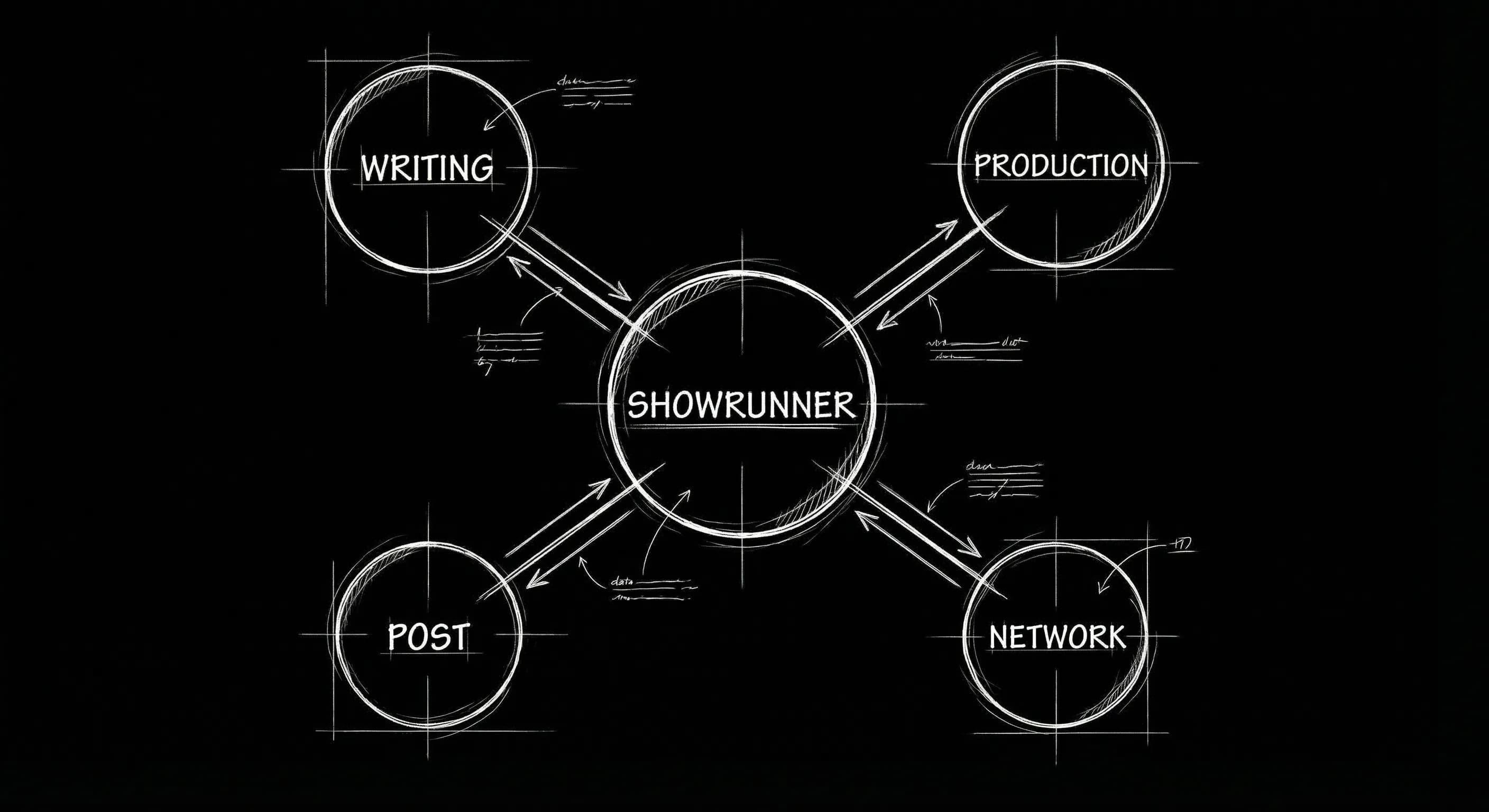
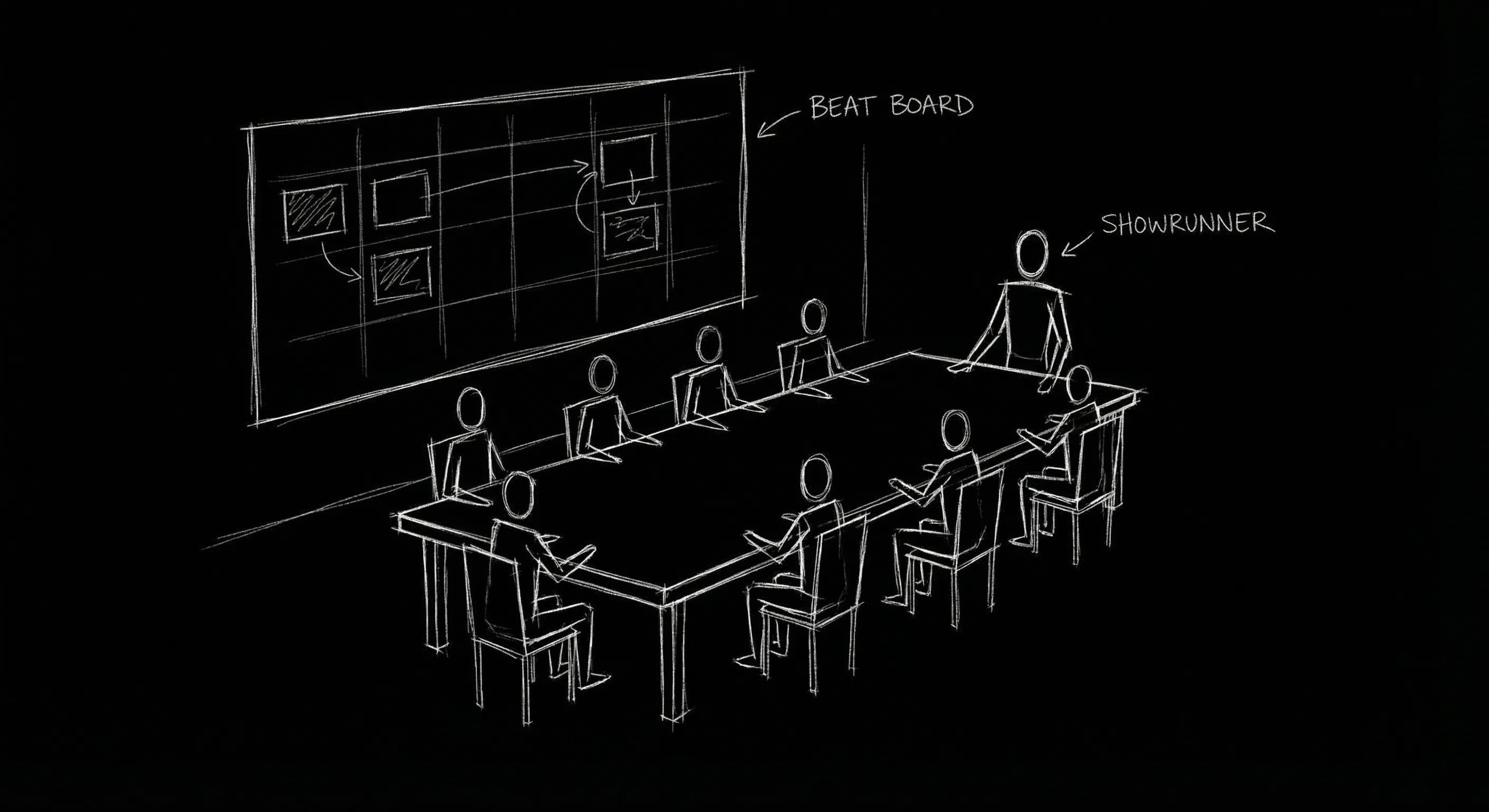
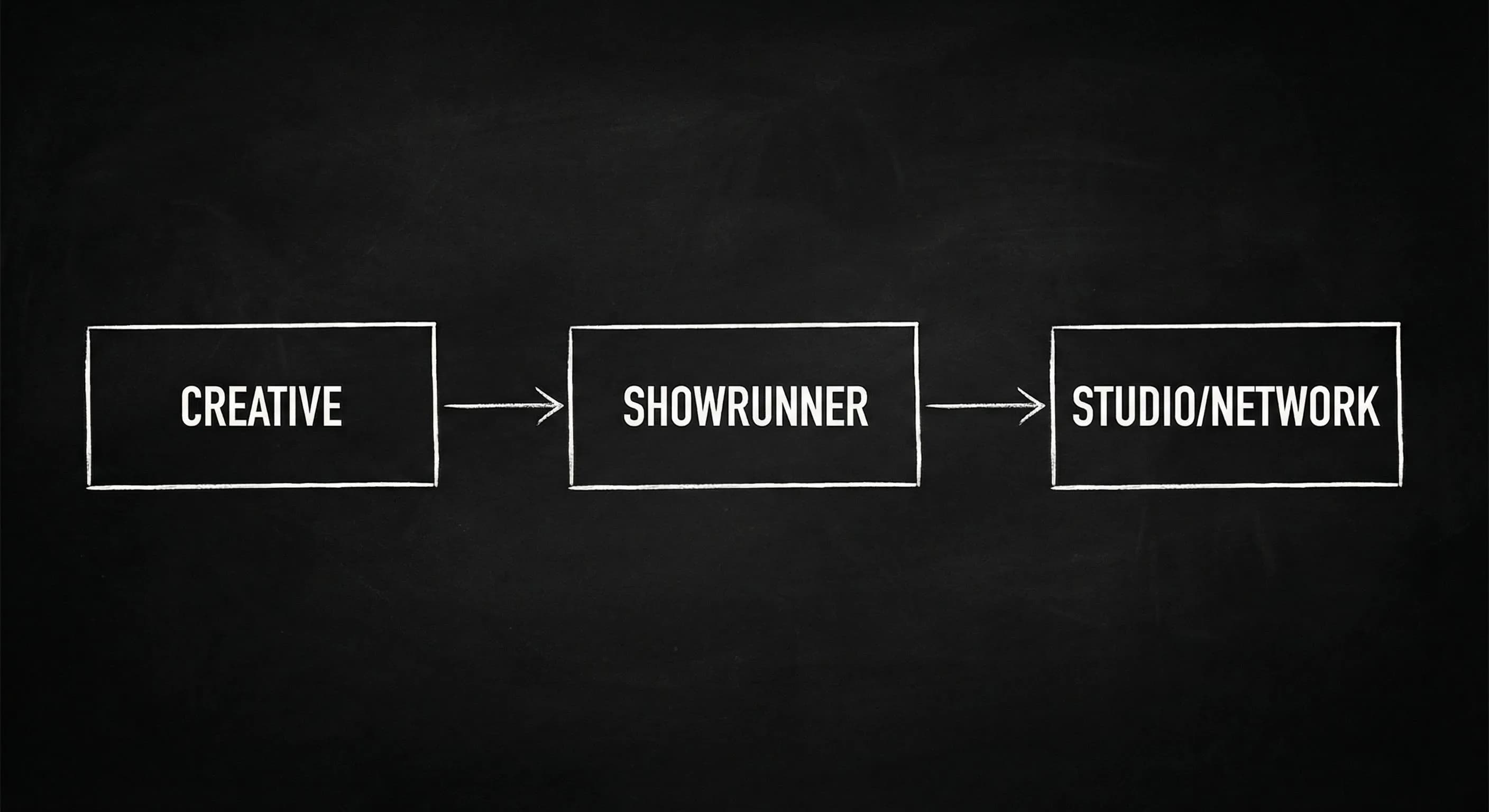
A showrunner is the chief creative and often the chief operational authority on a television series. They oversee the writers room: breaking story, assigning scripts, rewriting, and maintaining continuity. They work with producers and the studio on budget and schedule. They work with the network or streamer on notes and direction. They're in the edit bay. They're on set when it matters. They approve casting, music, and key hires. The buck stops with them when the show is off tone, over budget, or behind schedule.
Think of it as the difference between writing a novel and running a small company that produces a novel every week. The showrunner is the CEO and the lead author. They don't do every job. They make sure every job serves the same vision.
The showrunner is the person who says "this is what the show is" when everyone else is asking.
That clarity is the product. Without it, episodes feel like they're from different series. With it, the show has an identity. Networks and streamers depend on that. So do the writers, the crew, and the audience.
The Skills That Aren't Writing
Writing gets you in the room. Running the room requires more. You need to break story with a group,to take ideas from six people and shape them into one narrative. You need to give notes that are clear and actionable, and to take notes from above without losing the show's spine. You need to manage conflict: between writers, between departments, between the network and the creative. You need to understand schedule and budget well enough to know what you can fight for and what you can't. And you need stamina. A season is a marathon. Showrunners who burn out in year one don't get year two.
Some of this is learned on the job. Some of it is temperament. The best showrunners are decisive but not brittle. They listen, then they choose. They protect the show without making enemies of the people who pay for it.
How People Usually Become Showrunners
There is no single path. Most showrunners were writers first. Staff writers, then story editors, then executive story editors, then co-executive producers. They wrote episodes. They ran a room under a showrunner. They learned how to break a season, how to handle notes, how to sit in the edit bay. When they created or co-created a show, or when they were hired to run an existing one, they were ready. Not because they had a certificate. Because they had done the work.
Another path: creating a show from scratch. You pitch. You sell. You're the creator. Often the network or studio wants you to run it,or to run it with a more experienced co-showrunner. That's a fast track, but it's also a trap if you've never been in a room or on a set. Many first-time showrunners partner with a veteran for season one. They learn while sharing the load.
A third path: taking over an existing show. The original showrunner leaves. The studio needs someone who knows the show,often a writer or co-EP from the staff,to step up. That's how a lot of people get their first showrunning credit. They didn't create the show. They proved they could run it.
| Path | Typical sequence | Risk |
|---|---|---|
| Staff climb | Writer → EP → showrunner (own or assigned show) | Slower, more preparation |
| Creator | Pitch/sell → run your show (sometimes with co-showrunner) | Fast; can be overwhelming |
| Takeover | Writer/EP on show → showrunner when incumbent leaves | Depends on show health |
Relatable Scenario: The Staff Writer Who Wants to Run
You're in your third year on a drama. You've written two episodes. You've broken story, taken notes, sat in the room. You want to run your own show. What do you do? You keep doing the job in front of you,and you start doing the next job in miniature. Volunteer to run a day of breaking when the showrunner is in prep. Pay attention in the edit bay. Ask the line producer one question a week about schedule or budget. Read the memos from the network. When you pitch your own pilot, you're not just selling a idea. You're selling your ability to execute. The resume is the proof. No one hands you the keys because you have a great idea. They hand you the keys because they believe you can drive.
Try it free
Try Screenweaver for free on your script
It is free. Import your existing project, get a clearer view of your outline, and regain control of your story structure in minutes.
Start FreeRelatable Scenario: The Creator Who's Never Run a Room
You sold a pilot. The network wants you to run the show. You've written features. You've never been in a writers room. You've never managed other writers or dealt with network notes on a weekly basis. Here's the move: ask for a co-showrunner. Someone who has run a show before. You keep final say on the creative. They handle room management, production liaison, and the mechanics of the season. You learn by doing, with a safety net. By season two you may be ready to fly solo,or you may have found a permanent partner. Either way, you didn't crash the show in year one.
What Beginners Get Wrong (The Trench Warfare Section)
Assuming the title is the job. "Showrunner" sounds like "boss." It is. It's also mediator, diplomat, and sometimes sacrifice. You'll spend hours in meetings that aren't about the script. You'll choose between a perfect scene and making the day. You'll say no to a writer's idea and have to explain why without killing their morale. The job is creative and political. If you only want to write, stay a writer. If you want to own the vision and run the machine, aim for showrunner.
Not learning the business side. Showrunners who don't understand budget and schedule get outmaneuvered. The studio says "we need to cut two days." If you don't know what that means for the script, you can't push back effectively. Learn enough to have the conversation. You don't have to be a line producer. You have to know what things cost.
Protecting the script at the expense of the team. Your job is to defend the show. That includes defending the people who make it. If you throw writers under the bus when the network is unhappy, you'll lose the room. If you don't push back on bad notes, you'll lose the show. The balance is the job. Build trust with your staff. Build trust with the studio. When you have to choose, you want both sides to know you're acting in good faith.
Thinking you have to do everything. Delegation is survival. Trust your co-EPs, your producing directors, your script coordinators. You set the vision and the tone. You don't have to rewrite every line or sit in every casting session. The showrunner who tries to touch every frame burns out. The one who builds a team that shares the vision gets to season five.
The Relationship with the Network or Streamer
The network pays. They have notes. Your job is to listen, interpret, and respond. Sometimes their note is wrong for the show. Your job is to explain why and offer an alternative that addresses their concern. Sometimes their note is right. Your job is to take it without ego. The showrunner who fights every note gets a reputation. The one who says yes to everything loses the show. The skill is in the middle: know what you're willing to fight for, and fight for it clearly. For more on how to handle notes without losing your voice, see our guide on how to take feedback from producers.
Building Toward the Job
If you're a writer with showrunner ambitions, do this. Get on a show. Stay for more than one season if you can. Ask to be in the room for breaking, for notes, for post. Read the scripts that come back from the showrunner,see what they changed and why. When you have an idea for a show, develop it. Pitch it. When you get the chance to run something,your show or someone else's,say yes. The first time will be messy. That's how you learn. There's no course that replaces running a show. There's only running a show.
The Co-Showrunner Model
More shows are run by two people. One may be the creator; the other the veteran. Or two creators who split the load. Co-showrunning can work when roles are clear: who runs the room, who handles production, who does the final pass on scripts. It fails when it's unclear who has final say. If you're going to co-run, define the division of labor early. And get it in writing. Ambiguity becomes conflict when the pressure is on.
The Perspective
A showrunner is the person who holds the show together. They're the writer who became a leader,and the person who had to learn the difference between the spec script and the shooting script when the show went to production, the creator who learned to run the machine, or the veteran who stepped in when the show needed a steady hand. There's no single way to get there. There's only doing the work: writing, learning, and when the chance comes, taking the keys. If that's what you want, start now. Get in the room. Pay attention. And when you're ready, run.
Final Step
Build your next script with Screenweaver
Move from ideas to production-ready pages faster with timeline-native writing and AI-assisted story flow.
Try Screenweaver