
Free tool: use the Logline Workshop to build and pressure-test your logline.
Top Screenwriting Fellowships to Apply to in 2026 (Nicholl, Disney, Warner Bros Focus)
You’re staring at a half-finished script and an even more half-finished plan.
Someone on Reddit said, “Just place in Nicholl and your career is set.”
Another swore the Disney fellowship “changed everything.”
Then you saw a Twitter thread about a Warner Bros fellow getting staffed off their sample.
So you open a spreadsheet, dump in twenty links to “opportunities,” and feel that familiar nausea: entry fees, deadlines, vague promises, and a quiet fear that you’re just paying for another polite rejection email.
Here’s the hard truth: not all fellowships are created equal. Some are genuine industry on‑ramps. Others are glorified brand marketing. If you’re early in your career, you can’t afford to treat them as the same thing.
This guide walks you through the big three career-making fellowships people actually talk about in rooms, Nicholl, Disney, and Warner Bros, and helps you see them the way reps and showrunners do: as very specific tools, not lottery tickets.
Along the way, you’ll get realistic scenarios, step‑by‑step application strategies, and a clear sense of where these programs intersect with things you might already be doing, like contests or hosting work on platforms like the Black List or Coverfly. When we talk about submissions and loglines here, imagine them lining up with advice from deeper craft pieces like our guide on writing the perfect logline or notes strategy in how to take feedback from producers.
What a Fellowship Actually Buys You
Forget the marketing copy for a second.
Think of a fellowship the way an old‑school producer thinks of a film grant: access, protection, and leverage. Money is nice, but the real value is who now has permission to care about you.
At a high level, the three main variables that matter:
- Pipeline access: Who reads you and what they can do for you.
- Time and money: Whether you can stop juggling three side jobs and just write.
- Stamp of legitimacy: The line on your resume that makes a rep, exec, or showrunner take the meeting.
Here’s a quick comparison to ground the rest of the article.
| Fellowship | Core Focus | Main Output | Money (Typical) | Primary Leverage |
|---|---|---|---|---|
| Nicholl (Academy) | Feature writing | Script + prestige | ~$15K per fellow | “Oscar‑adjacent” stamp + rep interest |
| Disney (General) | TV staffing + studio pipeline | Multiple scripts + staffing meetings | Salary + benefits | Direct staffing path, brand halo |
| Warner Bros (TV Writing) | TV staffing in WB ecosystem | Staff‑ready pilot + room training | Salary + sometimes housing support | “Room‑ready” label, showrunner exposure |
If you think of your career like a slate of projects, a fellowship isn’t a trophy, it’s a financing and distribution deal for you as the writer.
That’s why choosing where to submit matters. A lot.
What a Fellowship Application Is Really Evaluating
Strip away the branding and each of the big fellowships is essentially trying to answer three questions:
- Are you already writing at a level that could hold up in a professional environment?
- Does your material feel like it belongs on the kinds of screens they control?
- Are you someone they can put in meetings and rooms without regretting it?
They’re not selecting “promising amateurs” so much as trainable professionals.
Your packet, script, essays, resume, has to work together to make that case.
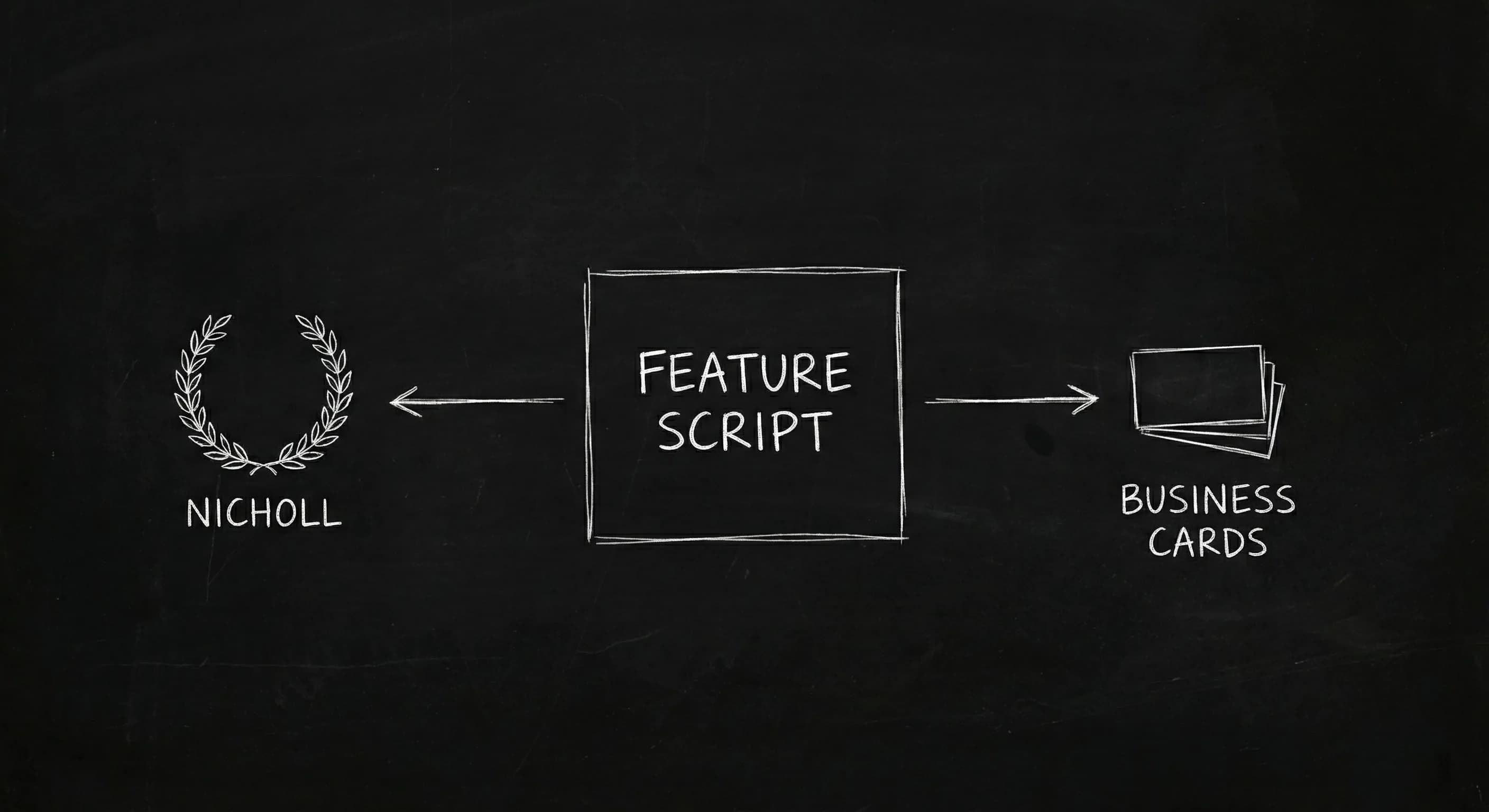
Scenario 1: The Nicholl Dreamer With One Great Feature
Let’s start with the situation I see constantly.
You’ve got:
- One grounded, character‑driven feature (say, a grief drama with a soft genre hook).
- A few shorts or pilots in various stages of disarray.
- No rep, no staff experience, maybe a couple of contest placements that sound nice but didn’t move the needle.
You hear “Nicholl” and translate that to “career launch.” That’s close, but not quite what it really is.
What Nicholl Actually Is
The Academy Nicholl Fellowships in Screenwriting are designed to identify promising feature writers the Academy wants to invest in. The brand matters here, this is the same institution behind the Oscars. People notice.
Key traits of Nicholl as a program:
- Feature‑only. If you’re only writing pilots right now, you’re not ready for Nicholl; they want a full feature.
- Voice‑first. Past winners tend to have a distinct point of view, emotional depth, and a sense of humanity that goes beyond genre tricks.
- Slow burn prestige. Being a Fellow doesn’t guarantee a sale or an assignment, but it does make reps and producers return your emails.
There’s a pattern you can see if you read loglines and scripts from past Nicholl fellows:
they’re often grounded dramas, contained but emotionally big, with a clear personal connection.
If you’re working on a feature that fits that description, Nicholl can be the right big swing.
Scenario 2: The TV‑Obsessed Writer Aiming at Disney
Now picture another writer.
You’ve been binge‑watching half‑hour comedies and genre‑bending dramas for years. Your Google Drive is full of pilots: a grounded family comedy, a genre drama with a crazy twist, a YA fantasy limited series.
You don’t care about features right now. You want to be in a writers’ room.
For you, the Disney writing program is less a prize and more a structured boot camp.
What the Disney Fellowship Really Offers
Disney’s program is about building writers for the company’s brands and pipeline: ABC, FX, Hulu, Disney+, and everything else in that orbit.
You’re not just being judged on one script. You’re being evaluated as a potential staff writer and long‑term collaborator.
If you make it in, expect:
- A full‑time job feel: office hours, assignments, deadlines.
- Feedback and rewrites that mirror a professional room.
- General meetings with execs who actually have slots on shows.
That’s why your sample for Disney can’t just be “a solid pilot.” It has to feel staffable: a clear arena, a clean engine, characters you can pitch episodic stories for.
Scenario 3: The Warner Bros Fellow Targeting the Room
Third scenario.
You’re already oriented toward TV structure. You’ve written a compelling one‑hour pilot that feels like something you’d find on a Warner‑produced streamer: character‑rich, bold, and clearly episodic.
You’ve maybe had:
- A second‑round placement at a solid contest.
- A short film that screened at a mid‑tier festival.
- A manager nibbling, but not fully committing.
For you, the Warner Bros TV Writers Workshop (or its 2026 successor) is about being room‑ready.
What Warner Bros Focuses On
Warner Bros wants writers who can:
- Integrate into an existing show as staff.
- Take notes quickly and implement them cleanly.
- Understand room etiquette: when to pitch, when to shut up, how to build on ideas.
Your submission here isn’t just “a piece of art.” It’s an audition tape for your professionalism.
That’s why the Warner sample tends to reward:
- Clean, readable pages with sharp scene work.
- A strong act structure that shows you understand tension and release.
- A sample that could sit in a showrunner’s stack and not feel amateur next to staffed writers.
The Anatomy of a Fellowship Application
You’re going to spend real money and real emotional energy sending your work to these programs. That deserves a professional, repeatable workflow instead of “panic‑upload the night before.”
Step 1: Choosing the Right Sample for Each Program
Don’t submit the same script everywhere by default.
Nicholl:
- Feature.
- Personal connection, emotional core, clear thematic spine.
- You might get away with an unusual structure if the voice is undeniable.
Disney:
- Pilot (hour or half‑hour, depending on your lane).
- Concept that fits somewhere in a Disney‑controlled ecosystem: grounded family drama, YA fantasy, workplace comedy, genre with a hopeful core, etc.
- A script that proves you understand series potential.
Warner Bros:
- Strong pilot that shows you can work in a network or streamer environment.
- Genre is fine, but clarity and structure must be razor sharp.
- You want to show you know where the show goes past episode one.
Each program is hiring you for a slightly different job. Nicholl is betting on future features. Disney and Warner are auditioning for staff positions.
Step 2: The Submission Mechanics
This is where beginners quietly blow it.
They export their script with:
- Wrong page count (132 pages for a drama).
- Weird font choices.
- Sloppy scene headings.
They don’t read instructions carefully, miss essay word counts, or mislabel a PDF.
Treat the submission portal like a camera test on a big‑budget set: your professionalism is visible in the tiniest details.
Have a checklist for:
- Format (font, margins, page count).
- File naming that matches guidelines.
- Logline and synopsis pasted cleanly into forms.
- Eligibility and residency rules double‑checked.
Dry? Yes. Career‑saving? Also yes.
Try it free
Try Screenweaver for free on your script
It is free. Import your existing project, get a clearer view of your outline, and regain control of your story structure in minutes.
Start FreeThe “Trench Warfare” Zone: What Beginners Get Wrong
Here’s where the pain lives.
You hear about winners, read a few press releases, and assume “I just need a better idea” or “they probably pick people with connections.”
That’s not what’s really happening on the other side of the reader queue.
Treating Every Fellowship Like a Contest
A fellowship is not a simple ranking system. It’s a hiring process.
Beginners approach it like a screenwriting contest: “I’ll just send my coolest script.” They don’t think about fit.
Fix it by asking three sharp questions for each program:
- Does this script match the format they care about?
- Does it match the brand? Would this concept live on their slate without major contortions?
- Does it prove I can do the job they’re effectively hiring for?
Essays That Read Like Slogans
Most fellowships ask some version of:
- “Why do you write?”
- “Tell us about a time you failed.”
- “Whose stories do you want to see on screen?”
Beginners answer with vague ambition:
“I’ve always loved movies and want to tell stories that reflect the human condition.”
Readers glaze over.
You need narrative essays, not adjectives. Think of them like miniature personal shorts: a main character (you), a specific incident, stakes, and some kind of shift. We go much deeper into that bio narrative work in our guide to submission packet essays, but the core principle is the same: tell a real story about yourself.
Sloppy First Ten Pages
Readers for big fellowships are buried. On a practical level they:
- Read on iPads or laptops.
- Skim faster than they mean to.
- Want a reason to stay, but they also want to survive the stack.
The first ten pages of your script aren’t just “the opening.” They’re a UI demo for your voice and professionalism.
Common failure modes:
- Dense blocks of action with no white space.
- Dialogue that floats without clear character voices.
- Confusing geography in the first scene.
Fix it by tightening white space, reading pages aloud, and pressure‑testing them with readers who have no stake in flattering you.
Submitting Before the Script Has Survived Real Feedback
Coverage can be helpful, but you need multiple, independent reads:
- A peer who reads a lot of produced scripts.
- Someone who knows TV and can sniff out premise fatigue.
- Ideally, at least one assistant, coordinator, or reader who knows the market.
When the same note shows up three times in different words, that’s not “their taste.” That’s structural.
How Nicholl Reads Your Script
Imagine a reader opening your feature on a tablet at 10:30 p.m. after a full workday.
What helps you here:
- A clear, emotionally legible protagonist within the first few pages.
- A sense that your world is small enough to be producible but rich enough to live in.
- A clean, unshowy style; you don’t need fireworks on the page, just confidence.
They’ve read previous winners. Many of those scripts aren’t high‑concept gimmicks. They’re:
- Family dramas with a specific cultural lens.
- Small‑town stories with one weird left turn.
- Genre scripts where the supernatural element is only half the point.
So ask yourself:
- Does my script feel like something a prestigious organization would be proud to champion?
- Do I show control at the level of theme, not just plot?
For a deep dive into what the Academy has actually favored, see our breakdown of past Nicholl winning scripts and the patterns they share.
How Disney Evaluates You as a Potential Staff Writer
Disney’s readers and execs are reading with a different question in mind:
“Can I put this person in a room with eight other humans and not regret it?”
Your script is the appetizer. Your essays and interview (if you get that far) are the main.
You want your pilot to show:
- A series engine: could this run 50 episodes?
- A balance of plot and character.
- Proof you can write to brand, hopeful, emotionally accessible, never nihilistic.
Your essays should give a taste of:
- What kinds of stories you’d pitch in a room.
- How you work under pressure.
- Ways you’ve already handled collaboration or conflict.
How Warner Bros Tests “Room Readiness”
With Warner, the test leans even more towards “are you ready to plug into an existing show?”
They’re looking for:
- A script with clean act breaks that could map onto their current slate.
- Comfort with genre and tone that matches the kind of series they’re making.
- Signs you understand episodic storytelling.
Imagine an EP skimming your sample on a lunch break. They’re looking at:
- How you move between A, B, and C stories.
- Whether jokes land without underlining.
- Whether emotional beats pay off inside the episode, not three seasons later.
Timing and Strategy for 2026 Submissions
Calendar matters.
Many of these programs have windows that clump in the first half of the year. If you try to “wing it” for all of them, you’ll rush the most important one.
A simple, realistic 2026 strategy:
- Pick one feature and one pilot as your core samples for the year.
- Identify which is your Nicholl script and which is your TV fellowship script.
- Give yourself at least two months before the earliest deadline to lock pages.
- Use later contests or smaller fellowships as “warm‑up” submissions once you’ve tested the scripts in real reads.
You don’t have to chase every deadline. You do have to be honest about when a script is truly ready to represent you.
When You Should Not Apply This Year
There are perfectly good reasons not to apply in 2026:
- Your script is still in the structural triage phase.
- You haven’t yet had a single outside reader who isn’t a friend.
- You’re chasing deadlines because of FOMO, not because the work is truly ready.
Sometimes the most professional move is to sit this cycle out, rewrite hard, and target 2027 with a killer draft and a much clearer strategy, especially when you’re already balancing festival plans for a short or contest runs for your pilot.
For a deeper look at how to manage that internal pressure and when to press pause on submissions to focus on rewriting, our breakdown of feedback fatigue and knowing when to pivot will help you decide how to time your pushes.
Where a Video Deep Dive Helps
At a certain point, you’ll want to see and hear how fellows talk about their experience.
Watching how they describe deadlines, rewrites, and politics will give you nuance that no one‑sheet application guide can match.
A Grounded Perspective Going Into 2026
Fellowships are not magic spells. They’re more like very specific kinds of production deals for your career as a writer.
If you:
- Understand what each program really wants,
- Choose samples that fit that mission,
- Treat your essays as narrative work,
- And refuse to submit half‑baked drafts just to feel “in the game,”
you put yourself in an entirely different category from the bulk of applicants.
You’re no longer the hopeful lottery player. You’re someone building a targeted campaign.
Before you send anything in 2026, ask yourself one sharp question:
“If this program called today, am I actually ready for the job they’d be hiring me for?”
If the answer is yes, you’re not just applying. You’re making a professional offer.
For further context on industry standards and pay scales that often intersect with fellowship graduates, the official resources at Writers Guild of America are worth bookmarking.
Final Step
Build your next script with Screenweaver
Move from ideas to production-ready pages faster with timeline-native writing and AI-assisted story flow.
Try Screenweaver