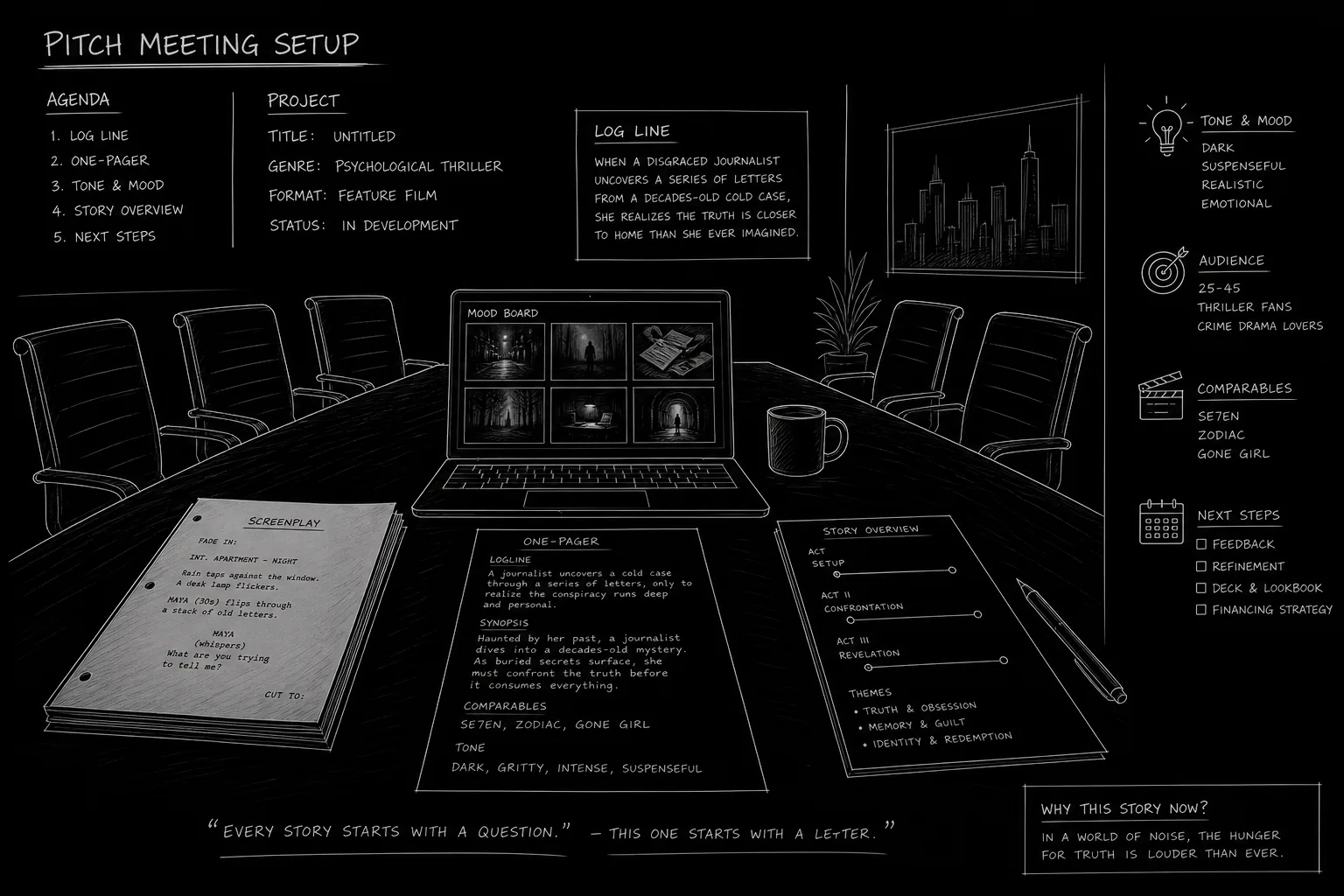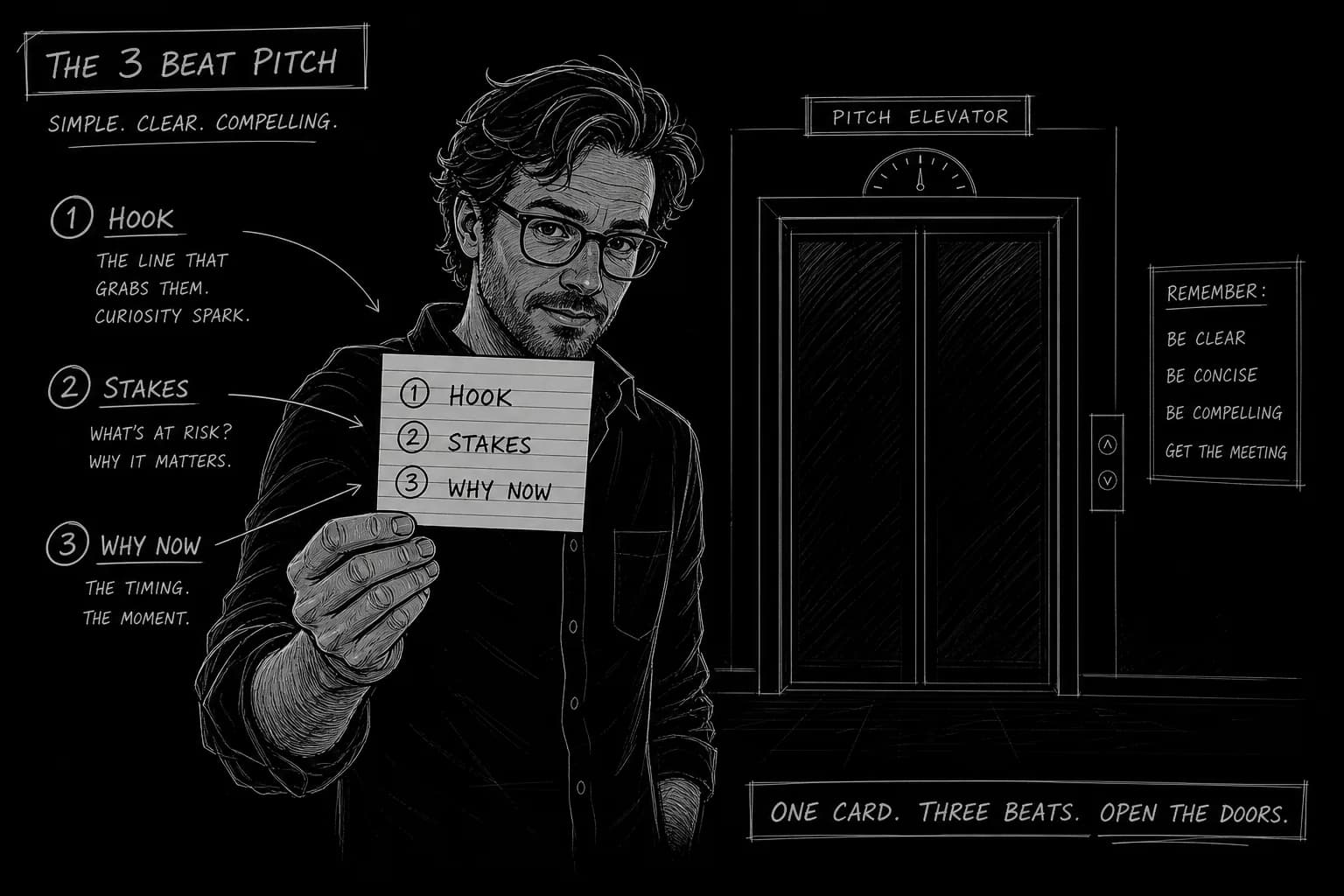

A streaming buyer does not want your entire creative soul in the wrong file type. Send a pitch deck when you are selling vision, market, and watchability in six minutes of meeting time. Send a treatment when they asked for narrative proof and you need room to dramatize season logic. Send both when the invitation explicitly allows a package, not because you are nervous.
Writers lose deals by attaching everything. This guide clarifies what each document does, when platforms expect which, and how to keep story, tone, and business language aligned across formats.
Free tool: use the Logline Workshop to build and pressure-test your logline.
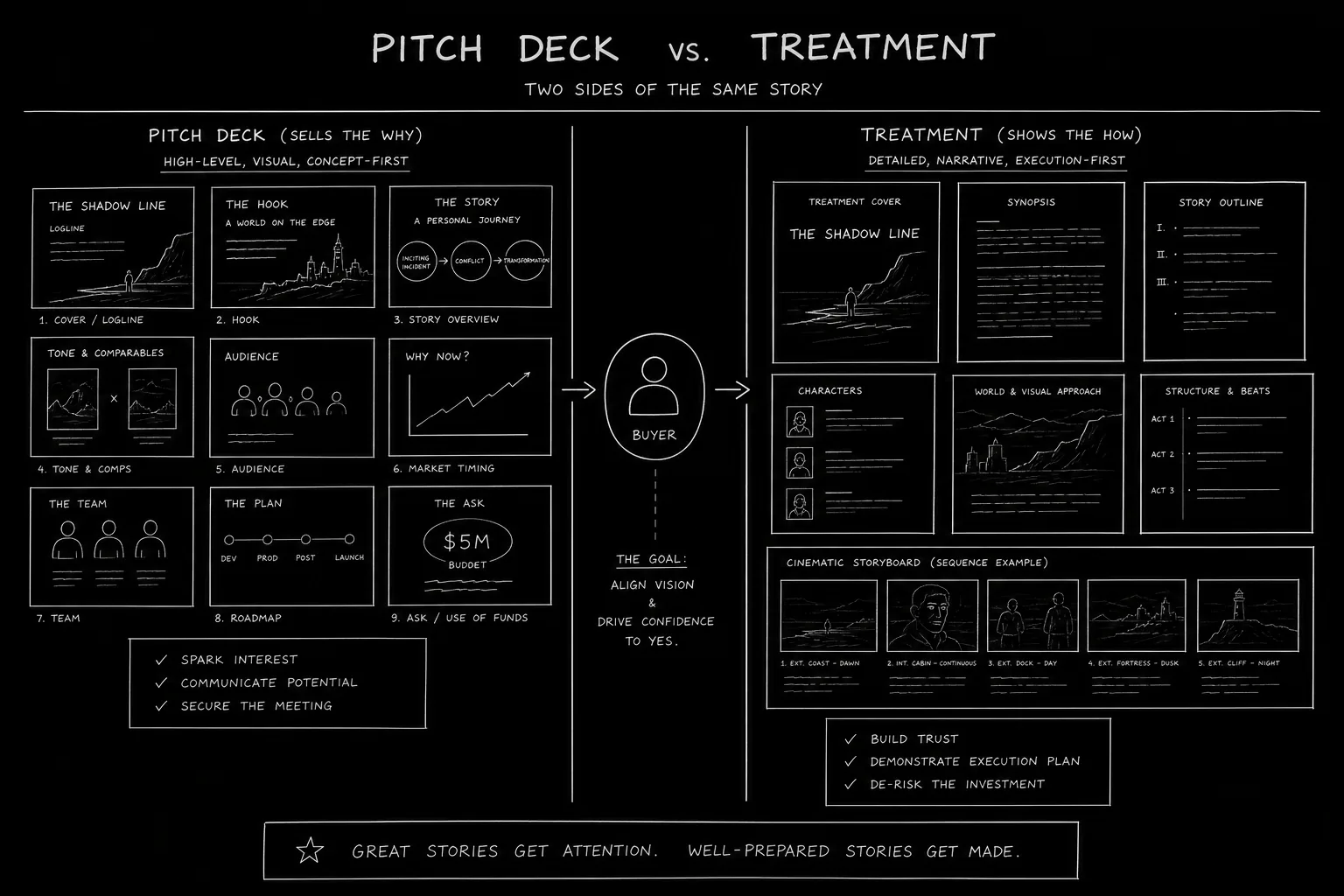
How It Works: Deck Sells the Show, Treatment Proves the Show
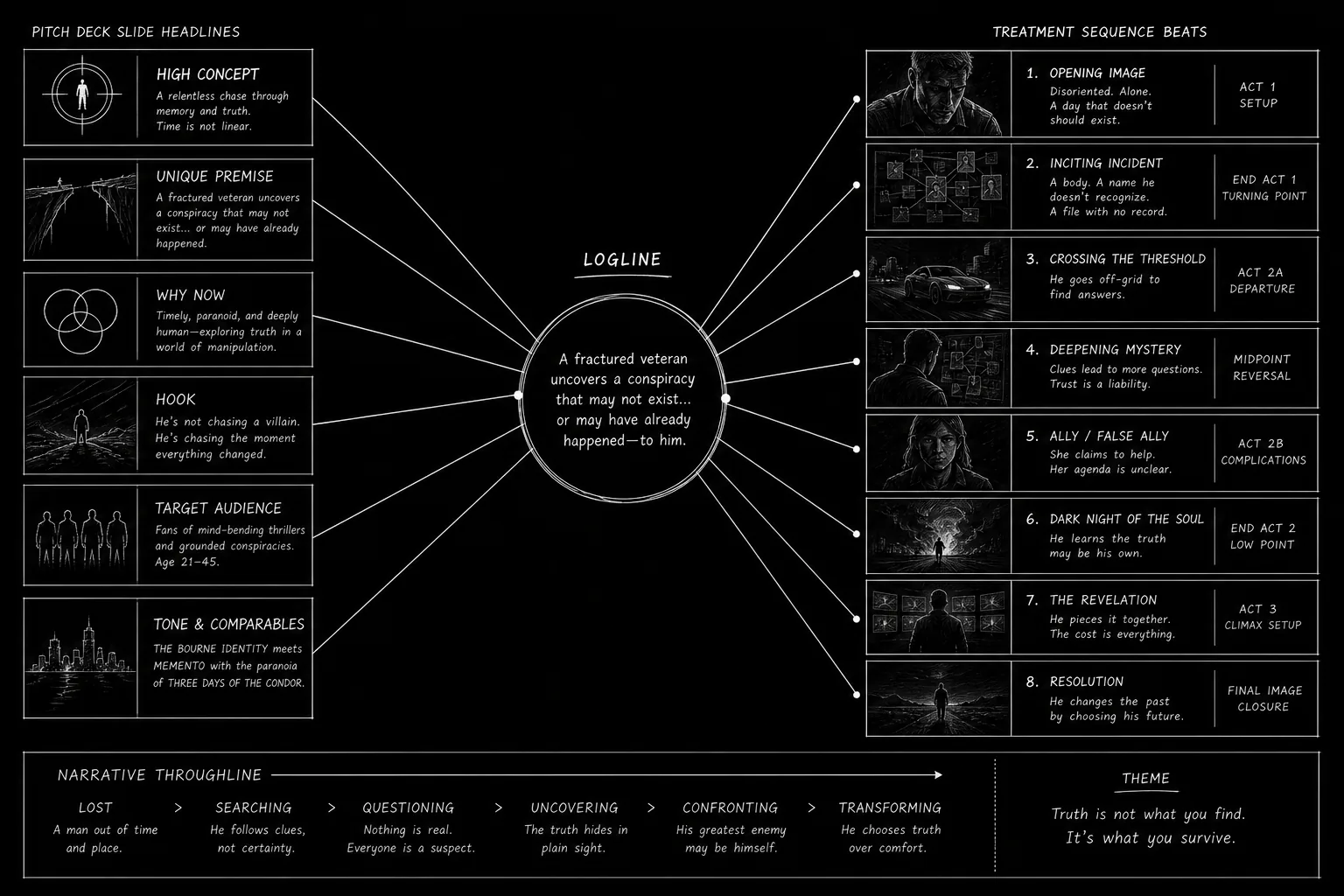
Pitch deck: Visual, modular, slide-based. Logline, comps, character grid, season arc at altitude, tone references, why this platform, why now. It is a meeting tool, not a substitute for craft.
Treatment: Prose-forward narrative of the pilot and series (or feature) with key sequences described in present tense. It demonstrates that scenes exist, turns land, and the engine renews.
The streaming context adds a third pressure: binge architecture. Decks headline the binge promise. Treatments show where episode breaks and season turns actually live.
For deck slide anatomy, see pitch deck slide-by-slide template. For document length norms, see treatment, outline, and synopsis: what to send when.
Platform and Use-Case Sections
Premium SVOD (Netflix, Apple, Max-Style Buyers)
Early general meetings often want a deck + lookbook tone first. Treatment arrives after interest, sometimes after NDAs. Do not lead with 18 pages of prose unless requested.
AVOD and FAST Channels
More market-forward decks with clear genre, episode count, and cost band. Treatments may be shorter: pilot synopsis plus season one grid.
International Co-Pro Pitch
Deck must travel across language markets: comps with global recognition, clear universal hook, localized risk notes. Treatment helps partners understand episode rhythm.
Writer-Producer Packaging
If talent is attached, deck carries cast sizzle and producer track record. Treatment stays focused on story to prove the attachment is not carrying empty pages.
Relatable Scenario: The Kitchen Sink Email
You met a development exec for twelve minutes at a festival. You email a 22-slide deck, 14-page treatment, series bible appendix, and pilot PDF "just in case." They do not open the attachment. You follow up twice. You are now "the kitchen sink writer." Correct move: one-line thank you, ask which single document they want, send only that.
Relatable Scenario: Deck Without Spoilers, Treatment With Turns
Your season finale twist is the selling point but spoils the pilot read. Deck references "a final reversal that redefines the pilot's inciting crime" without details. Treatment walks the turn in prose because development needs to know you can land it. Different containers, same secret kept appropriately.
Slide vs Page Function Map
| Story Element | Deck Home | Treatment Home |
|---|---|---|
| Logline | Slide 2 headline | Opening paragraph |
| Character grid | Visual slide | Character section |
| Pilot engine | One slide + verbal | Sequence prose |
| Season arc | Arrow diagram | Episode grid prose |
| Theme | Tone comps slide | Thematic through-line |
| Why platform | Tailored slide | Optional short section |
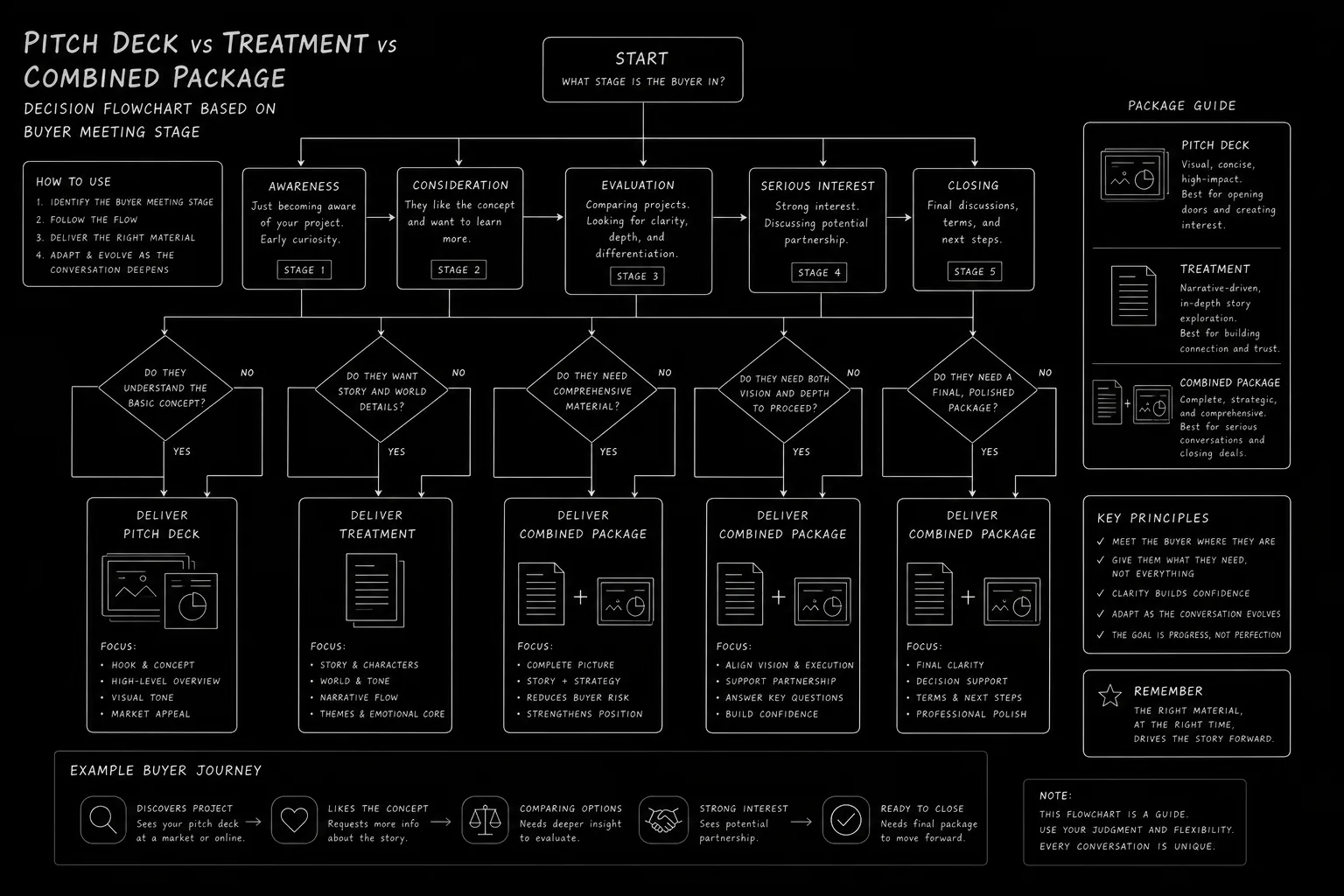
Step-by-Step: Choose, Build, and Send the Right Package
Step 1 - Read the invitation literally
"Send materials" is not permission for every PDF you have ever written. Ask rep or coordinator: deck, treatment, pilot, or combo.
Step 2 - Build the deck for spoken pitch
One idea per slide. Assume half the room is on email. Headlines must carry meaning alone.
Step 3 - Write the treatment in present tense scenes
Pilot first, then season overview. Describe 8-12 set pieces that prove tone. No internal monologue essay.
Step 4 - Align loglines across documents
Mismatch between deck logline and treatment hook destroys trust in five seconds.
Step 5 - Add comparables with discipline
Two comps maximum, honest positioning. "X meets Y" only if the merge is true.
Step 6 - Tailor platform slide without flattery
One slide on why the show fits their slate strategy: audience, genre gap, franchise potential. No brand worship paragraph.
Step 7 - Follow up with one artifact
After a good meeting, send the document they asked for, not a revised universe bible unless requested.
[YOUTUBE VIDEO: Mock streaming pitch meeting showing when the deck is shared on screen vs when the treatment is sent afterward, with buyer reactions to each format.]
Try it free
Try Screenweaver for free on your script
It is free. Import your existing project, get a clearer view of your outline, and regain control of your story structure in minutes.
Start FreeOperational Requirements: Length, Design, and Legal
Deck length: 10-15 slides for most first meetings. Appendix slides optional for deep fans after interest.
Treatment length: Often 6-12 pages for series development samples; feature treatments vary by market. Confirm with your rep.
Design: Decks must be readable on iPad, not just projector. Type size is not a creative flex.
Spoilers: Treatments spoil by design. Decks should not spoil the season finale unless pitching full season up front.
Rights and adaptation: Note underlying material status early in both documents if adapted.
Workflow integration: Keep deck text synced with your writing software project. See screenplay software pitch deck workflow for tooling discipline.
| Situation | Send First | Send Later |
|---|---|---|
| General intro meeting | Deck | Treatment if asked |
| Post-pilot read request | Treatment or pilot | Deck for packaging |
| Contest / fellowship | Per guidelines | N/A |
| Producer shopping | Deck + one-pager | Full treatment in due diligence |
For feature-length prose pitches, cross-read how to write a feature film treatment.
Outcome: Meetings That Move to Next Steps
The right document at the right time produces clear next steps: pilot read, showrunner conversation, story area deal discussion. The wrong package produces polite pass language: "We'll keep it in mind."
When deck and treatment align, buyers repeat your logline back correctly. That repetition is a win.
Why It Matters: Document Anxiety vs Strategic Packaging
The old way: Email 40 slides, 20-page treatment, pilot PDF, and mood reel because "more shows commitment."
The new way: Match format to meeting stage. Deck for vision and business. Treatment for narrative due diligence. Pilot when they are ready to read scripts.
Streaming rooms are busy. Strategic packaging respects the buyer's cognitive budget and yours.
Conclusion
Deck vs treatment is not a talent contest. It is a timing question. Lead with the artifact built for the conversation you are having. Sync loglines, comps, and season engine across files. Send less, better, later when appropriate.
Before your next buyer meeting, open both documents side by side. If they argue with each other, fix that before you fix the font. The pitch is one story in two containers. Treat it that way.
Rehearse the deck out loud with a timer. If you cannot pitch each slide in twenty seconds, the slide is overcrowded. Treatments benefit from the opposite discipline: read one sequence aloud and confirm a listener can track cause and effect without slides.
When a platform passes, ask your rep whether the pass was format friction (wrong doc) or project friction (not for slate). Format passes are fixable next meeting. Project passes teach you about positioning. Log the answer. Writers who learn buyer vocabulary pitch better the next quarter.
Store a master story bank in one document: logline variants, character paragraphs, season engine, comps, theme line. Deck slides and treatment prose should pull from the bank, not be written separately in different moods. Consistency is a workflow problem solvable with a single source of truth you update after every good note.
Final Step
Build your next script with Screenweaver
Move from ideas to production-ready pages faster with timeline-native writing and AI-assisted story flow.
Try Screenweaver