Animation and live action are both film. They share the same grammar: shots, cuts, dialogue, structure. A good story is a good story. But the process of writing for each, and the possibilities each medium offers, diverge in ways that matter. Writers who treat them as identical often miss what makes each form powerful.
The Fundamental Difference: Reality as Constraint
Live action is bounded by physics, budget, and what actors can do. Animation has no such constraint. If you can draw it, you can show it. Characters can morph, explode, fly through impossible spaces. That freedom is intoxicating. It's also dangerous. The best animation writing uses that freedom strategically, not indiscriminately.
What Animation Demands That Live Action Doesn't
Visual specificity. In animation, every detail must be designed. The writer's description shapes the look of the world. Staging and action. Animation excels at physical comedy and exaggerated action. The writer can specify "his eyes pop out of his head" and it will happen.
| Element | Live Action | Animation |
|---|---|---|
| Physical limits | Real-world physics | Imagination only |
| Performance | Actor's body, face | Voice + animator's interpretation |
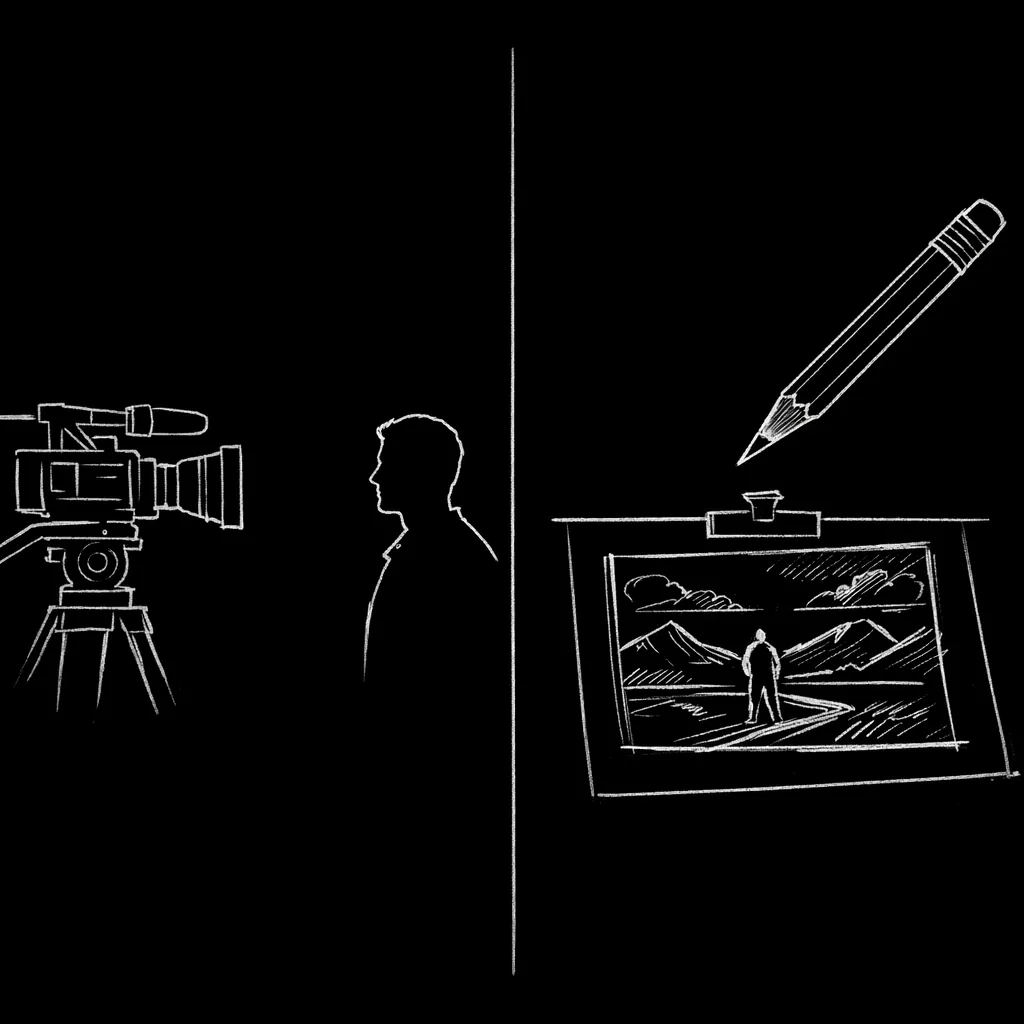
In animation, the script is a blueprint for drawings. In live action, it's a blueprint for photography. The end product is different. So is the path.
That blueprint now has a second reader. When the drawings come from a video model rather than an animator, every detail the writer leaves undesigned is a detail the model will reinvent from shot to shot, so the design work moves into model sheets and a style plate before anything moves. Our guides to making a 2D cartoon with AI and to stylised 3D animation with AI walk that path from script to finished shots.
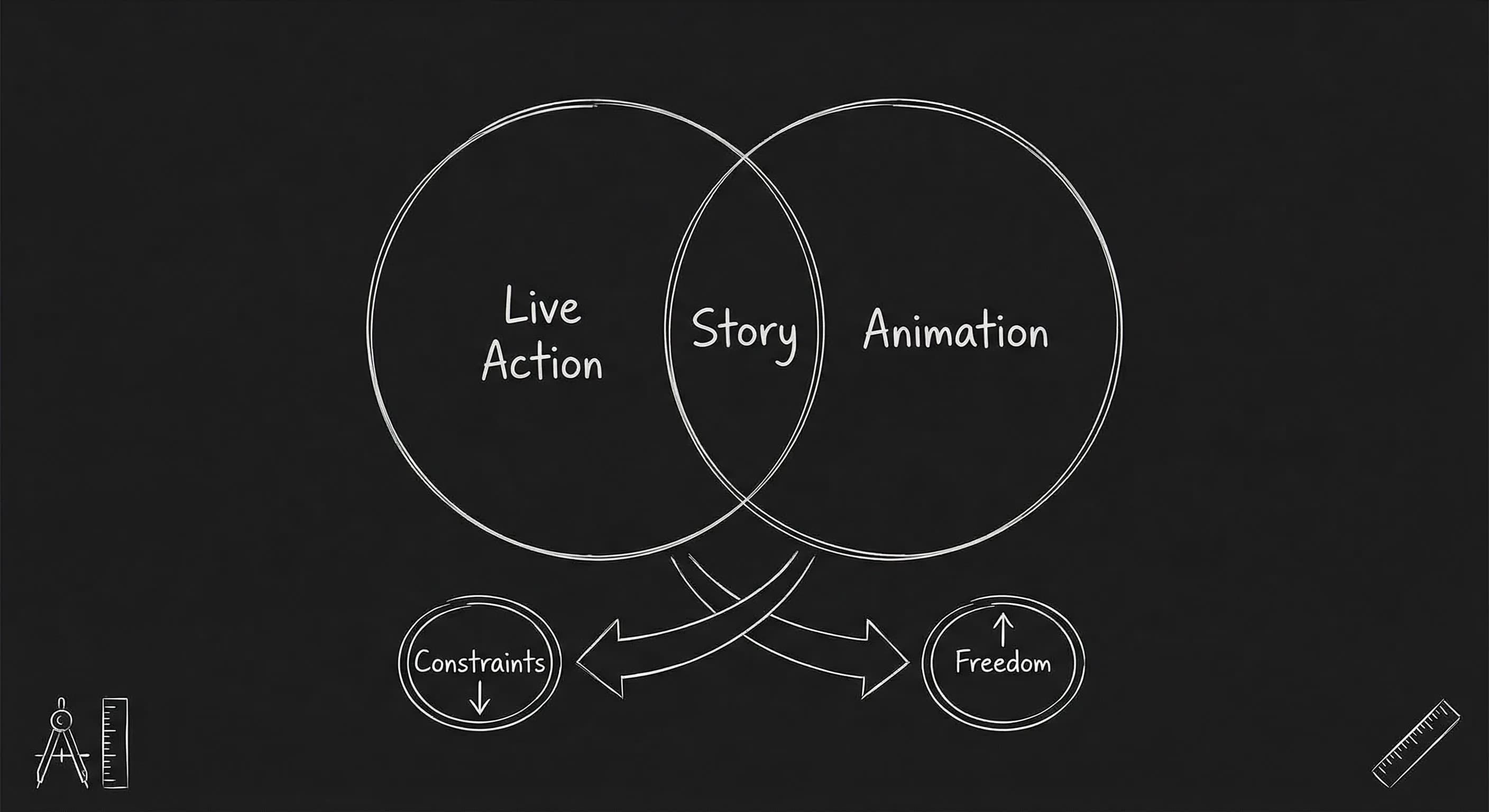
For writers interested in structure across formats, our guide on writing comedy timing applies to both,though the execution differs when the performance is drawn versus performed. Know the medium. Write for what it does best. The story stays central. The craft adapts.
Final Step
Build your next script with Screenweaver
Move from ideas to production-ready pages faster with timeline-native writing and AI-assisted story flow.
Try Screenweaver