
The network exec has heard a hundred pitches this month. Loglines blur together. Treatments collect dust. What cuts through? A sizzle reel, two to three minutes of pure energy that makes them feel your show before they've read a word.
A sizzle reel (sometimes called a proof-of-concept reel, pitch video, or show bible video) is a short video that sells your concept visually and emotionally. It doesn't require shooting new footage; most sizzle reels are assembled from existing clips, stock footage, music, and voiceover. What it does require is a script, a document that specifies exactly what the viewer sees and hears, beat by beat.
This isn't a screenplay. It's a sales document in video form. And writing it well requires understanding both storytelling and persuasion.
Free tool: use the Logline Workshop to build and pressure-test your logline.
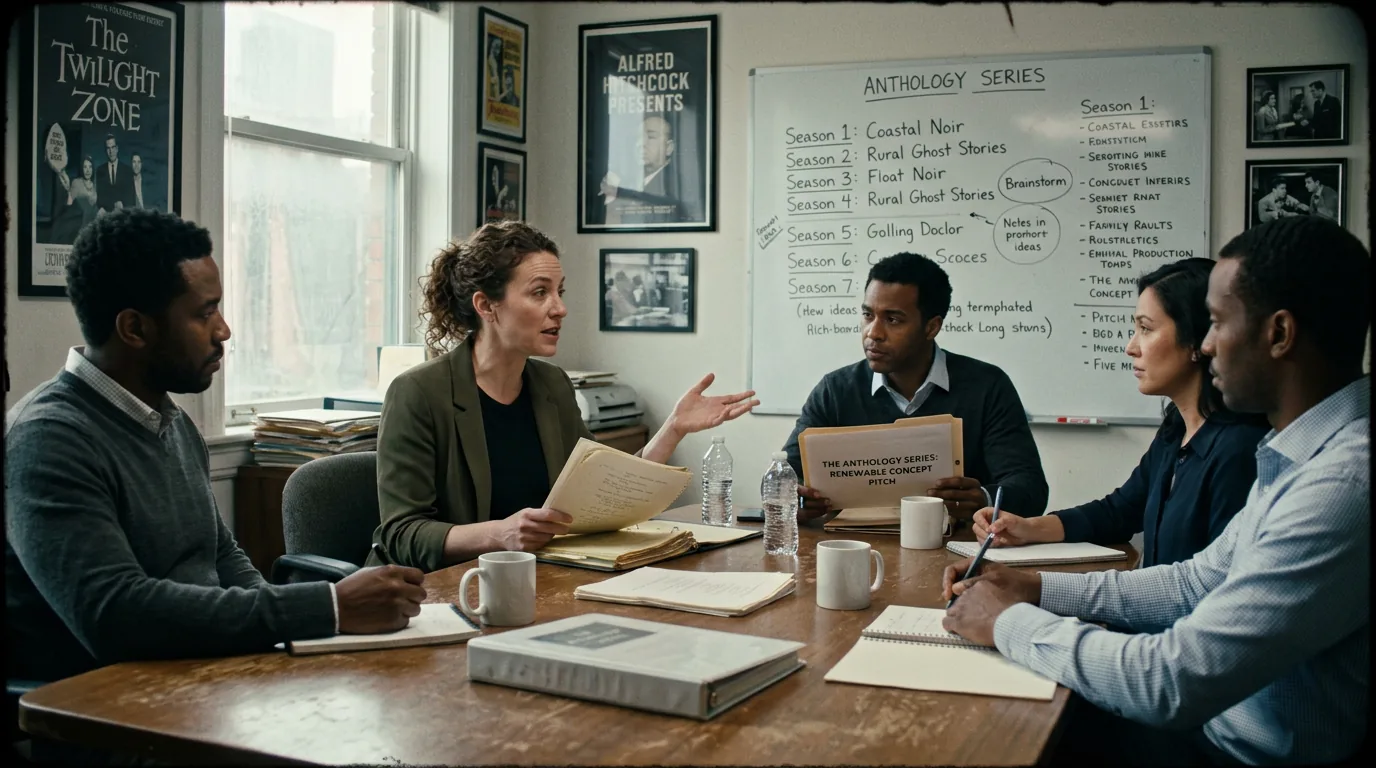
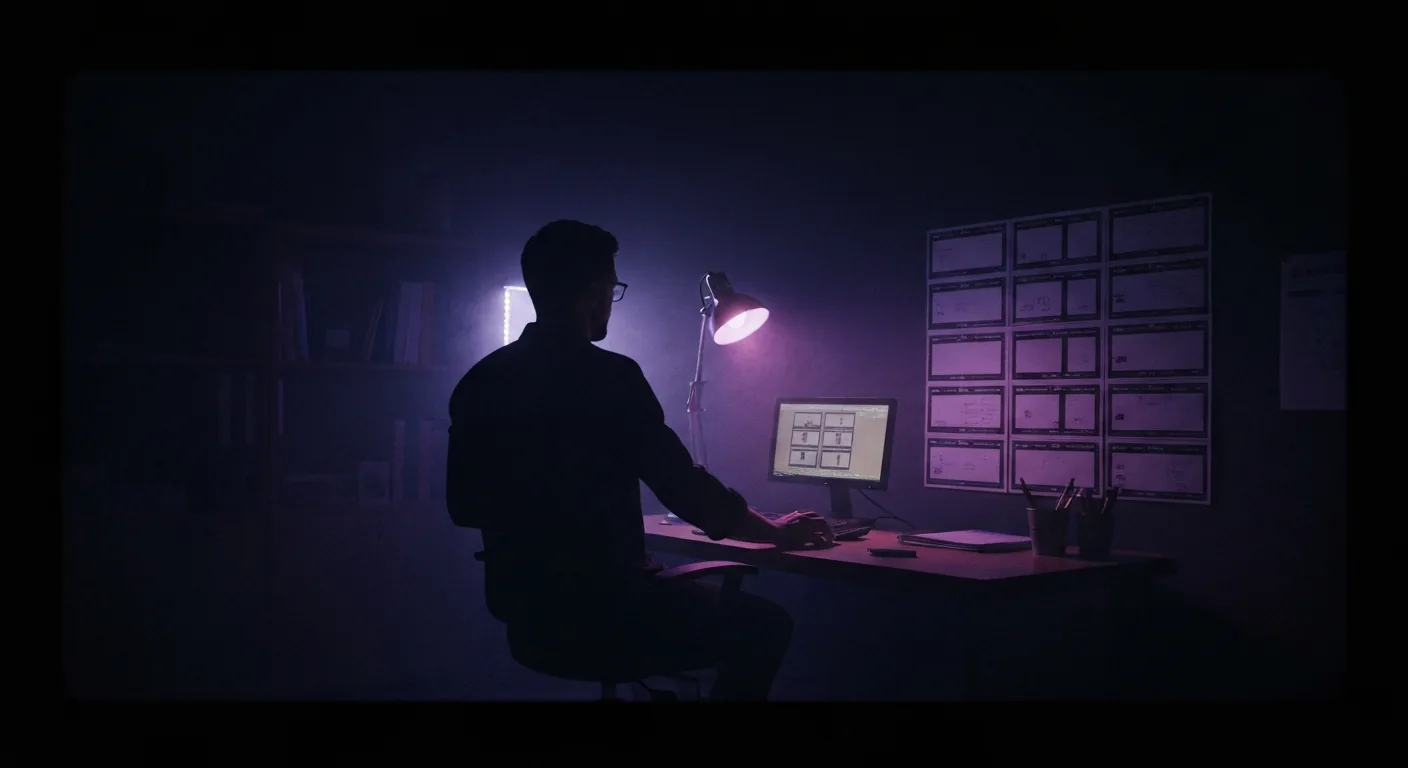
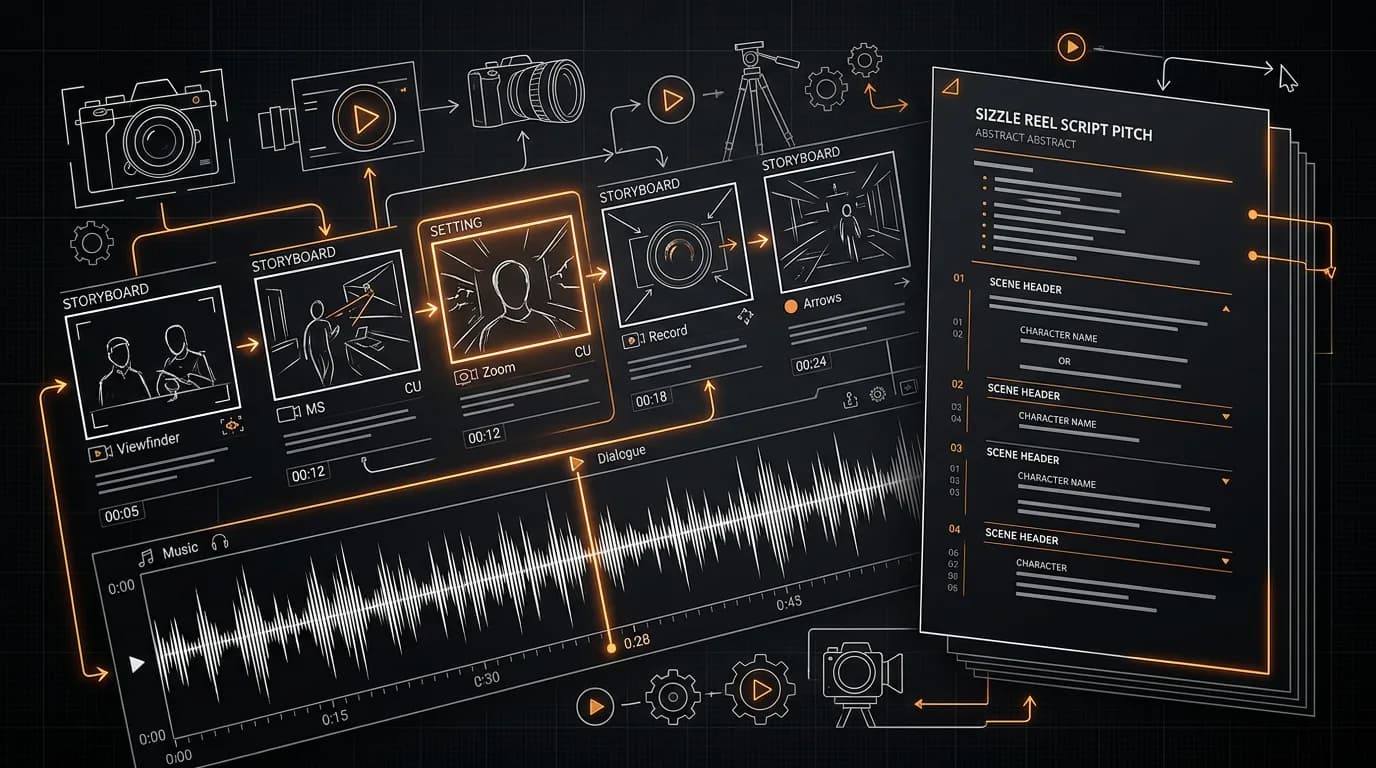
Cinematic workflow frames

These two visuals work as a pair: the first shows Cinematic workflow still, first angle, 35mm film grain, and the second shifts to Cinematic workflow still, second angle, 35mm film grain - compare them briefly, then move on.

What a Sizzle Reel Does (and Doesn't Do)
It does:
- Convey tone and visual style
- Communicate the emotional promise of the show
- Demonstrate that the concept is producible
- Hook the executive in the first ten seconds
- Leave them wanting more
It doesn't:
- Replace the written pitch or treatment
- Tell the whole story
- Require original production (though produced scenes help)
- Guarantee a sale
A sizzle reel supplements your pitch. It's the hype video before the deep dive. The exec watches it, feels excited, and then reads the treatment with enthusiasm rather than skepticism.
A sizzle reel answers one question: "What does watching this show feel like?"
Anatomy of a Sizzle Reel Script
A sizzle reel script follows an A/V format: visuals on one side, audio on the other. Every second is accounted for.
Standard structure:
| Timecode | Visual | Audio |
|---|---|---|
| 0:00–0:05 | Cold open, dramatic image | (Music: Impact hit) |
| 0:05–0:15 | Hook sequence | V.O.: Setup premise |
| 0:15–0:45 | Concept montage | V.O.: Expand world |
| 0:45–1:15 | Character introduction | V.O.: Stakes |
| 1:15–1:45 | Escalation/conflict montage | Music builds |
| 1:45–2:00 | Climax tease, emotional peak | Music climax |
| 2:00–2:15 | Title card + contact info | (Music: Resolve) |
Total runtime: 2–3 minutes. Not a second more. Executives are busy. Respect their time.
Writing the Hook (First 10 Seconds)
The hook is survival. If the first ten seconds don't grab attention, they'll stop watching.
Effective hooks:
Visual impact. A striking image that communicates genre immediately. Fire. A face in shadow. A skyline. Something cinematic.
Provocative question. "What if the government knew exactly when you would die?" Voiceover that creates intrigue.
Emotional punch. A character moment, tears, rage, laughter. Something human.
Contrast. Juxtaposition creates interest. A children's party... then blood on the floor. Ordinary... then extraordinary.
The hook doesn't explain the show. It creates a feeling: "I need to know more."
The Concept Montage (0:15–0:45)
This is where you convey the show's world and premise. The voiceover does the heavy lifting; the visuals illustrate.
Voiceover principles:
- Short sentences. No complex syntax.
- Present tense. "This is a world where..."
- Active verbs. "She fights. He runs. They hunt."
- Avoid jargon. No insider terms. No assumptions.
Visual principles:
- Match image to text. If V.O. says "nuclear wasteland," show wasteland.
- Variety. Wide shots, close-ups, action, stillness.
- Consistency. The visuals should feel like they belong to the same show.
Sample voiceover:
"In 2045, water is currency. Entire cities have gone dark. But in the ruins of Los Angeles, one woman has found a way to bring the rain back, if she can survive long enough to use it."
Thirty seconds. Premise delivered.

Character Introduction (0:45–1:15)
Every show is about people. The sizzle reel must introduce your protagonist, not with biography, but with essence.
What to convey:
- Who they are (role, not backstory)
- What they want
- What makes them compelling
Sample voiceover:
"Maya was a climate scientist. Now she's a survivor. She carries hope in a world that's forgotten the word, and enemies want what she knows."
Pair this with visuals: a determined face, a scientist's coat, a weapon, a moment of tenderness. Let the images suggest complexity.
If you have multiple protagonists (ensemble show), introduce them rapidly. One line each. Visual flash of each face.
Escalation and Conflict (1:15–1:45)
Build intensity. The montage accelerates. The music swells. The stakes become visceral.
Techniques:
- Faster cuts. Images stay on screen for shorter durations.
- Collision. Visual contrasts (calm/chaos, light/dark, silence/noise).
- Action peaks. If your show has action, show the best moments.
- Emotional peaks. If your show is drama, show the most charged moments.
The voiceover can drop out here. Let music and image carry emotion.
If voiceover continues, it should escalate stakes:
"They will do anything to stop her. But she's not running anymore."
Try it free
Try Screenweaver for free on your script
It is free. Import your existing project, get a clearer view of your outline, and regain control of your story structure in minutes.
Start FreeThe Climax Tease (1:45–2:00)
This is the emotional peak, the moment that makes them want the show.
What works:
- A single powerful image held slightly longer than the montage pace.
- A character moment: a look, a decision, a sacrifice.
- A mystery tease: something we don't fully understand but want to.
What doesn't work:
- Giving away too much. Leave them hungry.
- Ending on confusion. The peak should land emotionally even if the plot is unclear.
The music reaches its climax. The visual is iconic. Hold. Breathe.
Title Card and Close (2:00–2:15)
The title. Big. Clear. Memorable. The show's name is a brand; treat it like one.
The tagline (optional). A single sentence that captures the promise.
Contact information. Production company logo. Email or phone. This is a sales tool.
Music resolution. The track should resolve, not cut abruptly. Leave them satisfied.
The "Trench Warfare" Section: What Goes Wrong
Failure Mode #1: Too Long
The sizzle reel runs five minutes. The exec stops watching at two.
How to Fix It: Cut ruthlessly. Every second must earn its place. If it doesn't serve the hook, concept, character, or emotion, delete it.
Failure Mode #2: Explaining Instead of Showing
The voiceover is a lecture. "The show follows Maya, a 34-year-old climate scientist born in Phoenix, who lost her family when..."
How to Fix It: Less is more. "Maya was a scientist. Now she's a weapon." Let images fill in the rest.
Failure Mode #3: Wrong Music
The music doesn't match the tone. A dark thriller uses upbeat pop. A comedy uses somber strings.
How to Fix It: Music sets tone more than any other element. Choose carefully. License real tracks or use high-quality library music.
Failure Mode #4: Incoherent Visuals
The footage is grabbed from ten different shows with different visual styles. It feels like a trailer mashup, not a coherent concept.
How to Fix It: Curate visuals that share a palette, aspect ratio, and mood. Apply color grading if needed. Visual coherence sells the concept.
Failure Mode #5: No Emotional Landing
The montage just... ends. No climax, no resolution. It feels incomplete.
How to Fix It: Build to a peak. The final image should feel like a destination, not a random stop.
Sourcing Footage for the Sizzle Reel
Unless you're shooting original scenes, your visuals come from:
Stock footage. Services like Shutterstock, Pond5, Artgrid. Good for establishing shots, environments, action.
Existing films/TV. Use clips from similar properties to show tone. This is for pitch purposes only, not distribution. Be aware of copyright.
Original material. A shot scene, even a single minute, adds credibility. "We shot this to show the tone."
Found footage. Documentary clips, news footage, archival material. Appropriate for certain genres.
The script should specify where each visual will come from, even approximately: "(STOCK: sunset over desert)" or "(CLIP: similar to Mad Max)" or "(ORIGINAL: shot in warehouse)."

Sample Sizzle Reel Script (Excerpt)
PROJECT: "RAINMAKER" GENRE: Sci-fi thriller FORMAT: One-hour drama RUNTIME: 2:15
| TIMECODE | VISUAL | AUDIO |
|---|---|---|
| 0:00–0:03 | BLACK. Then: A drop of water falls in slow motion. Splashes. | (SFX: Water drop, reverb) |
| 0:03–0:08 | Dried lakebed. Cracked earth stretching to horizon. | V.O. (MAYA): "They told us the water would come back." |
| 0:08–0:12 | City ruins. Abandoned cars. Dust. | V.O. (MAYA): "They lied." |
| 0:12–0:18 | MAYA (30s, weathered) walks through ruins. Determined. | (MUSIC: Synth pulse begins) |
| 0:18–0:30 | Montage: Armed convoys. Water stations with armed guards. Refugees. | V.O.: "In 2045, water is the only currency. Those who control it control everything." |
| 0:30–0:42 | MAYA in a lab, working. Holographic weather patterns. | V.O.: "Maya was a climate scientist. She built a machine that can bring the rain." |
| 0:42–0:55 | MILITIA forces storm a building. Gunfire. Chaos. | V.O.: "Now everyone wants her, or wants her dead." |
| 0:55–1:10 | Maya running. A protector (AARON) pulls her into shadows. | V.O. (AARON): "You can't save the world if you don't survive the night." |
| 1:10–1:30 | Escalation montage: Explosions. Chases. Maya's face, resolve. | (MUSIC: Builds intensity) |
| 1:30–1:50 | Maya stands on a cliff. Storm clouds gather. Lightning. | V.O. (MAYA): "I'm not running anymore." |
| 1:50–2:00 | Rain begins to fall. Maya looks up. A single tear. | (MUSIC: Peak, then resolve) |
| 2:00–2:15 | TITLE: RAINMAKER. Tagline: "She holds the storm." Contact info. | (MUSIC: Gentle fade) |
The Perspective: Selling the Dream
A sizzle reel isn't content, it's marketing. You're not telling a story; you're selling one. The executives watching aren't audiences; they're investors deciding where to put resources.
This doesn't make the work cynical. It makes it strategic. The same craft that goes into storytelling, rhythm, emotion, surprise, character, goes into the sizzle reel. You're just compressing it into two minutes and adding a call to action.
Done well, a sizzle reel is intoxicating. It leaves the viewer with a feeling: "I need to see this show." That feeling is the point. The treatment provides the plan; the sizzle reel provides the hunger.
Write the script as carefully as you'd write a pilot. Every word matters. Every image counts. Two minutes to make them believe.
Make them believe.
[YOUTUBE VIDEO: A showrunner breaking down a successful sizzle reel, showing how the script translated to screen and what elements convinced the network to greenlight.]
Further reading:
- For anthology series pitching, see the anthology series: how to hook a network with a renewable concept.
- If you're building a visual pitch deck, see pitch deck template with slide-by-slide guide.
- No Film School has resources on sizzle reel production at nofilmschool.com{:rel="nofollow"}.
Final Step
Build your next script with Screenweaver
Move from ideas to production-ready pages faster with timeline-native writing and AI-assisted story flow.
Try Screenweaver