
Sundance Labs are not a lottery ticket for unfinished ambition. They are a development accelerator for writers with a project that has voice, cinematic intention, and honest unfinished edges the lab can actually help. Submitting without reading the room wastes everyone's time and burns the relationship before it starts.
This guide walks you through what Sundance-style labs typically want, how to prepare a screenplay submission package, and how to write the supporting materials so they sound like a filmmaker, not an applicant performing enthusiasm.
How It Works: What Labs Actually Select For
Labs select projects and people together. Readers ask: Is this script doing something only this writer would attempt? Is there a clear film on the page? Would two weeks of mentorship change the trajectory? Is the writer coachable without being generic?
Unlike contest coverage optimized for gatekeeping, lab reads favor developmental potential over polish theater. A sharp 90-page draft with one act that needs surgery can beat a bland 110-page "ready" script if the voice is alive.
Start months before the deadline. Labs are not where you learn format basics. They are where you refine a project that already survived your own ruthless passes. Pair prep with screenplay revision passes before you export the PDF.
Platform and Use-Case Sections
Feature Film Labs
Feature tracks want complete or near-complete drafts with a coherent directorial point of view, even if you are writer-only applying. Theme, cultural specificity, and access matter.
Episodic and Series Labs
Series submissions need a pilot plus series architecture: season engine, character runway, end-of-season turn. A lone pilot without a plan reads like a sample script, not a lab project.
Indigenous and Artist-Specific Tracks
Many tracks serve defined communities. Apply where your biography and project align authentically. Do not chase category fit with cosmetic identity framing.
Writer-Director vs Writer-Only
If you are writer-only, the pages must imply visual grammar. If you are writer-director, a lookbook or reference frame language helps, but the script still leads.
Relatable Scenario: The "Almost Ready" Trap
You submit a draft you know needs a third-act rebuild because the deadline is tomorrow. Readers experience the weakness you already feel, but without your charity. They pass. You waste a cycle. Better move: submit an 88-page draft that ends cleanly at a slightly smaller scale than your maximal vision. Labs can help you expand later if the voice is undeniable. They cannot help if the read dies in Act Three confusion.
Relatable Scenario: The Wrong Sample Pages
You send the funniest scene in the script while the lab needs proof of cinematic tension. Selection teams read fast. Choose pages that show range in one sequence: behavior, turn, subtext, visual implication. A ten-page stretch that includes a silent beat often outperforms ten pages of banter.
What Not to Put in the Statement
Avoid comparing yourself to legendary filmmakers without anchoring the comparison in your pages. Avoid trauma dumping without craft connection. Avoid market size statistics that sound like a VC deck. The statement is not a Kickstarter. It is evidence that you think like an artist who finishes work.
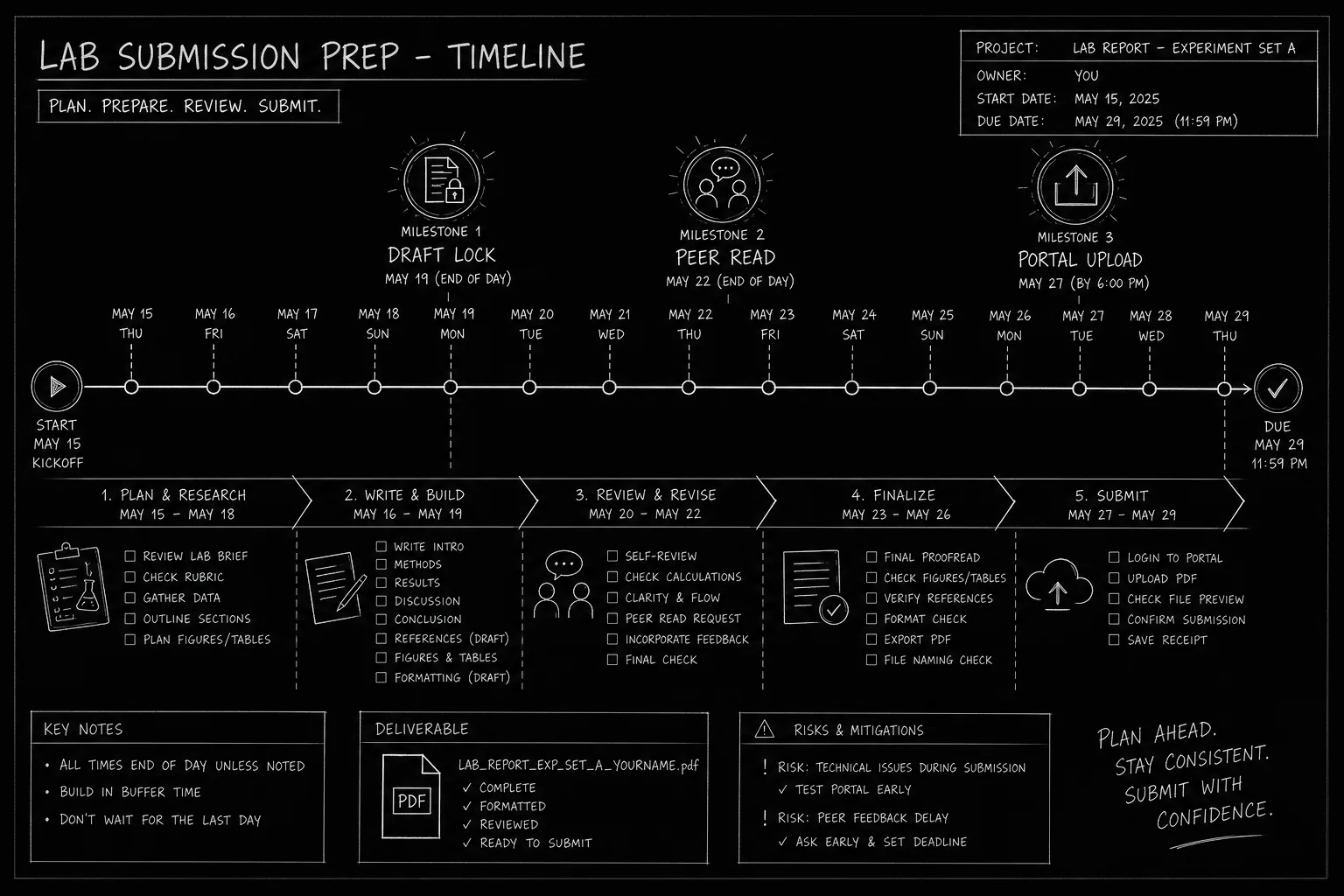
Step-by-Step: Building a Competitive Lab Submission
Step 1 - Confirm eligibility and track fit
Read current guidelines line by line. Wrong track equals automatic pass regardless of talent.
Step 2 - Stabilize one draft version
Lock a single draft with clean pagination and scene numbers if required. Version chaos signals production unreadiness.
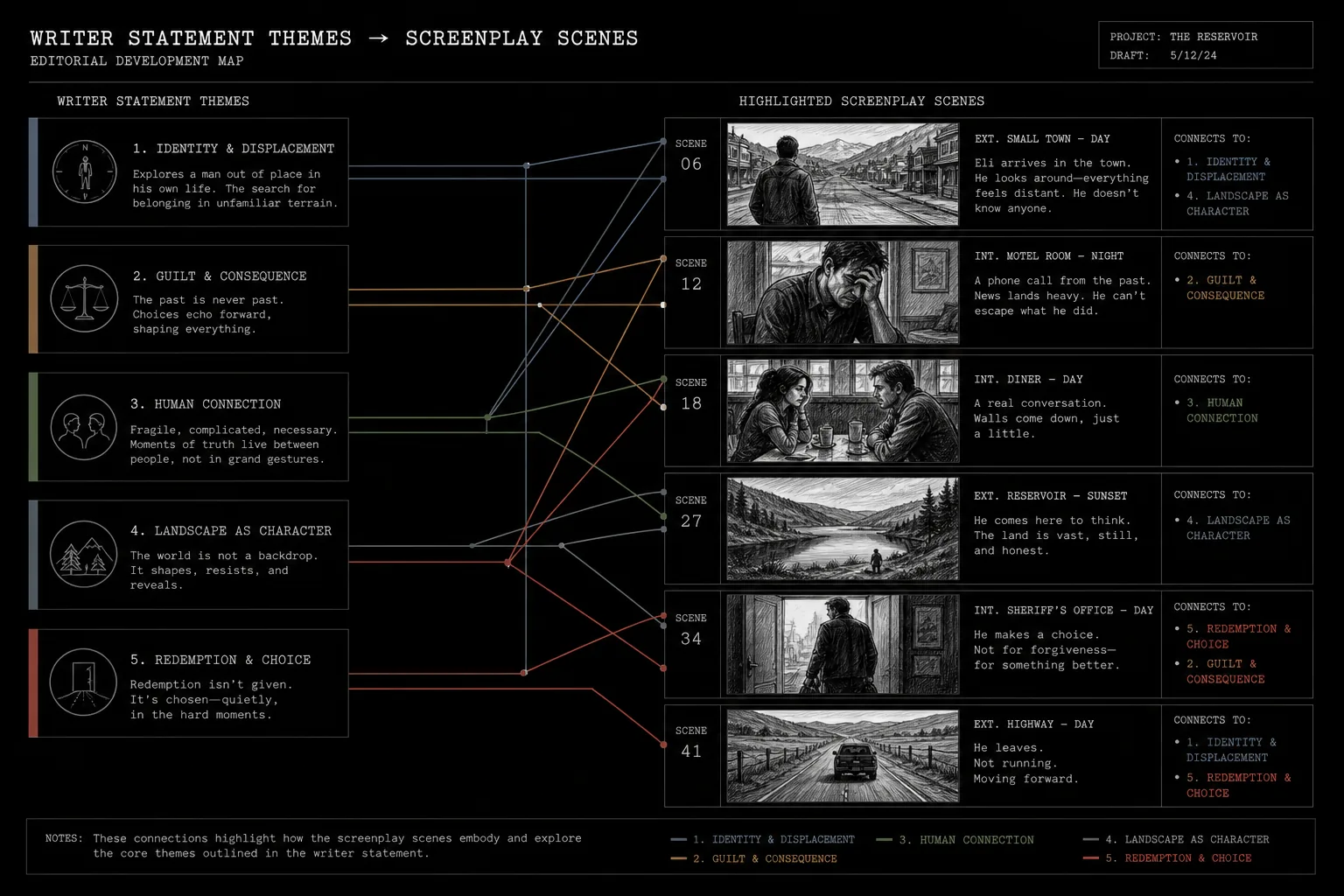
Step 3 - Write a one-page project statement
Answer: what is the film, why now, why you, what is unfinished on purpose. No marketing adjectives without evidence on the page.
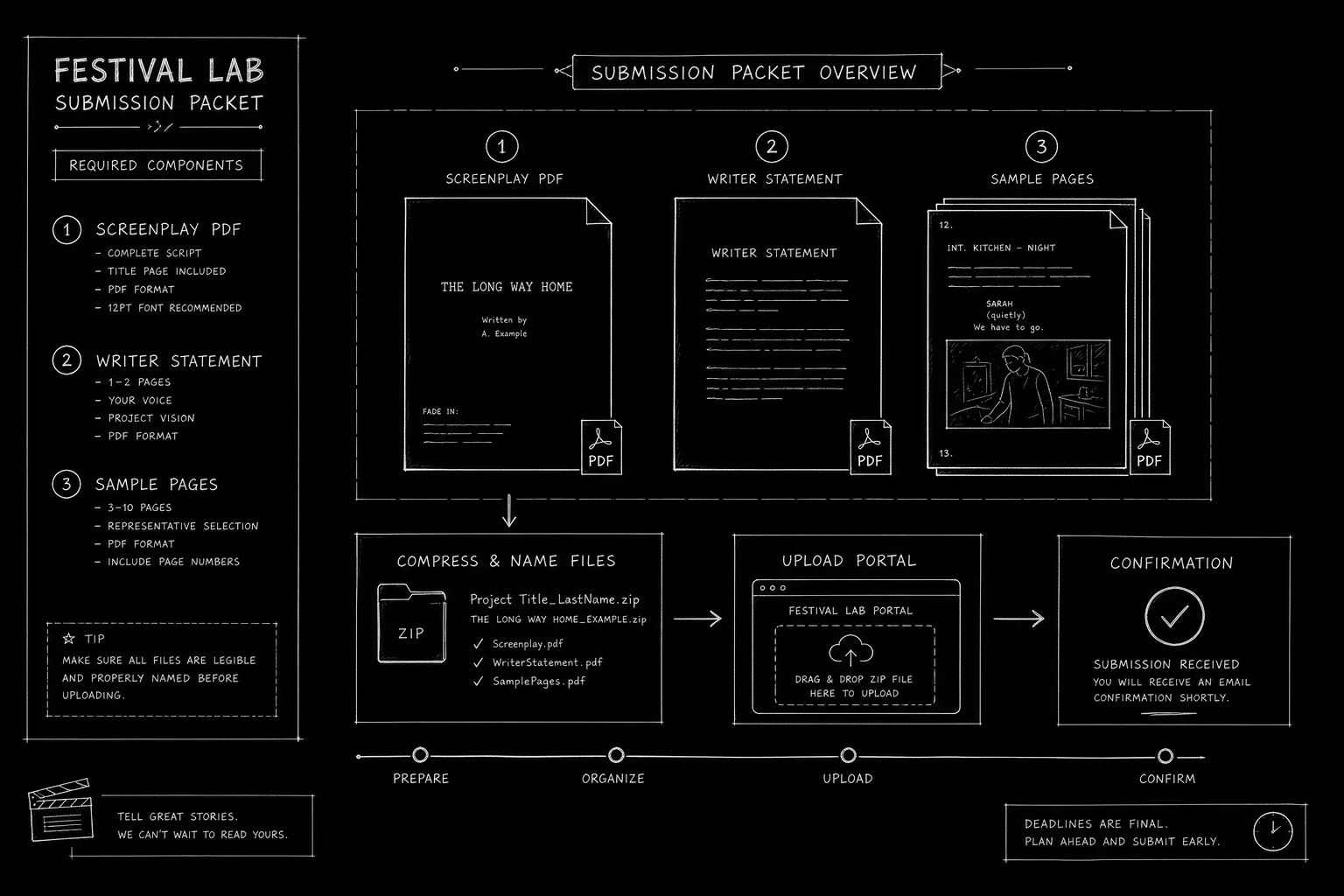
Step 4 - Prepare sample length exactly as requested
If they want 10 pages, do not send 25 "because the cold open is special." Follow instructions as a craft signal.
Step 5 - Add optional materials only when allowed
Lookbooks, prior shorts, proof-of-concept stills help when permitted. Never attach a budget top sheet unless asked.
Step 6 - Peer read before submit
One trusted reader who has seen lab-selected work. Ask: "Does this feel like a lab project or a contest entry?"
Step 7 - Submit early, confirm receipt
Portal errors happen. Screenshot confirmation. Calendar follow-up if acknowledgment is promised.
[YOUTUBE VIDEO: Former lab fellow walks through a real application package (redacted), explaining which pages carried weight and which supporting documents felt like noise.]
Try it free
Try Screenweaver for free on your script
It is free. Import your existing project, get a clearer view of your outline, and regain control of your story structure in minutes.
Start FreeOperational Requirements: Materials, Format, and Professionalism
PDF export: Industry-standard margins, no watermarks that read as paranoid, file name Title_LastName_DraftDate.pdf. Use production PDF export hygiene if your software mangled pagination.
Writer biography: Short, specific credits or life access that explain why you can write this story. No five-paragraph childhood unless it is the project.
Recommendation letters: When optional, choose readers who know the work, not famous names who met you once.
Previous lab history: If you applied before, note evolution. Projects that grow between cycles show persistence.
Rights clarity: Labs want to know you can eventually make the film. Basic chain-of-title awareness helps on adapted or biographical work.
| Material | Purpose | Common Failure |
|---|---|---|
| Script | Prove voice + vision | Over-polished generic draft |
| Statement | Context + urgency | Vague theme essay |
| Bio | Trust + access | Resume padding |
| Sample pages | Hook under time pressure | Wrong scene choice |
| Optional media | Tone proof | Trailer with no script match |
For festival context beyond labs, see short film festivals as a route for new writers and using the Black List effectively when you are building parallel industry paths.
Outcome: What a Strong Submission Buys You
A competitive submission does not guarantee selection. It guarantees serious readership: your work enters the conversation as development-ready art, not homework. Fellows gain mentorship, peer cohort pressure, and industry visibility that converts when the script improves during the lab, not before.
Even rejection has value when the package is professional. Readers remember projects that almost made it. Many lab alumni stories start with a prior year's near miss.
Why It Matters: Spray-and-Pray vs Lab-Ready Development
The old way: Finish draft Friday, submit Sunday, reuse the same cover letter for six tracks, call the project "timely" without dramatizing why.
The new way: Target one track, lock materials, write statement as companion text to the script, choose sample pages that showcase voice and structure under constraint.
Labs reward intention. Contests sometimes reward volume. Treat them differently.
Conclusion
Sundance Labs submissions are development pitches disguised as forms. Your script leads, your statement proves urgency and access, your materials show you can finish work on deadline. Read the guidelines like a contract, stabilize one draft, and submit a package that respects the reader's time.
If you are not lab-ready yet, that is not failure. It is a schedule. Run another revision pass, make a short proof-of-concept, come back stronger. Labs wait for projects that know what they are. Make yours one of them.
After submission, keep writing on the project anyway. Fellows often report that the draft they submitted is not the draft they developed in the lab. Continuous work signals seriousness if you reapply. Silence for six months signals the opposite.
Build a one-page FAQ for yourself: eligibility, track, page limit, file type, deadline timezone, recommendation rules. Anxiety makes writers miss obvious requirements. A checklist is cheaper than a missed window.
Track submission seasons in a calendar shared with your writing partner or rep. Lab deadlines cluster with festival deadlines and contest windows. Spreading yourself across twelve simultaneous submissions often produces twelve mediocre packages. Choose the two tracks that fit the project and nail those.
Final Step
Build your next script with Screenweaver
Move from ideas to production-ready pages faster with timeline-native writing and AI-assisted story flow.
Try Screenweaver