
The email arrives. "Great draft. We have some notes." Your stomach drops. You open the attachment. There are twenty comments. Some are small. Some say "rethink the second act." You want to argue. You want to explain. You want to hide. Every writer has been there. Notes are not an attack. They're a negotiation. The producer has a vision. So do you. The job is to find the version that serves the project without losing what made you write it in the first place. That's a skill. It can be learned.
The writers who last are the ones who can take a note without taking it personally,and who can push back when the note is wrong without burning the relationship. You're not being graded. You're being collaborated with. The notes are the start of the conversation, not the end of your authority.
What Notes Actually Are
Notes are feedback on the script from people who have a stake in it: producers, executives, directors, network or streamer. They've read the draft. They have reactions. Some of those reactions are about story, character, pacing, or tone. Some are about budget, cast, or market. Some are about taste. Your job is to receive them, understand them, and respond. Not by obeying every line. By engaging. By figuring out which notes make the script better and which would make it something you don't want to write. Then by doing the work,or by making the case for why you're not.
Notes are not a verdict on your worth. They're data. The same script may later become a spec script vs. shooting script conversation,notes from production are another layer of feedback you'll learn to navigate. The producer thought the love interest was underdeveloped. The executive didn't buy the twist. The network wants less violence in act three. That's information. You can use it, push back on it, or find a third option. What you can't do is treat every note as proof that you're a fraud. That way lies imposter syndrome,and a lot of unnecessary pain.
The note is what they said. The note under the note is what they need.
Often the stated note is a symptom. "The middle drags" might mean the middle actually drags. It might mean they're bored because the protagonist's goal isn't clear. It might mean they don't like the tone of one scene and it's bleeding into their read. Your job is to listen for the need. Fix the right problem. Don't just do the literal thing they asked for if the literal thing doesn't address the real concern.
Before You Respond
Read all the notes. Don't reply to the first one. Don't reply in the room or on the call if you can help it. Give yourself time. Let the initial reaction pass. You're allowed to feel defensive. You're not allowed to let defense drive the response.
Identify the type of note. Is it a fix? "Change this line." "Cut this scene." Is it a concern? "We're not sure the audience will follow the twist." "The character feels unsympathetic." Is it a question? "What if she found out earlier?" "Could the brother be the one who does it?" Fixes are clear. Concerns need discussion. Questions are invitations to brainstorm. Don't treat a question as a demand. Don't treat a concern as a small fix.
Separate the note from the tone. Sometimes notes are delivered badly. Dismissive. Vague. Contradictory. Your job is to extract the useful part. "We don't get the character" might be poorly phrased. The useful part might be: we need a clearer moment where we understand her motivation. Focus on the useful part. Let the tone go.
In the Room or on the Call
Listen more than you talk. Let them finish. Take notes,literal notes,so you remember what they said. If you don't understand a note, ask. "When you say the second act doesn't land, is it the pacing or the logic of the twist?" Clarifying is not defensive. It's professional.
Don't argue in the moment. You can say "I want to think about that" or "I see what you're going for,let me see if I can find a version that does that and keeps X." You're not agreeing to everything. You're not committing to nothing. You're buying time to respond thoughtfully. The worst move is to defend every beat in real time. You'll sound brittle. You'll miss the good notes mixed in with the ones you disagree with.
If you're going to push back, pick your battles. You can't fight every note. You can fight the ones that would break the script or betray the story you're telling. When you push back, do it with alternatives. "I hear that the ending feels rushed. What if we don't change the twist but add a beat where she processes it? Would that address the concern?" That's collaboration. "No, the ending stays" is a wall. Walls get run into. Collaboration gets to the other side.
After the Meeting: Doing the Pass
You have the notes. You've had a day or two. Now you're at the keyboard. Start with the notes you agree with. Do those first. They're easy. They build momentum. Then tackle the notes you partially agree with. Find the version that honors their concern and your vision. Maybe they said "cut the brother subplot." You don't want to cut it entirely. So you trim it. You make it leaner. You see if that satisfies. You're not surrendering. You're negotiating in the draft.
For the notes you disagree with, you have two choices. Do something that addresses the underlying concern in your own way, or don't do it and prepare to explain. If you don't do it, have a reason. "I kept the brother subplot because it sets up the finale,here's how it pays off." When you turn in the revision, you can include a short note: "On the brother subplot, I tightened it rather than cutting it; I'm happy to discuss if the concern remains." That signals that you heard them and made a choice. It's not defiance. It's engagement.
| Situation | Response |
|---|---|
| Note you agree with | Do it. Don't overthink. |
| Note you partially agree with | Find the version that serves their concern and your story. |
| Note you disagree with | Address the concern another way, or don't and explain why. |
| Contradictory notes | Clarify. "I got two different directions on the ending,can we align?" |
| Vague note | Ask what would fix it. "What would make the character feel more sympathetic to you?" |
Try it free
Try Screenweaver for free on your script
It is free. Import your existing project, get a clearer view of your outline, and regain control of your story structure in minutes.
Start FreeRelatable Scenario: The Note That Feels Wrong
The producer wants you to change the ending. The killer was supposed to be the brother. They want it to be the neighbor. You think that's worse. It's less set up. It's more random. Here's what you do. Don't say "that's wrong" in the room. Say "I want to sit with that." At home, try it. Write the version where the neighbor is the killer. See how it reads. Maybe it's worse. Maybe it's different but not worse. If it's worse, prepare your case. "I tried the neighbor. Here's the draft. I found that we lose the emotional payoff with the brother because we've been setting that up since page 20. What was the concern with the brother,was it that it felt too telegraphed? If so, I could obscure it by X." You're offering a different solution to the same problem. That's the move.
Relatable Scenario: Too Many Notes
You got forty notes. Half are tiny. Half are big. You're overwhelmed. Break it down. Do a pass that's only the small stuff,typos, line changes, clear cuts. That gets a chunk done. Then group the big notes by theme. "Everything in this group is about the love interest." "Everything in this group is about act two pacing." Tackle one theme at a time. You're not doing forty separate tasks. You're doing a few passes, each with a focus. And if the volume is unreasonable, say so,once. "I want to make sure I'm prioritizing. Can we identify the top five that would make the biggest difference?" That's not pushback. That's project management.
What Beginners Get Wrong (The Trench Warfare Section)
Taking every note literally. They said "make the character likable." You don't have to add a scene where she rescues a cat. You have to find what "likable" means in their read. Maybe they need one moment of vulnerability. Maybe they need to see her care about someone. Ask. Then fix the right thing.
Arguing in the room. You're not there to win. You're there to understand and to be understood. Save the detailed defense for the draft. In the room, listen. Take notes. Say "I'll dig into that." The draft is where you show your thinking.
Saying yes to everything. Some writers say yes to every note, then hand in a draft that's lost its spine. The script becomes a committee product. The producer didn't ask for that. They asked for a response. Your job is to integrate the notes into your vision, not to replace your vision with the notes.
Going silent. You disagree. You don't say anything. You don't do the note. You turn in the draft with no explanation. They notice. They feel ignored. Now it's not about the note,it's about trust. If you're not doing a note, say why. One line. "I kept X because Y." Give them the chance to respond. Silence reads as passive-aggressive.
Letting one bad note ruin the process. There's always one note that feels stupid or hostile. Don't let it color the rest. Do the good notes. Address the reasonable ones. For the one that sticks in your throat, either try it and see, or skip it and explain. Don't let it poison the whole pass.
The Perspective
Notes are part of the job. They're not a referendum on your talent. They're the raw material of the next draft. Listen for the need under the note. Respond with the draft,and when you push back, do it with clarity and alternatives. The goal is a better script and a relationship that can survive the next round. Do that, and you're not just a writer who can take notes. You're a writer people want to work with again.
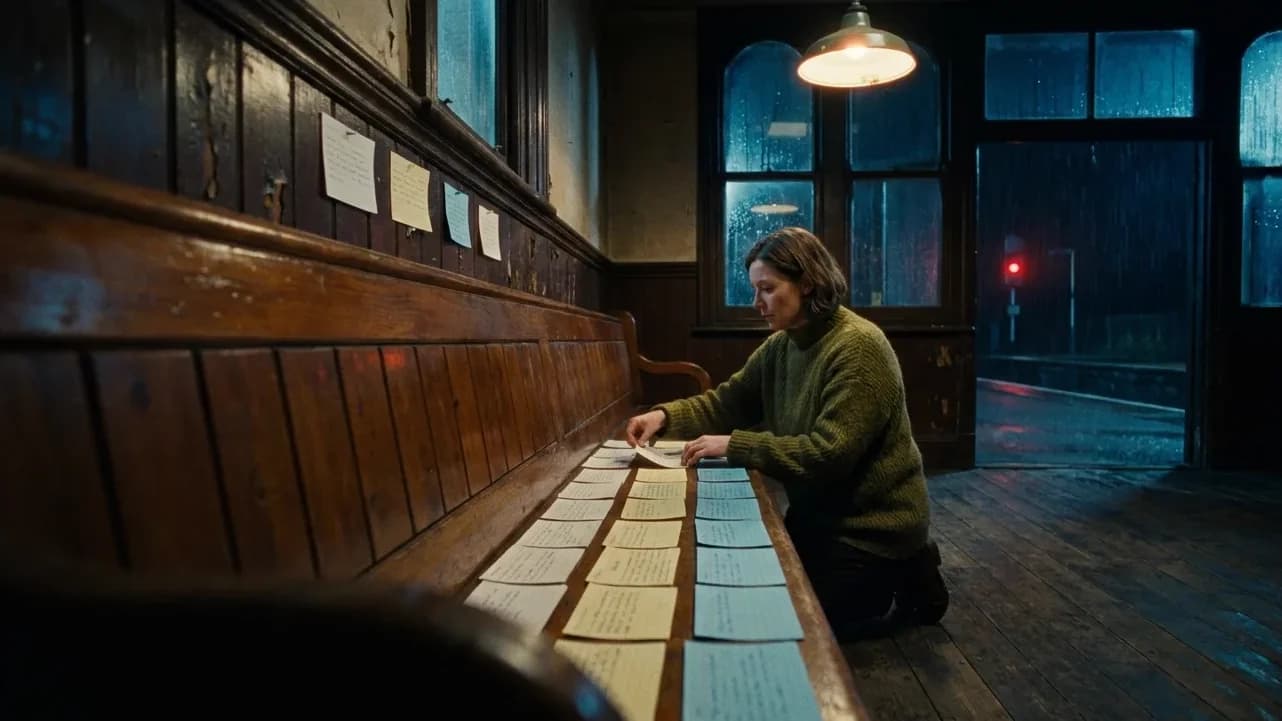
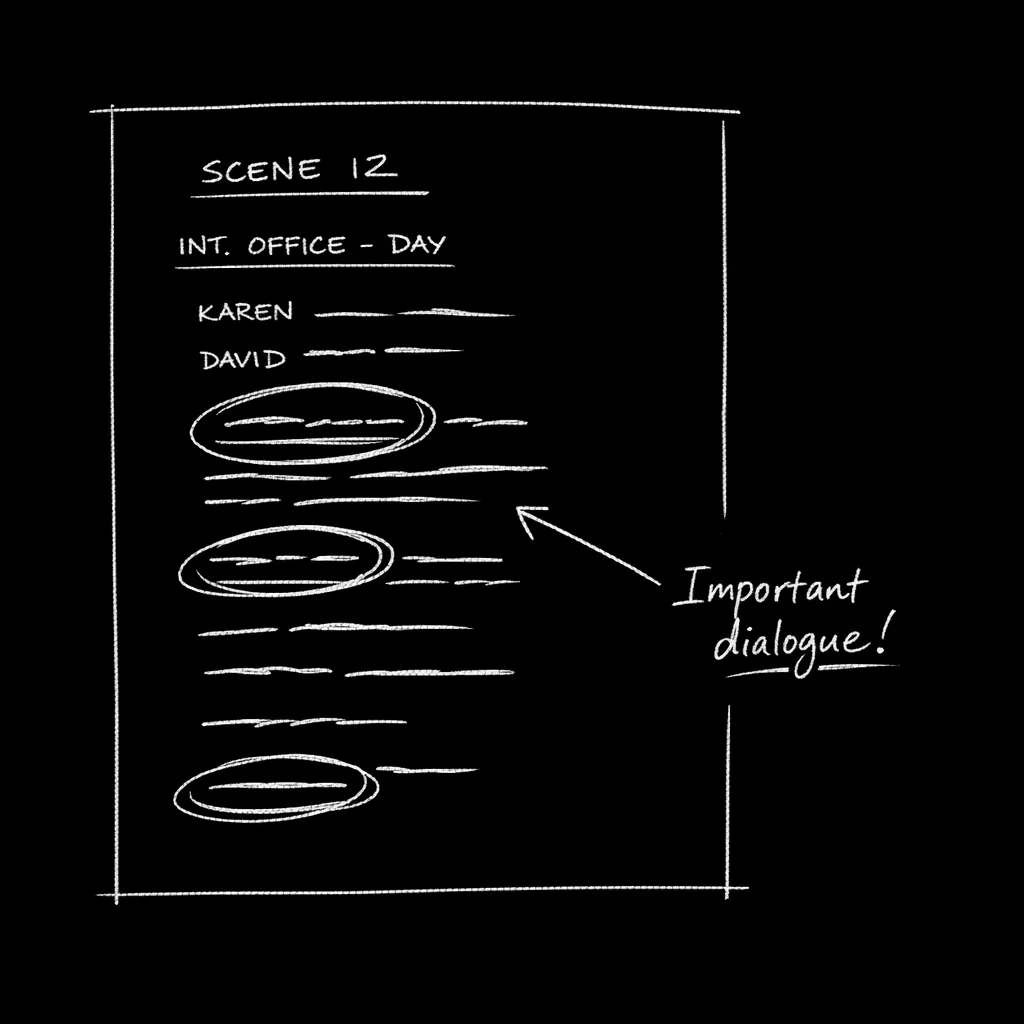
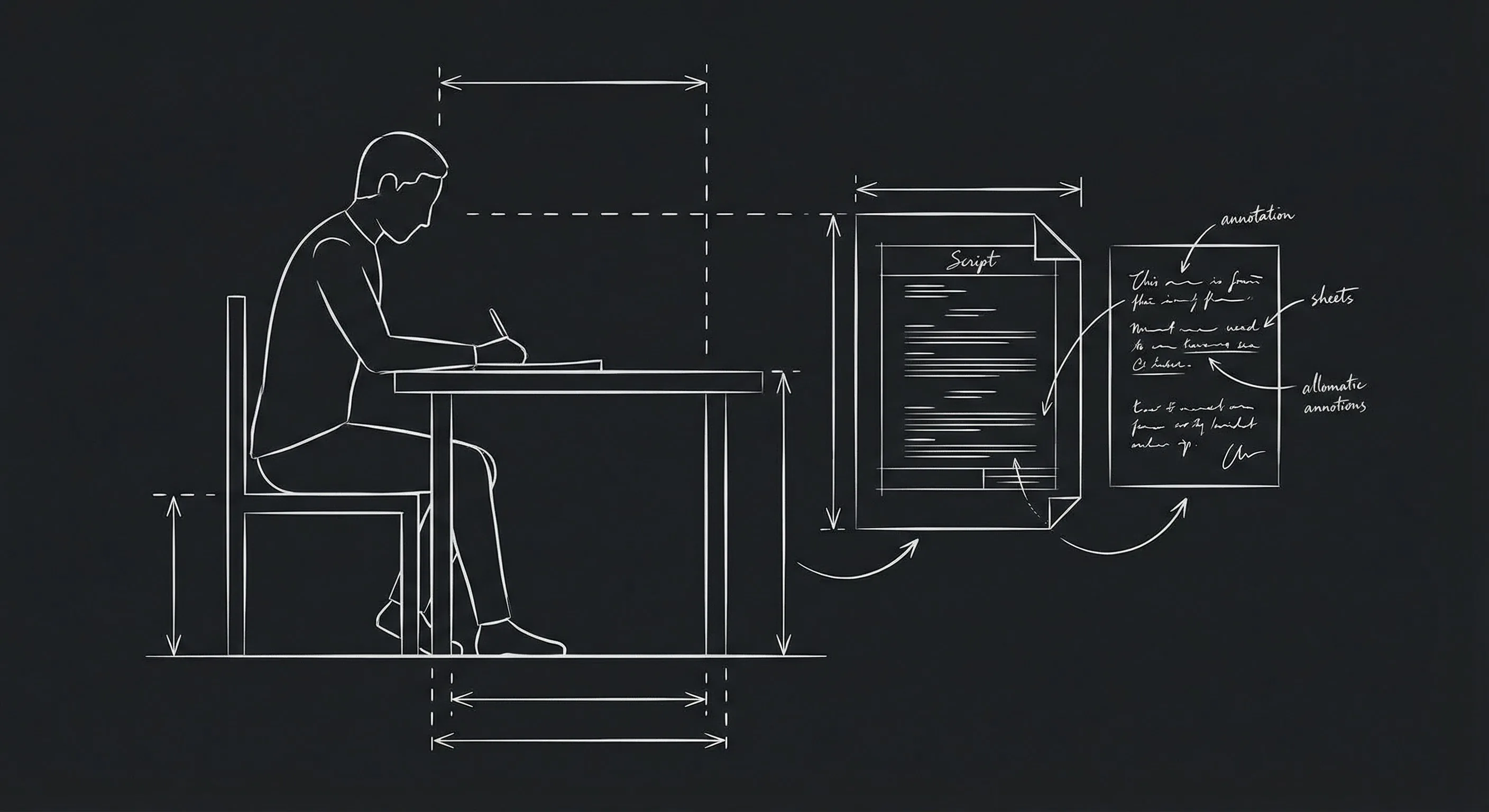
These two visuals work as a pair: the first shows Notes and script side by side, and the second shifts to Writer processing notes - compare them briefly, then move on.
Final Step
Build your next script with Screenweaver
Move from ideas to production-ready pages faster with timeline-native writing and AI-assisted story flow.
Try Screenweaver