
There is no open inbox for short drama scripts at the big apps. ReelShort commissions its series and runs periodic contests; DramaBox takes pitches through a creator portal; the smaller apps take licensing conversations. The self-publish route (TikTok, YouTube Shorts, Reels) has no gate and pays by views. What sells on every route is the same package: a logline with an engine, a season grid, and two or three finished sample episodes.
The package itself is built across the script format, episode structure and tropes articles. This one is about where it goes.
The routes, side by side
| Route | How work gets in | What they ask for | Pay model |
|---|---|---|---|
| ReelShort (Crazy Maple Studio) | Commissioned writing, contractor roles, periodic contests. No self-serve upload | Contest: synopsis, season outline, 2 to 3 sample episodes, credentials | Contest prizes; contractor rates |
| DramaBox | Creator portal, pitch-and-greenlight | Series synopsis, episode outline, 2 to 3 sample episodes, credentials | Not published |
| ShortMax, GoodShort, ShortTV and peers | Pitch or licensing conversation | Varies by app | Not published |
| TikTok | Open self-publish | Nothing. A Series paywall feature exists | Creator Rewards, per qualified view |
| YouTube Shorts | Open self-publish | Nothing | Share of the Shorts ad pool |
| Instagram Reels | Open self-publish | Nothing | Meta's current creator programs |
The routes and their requirements are as described in character.app's July 2026 guide to publishing a vertical drama, which also reports ReelShort contest prizes of up to $100,000 overall and up to $50,000 for best series, and a DramaBox review turnaround of one to three weeks with resubmission possible. Treat prize figures as that article's report, and check the current contest page before pitching.
ReelShort: commissioned, contracted, or contested
ReelShort is owned by Crazy Maple Studio, and the way scripts reach it is through the studio: it hires and contracts screenwriters, often to adapt web novels into vertical seasons, and produces in-house or with partner studios. The studio's careers portal on Workable carries recurring listings for contractor screenwriters and producers.
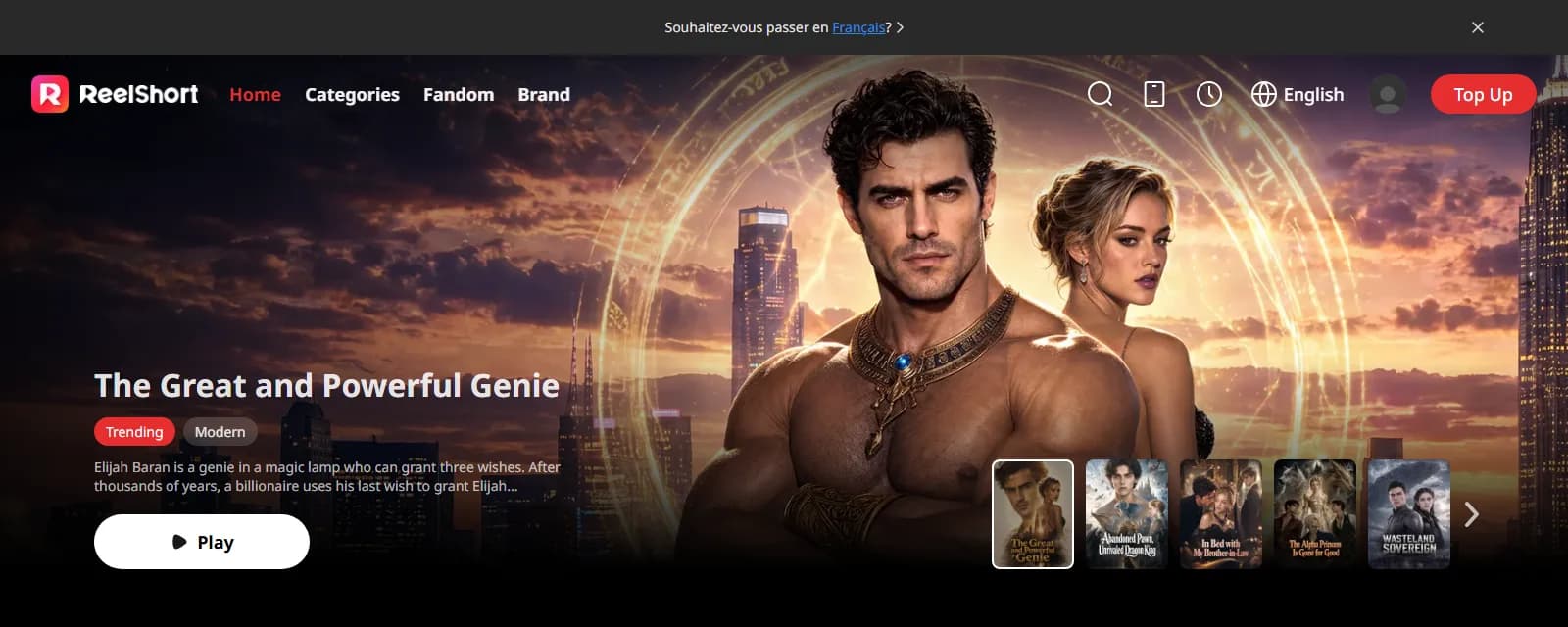
ReelShort's web catalogue, captured 3 September 2026. Every series on it was commissioned or produced by Crazy Maple Studio; a spec script sent cold has nowhere to land, and contractor roles on the studio's careers portal are how most writing gets in.
Practical implications:
- A finished spec season is a writing sample, not a product. The studio buys writers more than scripts.
- The contest is the one door open to unrepresented writers with a spec. It wants the same package as a pitch: synopsis, outline, samples.
- Adaptation skill is the hire. Many commissioned seasons are adapted from web novels, so a sample that shows you can compress a novel chapter into a 90-second episode is worth more than an original.
DramaBox: the pitch that gets read
DramaBox's portal wants a series synopsis, an episode outline, two or three sample episodes and your credentials, reviews in one to three weeks, and allows resubmission. The order the reader goes through is the order the package should be built in:
- The logline. One sentence with the secret, the clock and the witness. If the engine is missing here the outline does not get opened.
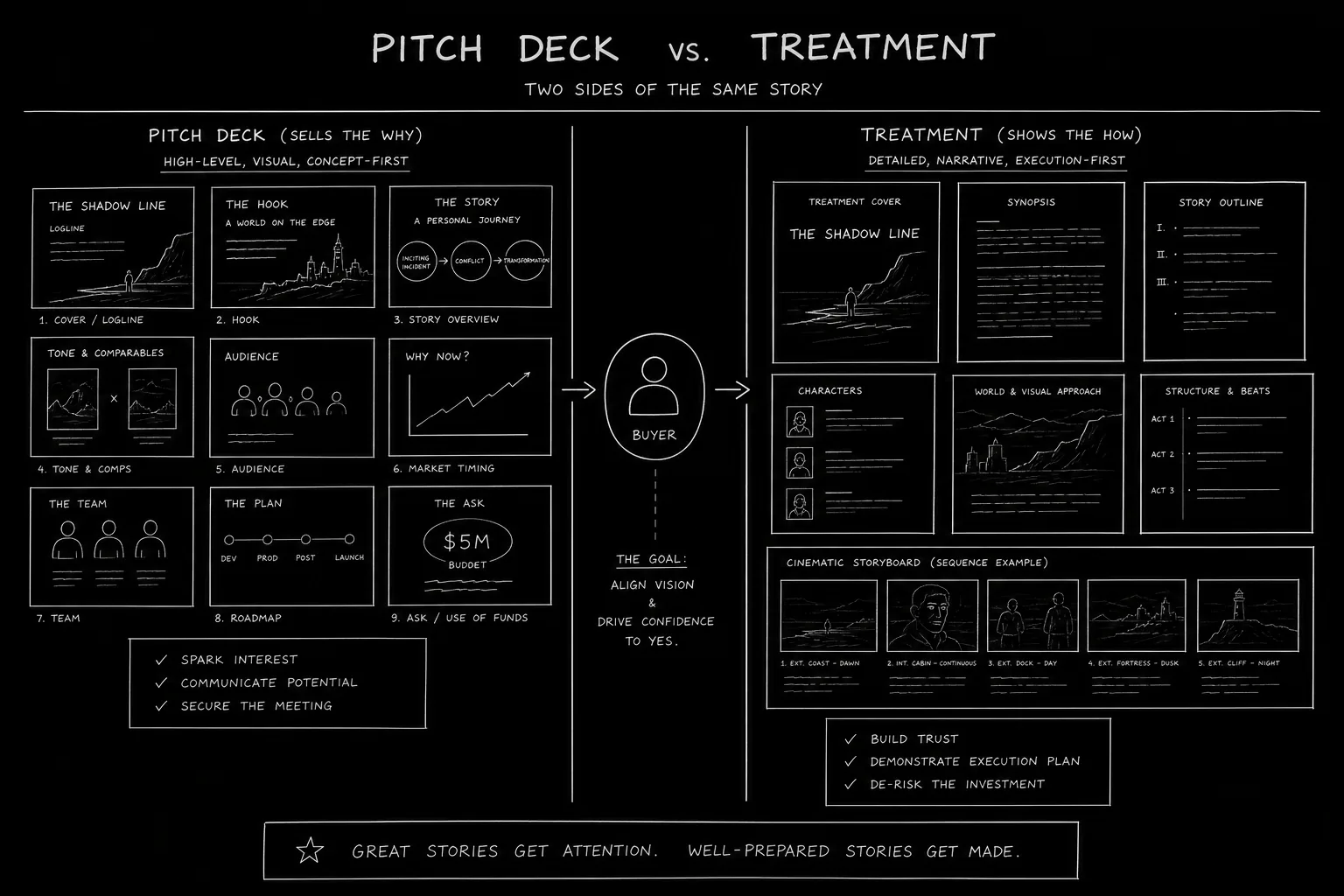
- The season outline. Seventy lines, one per episode, each ending on its cliffhanger shape, with the paywall episode, the midpoint and the finale marked. The episode planner produces exactly this grid.
- The sample episodes. Episode 1, episode 2, and the paywall episode. Not three consecutive ones. The reader wants to see the hook, the pair rule between 1 and 2, and the cliffhanger that sells the season.
- Credentials. Anything produced, including a self-published social season with numbers.
That last line is the argument for the self-publish route even when the goal is a commission.
Self-publishing: the route with no gate and a portfolio at the end
A ten-episode season on TikTok or Shorts costs nothing to distribute and produces the one credential the apps cannot ignore: retention. The pay itself is small at the start. Per character.app's summary of the platform programs, TikTok's Creator Rewards pays by qualified views with thresholds of 10,000 followers and 100,000 views in 30 days, on videos of at least one minute; YouTube Shorts shares its ad-revenue pool by view share once a channel clears 1,000 subscribers and 10 million Shorts views in 90 days, or 4,000 watch hours in a year. TikTok also has a Series feature that lets a creator put episodes behind their own paywall.
Made with AI, that ten-episode season is a few hundred dollars and two to three weeks, per the cost article. Made live with friends, it is a weekend and a phone rig. Either way, a pitch that arrives with "episode 4 retained 60% of episode 1's viewers" is a different pitch.
What the package looks like on the page
| Document | Length | Notes |
|---|---|---|
| Logline | 1 sentence | Trope plus twist, with the secret, the clock and the witness |
| Synopsis | Half a page | The five movements in five paragraphs |
| Season outline | 1 line per episode | Cliffhanger shape at the end of each line; milestones marked |
| Sample episodes | 3 episodes, 1 to 2 pages each | Episode 1, episode 2, the paywall episode |
| Title page | 1 page | Series title, episode count, episode length, contact |
| Credentials | A few lines | Produced work first, with numbers if they exist |
Format the samples in the short drama script format: episode headers, a hook line, one turn, a final line that asks a question. The title page maker handles the cover, and the script watermarker is worth a minute before a PDF leaves your hands.
Try it free
Try Screenweaver for free on your script
It is free. Import your existing project, get a clearer view of your outline, and regain control of your story structure in minutes.
Start FreeRights, before you send anything
- A contest entry grants the platform some rights for some period. Read which ones and for how long before entering, because a season you cannot publish elsewhere during a six-month evaluation is a season on ice.
- A commissioned season is work for hire. You are paid, the platform owns it.
- A self-published season is yours, and a platform that later commissions it will want an assignment of rights. Keep the paperwork, including AI-generation records, because platforms increasingly ask what was generated and with what.
- Register the script. The copyright and registration guides on this blog cover the mechanics.
The order that works
- Build the grid and write episodes 1, 2 and the paywall episode.
- Produce ten episodes for a social feed, with AI or a phone, and publish them weekly.
- Pitch DramaBox's portal with the package and the retention numbers.
- Enter the ReelShort contest when one is open, with the same package.
- Apply to the contractor roles at Crazy Maple Studio with the produced season as the sample.
Each step produces the credential the next one asks for, and none of them requires an agent.
FAQ
Where can I submit a short drama script?
DramaBox has a creator portal that takes a synopsis, an episode outline, two or three sample episodes and credentials. ReelShort does not take unsolicited scripts; it commissions writers and runs periodic contests. The smaller apps take pitches or licensing conversations. TikTok, YouTube Shorts and Reels take anything, with no gate.
Does ReelShort buy scripts from writers?
It hires and contracts writers, often to adapt web novels, and runs contests that reportedly pay prizes rather than buying specs outright. A spec season is best used as a writing sample for the contractor roles on Crazy Maple Studio's careers portal, or as a contest entry.
What should a short drama pitch include?
A one-sentence logline with an engine, a half-page synopsis, a season outline with one line per episode ending on its cliffhanger shape, and three sample episodes: episode 1, episode 2 and the paywall episode. Add any produced work with retention numbers.
How much do vertical platforms pay writers?
The platforms do not publish rates, and the figures on distribution blogs are unsourced. Contest prizes are the only public numbers, and they change per contest; check the current contest page. Contractor roles pay as contractor roles do.
Can I publish my short drama on TikTok instead of pitching an app?
Yes, and for a first season it is the better route: no gate, a paywall of your own through TikTok Series if you want one, and retention numbers that become the credential a platform pitch needs. Pay per view is small at the start.
Do I need an agent to sell a vertical drama?
No. Every route above is open to unrepresented writers: the DramaBox portal, the ReelShort contest, the contractor listings and the social platforms. A produced season with numbers does the agent's job.
Final Step
Build your next script with Screenweaver
Move from ideas to production-ready pages faster with timeline-native writing and AI-assisted story flow.
Try Screenweaver