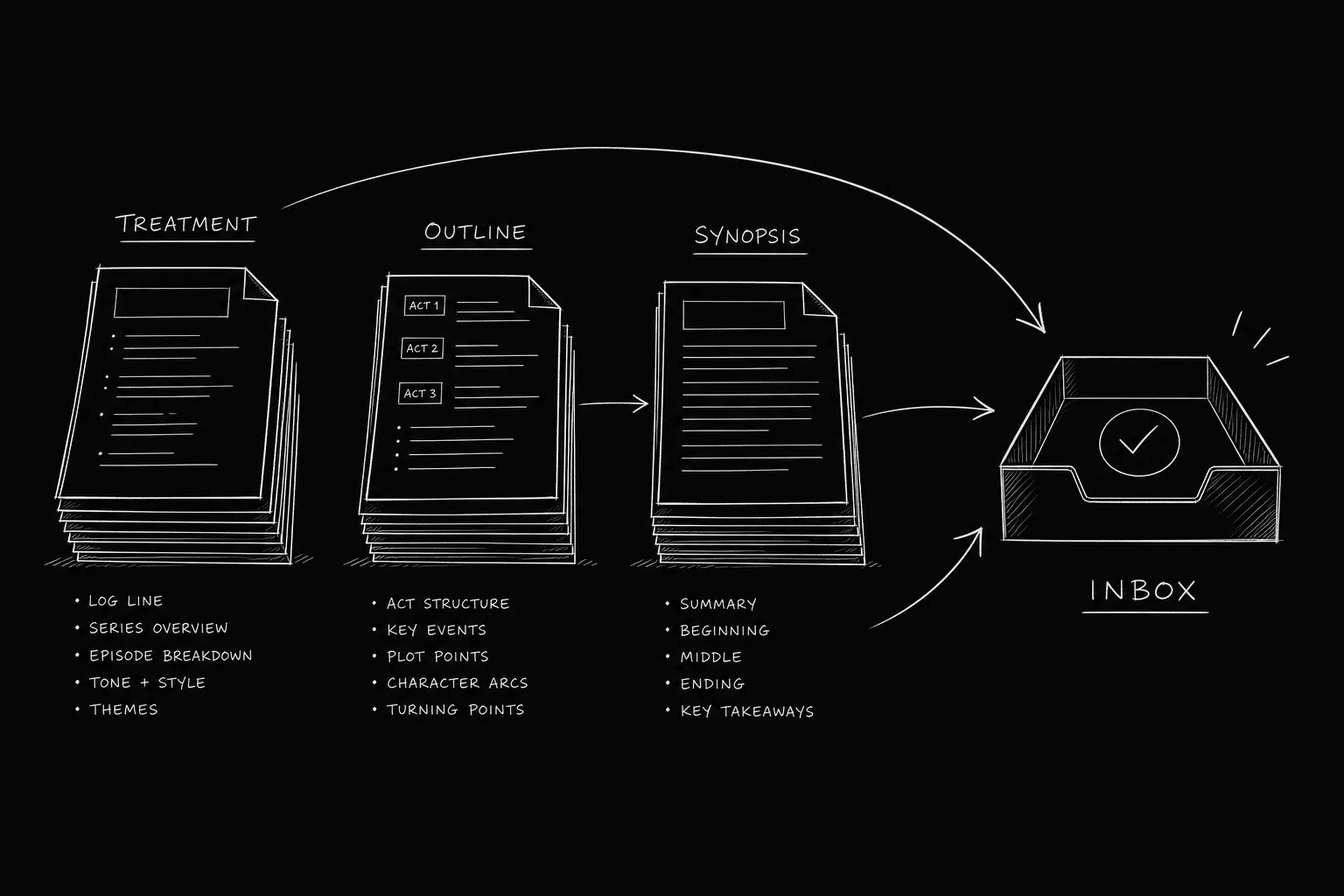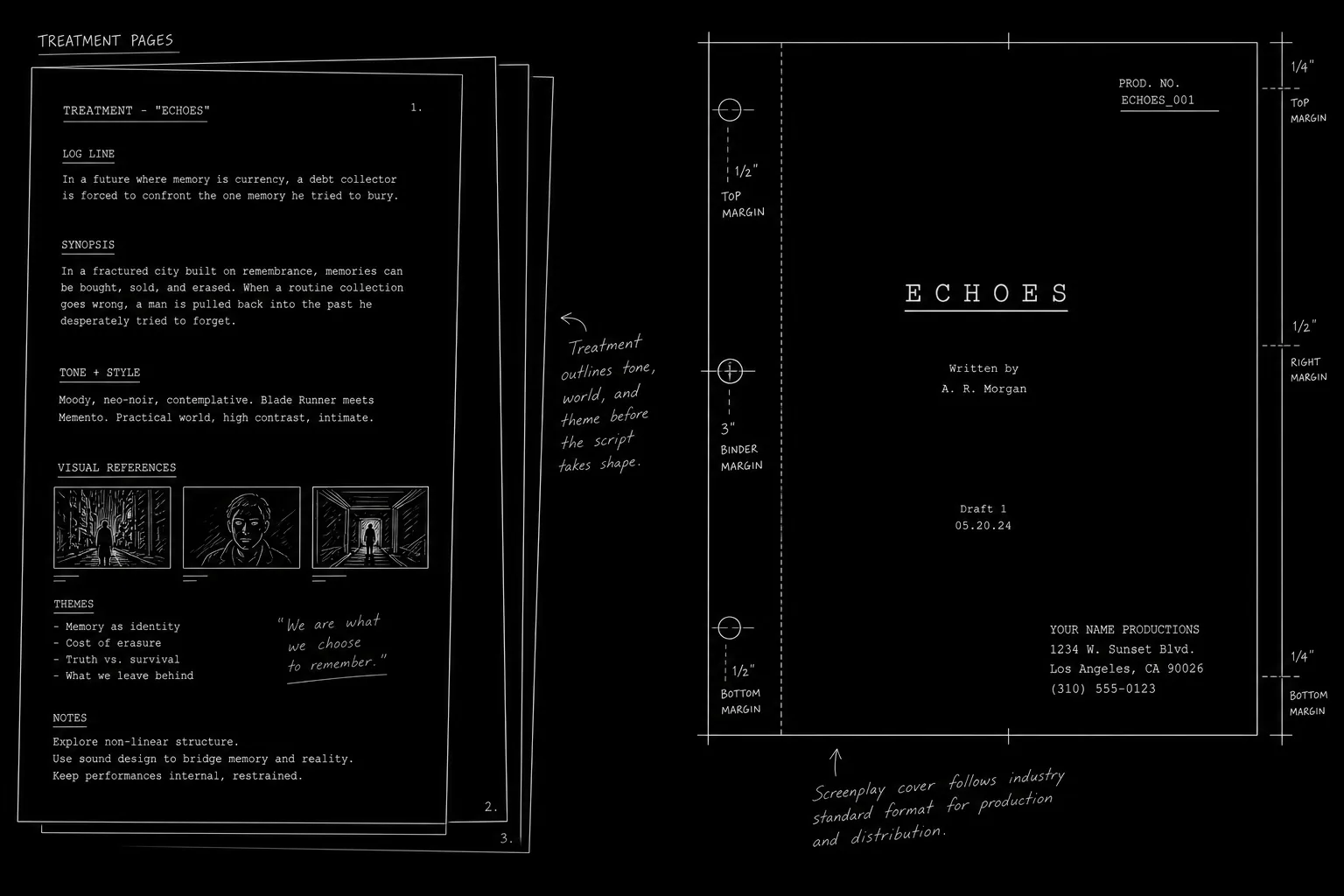

The pitch went well. They want to see the series. Not just the pilot, the series. That means a bible. Not a religious text. A document that lays out the world, the characters, the season arc, and the episodes so that a room (or a buyer) can see the full vision. In 2026, a TV series bible is still the standard deliverable when someone says "show us the show." Get it wrong and you look unprepared. Get it right and you give them a map they can follow into development.
A series bible is a written document, usually 15 to 40+ pages, that accompanies the pilot script. It answers: What is this show? Who are these people? What happens in the first season, and beyond? What’s the tone, the world, and the engine? This guide covers the essential components for 2026: character bios, season arcs, episode summaries, and the framing material that makes a bible feel professional and usable. We’ll also touch on what to avoid so your bible doesn’t read like a first draft or a mess of notes.
Free tool: use the Logline Workshop to build and pressure-test your logline.
What a Series Bible Is For
The bible is not the pilot. The pilot is the proof you can write the show. The bible is the proof you can run the show. It shows that you know the characters, the long game, and the shape of the season. Execs and potential showrunners use it to see whether the idea has legs. Writers’ room candidates use it to prep. So the bible has to be clear, consistent, and easy to navigate. It’s a reference document. Someone should be able to find a character’s motivation, the season’s arc, or the logline of episode four without digging through prose.
It’s also a sales document. It has to excite. The tone of the bible should match the tone of the show. A dark thriller bible shouldn’t read like a textbook. A comedy bible can have voice. But it can’t be sloppy. Spelling, consistency, and structure matter. You’re demonstrating that you can hold a lot of story in your head and on the page.
The bible doesn’t replace the pilot. It extends it. It says: here’s the world and the plan. Now read the script.
Essential Component 1: Title, Logline, and Premise
Open with the title of the series. Then the logline, one or two sentences, same formula you use everywhere: protagonist, goal, obstacle, stakes. Then a premise paragraph: what is the show’s engine? What’s the central question or tension? Who is the show about and what do they want over the course of the series? This section is the same kind of material you’d put on a one-pager. It orients the reader before they dive into characters and episodes. One page max. If you’ve already written a strong logline and premise for your pitch materials, reuse them here. Consistency across documents is a plus.
Essential Component 2: Tone and World
One short section. Tone: How does the show feel? Dark, light, satirical, earnest? One or two sentences or a comp line. "Tone: Fleabag meets The Americans, intimate, morally complicated, dryly funny." World: Where and when does the show take place? What are the rules, social, physical, genre? For a period piece, what’s the era and what matters about it? For a genre show, what’s the "reality" (e.g. one magic system, one set of rules)? Keep it to a page. The goal is to set the stage so that when we meet the characters, we know the sandbox they’re playing in.
Essential Component 3: Character Bios
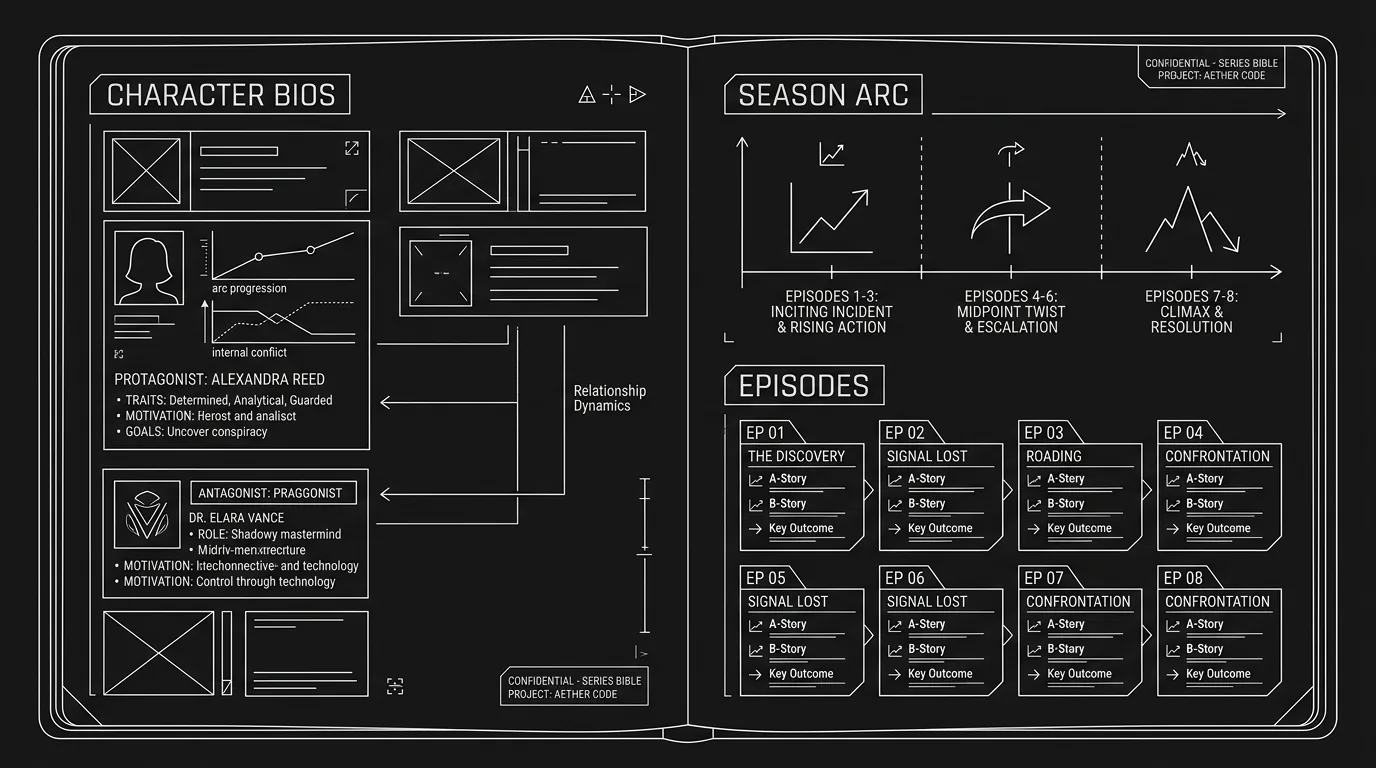
This is often the longest section. For each series regular (and sometimes key recurring characters), give:
Name, age (if relevant), role in the story. One line. "Maya Chen, 38 , the showrunner of the series-within-the-series; our protagonist."
Backstory. Two to four sentences. Where do they come from? What shaped them? What do they want when we meet them? Don’t write a novel. Give enough so that a writer in the room could write the character. Include the flaw or wound that the show will test. If there’s a character arc across the season, hint at it here ("By the end of the season she will have to choose between the show and her family").
Key relationships. How do they connect to the other leads? "Best friend and sometimes rival of James." "Reports to Diane; doesn’t trust her." One line per relationship is enough. This helps the room see the web of the cast.
Voice or quirk (optional). If the character has a defining speech pattern or trait, one line. "Never finishes a sentence." "Uses humor to deflect." Don’t overdo it. Not every character needs a quirk.
Format: one block per character, or a header plus a short block. Keep bios to half a page to a page per character for leads. Recurring can be shorter. The total character section might be 5–12 pages depending on cast size. For more on building characters that fit a long-running engine, our guide on character arcs and ensemble balance can help; the bible is where you commit those arcs to paper.
Essential Component 4: Season Arc (Season One)
One section that describes the season as a whole. What’s the A-story spine? What’s the question the season asks, and how does it end? For a serialized show: "Season One is the story of Maya losing control of her show and her family; by the finale she must choose one or lose both." For a procedural with a serialized spine: "Each episode is a case; the serialized thread is the investigation into who leaked the pilot, which culminates in the finale." Give the big beats: inciting incident, midpoint turn, finale. You don’t have to list every scene. You’re giving the arc. One to two pages. This is the spine the episode summaries will hang on.
Essential Component 5: Episode Summaries (Season One)
For each episode of the first season, provide:
Episode number and title (if you have one).
One- to three-sentence summary. What happens in this episode? What’s the A-plot? What’s the B-plot if there is one? How does it advance the season arc? Be specific enough that a reader can see the episode, but don’t write full scene breakdowns. Half a paragraph to a short paragraph per episode is typical.
Optional: key character moments. If a particular episode is a turning point for a character, one line. "This is the episode where James learns the truth about his father."
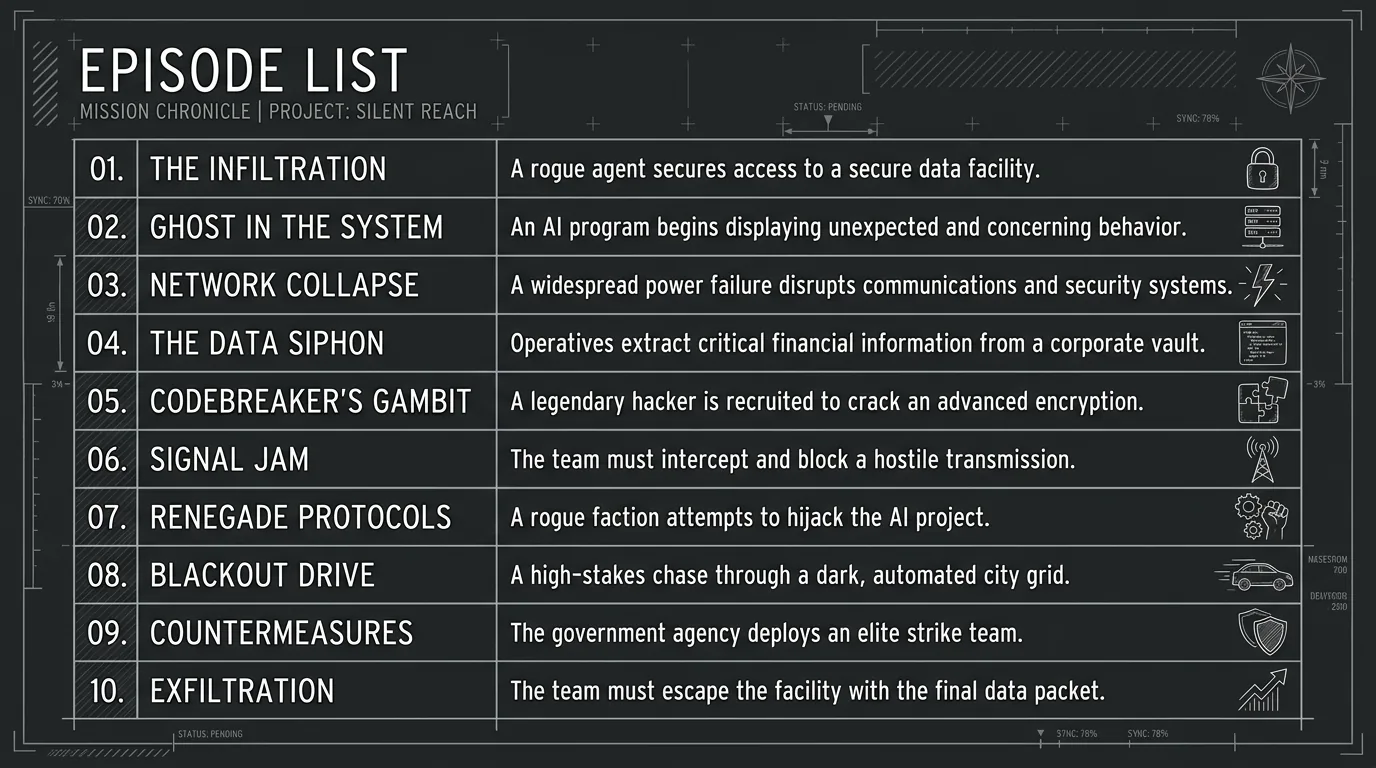
Format: a list, one block per episode. Number them. If you have 8 or 10 episodes, this might be 2–4 pages total. If the show is heavily serialized, the summaries will be denser. If it’s more procedural, each episode might have a "case" plus a line on the serialized thread. The goal is clarity. Someone should be able to skim and know what happens in the season. For structural consistency, our five-act and limited series structure guide can inform how you shape season and episode beats; the bible is where you document that shape.
Try it free
Try Screenweaver for free on your script
It is free. Import your existing project, get a clearer view of your outline, and regain control of your story structure in minutes.
Start FreeEssential Component 6: Future Seasons (Optional but Recommended)
One to two pages. You don’t need to write episode-by-episode for season two and three. You need to show that the show has somewhere to go. "Season Two: The fallout from the finale; Maya in exile; the new showrunner is an antagonist from her past." "Season Three: The reckoning; the show within the show is cancelled; the family must rebuild." Broad strokes. This answers the buyer’s question: "Can this run for more than one season?" If you’re pitching a limited series, you might have a single season and a clear ending; you can note "Limited series , one season, closed ending" and skip this section or keep it to one short paragraph.
What to Avoid
Overwriting. The bible is not the script. Don’t write dialogue or long scene descriptions. Summarize. If a section feels like a treatment, cut it down to beats and one or two sentences per beat.
Inconsistency. Character names, places, and timeline have to match the pilot and each other. Proofread. If the pilot says "three years ago," the bible shouldn’t say "five years ago."
Vague episode summaries. "In this episode, things get more complicated." That doesn’t tell us anything. "Maya discovers that James has been feeding stories to the press; she confronts him at the wrap party and he reveals he’s been protecting someone else." Now we know what happens.
Skipping the season arc. Jumping from character bios to episode list without a "season one arc" section makes the bible feel like a list instead of a vision. The arc section is the bridge. Include it.
Dated or generic comps. If you reference tone or comps, use recent shows (e.g. 2022–2025). It shows you know the current landscape. Our comparative titles guide applies here too: comps in the bible help buyers file the show.
What Beginners Get Wrong (The Trench Warfare Section)
Writing the bible before the pilot is solid. The pilot is the proof. The bible supports it. If the pilot is still shifting, the bible will keep changing. Lock the pilot (or get it close), then write the bible so it matches.
Too many characters. Every named character doesn’t need a full bio. Lead characters and key recurring get bios. Minor recurring can be one line in the episode summaries or a short "recurring characters" list. If the character section is 25 pages, no one will read it all.
Episode summaries that don’t connect. Each episode should advance the season. If episode four could be cut and nothing changes, the summary (or the design of the season) needs work. Make sure every episode does something for the arc.
No visual or structural hierarchy. Use headers, bold, and clear section breaks. "Character Bios," "Season One Arc," "Episode Summaries." A reader should be able to jump to the section they need. Walls of text make bibles unusable.
Treating the bible as fixed. In development, things change. The bible is a living document. But for the pitch, it should feel complete and consistent. You can add "Subject to change in development" in a footnote if you want; the main thing is that what you deliver is clean and coherent.
Quick Reference: Bible Structure
| Section | Length | Purpose |
|---|---|---|
| Title, logline, premise | 1 page | Orient the reader |
| Tone and world | ~1 page | Set the sandbox |
| Character bios | 5–12 pages | Who everyone is and what they want |
| Season One arc | 1–2 pages | The spine of the season |
| Episode summaries | 2–5 pages | What happens in each episode |
| Future seasons | 1–2 pages (optional) | Where the show can go |
Total: often 15–25 pages for a first season, more if the cast is large or the world is dense. Quality and clarity matter more than page count.
The Perspective
A TV series bible in 2026 is still the standard way to show that you see the full show. Character bios, season arc, episode summaries, those are the essential components. Add a clear logline, premise, tone, and world at the top, and optional future seasons at the end. Keep it clear, consistent, and easy to navigate. The bible doesn’t replace the pilot. It makes the pilot part of a plan. Give them that plan, and they’ll know you’re ready for the room.
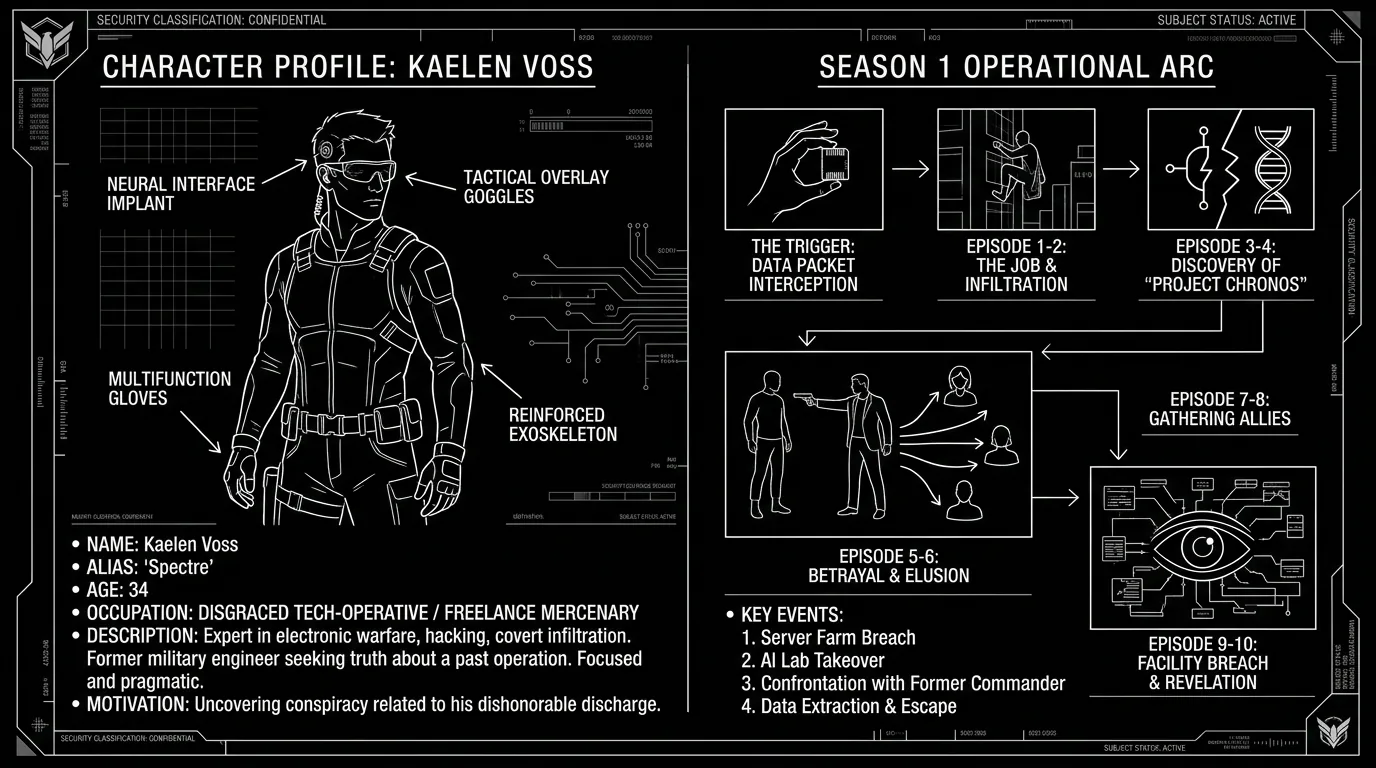
These two visuals work as a pair: the first shows Character bio and season arc side by side; dark mode technical sketch, and the second shifts to Episode list with one-line summaries; dark mode technical sketch - compare them briefly, then move on.
Final Step
Build your next script with Screenweaver
Move from ideas to production-ready pages faster with timeline-native writing and AI-assisted story flow.
Try Screenweaver