The moment the protagonist walks into the bar, something shifts. You feel it in your chest before you can name it. The scene you've been setting up for thirty pages is about to pay off. You don't know exactly what will happen, maybe she'll confront him, maybe she'll walk away, maybe she'll order a drink and let the silence do the work, but you know this is the moment.
No algorithm told you that. No tool surfaced a pattern. You felt it. That feeling is intuition, the accumulated wisdom of every story you've read, every draft you've written, every choice you've made and regretted and learned from. It's the thing that tells you when a scene is working and when it's merely complete.
Here's the argument I want to make: algorithmic tools will not replace this intuition. They cannot. Intuition lives in the gaps between what can be measured, in subtext, in rhythm, in the thousand micro-decisions that make a scene feel alive versus functional. But these tools can make you faster at everything else. The structure you plot. The drafts you generate. The problems you diagnose. The patterns you catch. The administrative weight that distracts you from the moments that matter.
The mistake is thinking it's either/or. Either tools replace writers, or tools are useless. Neither is true. The truth is collaboration: intuition does what intuition does, tools do what tools do, and the writer who integrates both works at a level neither could achieve alone.
Tools? Sure. Compare generators, chat tabs, “augmented” whatever, in one sitting: top AI tools for screenwriters in 2026. This piece is the stubborn half of the argument: why your gut still outranks the histogram once the novelty cools. After the robots leave the room, readers still want a PDF that behaves; exporting for production is that boring handshake.
Free tool: use the Logline Workshop to build and pressure-test your logline.
Cinematic workflow frames
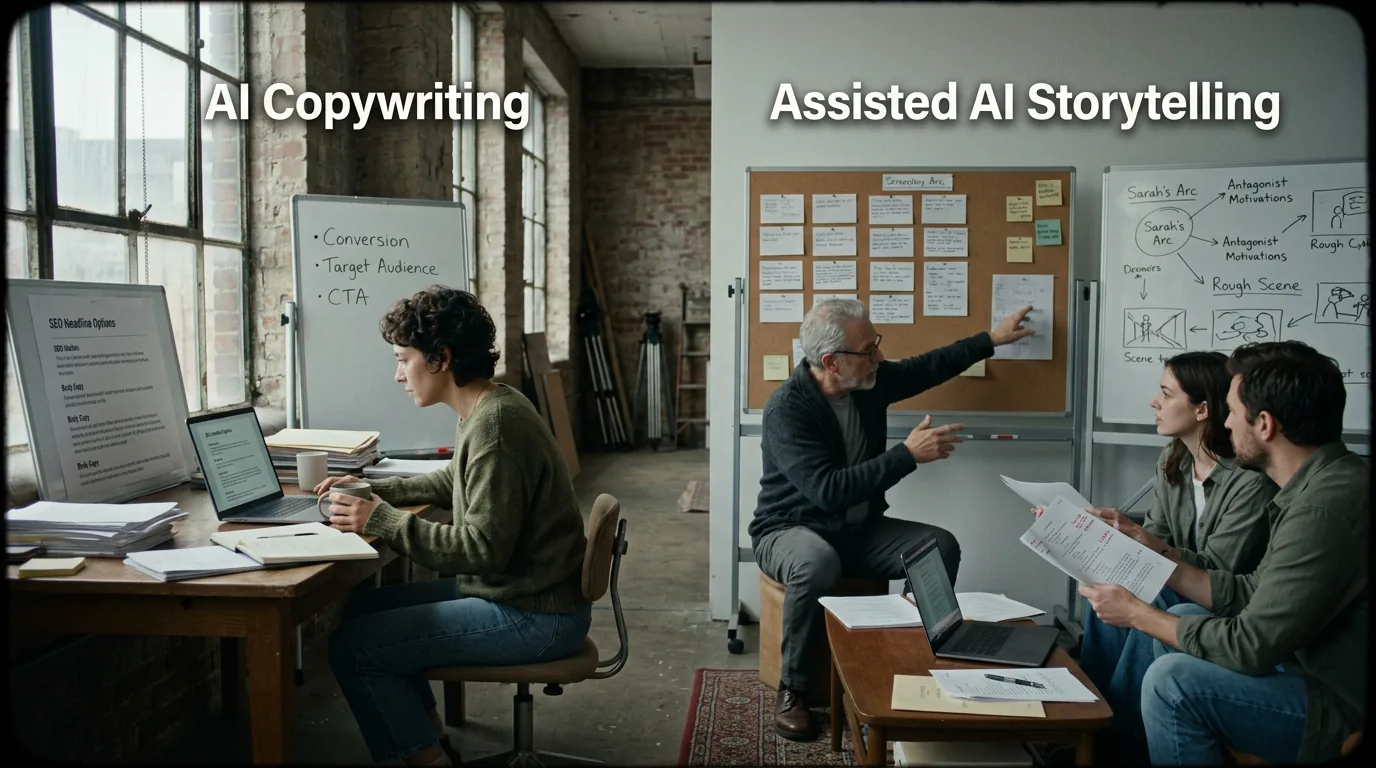
These two visuals work as a pair: the first shows Cinematic workflow still, first angle, 35mm film grain, and the second shifts to Cinematic workflow still, second angle, 35mm film grain - compare them briefly, then move on.

What Intuition Actually Is (And Why It's Irreplaceable)
Intuition isn't mysticism. It's pattern recognition compressed into feeling.
When you watch a scene and sense that it's too long before the runtime confirms it, that's intuition. You've internalized a hundred scenes that dragged and a hundred that landed, and your brain has abstracted the difference into a felt response. You don't need to analyze frame-by-frame; you feel the sag.
When you read dialogue and know, instantly, that a character wouldn't say that, that's intuition. You've built a model of the character from everything you've written and imagined, and the line violates the model in a way you recognize pre-cognitively.
When you write toward an ending and discover, mid-sentence, that the scene should end differently than planned, that's intuition. You're improvising in real time based on what the scene is becoming, and the improvisation is informed by everything you know about story, even if you couldn't articulate it.
This kind of knowing cannot be computed. Not because it's magic, but because it's based on tacit knowledge, knowledge that exists in the writer's body and experience but cannot be fully externalized into rules or data. A model can learn that scenes above three pages often run long; it cannot feel the specific scene you're writing and sense that this one should run four.
Intuition is expertise compressed into instinct. It's not the absence of analysis, it's analysis so internalized that it feels like knowing.
This is why the best writers are fast. They're not calculating; they're feeling-forward, guided by a sense of rightness that comes from deep practice.
What Algorithms Actually Do (And Why They're Useful)
Algorithms, whether simple scripts or complex language models, operate on explicit data. They count, compare, sort, and match. They identify patterns that humans might miss because humans get tired, distracted, or can only hold so much in working memory.
Here's what they do well:
Quantify structure. Where does your midpoint fall? How long is your first act relative to your second? What percentage of scenes are interior versus exterior? These are knowable facts about your script, and knowing them might reveal a pacing issue.
Track consistency. Does your character's name change spelling? Does a prop appear before it's introduced? Does the timeline contradict itself? The algorithm reads the whole script and flags what doesn't match.
Generate options. Give me ten ways this scene could end. Give me five alternate loglines. Give me three variations on this dialogue. The algorithm produces raw material, none of it as good as what you'll eventually write, but all of it fodder for your intuition to evaluate.
Identify patterns across corpus. How does your scene-length distribution compare to successful films in your genre? What vocabulary do horror scripts use that yours doesn't? What structural beats do award-winning pilots hit that yours misses? The algorithm can compare your script to hundreds of others and surface differences.
None of this tells you what to do. It tells you what is, and what might be. The decision remains yours.
The Symbiosis Model: Intuition Plus Assistance
The right way to think about this isn't replacement. It's division of labor.
Intuition handles the creative decisions. What does this character want? What is this scene about? Where does the story turn? These are questions only you can answer, because only you know the story you're trying to tell.
Algorithms handle the grunt work. How many pages until the midpoint? Is the dialogue balanced across characters? Are there continuity errors? These are questions the tool can answer faster and more reliably than you.
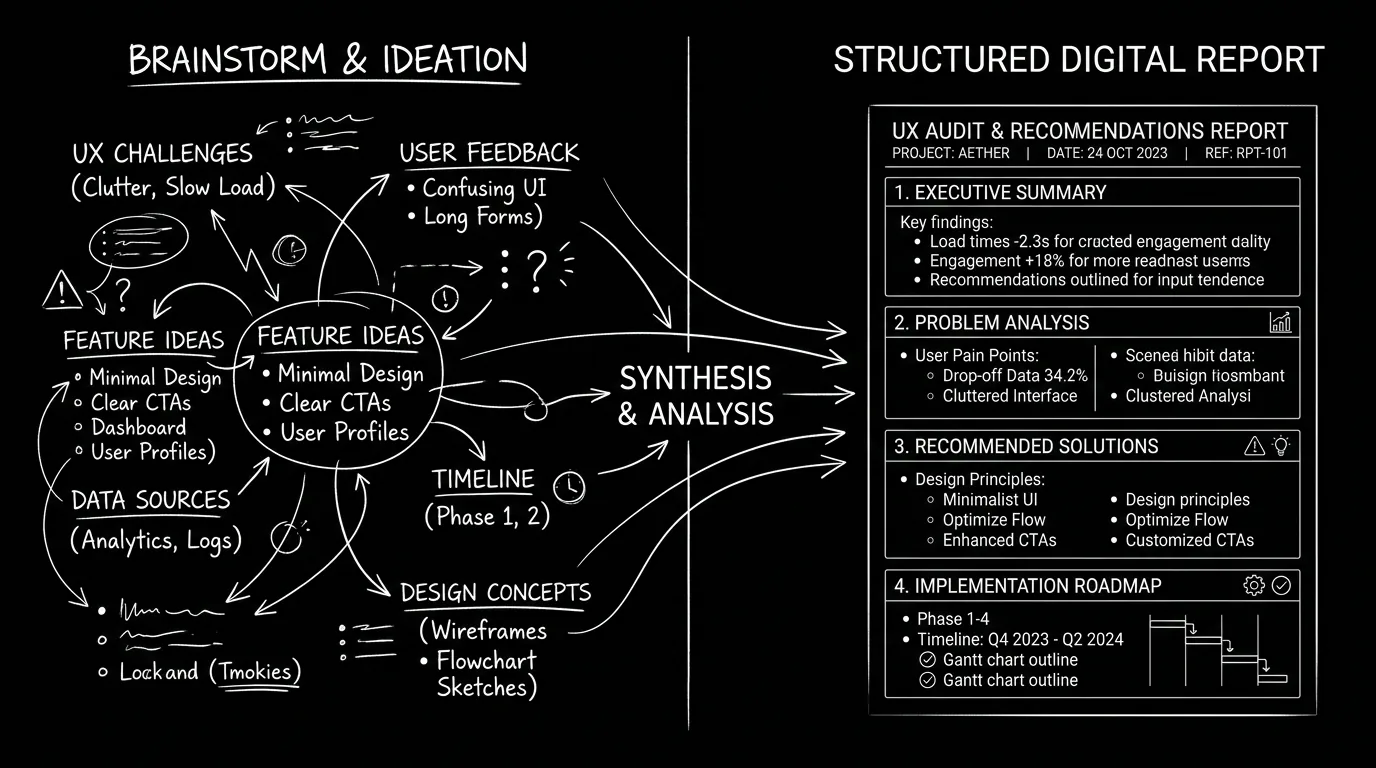
The writer who uses both works in layers. They write from intuition, fast, flowing, trusting the felt sense of the scene. Then they run the output through tools, checking structure, flagging errors, generating alternatives for stuck moments. Then they return to intuition, evaluating the tool's suggestions with their felt sense of rightness.
This loop isn't slow. It's faster than either approach alone. Intuition without tools produces drafts with hidden errors. Tools without intuition produce competent, lifeless text. Together, you get velocity and soul.
Three Scenarios: Integration in Practice
Scenario A: Breaking Story
You're in the outline phase. You know the general shape, inciting incident, midpoint, climax, but the specifics are fuzzy. You sit with a blank document, trying to feel your way forward.
Intuition's role: You sense that the protagonist needs a betrayal somewhere in Act Two. You don't know who betrays her or what the stakes are, but you feel the absence.
Tool's role: You ask the tool: "Give me ten ways a mentor figure could betray a protagonist in a heist story." The tool generates options, some obvious, some stupid, one intriguing. The intriguing one involves the mentor stealing something the protagonist didn't know she had.
Integration: You recognize the intriguing option as right, it fits the character, it raises stakes, it creates a twist you didn't expect. You develop it, trusting intuition to guide the specifics.
Scenario B: Diagnosing a Stalled Draft
You've written sixty pages. The script is flatlining. You can't pinpoint why. Every scene seems fine in isolation.
Intuition's role: You feel the sag but can't locate it. Your pattern recognition is overwhelmed by proximity, you've read these pages too many times.
Tool's role: You run a structural analysis. The tool reports: your first act ends on page thirty-two; your midpoint falls on page fifty. The back half of Act One is fifteen pages longer than standard. The scenes in this stretch average four pages each, longer than your earlier scenes.
Integration: Now you know where to look. You reread pages twenty to thirty with fresh eyes. Intuition kicks in: this scene drags, that scene repeats information, this one could be cut entirely. You revise, and the script accelerates.
Scenario C: Punching Up Dialogue
You've finished a draft. The dialogue is functional but flat. You need it to sing.
Intuition's role: You read the lines aloud. Some feel dead. You know the character wouldn't say it that way, but you can't figure out the better version.
Tool's role: You feed the flat line to a language model: "Give me five variations on this line that are more sarcastic and economical." The model returns five options. Four are garbage. One has a phrase you like.
Integration: You take the phrase, just the phrase, and build a new line around it. The new line is yours; the phrase was a spark. Intuition recognized what worked and discarded what didn't.
A Table: Division of Labor
| Task | Intuition's Contribution | Algorithm's Contribution |
|---|---|---|
| Structural planning | Sense of what the story needs emotionally | Quantified analysis of where beats fall |
| Character voice | Felt sense of how this person would speak | Consistency check across scenes |
| Scene pacing | Knowing when a scene drags | Measuring scene length, page-range distribution |
| Dialogue revision | Recognizing what sounds right | Generating options for stuck lines |
| Continuity | Remembering what matters | Catching what you forgot |
| Brainstorming | Evaluating options against vision | Producing volume of options quickly |
| Final polish | The decision to stop revising | N/A, tools can't tell when something is "done" |
The last row is key. No algorithm knows when your script is finished. Only you do.
Try it free
Try Screenweaver for free on your script
It is free. Import your existing project, get a clearer view of your outline, and regain control of your story structure in minutes.
Start FreeThe "Trench Warfare" Section: How Integration Fails
Failure Mode #1: Over-Reliance on Tools
You let the tool make decisions. It suggests a plot point; you take it without evaluating against intuition. The resulting script is functional but feels generic, because the choices weren't made by a sensibility, they were accepted by default.
How to Fix It: Always run suggestions through your felt sense. Does this feel right? If you're not sure, it probably isn't.
Failure Mode #2: Ignoring Tools Entirely
You trust only intuition. You write a draft, submit it, and discover later that the midpoint fell on page sixty and the protagonist disappeared for twenty pages in Act Two. These are errors intuition might have caught if you weren't so close to the material, but you didn't use tools to check.
How to Fix It: Run structural scans on complete drafts. Think of it like proofreading, you're not doubting your writing; you're verifying.
Failure Mode #3: Using Tools as Procrastination
You spend hours tweaking tool settings, generating analysis reports, running multiple scans, and you never write a page. The tools become a way to avoid the hard work of drafting.
How to Fix It: Draft first, analyze later. Tools are for revision, not for delaying creation.
Failure Mode #4: Mismatched Tool for Task
You ask a language model to tell you where your story should turn. But the model doesn't know your story, it knows language patterns. It gives you a generic answer. You're frustrated and dismiss all tools.
How to Fix It: Match the tool to the task. Language models are good for generation and variation, not for strategic narrative decisions. Use them for brainstorming and alternatives, not for architecture.
Failure Mode #5: Loss of Voice
You use suggested dialogue too often, and the script starts to sound uniform. The machine's voice, neutral, competent, safe, bleeds into your characters.
How to Fix It: Never accept tool-generated text verbatim for voice-sensitive material. Use it as raw material and rewrite in your voice.
Why Replacement Is Impossible
Let's be direct about the theoretical claim. Why can't algorithms replace intuition?
Intuition is embodied. It arises from physical experience, reading, watching, writing, failing, learning. A model learns from text; a writer learns from living with stories. The knowledge isn't the same kind.
Intuition is context-dependent. Your intuition about this script is shaped by what you're trying to do with this script. A tool doesn't know your intent, only your text.
Intuition is evaluative. It tells you what's good, not just what's possible. Tools can generate options; they can't prefer. Preference requires a perspective, a taste, a vision, things that come from being a person with a history.
Intuition is integrative. It synthesizes everything you know, craft, emotion, culture, audience, into a single judgment. Tools operate on narrow data streams. Integration is uniquely human.
This isn't a claim that algorithms will never improve. They will. But improvement along one axis (speed, volume, pattern recognition) doesn't translate to capability on another axis (taste, meaning, soul). The axes are different.
Algorithms can make more text faster. They cannot want anything. And story is, finally, about want, the character's, the writer's, the audience's.
What Faster Looks Like
The promise of algorithmic assistance isn't replacement. It's velocity.
A writer who uses tools well finishes drafts faster, because the structural problems are caught earlier. They revise more efficiently, because they know where to look. They brainstorm more freely, because there's always more raw material to evaluate. They produce more work over a career, because the administrative friction is reduced.
This velocity doesn't compromise quality. It might even improve it, because the time saved on grunt work can be reinvested in the creative work that requires intuition.
The screenwriters who thrive over the next decade will likely be the ones who master this integration. They'll write like artists and analyze like engineers. They'll trust their gut and check their math. They'll be faster without being shallow.
That's the opportunity. Not replacement, not irrelevance, but augmentation. A writer and a set of tools, working together, producing work that neither could produce alone.
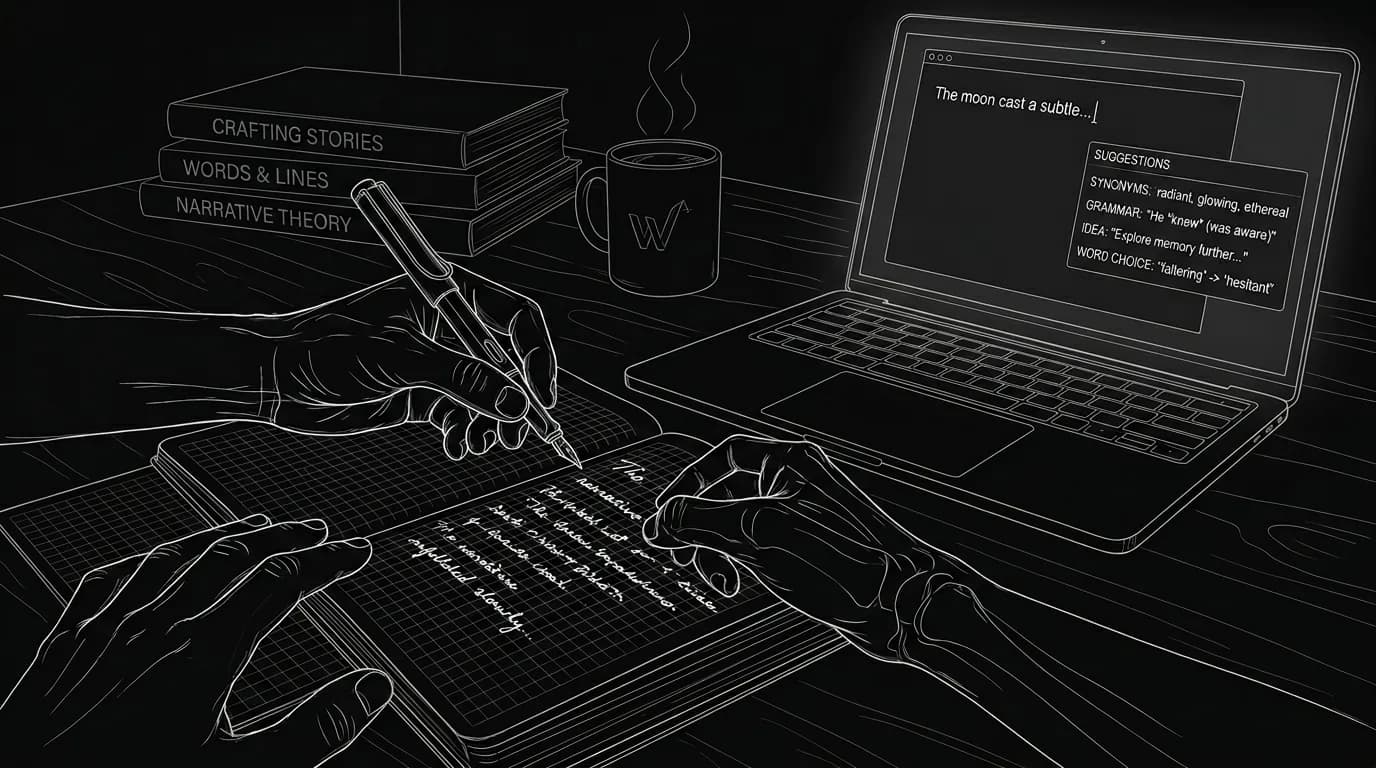
The Perspective: Intuition Is the Voice, Tools Are the Amplifier
Here's a way to frame it. Intuition is your voice, the thing that makes your writing yours. It can't be copied, because it's not a set of rules; it's a sensibility.
Tools are amplifiers. They increase the range and speed of what you can do. An amplifier doesn't create the sound; it makes it louder, clearer, further-reaching.
If you have nothing to say, the amplifier only magnifies the silence. If you have something to say, the amplifier helps it travel.
The writers who fear replacement are sometimes writers who fear they have nothing unique to say, that their value is in the labor, not the vision. But the labor is the replaceable part. The vision isn't.
Invest in your intuition. Read widely. Write daily. Fail and learn. Build the tacit knowledge that no tool can extract. Then use tools to handle everything else.
The future belongs to writers with taste. Tools will write text; taste will make it mean something.
[YOUTUBE VIDEO: A conversation with a working screenwriter about how they balance intuitive creative decisions with tool-assisted analysis, with examples from their development process.]
Further reading:
- For practical guidance on using language models as sparring partners to stress-test plot holes, see our workflow guide.
- If you're concerned about maintaining your unique voice while using suggestion tools, see keeping your unique voice with narrative suggestion tools.
- The American Film Institute's screenwriting resources explore the interplay of craft and intuition at afi.com{:rel="nofollow"}.
Final Step
Build your next script with Screenweaver
Move from ideas to production-ready pages faster with timeline-native writing and AI-assisted story flow.
Try Screenweaver