
You and a friend, or a writer you met in a class, decide to write a script together. You're excited. You start outlining. Maybe you've already written a few scenes. Then someone asks: who owns what? Who gets credit? What if one of you wants to leave the project? If you don't have a collaboration agreement before you write page one, you're building on sand. The best time to agree is before there's anything to fight over. This guide covers why you need a contract, what should be in it, and how to have the conversation without killing the vibe. Get it in writing. Then write.
The collaboration agreement is the boring document that keeps the friendship, and the project, alive when things get complicated. No contract, and a dispute over credit or ownership can sink the script and the relationship. One short agreement, and you both know where you stand.
When the script is ready to sell, you'll need clear chain of title for option agreements and for copyright. When money or disputes get serious, an entertainment lawyer can help. But the collaboration agreement comes first.
Why You Need a Contract Before Page One
Without an agreement, you're relying on trust and assumptions. You might assume you're 50/50. Your partner might assume they're leading because they brought the idea. You might assume you can take the script to a producer alone if the partnership sours. They might assume neither of you can do anything without the other. When the script gets interest, or when one of you wants to quit, those assumptions collide. The result: stalled projects, hurt feelings, and sometimes legal mess. A collaboration agreement fixes that by answering the questions before you have a hit script and conflicting memories.
So the rule is simple: before you write the first page together, sign a short agreement. It doesn't have to be 20 pages. It has to cover ownership, credit, decision-making, and what happens if someone leaves or the project is abandoned.
What Should Be in the Agreement
Ownership. Who owns the script? Usually 50/50 unless you've agreed otherwise (e.g. one person brought the underlying material and gets a larger share). The agreement should state the percentage each writer owns. That ownership applies to the script and to any proceeds from option, sale, or production.
Credit. How will you be credited? "Written by Writer A and Writer B" or "Screenplay by Writer A and Writer B." If one of you did more (e.g. story by one, screenplay by both), spell it out. Credit disputes are among the ugliest. Agree now. Put it in the contract.
Contribution and responsibilities. What is each person responsible for? Outlining together? Splitting scenes? One person does dialogue, the other structure? You don't have to lock in every detail, but a short description of how you'll work and what "equal" means helps. If one person stops contributing, the agreement can say what happens (e.g. the other can buy them out, or the project can be abandoned with reversion of rights as agreed).
Decision-making. How do you make decisions? Unanimous? Majority? What if you disagree on a major rewrite or on whether to accept an option offer? A clause that says "material decisions require both parties' consent" is common. So is "if we can't agree, we use a mutually chosen mediator or arbitrator."
What happens if one writer leaves. If one of you wants to quit, do they keep their share? Do they have to sell it to the other? Do they forfeit rights? Spell it out. Common approaches: the leaving writer keeps their ownership share but can't block the other from continuing to develop/sell; or the remaining writer can buy out the leaving writer at a defined price or formula. Get it in writing.
Reversion and abandonment. If you both stop working on the project, who can take it elsewhere? Often: after a period of inactivity (e.g. one or two years), either writer can trigger a buyout or split, or the project reverts to the one who wants to continue, subject to paying the other their share of any future proceeds. Clarity here avoids one person holding the script hostage.
Underlying material. If one of you brought a pre-existing idea, treatment, or draft, the agreement should say whether that person gets a "story by" or additional share, and that the other is contributing to a joint work. That protects both sides and clears chain of title for a producer later.
How to Have the Conversation
Bring it up early. "Before we start writing, I want us to sign a short collaboration agreement so we're both protected and we know we're 50/50." If your partner hesitates, frame it as protection for both of you, not distrust. You can use a simple template (many are available online or from writers' organizations) and adapt it, or have a lawyer draft one. Splitting the cost of a lawyer for a one-time agreement is a good investment. Once it's signed, you can focus on the script.
Try it free
Try Screenweaver for free on your script
It is free. Import your existing project, get a clearer view of your outline, and regain control of your story structure in minutes.
Start FreeRelatable Scenario: One Writer Stops Contributing
You've been writing for six months. Your partner gets busy with another job and stops responding. You finish the script alone. Who owns it? Without an agreement, it's messy. With an agreement that says "if one party doesn't contribute for X months, the other can continue and retain a larger share (or buy out the other at a defined price)," you have a path. The key is to have that path written down before the problem happens.
Relatable Scenario: A Producer Wants to Option the Script
The producer asks: "Who do I need to sign?" You and your partner both need to sign the option, or one of you can sign on behalf of both if the collaboration agreement grants that authority. The producer will want to see that you have clear chain of title: you both own it, and you've agreed how to grant rights. A collaboration agreement that states ownership and that both parties will sign any option/sale documents (or that one can sign on behalf of both under certain conditions) makes the deal clean. Without it, the producer may walk away rather than step into a dispute.
What Beginners Get Wrong
Waiting until after the script is done. By then, you may disagree on who did what. Get the agreement first. Then write.
Handshake deals. "We're 50/50, we're good." When money or credit is on the line, memories change. Put it in writing.
Skipping the "what if one of us leaves" clause. Sooner or later one partner may want out. If you haven't agreed in advance, you're in a standoff. Address it in the agreement.
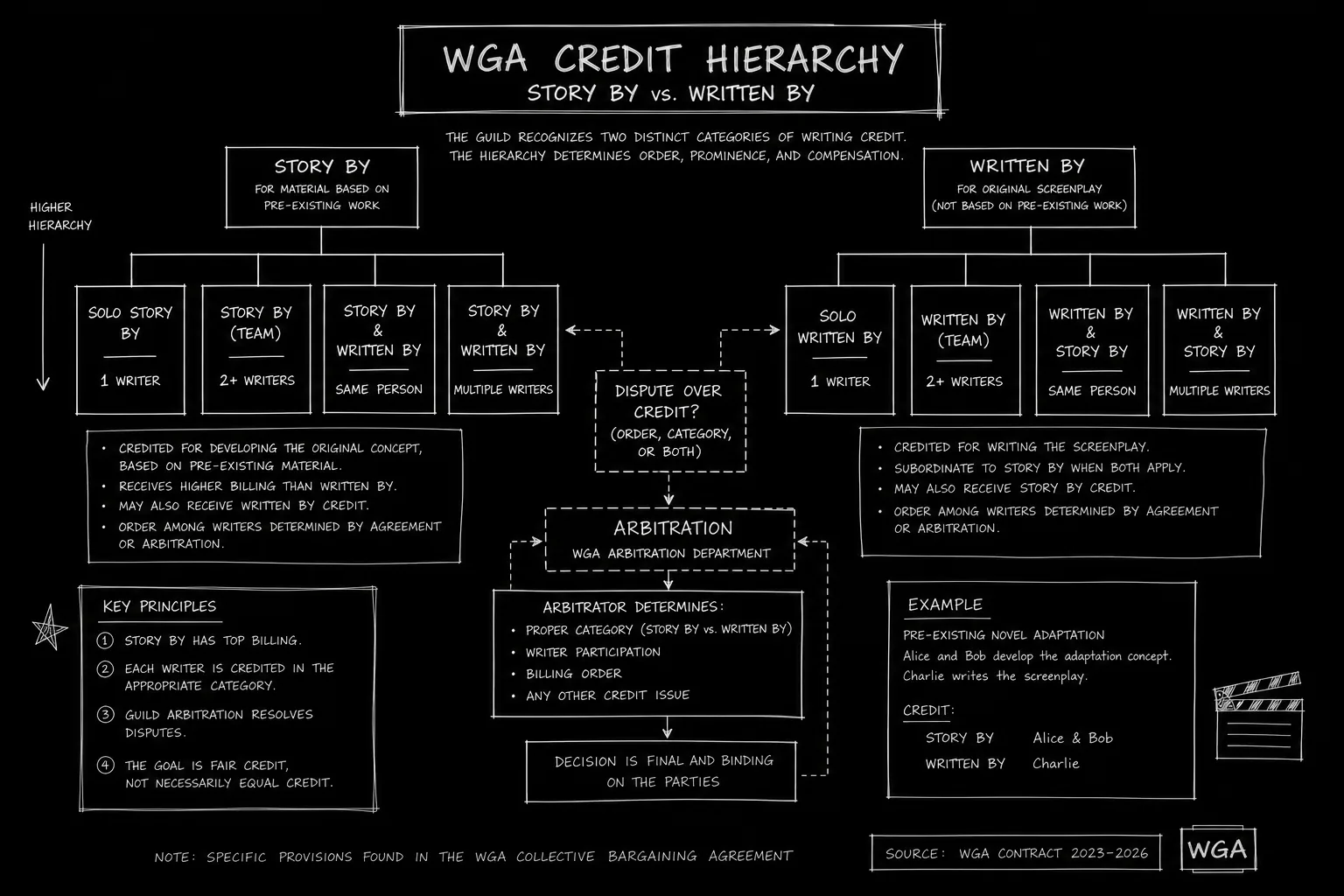
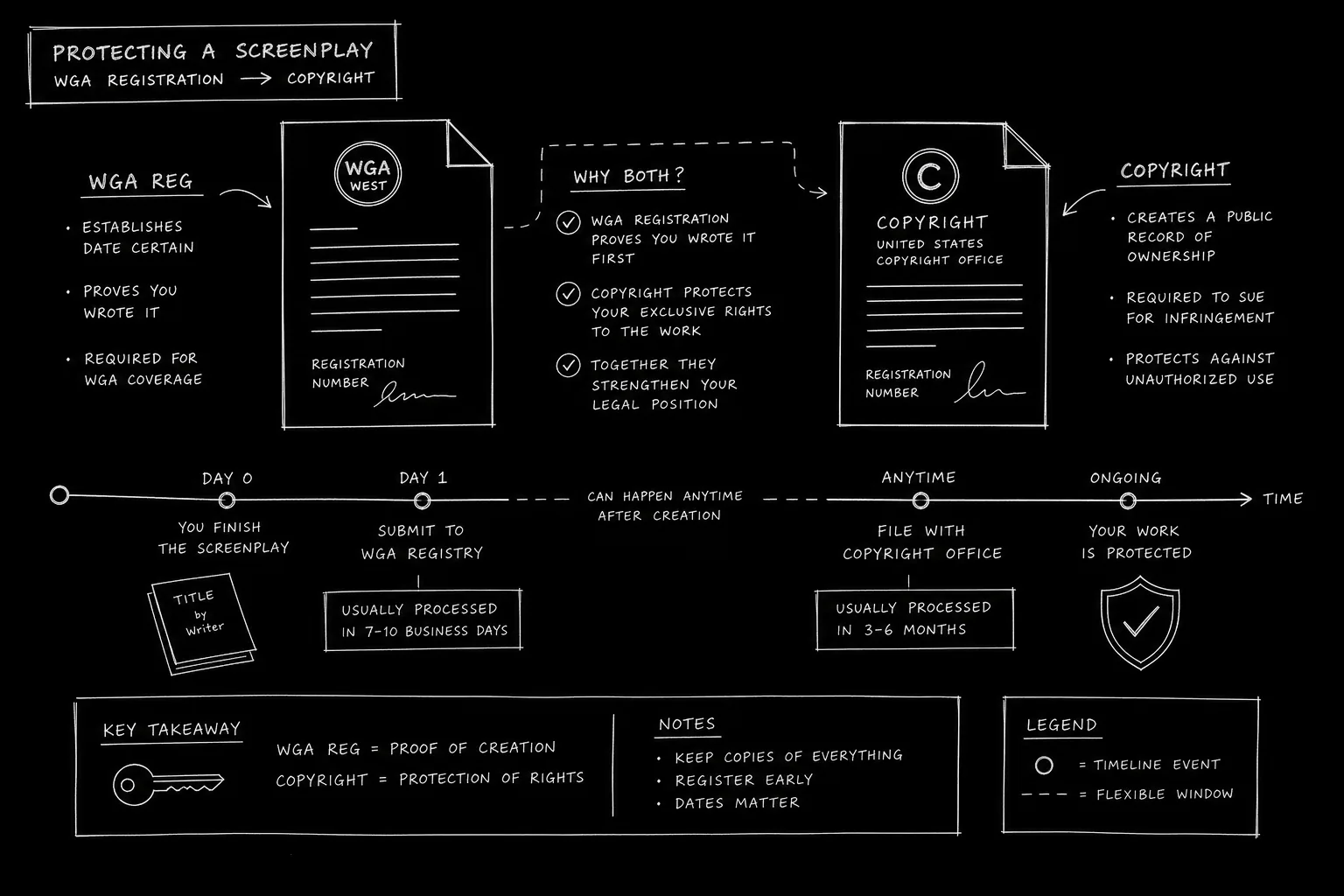
Forgetting to register and option in both names. When you register the script with the Copyright Office, list both writers. When you sign an option, both sign (or one with authority from the other). Chain of title matters to buyers.
Not clarifying underlying material. If one person brought the idea or a prior draft, say so in the agreement. Otherwise the other may claim equal ownership of the concept and you'll have a dispute when "story by" or money is at stake.
The Perspective
Writing with a partner can be one of the best experiences in screenwriting, or one of the worst if you skip the paperwork. A collaboration agreement before page one is the cost of doing business. It's not unromantic. It's professional. Agree on ownership, credit, and what happens if someone leaves or the project stalls. Then write. When the script is ready, your option and copyright will be clean, and you'll both know exactly where you stand.
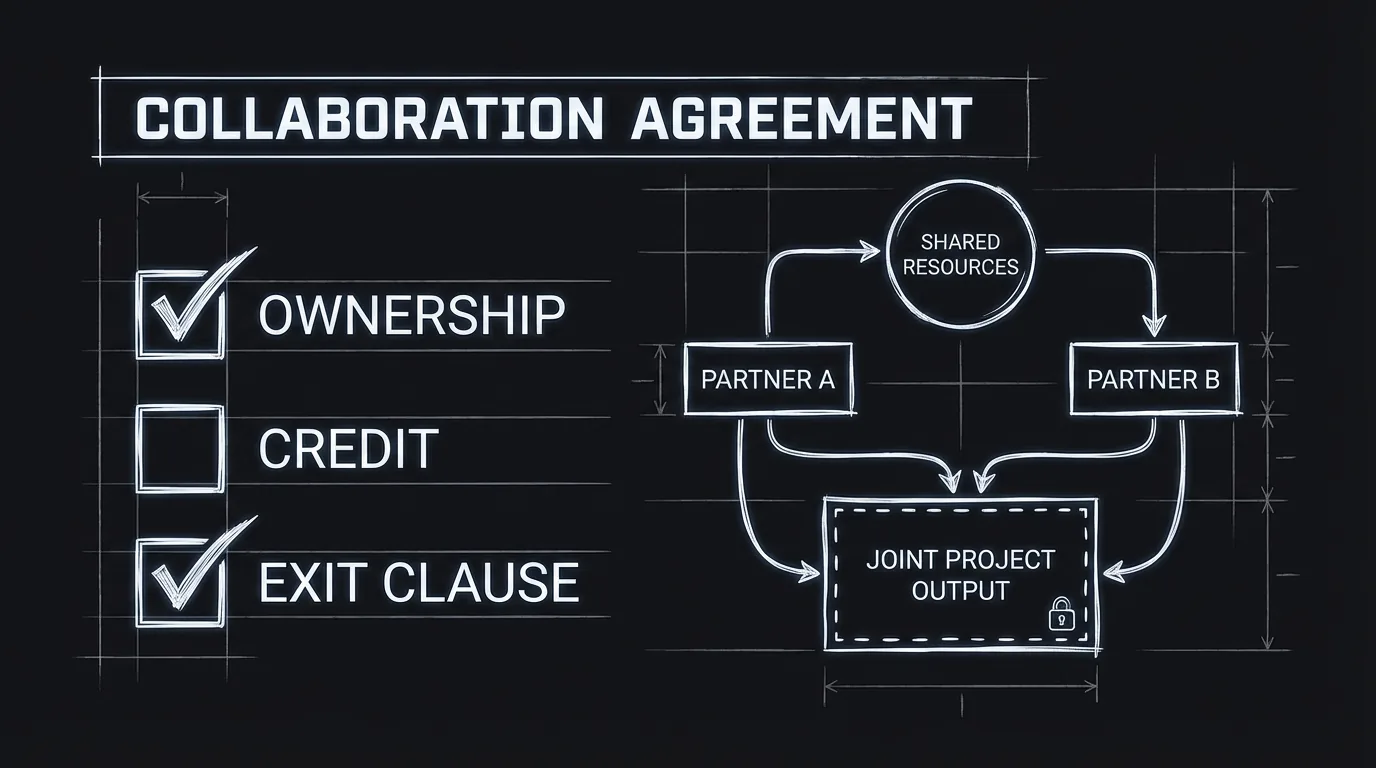
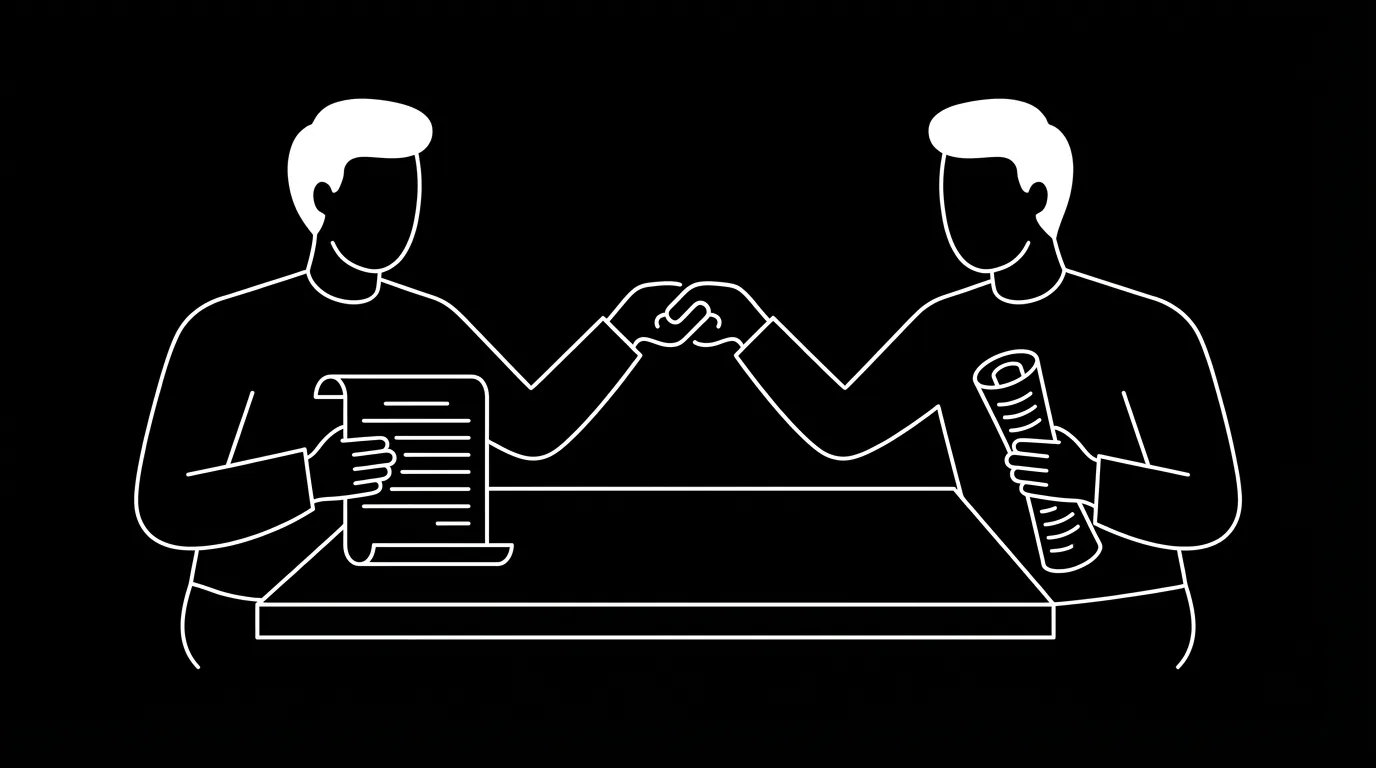
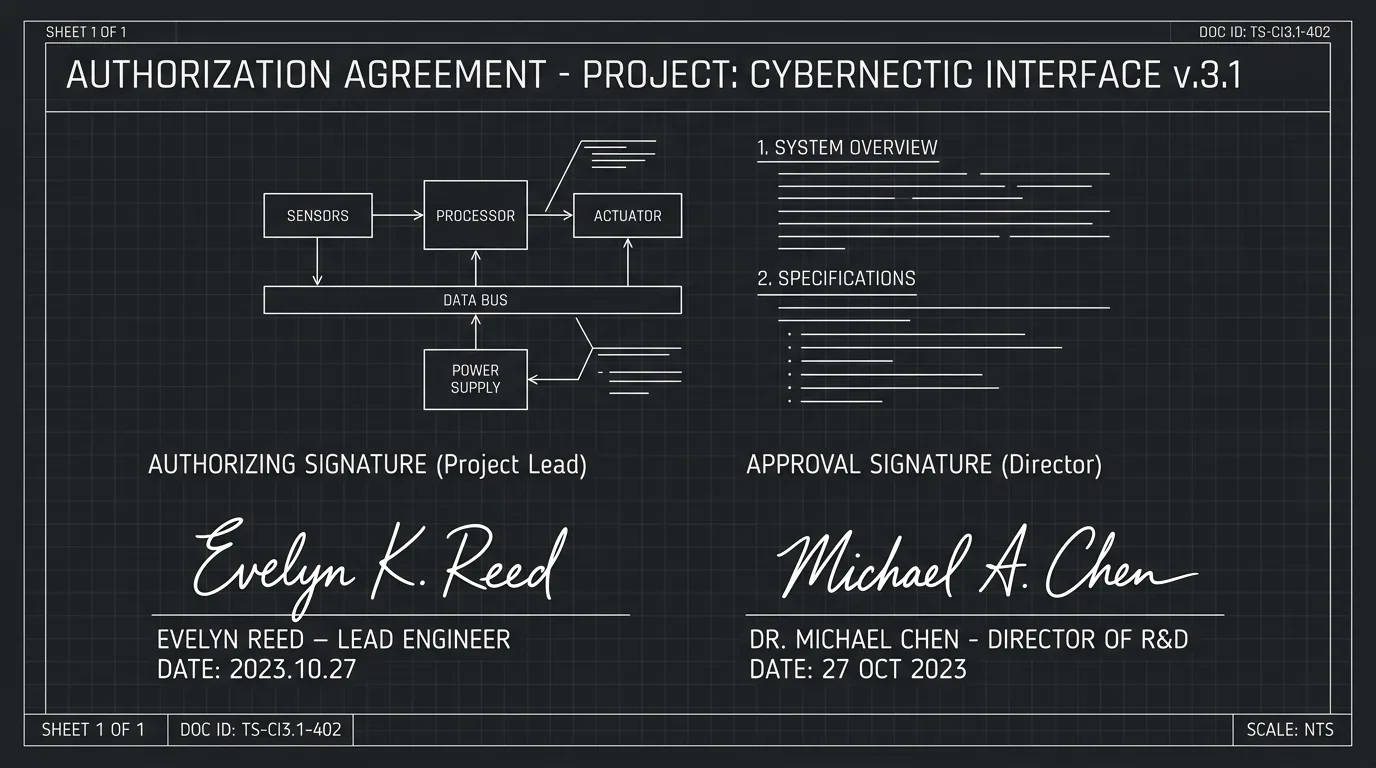
These two visuals work as a pair: the first shows Collaboration agreement checklist; dark mode technical sketch, and the second shifts to Two signatures on one document; dark mode technical sketch - compare them briefly, then move on.
Final Step
Build your next script with Screenweaver
Move from ideas to production-ready pages faster with timeline-native writing and AI-assisted story flow.
Try Screenweaver