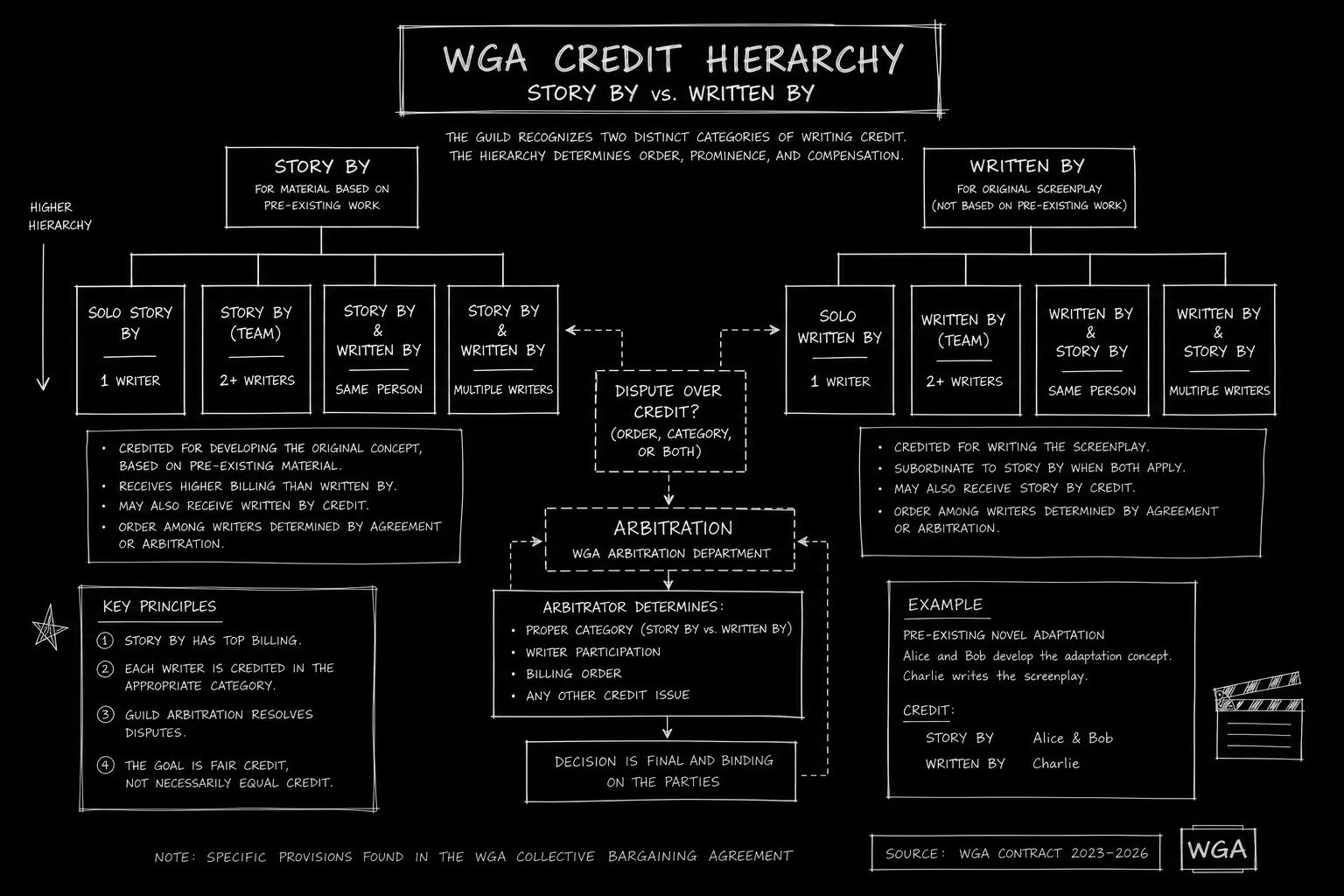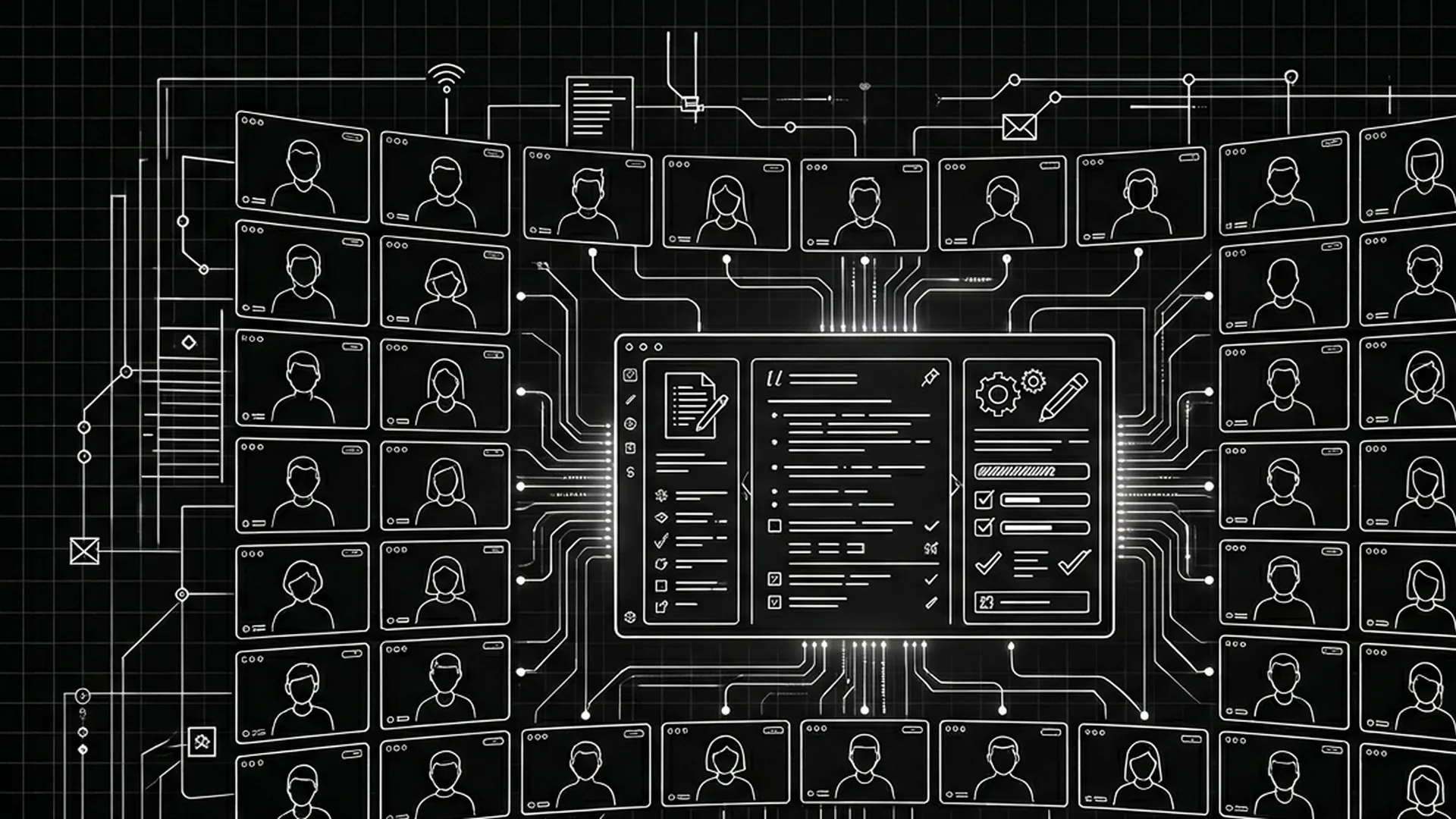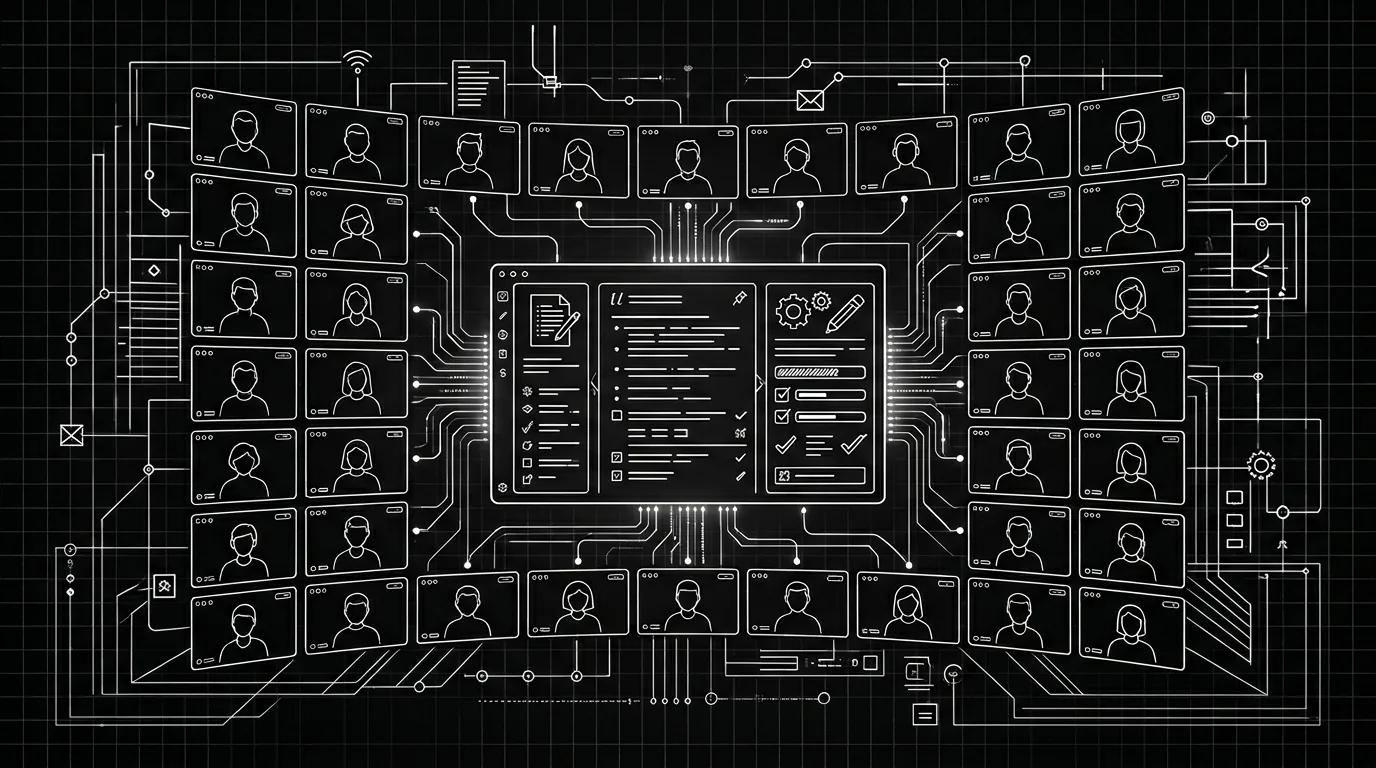

The Zoom call has twelve boxes. Eleven writers, one showrunner. It's hour six of the room. Someone pitched a runner for Episode Four three hours ago, a callback gag that would pay off in the finale, and nobody wrote it down. The showrunner scrolls through the shared doc, can't find it, and asks: "Wait, what was that joke about the dog?" Silence. Nobody remembers.
Remote writers rooms have been around for a few years now, accelerated by the pandemic and sustained by budget logic. They work. But they have a coordination problem. In a physical room, someone's always near the whiteboard. Notes accumulate in real time. Side conversations get overheard. The texture of the day, who said what, when energy flagged, which bits got laughs, is absorbed collectively.
In a remote room, that texture dissipates. People mute. Notes fragment across individual docs. Nobody can skim the whiteboard because there isn't one. The information that used to live in the room now has to be manually captured, or it vanishes.
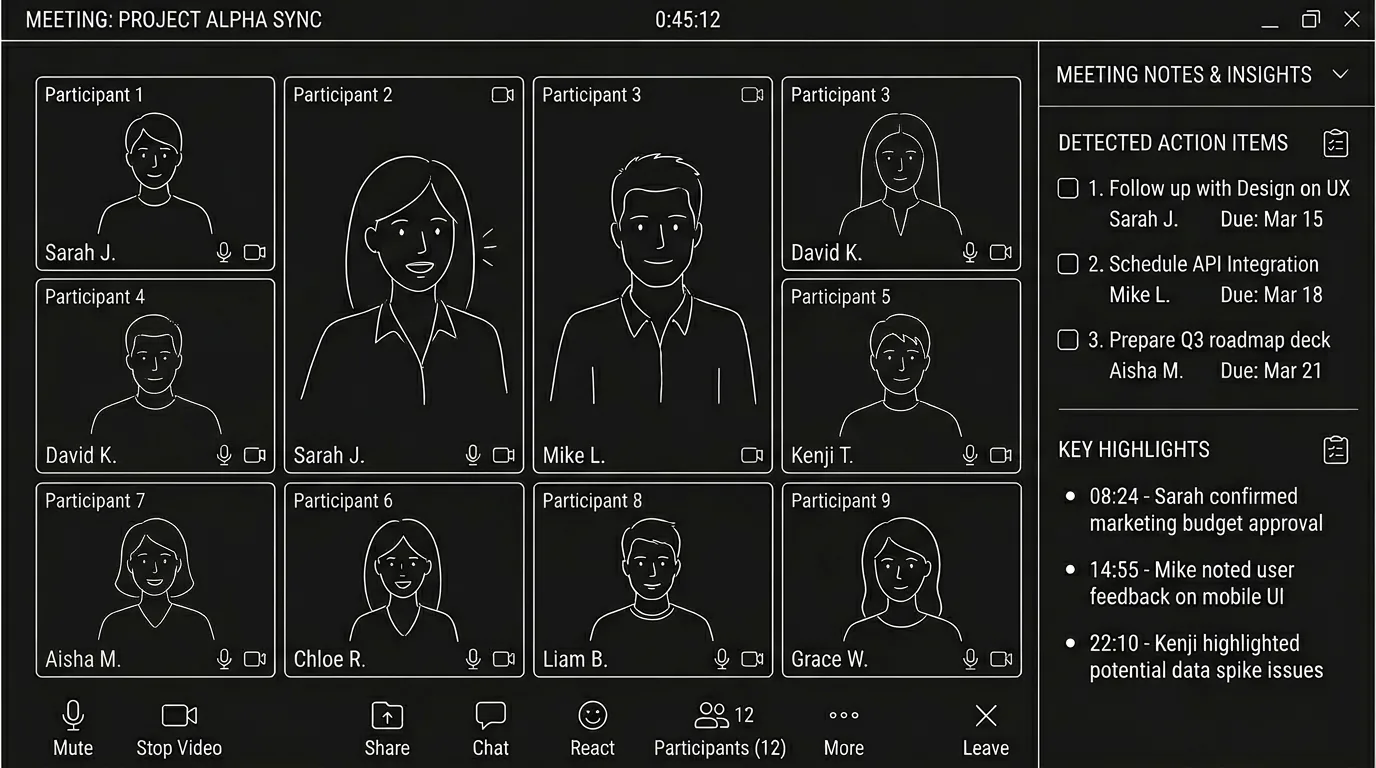
Enter virtual assistants. Not the voice-activated gadgets in your kitchen, software assistants built into the video call or writing platform. They transcribe. They tag. They summarize. They track who spoke and what they said. They flag action items. They compile the day's beats into a document that hits your inbox before you've finished your commute home.
These tools are changing the dynamics of remote rooms in ways that go beyond note-taking. They're changing who has power, how decisions get remembered, and what it means to "be in the room" when the room isn't a room at all.
Cinematic workflow frames
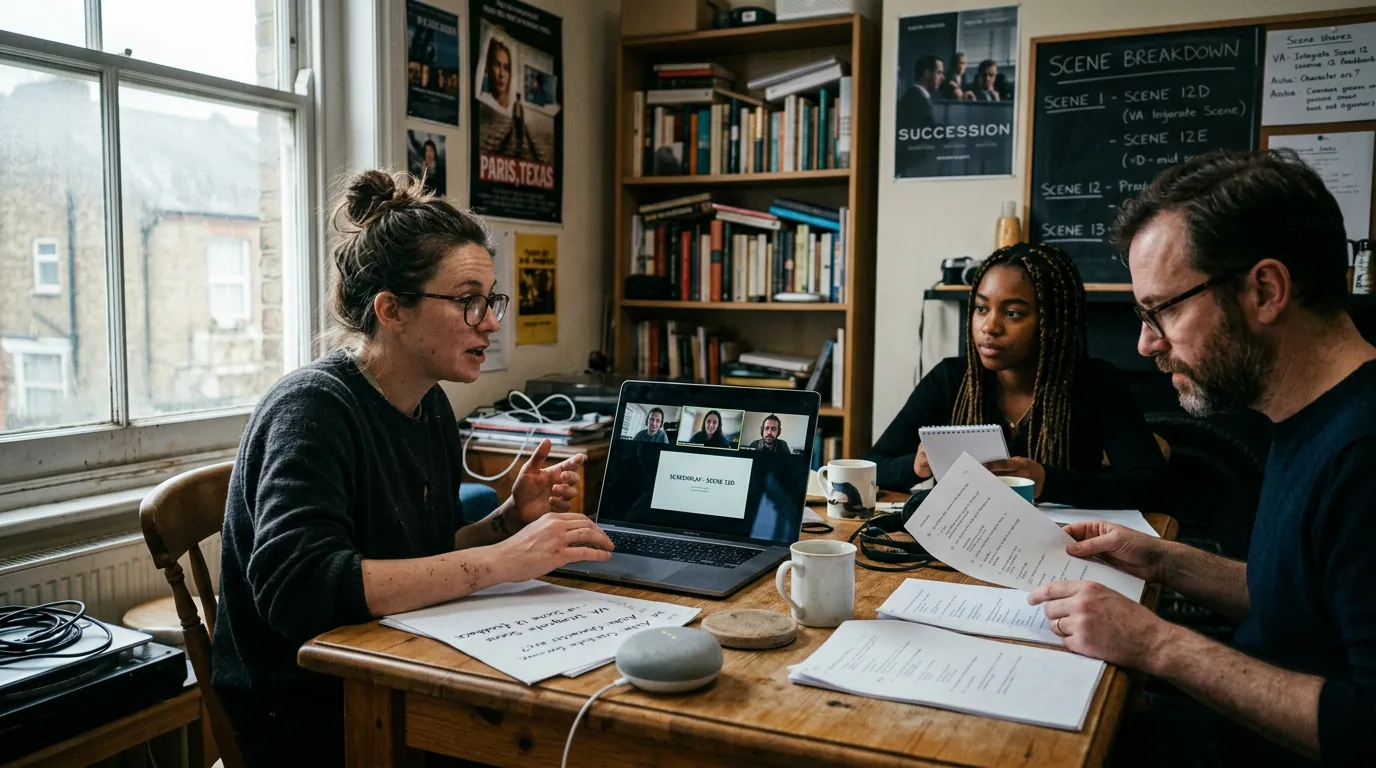
These two visuals work as a pair: the first shows Cinematic workflow still, first angle, 35mm film grain, and the second shifts to Cinematic workflow still, second angle, 35mm film grain - compare them briefly, then move on.
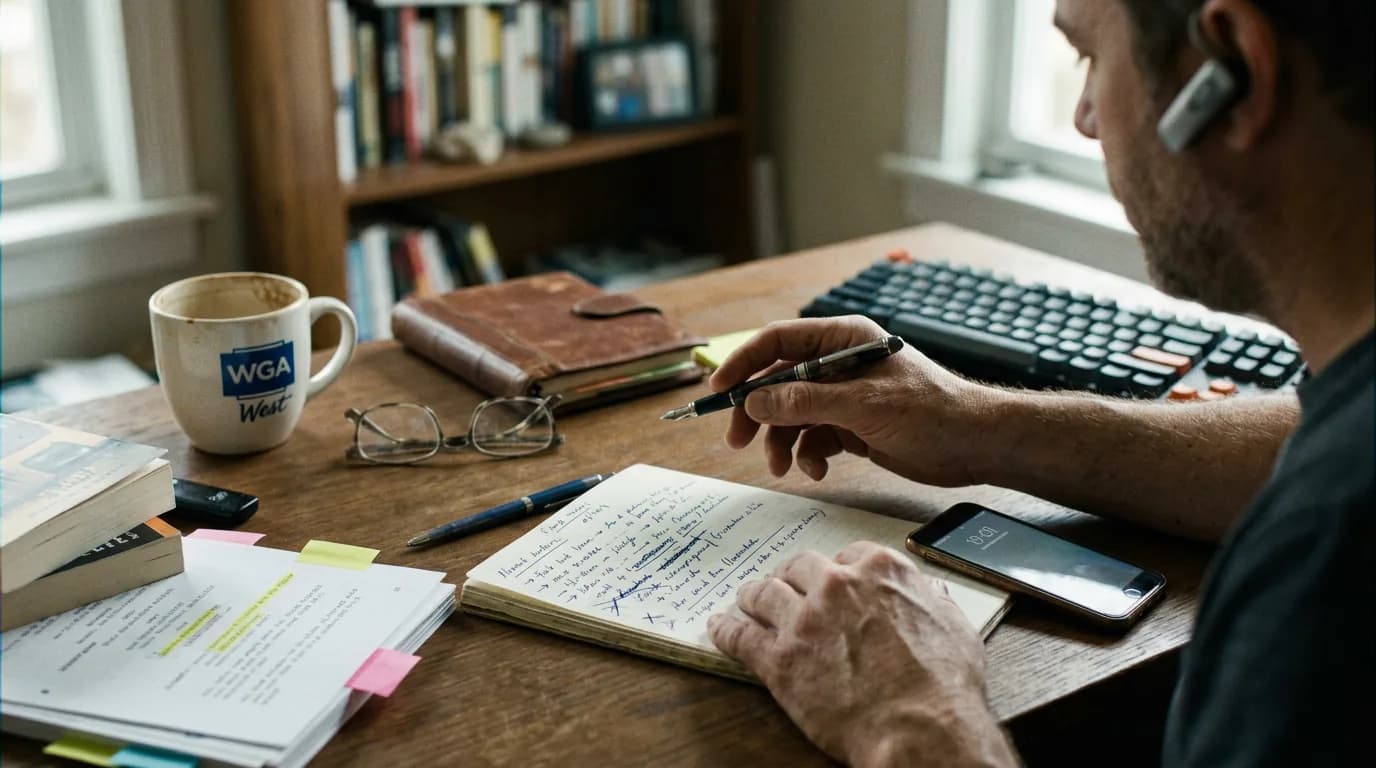
What "Virtual Assistant" Means in This Context
Let's define terms. We're not talking about a human assistant joining the call (though many rooms have those too). We're talking about software, embedded in the video platform or running alongside it, that performs functions previously handled by the writers' assistant or script coordinator.
The typical feature set includes:
Live transcription. Everything said in the call is converted to text in real time. The transcript is searchable.
Speaker identification. The software tags who said what. "MARCUS: What if the dog comes back in Act Four?"
Action item detection. When someone says "Let's make sure to add that to the outline" or "Can you run that by the network?", the assistant flags it as a task.
Summarization. At the end of the session, the assistant generates a summary: topics discussed, decisions made, open questions.
Highlight clips. Some tools let you mark moments during the call. "That pitch was great, bookmark it." The clip is automatically extracted.
Integration with documents. The transcript syncs with a shared writing doc. You click a timestamp and jump to the moment in the recording.
Not every room uses all features. Some use transcription only; others use the full suite. But the trend is toward more automation, not less.
How This Changes the Writers' Assistant's Role
Traditionally, the writers' assistant sat in the room and typed furiously. They captured everything: the jokes, the story beats, the tangents, the debates. They became the institutional memory of the room. A good writers' assistant knew where every idea came from and could recall, a month later, when the subplot about the sister was first pitched.
Virtual assistants take over the transcription. The machine never zones out. It never mishears. It captures everything, verbatim, tagged by speaker.
Does this eliminate the writers' assistant role? Not exactly. What it does is elevate the role. Instead of typing, the assistant curates. They review the machine transcript and pull out what matters. They contextualize. They organize. The machine gives them the raw material; they turn it into useful documents.
In the best rooms, the writers' assistant now functions more like an editor. They know what the room values, what decisions are provisional, which pitches are serious and which are brainstorming chaff. The machine can't make those judgments. The assistant can.
The machine transcribes. The human decides what the transcript means.
For aspiring writers' assistants, this means the job requires different skills. Less stenography, more editorial judgment. Less typing speed, more story sense. The barrier to entry shifts.
A Realistic Scenario: Breaking Episode Nine
Let's see how this plays out in a day.
9 a.m.: The remote room opens. Twelve boxes, one shared outline doc, one virtual assistant running in the sidebar. The showrunner says, "Today we're breaking Episode Nine." The assistant begins transcribing.
10:30 a.m.: A writer pitches a cold open: the protagonist wakes up handcuffed to a stranger. Discussion follows. Some love it; some think it's too far. The showrunner says, "Let's table it, circle back after lunch." The assistant flags this as an open question.
12:00 p.m.: Lunch break. The writers' assistant reviews the morning transcript. They highlight three strong pitches, summarize the debate about the cold open, and note that nobody has figured out the Act Three break yet.
1:30 p.m.: The room reconvenes. The showrunner asks, "What did we land on this morning?" Normally, this question requires hunting through notes. Instead, the assistant shares the curated summary. The showrunner skims it in thirty seconds and says, "Okay, we liked Marcus's idea about the sister. Let's go from there."
4:00 p.m.: The room wraps. The assistant generates a full summary: beats for Acts One through Three, open questions for tomorrow, action items (who's writing what by when). This document goes to the entire staff.
5:00 p.m.: A writer who missed the afternoon session catches up by reading the summary and skimming the transcript for their favorite beats. They're prepared for tomorrow without having to watch a five-hour recording.
The room didn't just record itself, it organized itself. The gap between what was discussed and what is remembered has shrunk.
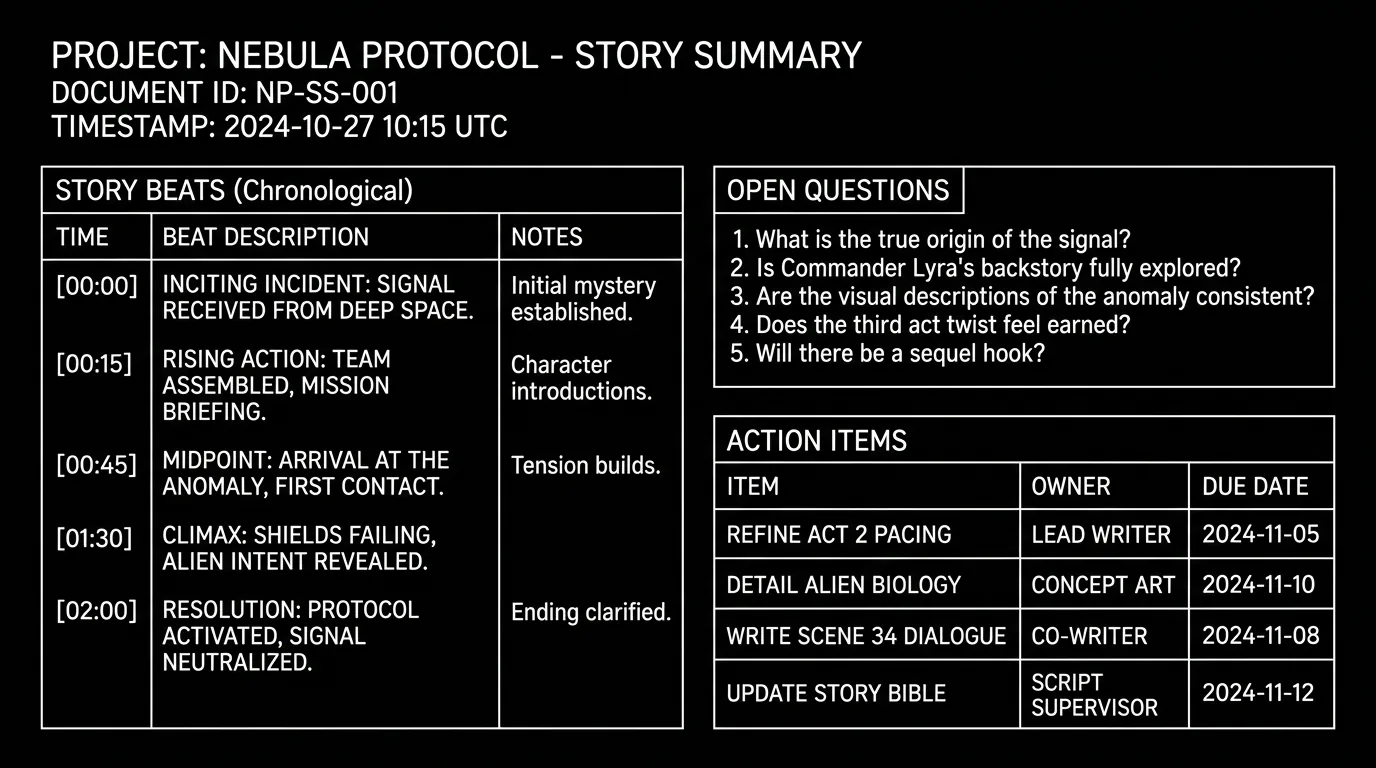
A Table: What Gets Automated vs. What Stays Human
| Function | Automated? | Human Still Needed? |
|---|---|---|
| Transcription | Yes | Light editing for errors |
| Speaker identification | Yes | Occasional correction |
| Action item flagging | Yes | Validation that it's actually an action item |
| Summarization | Partial, captures topics | Human decides what's signal vs. noise |
| Tone/energy assessment | No | Writers' assistant's judgment |
| Pitch quality evaluation | No | Showrunner's judgment |
| Story logic checks | No | Room's collective judgment |
| Integration with prior episodes | Partial, can cross-reference | Human ensures continuity |
| Credit attribution (who pitched what) | Yes, tagged by speaker | Human ensures fairness |
The pattern: machines handle capture and retrieval; humans handle evaluation and prioritization.
The Power Dynamics Question
Here's where things get complicated. When everything is transcribed, everything is on record. This changes how people behave.
In a physical room, bad ideas die quietly. You pitch something half-baked, it doesn't land, and it's forgotten. The room's memory is merciful.
In a transcribed room, that pitch exists forever. Tagged with your name. Searchable. If, three months later, someone wants to prove you pitched the subplot that bombed, they can find it.
This changes the psychology of the room. Some writers become more cautious, less willing to throw out rough ideas because everything is documented. Others become more performative, aware that the transcript is a record and wanting to sound good on it.
Showrunners need to address this directly. The healthiest rooms establish ground rules: transcripts are working documents, not evidence. Bad pitches are part of the process. Nobody gets dinged for an idea that didn't work. The transcript captures everything, but judgment about the transcript is a human responsibility.
Documentation without psychological safety is surveillance. The tool only helps if the room still feels free to fail.
Some rooms enforce this by making transcripts internal-only, visible to the writing staff but not shared with the network or studio until edited into summaries. This preserves the room's freedom while still benefiting from the documentation.
Try it free
Try Screenweaver for free on your script
It is free. Import your existing project, get a clearer view of your outline, and regain control of your story structure in minutes.
Start FreeThree Scenarios: Different Room Configurations
Scenario A: Fully Remote, Established Show
A show in its fourth season. The writers know each other well. They're used to Zoom. The virtual assistant runs quietly in the background; nobody pays much attention to it.
How the assistant helps: Continuity. The writers reference jokes and subplots from past seasons. The assistant's searchable archive lets them pull up when a runner was established, what the original wording was, and how it evolved.
Potential pitfall: Complacency. The room stops verifying the assistant's summaries because they trust the system. Minor errors compound over time.
Scenario B: Hybrid Room (Some In-Person, Some Remote)
Half the writers are in LA, in a physical room with a camera. Half are remote, on Zoom. The in-person writers have side conversations the camera doesn't catch.
How the assistant helps: Equity. The assistant ensures remote writers have the same record as in-person writers. They can review the transcript and not miss the bits that happened off-mic.
Potential pitfall: The in-person writers naturally dominate, they can read body language, react faster, build rapport in ways remote writers can't. The assistant documents the gap but doesn't fix it. Showrunner must actively include remote voices.
Scenario C: New Show, New Room
A pilot season. The writers don't know each other. The show's voice is undefined. Everything is discovery.
How the assistant helps: Capture of early decisions. The first weeks of a room generate hundreds of ideas, most of which are discarded. The assistant archives everything, so when the showrunner says "Remember that idea from week two?", someone can find it.
Potential pitfall: Overcapture. The room hasn't yet learned what matters and what doesn't. The assistant treats everything as equally important, generating overwhelming documentation. The writers' assistant needs to aggressively filter.
The "Trench Warfare" Section: What Goes Wrong
Failure Mode #1: Transcript Overload
The assistant generates eighty pages of transcript per day. Nobody reads it. The summary is too long. The documentation exists but is useless.
How to Fix It: Set aggressive length limits on summaries. The showrunner should define what "matters", story beats, decisions, action items, and the assistant should trim everything else. A one-page summary is more valuable than a twenty-page dump.
Failure Mode #2: Speaker Misattribution
The assistant tags Marcus when Alicia was speaking. Over time, credit gets misallocated. Alicia pitched the cold open, but the record says Marcus did.
How to Fix It: Human review of speaker tags, especially for pitches that might matter later. Before the summary goes out, the writers' assistant should verify attribution for significant contributions.
Failure Mode #3: Chilling Effect
Writers stop pitching freely because they know everything is recorded. The room gets quieter. Fewer risks. Fewer breakthroughs.
How to Fix It: Showrunner sets the tone. Explicitly frame the transcript as a tool, not a test. Praise messy pitches. Celebrate the ideas that didn't work but led somewhere. Model psychological safety.
Failure Mode #4: Over-Reliance on Summaries
Writers stop attending live sessions because they can "catch up from the summary." Room energy drops. Collaborative energy evaporates.
How to Fix It: The summary is a backup, not a replacement. Attendance matters. The showrunner should address absences directly and reinforce that live presence, even remote presence, is expected.
Failure Mode #5: Technical Failures
The assistant crashes mid-session. The transcript is lost. The day's work isn't captured.
How to Fix It: Redundancy. Run a backup recorder. Have the human assistant take parallel notes, even if abbreviated. Never rely on a single system.
What This Means for Room Culture
The deeper question isn't whether virtual assistants work, they do, but what kind of room they create.
A well-documented room can be a meritocracy. If the transcript captures who pitched what, credit is clear. Writers who contribute see their contributions logged. The paper trail supports fair attribution.
But a well-documented room can also be an archive of anxiety. If every half-baked idea is preserved, the pressure to pitch carefully, rather than freely, can stifle creativity. The room loses the looseness that makes it generative.
The difference is culture. The showrunner decides whether documentation is a resource or a weapon. They decide whether the transcript is a tool for memory or a test for performance. The technology is neutral; the application is not.
Rooms that thrive with virtual assistants are rooms that were already healthy. They had psychological safety, clear roles, and a showrunner who valued contribution over perfection. The assistant amplified what was already working.
Rooms that struggle with virtual assistants are often rooms that had pre-existing problems: competitive dynamics, unclear credit, fear of failure. The assistant makes those problems visible. It doesn't create them, but it doesn't fix them either.
The Perspective: The Room Is Still the Room
Here's the thing people miss when they worry about automation in writers rooms. The room's purpose isn't documentation. The room's purpose is story.
Virtual assistants make documentation easier, but documentation was never the hard part. The hard part is generating ideas, finding the story, wrestling with character, landing the joke. No assistant, virtual or human, does that.
What the assistant does is free the room to focus on story. Writers don't have to repeat themselves because the transcript exists. The showrunner doesn't have to remember where the B-plot was left because the summary is right there. Energy that used to go to coordination now goes to creation.
This is the promise: not that machines will write the stories, but that machines will take the administrative weight so humans can write better.
The room is still the room. The writers are still the writers. The assistant is just watching, capturing, tagging, summarizing, so that when the work is done, nothing is lost.
That's not transformation. That's infrastructure. And good infrastructure disappears into the work it supports.
Further reading:
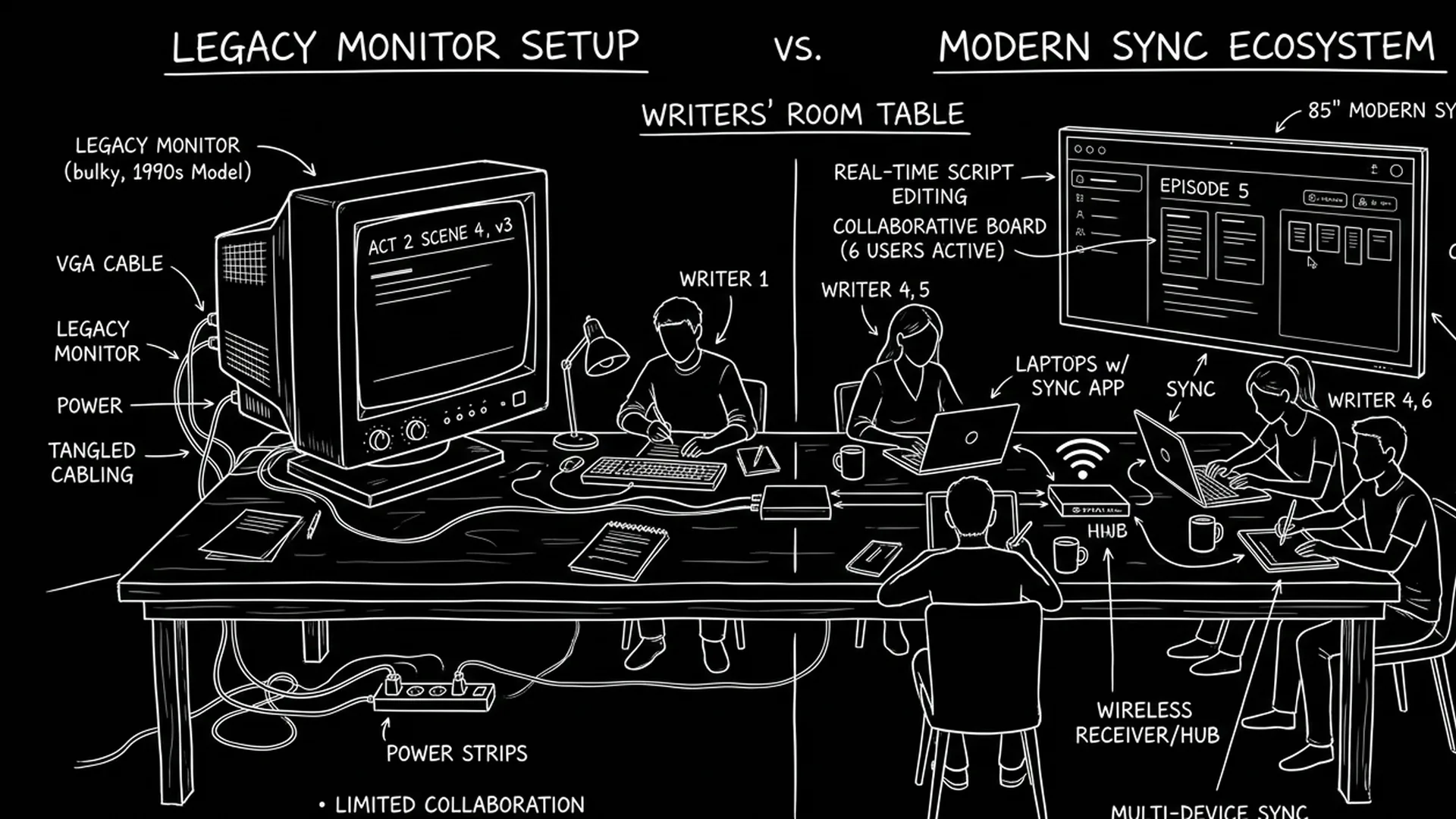
- For guidance on real-time co-writing and traditional software sync, see how distributed teams keep scripts aligned.
- Learn how showrunners manage collaborative dynamics in our what is a showrunner guide.
- Zoom and other platforms publish documentation on their transcription and assistant features at zoom.us/docs.
Final Step
Build your next script with Screenweaver
Move from ideas to production-ready pages faster with timeline-native writing and AI-assisted story flow.
Try Screenweaver