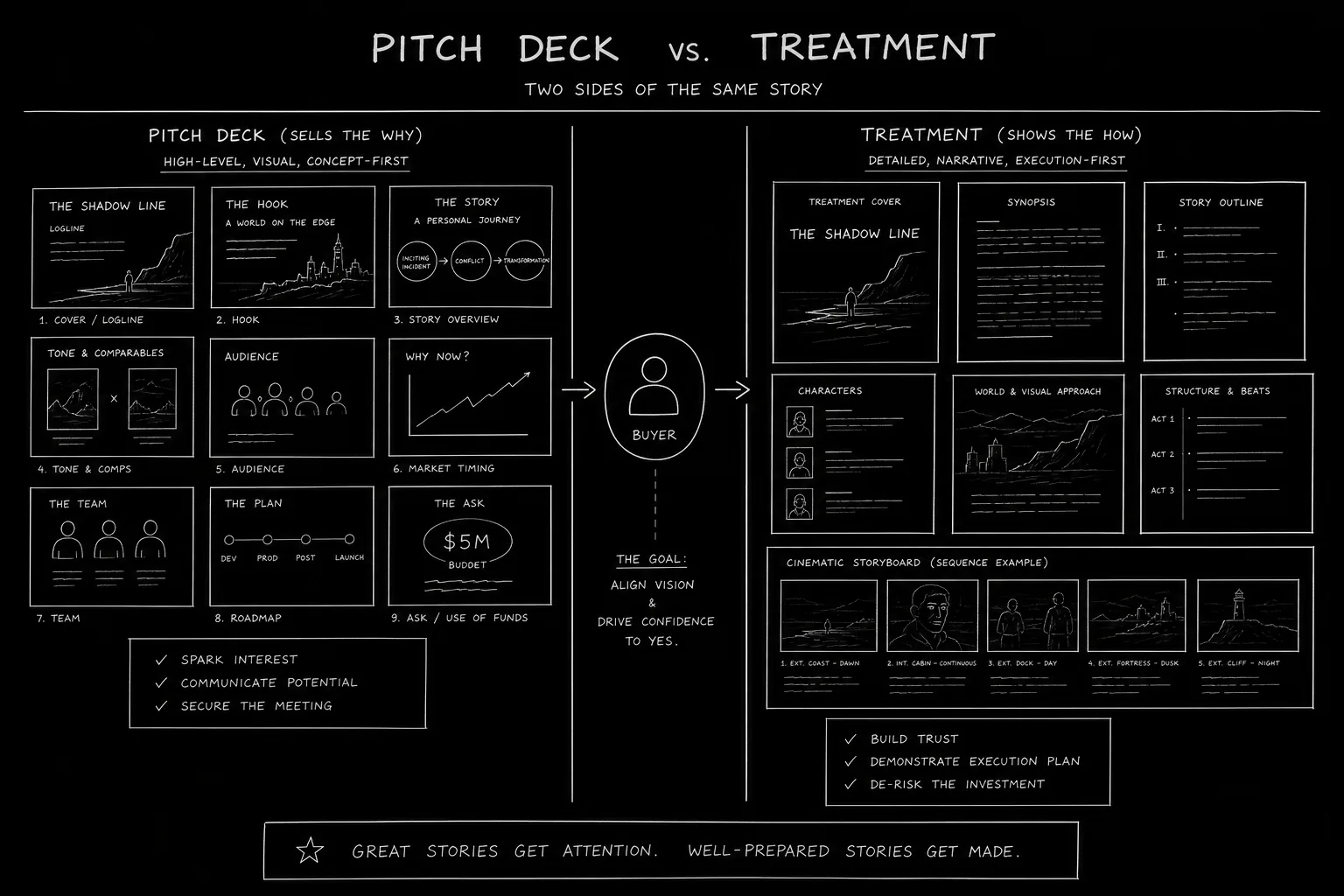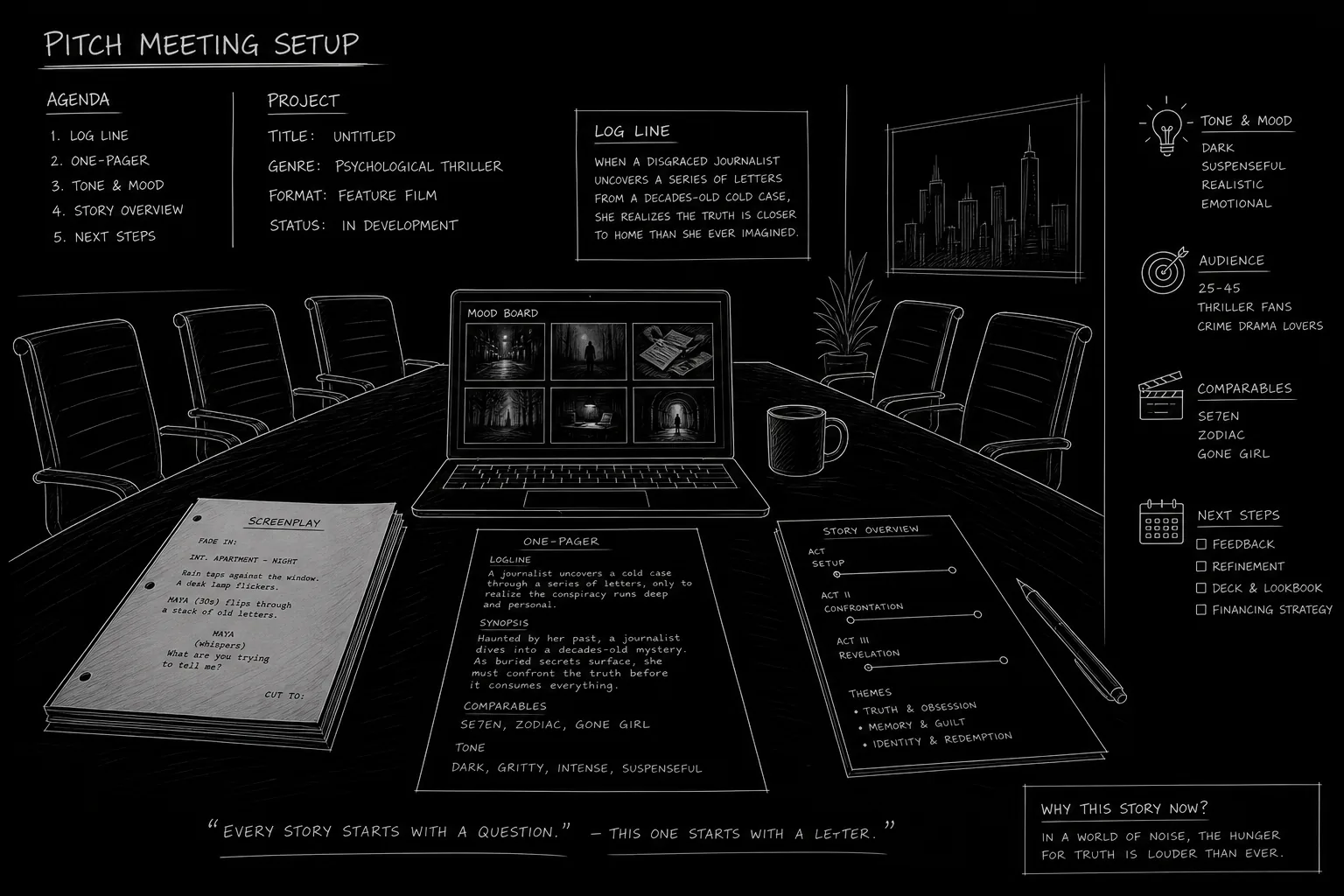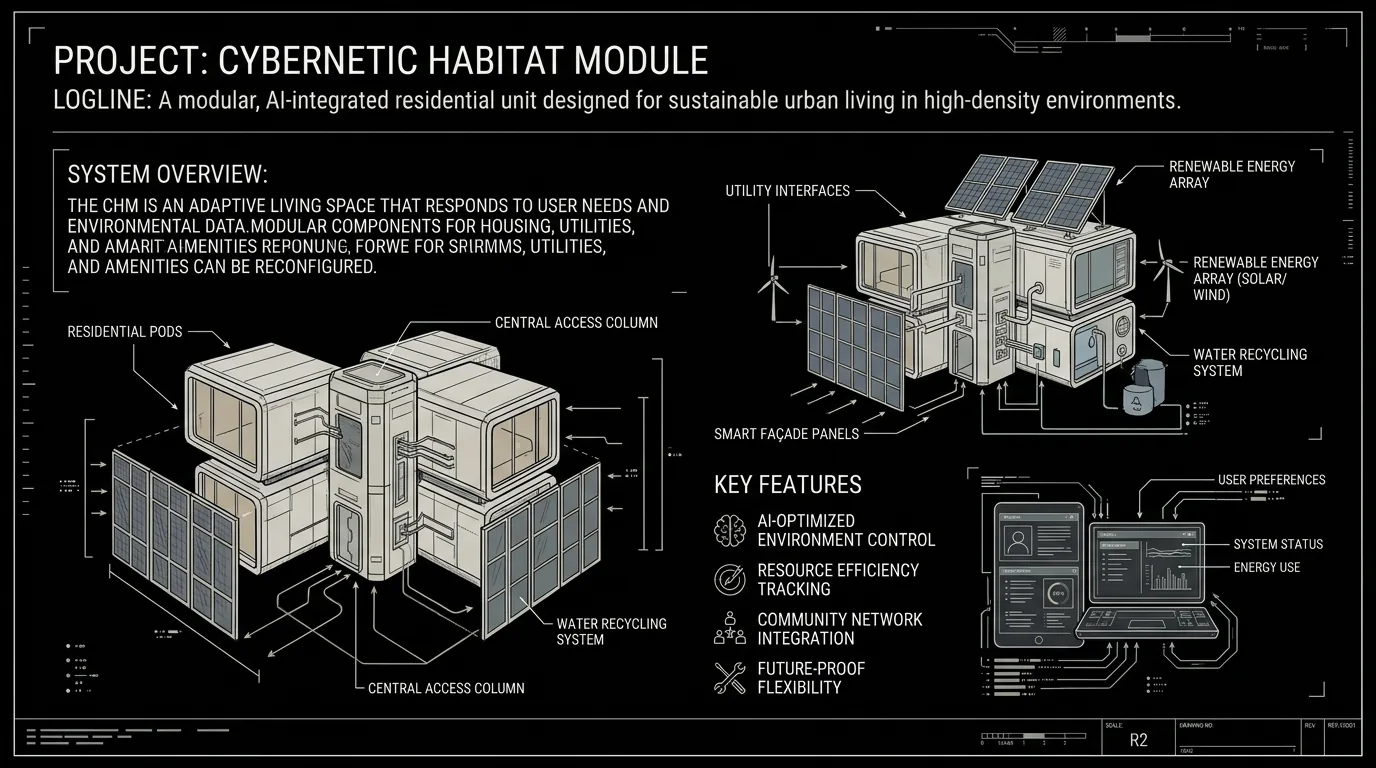

You get the meeting. Not the full hour, the quick one. "Send us a one-pager." You have one page to make them want the script, the pitch, or the series bible. Not two pages. Not a treatment. One page. That constraint is the point. It forces you to choose what matters: the hook, the world, the engine of the show, and why you. Nail it and you get the next step. Fumble it and you’re another attachment in the inbox.
A one-pager is a single-page document that summarizes your series or film for meetings, submissions, and quick reads. It lives in the ecosystem between the logline and the full pitch deck or bible. Execs and producers use it to decide whether to request the pilot, the bible, or a pitch meeting. This guide walks you through what to put on that page, what to cut, and how to make it do the work you need it to do.
Free tool: use the Logline Workshop to build and pressure-test your logline.
What a One-Pager Is For
The one-pager answers three questions in under a minute of reading: What is it? Why does it work as a series (or film)? Why are you the one to write it? It’s not a synopsis of every episode. It’s not a character list. It’s a sales document. Its job is to create enough interest that the reader asks for more. So every block of text has to earn its place. If a sentence doesn’t sell, cut it.
Think of it as the document you leave behind after a coffee meeting, or the thing you send when someone says "Send me something I can pass along." It has to stand alone. The reader might not have heard your pitch. They might be reading it on a phone. So clarity and punch matter more than completeness.
The one-pager doesn’t tell the whole story. It makes them want the whole story. One page. No more.
The Structure: What to Put on the Page
Header. Title of the series (or film). Optional: genre, format (e.g. "Limited Series, 8 episodes"), and your name and contact (or your rep’s). Keep it to two or three lines. No logo needed unless it’s a company submission.
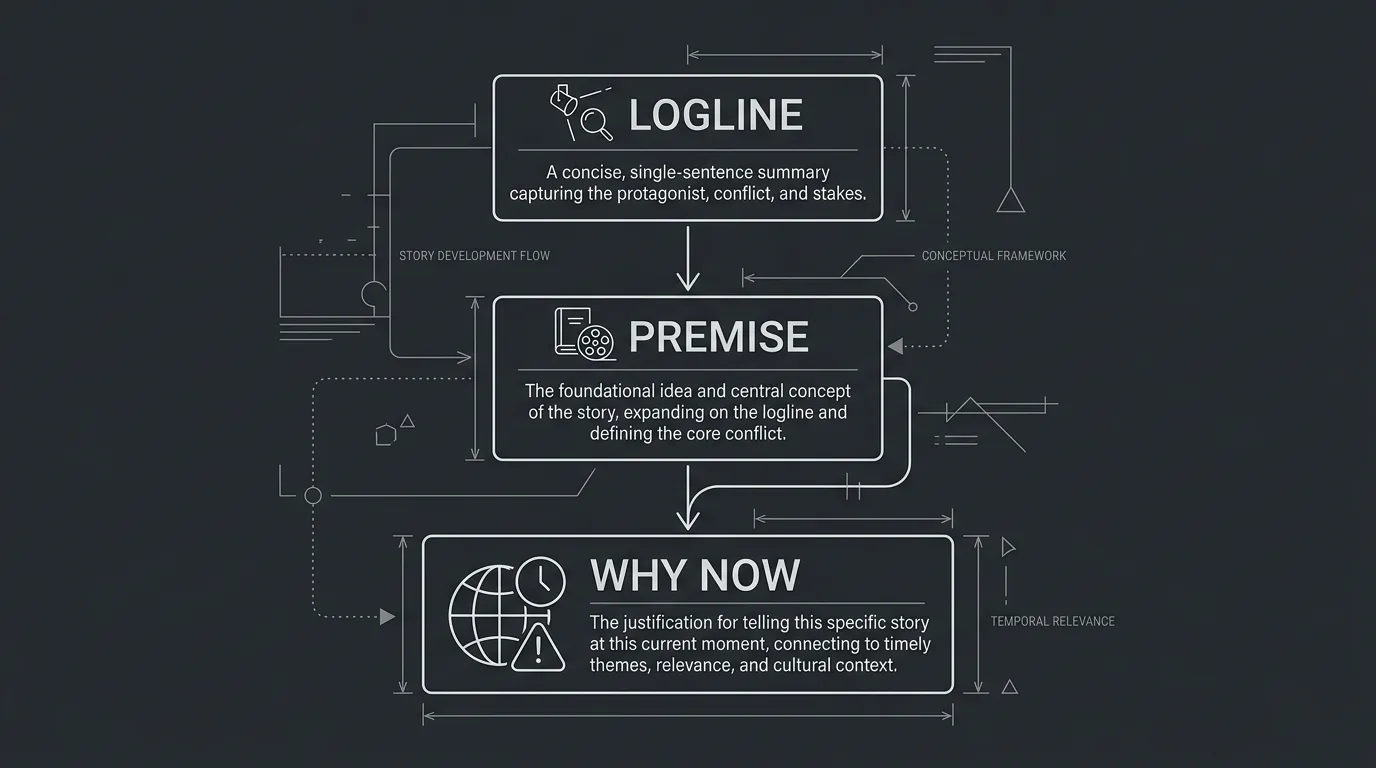
Logline. One to two sentences. Same formula as everywhere else: protagonist, goal, obstacle, stakes. This is the first thing their eye hits after the title. It has to land. If you’ve already built a strong logline, paste it here. No variation. One version, everywhere.
Series (or film) premise. One short paragraph. What is the show about in terms of engine and world? Who is the central character? What is the ongoing tension or question that drives the series? For a procedural, what’s the case-of-the-week and what’s the serialized spine? For a limited series, what’s the one story and how does it build? Don’t list episodes. Don’t list every character. Give them the throughline. Three to five sentences max.
Why now / Why this. One short paragraph or two to three bullets. Why does this story belong on screens now? Cultural moment, gap in the market, personal connection, or proof of concept (e.g. short film, book, article). This is where you answer "Why should we care?" and "Why you?" Keep it tight. One paragraph or a few bullets. No essay.
Tone and comps. One line or a short phrase. "Tone: Succession meets Fleabag." Or: "Comps: The White Lotus (tone), Big Little Lies (structure)." You’re giving them a filing cabinet. They need to know how to position the show internally. Be specific. Comps from the last few years show you’re current. Our guide on comparative titles goes deeper on picking and using comps.
Optional: key characters. Only if the series is heavily character-driven and the cast is part of the sell. Three to five names with one line each. "Maya, 42 , the showrunner who’s losing her grip." "James, 28 , the writer who’s about to blow the lid off." Don’t list everyone. List the people who define the show. If your one-pager is already dense, skip this and let the premise carry it.
Optional: your bio. One to two lines. Credits, relevant experience, or why you’re the writer for this. Only include if the reader doesn’t know you. If you’re repped, sometimes the rep’s name is enough and you don’t need a bio.
Footer. Your name, email, (optional) phone. Or "Represented by [Agency/Manager]." One line.
That’s it. Logline, premise, why now, tone/comps, maybe characters, maybe you. One page when printed or viewed at 100%. If it runs to two pages, you’ve written too much. Cut.
Relatable Scenario: The Serialized Drama
You have an eight-episode limited series about a family running a vineyard during a drought and a succession crisis. You’re tempted to put: "Episode 1: We meet the family. Episode 2: The will is read…" That’s a bible, not a one-pager. On the one-pager you write: logline (e.g. "When the patriarch of a legendary vineyard dies without naming a successor, his three adult children must choose between saving the estate and destroying each other, as a historic drought and a corporate buyer close in."). Then one paragraph: the vineyard is the setting; the question is who will control it and at what cost; the tone is family noir, secrets and alliances. Then why now: water crisis, family business, relevance. Then comps: Succession meets Mare of Easttown. No episode list. They’ll ask for the series bible if they want structure and episodes.
Relatable Scenario: The Comedy
Your show is a workplace comedy about a failing escape room. One-pager: logline ("The manager of the worst-reviewed escape room in the city must turn a profit in 90 days or lose the business, and the found family of misfits who work there."). Premise: one paragraph on the engine, every week a new group of customers, internal dynamics, the ticking clock. Why now: escape rooms as a moment, underdog stories. Tone: Superstore meets The Bear (stakes and warmth). Maybe three character lines. Done. You don’t need to list every joke or B-plot. You need to convey tone and engine.
Try it free
Try Screenweaver for free on your script
It is free. Import your existing project, get a clearer view of your outline, and regain control of your story structure in minutes.
Start FreeFormatting and Design
Use a clear, readable font (e.g. 11–12pt). Plenty of white space. Short paragraphs. No tiny margins. The goal is to be read on a screen or printed once. No need for fancy design, clean and professional is enough. If you use a second color, use it sparingly (e.g. title or section headers). Many one-pagers are black text on white. The content does the work.
What Beginners Get Wrong (The Trench Warfare Section)
Writing two pages. "It’s almost one page with smaller font." No. One page means one page at normal size. If it doesn’t fit, cut. Cut the second comp, the third character, the long "why now." The discipline is the point.
Spoiling the whole series. The one-pager sets up the show. It doesn’t reveal every twist and ending. Tease the conflict and the stakes; don’t write the last episode in the premise paragraph.
No logline. Some writers jump straight to the premise. The logline is the hook. Put it at the top. Without it, the reader doesn’t have a handle on the idea in five seconds.
Vague comps. "It’s like a mix of drama and comedy." That’s every dramedy. "The Bear meets Severance" gives a clear picture. Use real titles and be specific. For more on choosing and using comps, see our comparative titles guide.
Treating it like a synopsis. A synopsis tells the story. A one-pager sells the story. You’re not listing every beat. You’re answering: what is it, why does it work, why now, why you.
No contact or next step. You want them to request the script or set a meeting. Put your name and how to reach you (or your rep). Make it easy to say yes.
One-Pager vs. Other Documents
| Document | Length | Purpose |
|---|---|---|
| Logline | 1–2 sentences | Hook in 5 seconds |
| One-pager | 1 page | Summarize for meetings and quick passes |
| Pitch deck | 10–20 slides | Visual pitch in the room |
| Series bible | 15–40+ pages | World, characters, season arcs, episodes |
| Treatment | 5–15+ pages | Scene-by-scene or beat-by-beat story |
The one-pager sits between the logline and the deck or bible. It’s the document that gets you the meeting or the request for the full materials. Keep it to one page and make every line sell.
The Perspective
The one-pager is your show on one sheet. Logline first. Then premise, why now, tone and comps. Maybe characters, maybe you. No more. When they say "send us a one-pager," they mean one page. Give them that, make it clear and compelling, and save the rest for the pitch and the bible. One page. That’s the deal.
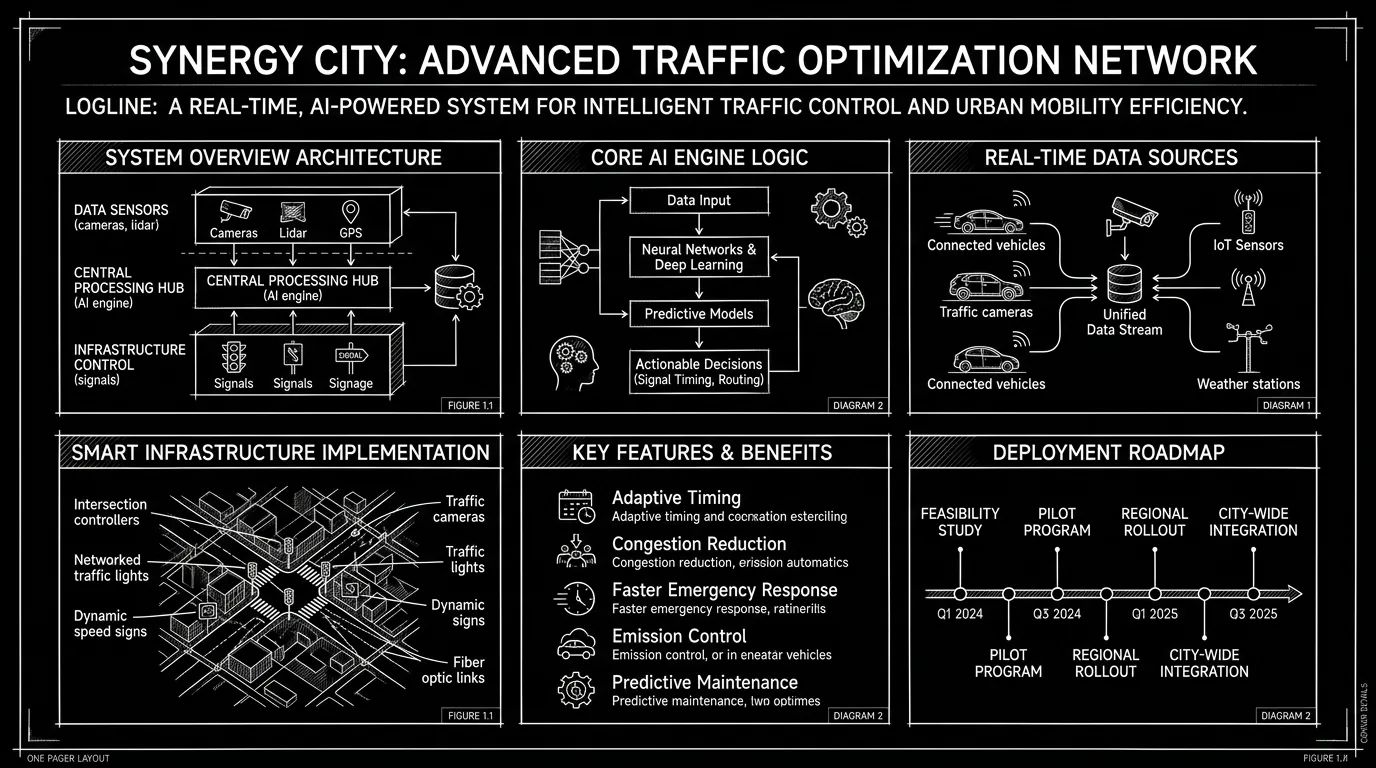
These two visuals work as a pair: the first shows One-pager layout: title, logline, blocks; dark mode technical sketch, and the second shifts to Hierarchy: logline → premise → why now; dark mode technical sketch - compare them briefly, then move on.
Final Step
Build your next script with Screenweaver
Move from ideas to production-ready pages faster with timeline-native writing and AI-assisted story flow.
Try Screenweaver