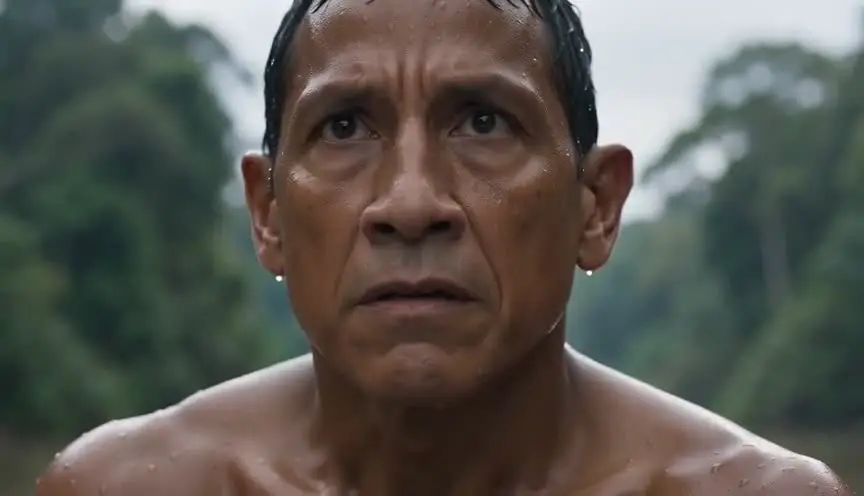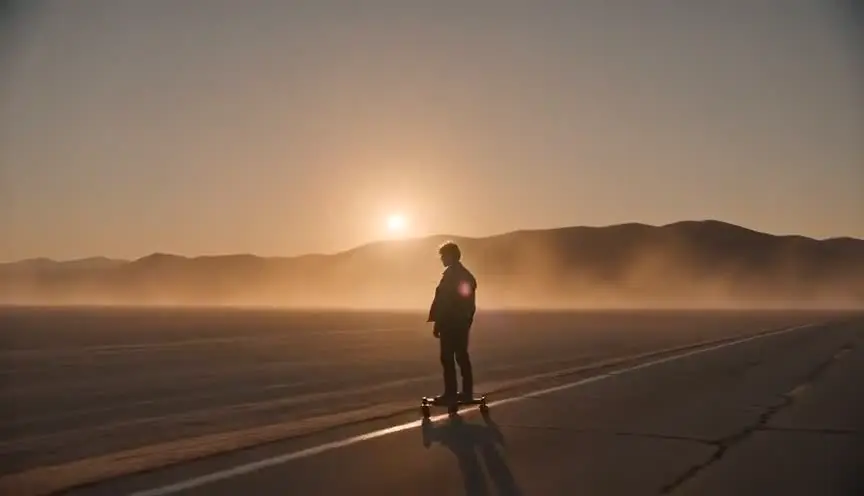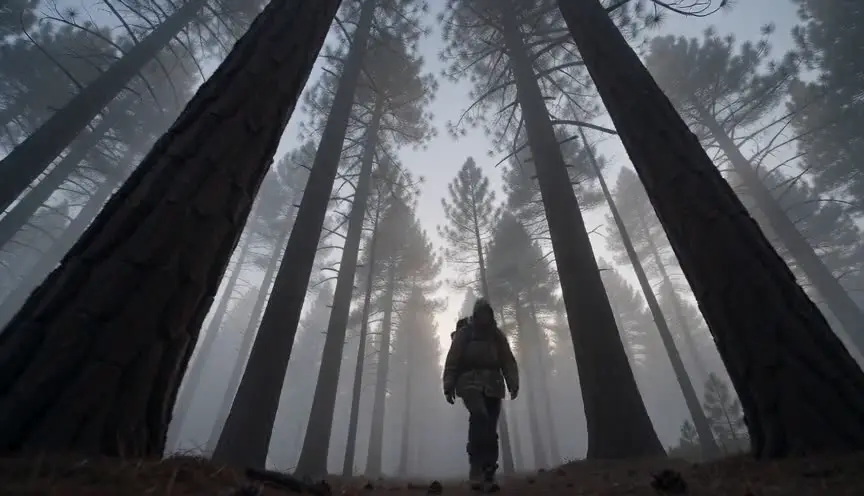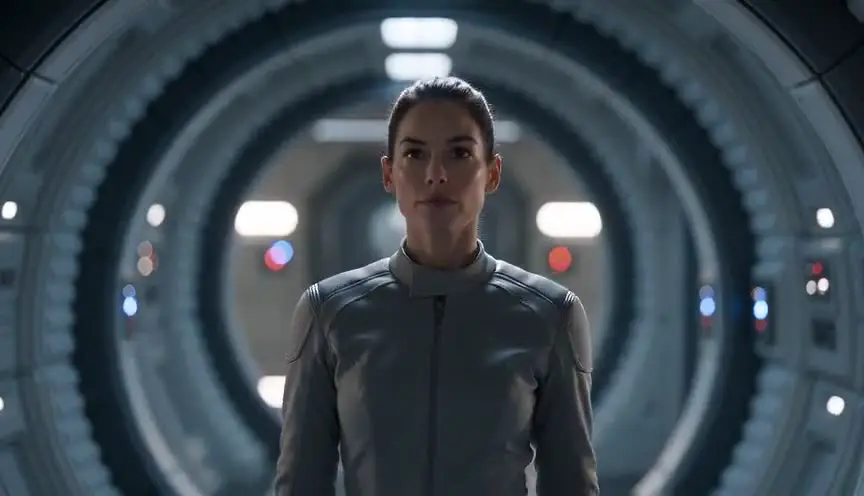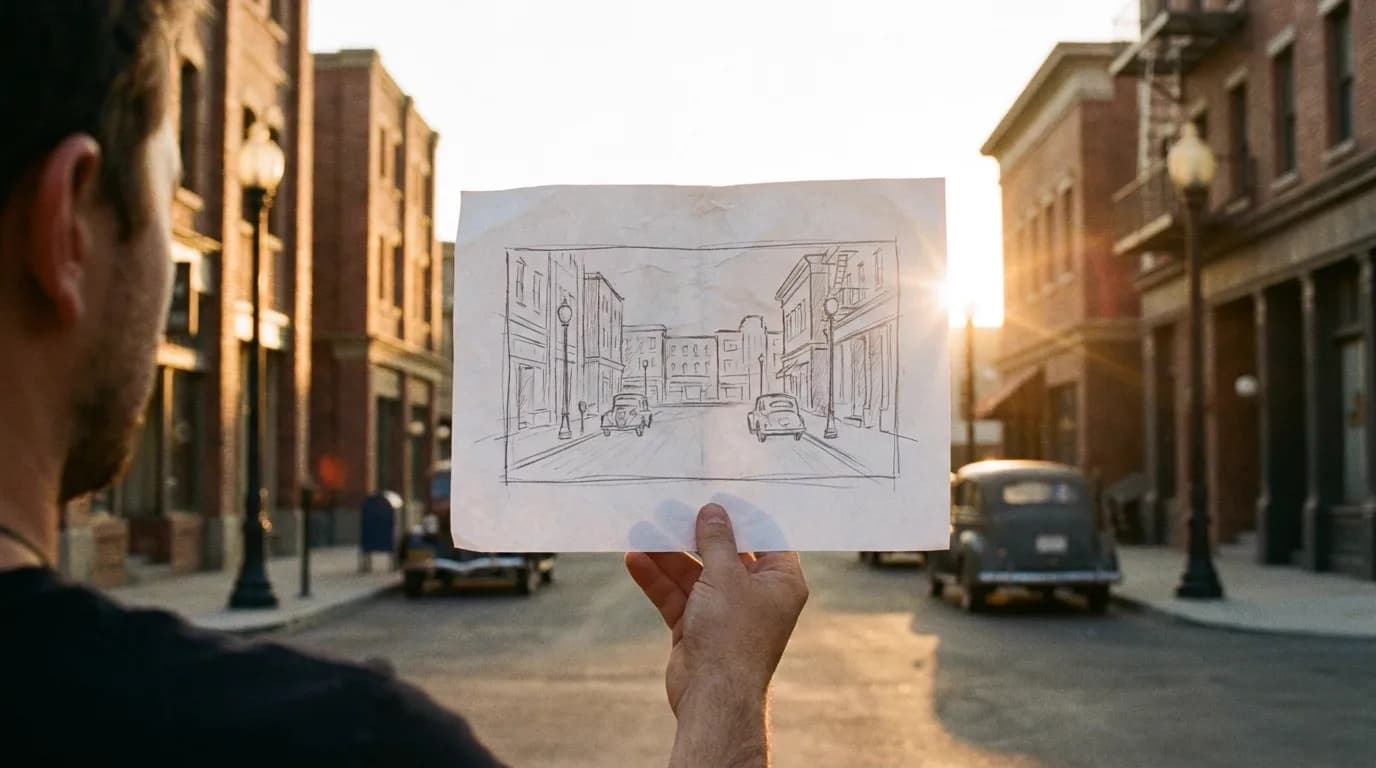

Storyboard before AI video generation, always. A storyboard is where you make framing, continuity, and cut decisions while they are still free, so the generator receives decisions instead of guesses. People keep asking video models for a built-in planning mode. That feature already exists upstream, in an AI storyboard generator that boards your script before you spend one credit.
The feature request everyone keeps filing
Spend ten minutes in any AI video community and you will see the same post. "This tool needs a storyboard mode." "Wish I could plan my shots before generating." "Why can't I lock framing across clips?" The request is reasonable. The address is wrong.
A video generator is a renderer. It takes a description and produces pixels. Asking it to also be your planning tool is like asking your camera to write the script. The planning layer belongs upstream, in pre-production, where it has lived for almost a century: storyboarding grew out of animation studios in the early 1930s precisely because animators could not afford to discover their framing mistakes after the drawings were inked. Animation still runs on that logic today, from the board to the blocking pass.
You are in the same position those animators were. Rendering is expensive. Paper is cheap.
I learned this the annoying way. My first AI short, I prompted my way through a 12-shot scene with nothing but a script and vibes. Every clip looked fine in isolation. Cut together, the two characters swapped sides of the screen four times, three shots were the same medium size in a row, and the scene had no close-up where the emotional turn landed. I regenerated more than half the scene, twice. None of those rerolls fixed a model failure. They fixed decisions I had never made.
Decisions are free on paper and billed at the render
Here is the placement argument in one sentence: a storyboard is the last point in the pipeline where changing your mind costs nothing.
Change a frame on a board and you redraw a rectangle in thirty seconds. Change your mind after generation and you pay for a new clip, wait for it, evaluate it, and often pay again because the new take broke something else. The economics of this are brutal and they compound across a whole scene, which is exactly why credit budgets die by a thousand rerolls. It is also why the seven-day short film schedule spends a full day on the board before a single clip is generated.
So the storyboard-first workflow is really a sorting rule. Every visual decision belongs in one of two buckets:
- Decisions you can make in advance: frame size, camera angle, character position, screen direction, where the cut lands.
- Outcomes only the model controls: texture, motion quality, whether the face holds together, whether the physics behave.
Boards move everything in bucket one upstream, where iteration is free. Generation then only has to handle bucket two. When a clip fails, you know it failed because the model missed, and you reroll with confidence instead of second-guessing your own intent.
What a board decides that a prompt cannot
A text prompt describes content. A board commits to composition. Those are different jobs, and the gap between them is where most wasted credits live.
| Decision | What the board locks | What happens when you leave it to the prompt |
|---|---|---|
| Frame size | This shot is a close-up, the next is a wide | "Cinematic shot of Maya" returns a random size every generation |
| Eyeline | Character looks frame left, slightly down | Eyelines wander, and reverse angles stop matching |
| Screen direction | Maya exits right, so she enters the next shot from the left | Characters teleport across the 180-degree line between clips |
| Cut point | The wide ends as the door opens, the close-up begins on the reaction | Every clip is a self-contained moment with no handoff to the next |
| Composition | Dan is foreground left, out of focus, Maya sharp behind him | The model arranges the frame however it likes, differently each time |
Notice what these five rows have in common. None of them are about image quality. A generator can produce a gorgeous clip that is the wrong size, faces the wrong way, and cuts against the shot before it. Gorgeous and unusable.
The prompt box tempts you to describe harder. "Close-up, 85mm, she looks left, shallow depth of field." Better, sure, and the published formulas behind that phrasing are collected in the director's guide to cinematic prompts. But you only knew to write those words because you had already made the decision. The board is where the decision gets made and, critically, where it gets made in sequence, next to the shots before and after it. Framing only means something relative to the cut.
The same eight shots, boarded and unboarded
A thought experiment, clearly illustrative, with invented numbers of exactly zero. Take one scene: a courier delivers a package on a rooftop at dusk, the recipient opens it, something inside changes the mood. Eight shots. Two ways to make it.
Unboarded. You prompt shot one from the script: "courier steps onto rooftop, sunset, cinematic." You get a wide. Nice. Shot two, the recipient waiting: the model gives you a medium, but she is on the left side of frame and the courier was walking left to right, so it plays like she is behind him. Reroll. Shot three, the handoff: what size should this even be? You try a close-up on hands, then decide the scene needs to see both faces, so you reroll to a two-shot. Shot five, you realize the package looks different from shot three. Shot seven, you want the reveal on her face, but shot six already ended on her face, so the cut feels dead, and you regenerate six as an insert instead. Every one of those rerolls happened because you changed your mind, and the generator charged you for your own indecision.
Boarded. You spend twenty minutes sketching eight rectangles first. On paper you catch that shots five and six were both mediums, so you turn five into an over-the-shoulder. You draw the handoff and immediately see the package needs an insert shot, so you add it and know it must match the wide. You decide the reveal lands on her face and deliberately keep her face out of shot six to protect the cut. Then you generate. When shot four comes back with mushy hands, you reroll it, once, because the intent was already right and only the execution missed.
Same scene, same model, same taste. The difference is where the thinking happened. In version one, generation was your sketchbook, at render prices. In version two, the sketchbook was a sketchbook.
The workflow: script to boards to shot list to references to generation
Storyboard-first is one link in a longer chain. The full pipeline runs from script to screen, and boards sit exactly in the middle of it. Here is the order and the reason for the order.
1. Lock the scene on the page. Boards visualize decisions the script already made. If the scene still might change, every panel you draw is speculative. Get the dialogue and action stable first.
2. Board the scene. One rough frame per intended shot. This is where you argue with yourself about size, angle, and cut points. I will not reteach drawing here; the mechanics of going from screenplay to storyboard are their own craft, and if drawing is the bottleneck you can generate boards straight from the screenplay, pass by pass, in the script-to-panels walkthrough, and edit the framing instead of sketching it.
3. Extract the shot list. The board becomes a numbered inventory: size, angle, movement, subject, one row per shot. On a music piece the row is addressed by timecode instead, which changes the board's fields; the music video version covers that variant. This document is what you will actually prompt from, and if the term is fuzzy, here is what a shot list is and what goes in each column.
4. Build the reference kit. Character reference images, the location's look, wardrobe, key props. One consistent set, reused across every shot, so the model is not reinventing your protagonist's face per clip.
5. Generate, in shot order, checking cuts as you go. Prompt each shot from its board frame plus its shot list row plus the reference kit. After every clip, place it on the timeline next to its neighbors before generating the next one. A cut that fails is cheapest to fix while the scene is still short.
The pattern to notice: each stage converts ambiguity into a document the next stage consumes. The generator, sitting last, receives a stack of decisions. That is the whole trick.
Try it free
Try Screenweaver for free on your script
It is free. Import your existing project, get a clearer view of your outline, and regain control of your story structure in minutes.
Start FreeA minimal board standard for AI work
You do not need clean drawings. Stick figures are fine, and boxes with arrows are fine. What you need is for each panel to answer the questions the generator will otherwise answer randomly. Rough is fine. Vague is not.
The checklist, per panel:
- Frame size named (WS, MS, CU, insert), not implied by the drawing quality
- Subject placement fixed: who is frame left, who is frame right
- Eyeline direction drawn as an arrow, even if the face is a circle
- Screen direction consistent with the panels before and after
- Camera height noted when it matters (low angle, high angle, eye level)
- Movement, if any, as one arrow: push in, pan left, static
- The cut: a one-line note on what the next shot picks up
Seven checks, maybe two minutes per panel once you have the habit. A panel that passes all seven can be a terrible drawing and a perfect plan. A beautiful panel that fails three of them is concept art, and concept art will not save you a single reroll.
One more habit worth stealing: number the panels and keep the numbers when you cut shots. If shot 5 dies in review, the board goes 4, 6, 7. Renumbering mid-production is how references get attached to the wrong shot at 1 a.m.
Add an eighth check when the piece has a fixed runtime. Advertising boards write the duration on every panel and keep a running total, which is the discipline behind the 30-second ad board, and it is worth borrowing for any generated video that has to hit a length.
Where this leaves the feature request
The people asking generators for a storyboard mode have correctly diagnosed the problem. Generating without a plan burns money. They have just pointed the fix at the wrong layer of the stack. The planning tool exists, it has existed since the 1930s, and its modern form reads your screenplay and drafts the frames for you.
So before your next scene, do the boring thing. Board it, list it, reference it, and let the generator do the only job it is actually good at: rendering decisions you already made.
For a worked budget of this workflow on a comic adaptation, including the retry multiplier that decides the bill, see how much it costs to animate a webtoon.
The vertical version of this workflow, for 9:16 serialized micro dramas with a locked cast across 70 episodes, is in how to make a short drama with AI.
FAQ
Do I really need a storyboard for a 30-second AI video?
For a single continuous shot, no. A storyboard earns its keep the moment you have two shots that must cut together, because the cut is where framing, eyeline, and screen direction decisions start interacting. A 30-second piece with six shots has five cuts, and each one is a place to waste rerolls if you never planned it.
How rough can AI storyboard frames be?
As rough as you like, as long as each frame commits to a shot size, subject placement, and eyeline. Stick figures with arrows pass that bar. The drawing is a container for decisions, and the generator never sees it anyway. If you cannot draw at all, generate the frames from your screenplay and edit the framing until it matches your intent.
Can I skip boards and just write more detailed prompts?
A detailed prompt helps one shot but cannot see its neighbors. Framing decisions only make sense in sequence: a close-up is a close-up because a wide came before it. Boards let you review the whole scene as a strip before rendering anything, which is the part no per-shot prompt, however detailed, can replicate.
What comes first, the storyboard or the shot list?
Board first, then extract the shot list from the panels. The board is where you discover the shots by drawing the scene; the list is the clean inventory you prompt from. Some people work list-first and sketch after, which works for coverage-heavy scenes, but for anything with staging complexity the drawing catches problems the spreadsheet cannot. For live-action projects the answer is less clear-cut; the shot list vs storyboard comparison goes through it by project type.
Does storyboard-first slow the whole project down?
It front-loads effort, and it repays it at the render stage. Twenty minutes of boarding a scene typically replaces the rerolls you would have spent changing your mind mid-generation, and mind-changing rerolls are usually the biggest single line in an AI film's credit spend. You trade cheap minutes for expensive ones. How expensive depends on which plan you bought those credits on, which is what one AI video credit actually buys in numbers.
How many storyboard panels does one scene need?
One panel per intended shot is the baseline, plus an extra panel wherever a shot contains a significant camera move or a mid-shot change worth showing. A dialogue scene might need six to twelve panels. An action beat might need one panel per second of screen time. Let the cutting rhythm decide, not a quota.
Final Step
Build your next script with Screenweaver
Move from ideas to production-ready pages faster with timeline-native writing and AI-assisted story flow.
Try Screenweaver