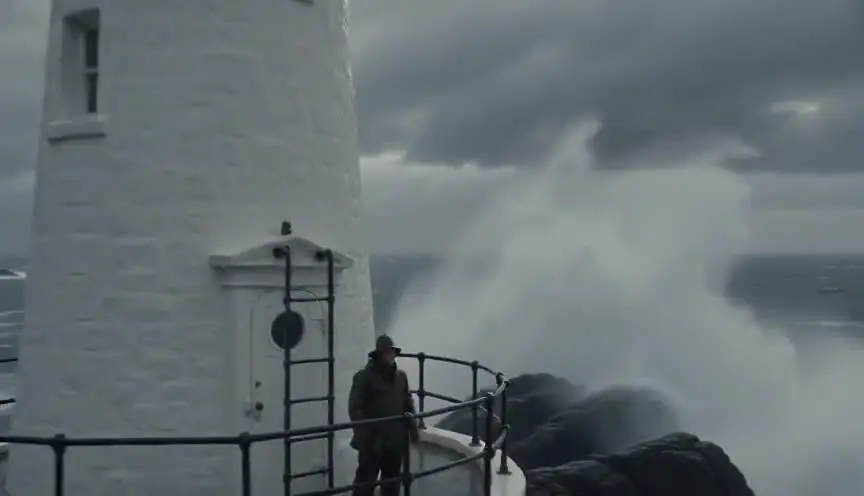
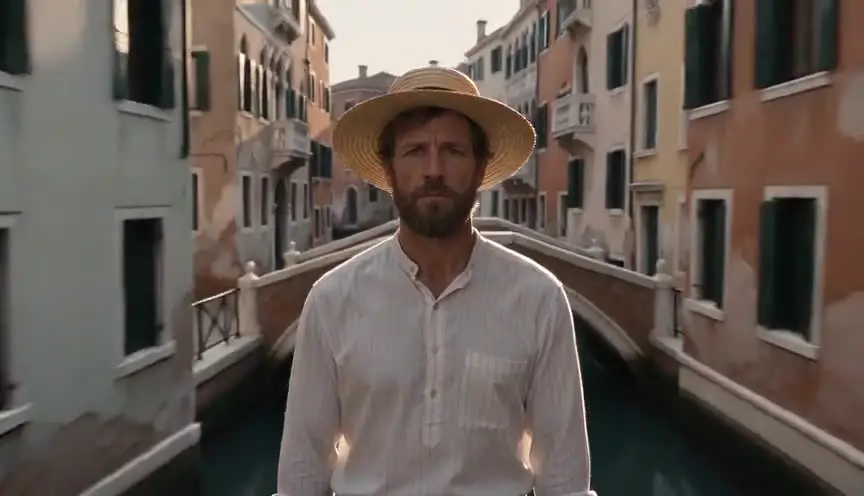
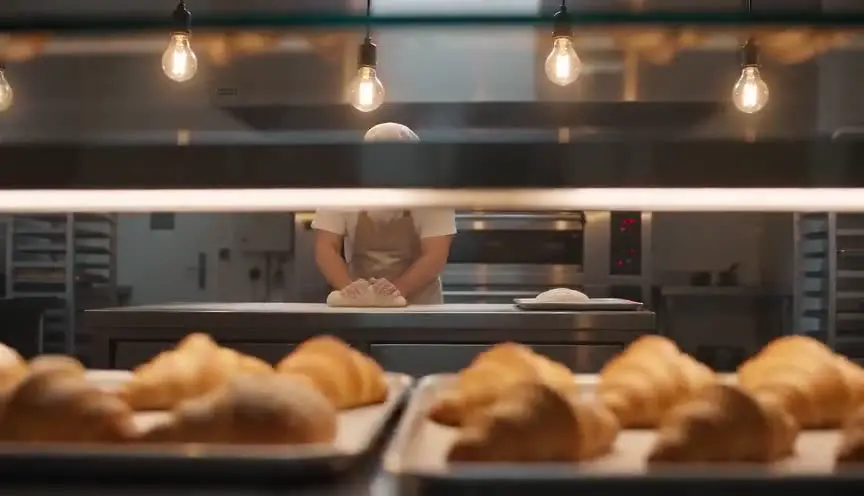
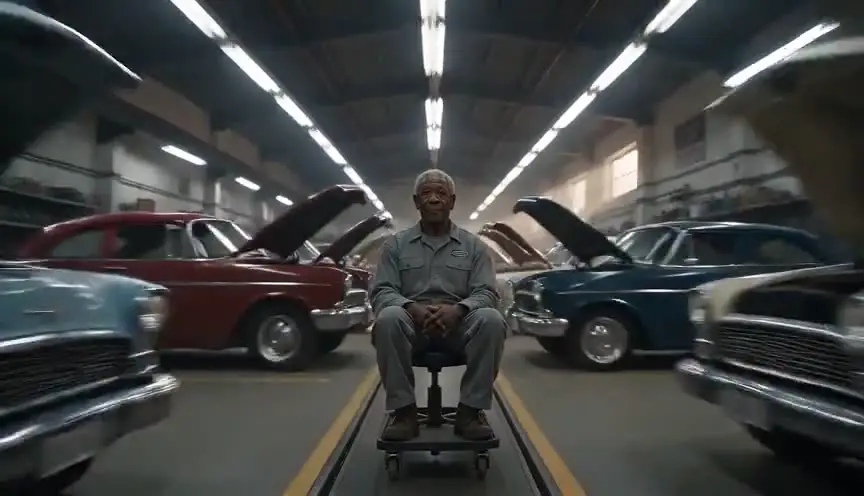
Dolly inMoving closer as the pressure rises
A dolly in rolls the camera physically toward the subject, so the frame tightens and the background shifts with real perspective. The audience feels drawn into a character's head, as if they had leaned forward in their seat.
Also calledPush inDolly pushTrack in
Camera movement
Why it works on screen
It is the workhorse of the dramatic turn. Push in when a character makes a decision, hears something that matters, or starts to hide something. Because the camera travels through the space, the move feels like approach and attention rather than observation. It serves tension, intimacy, resolve and dawning fear. A slow push across a whole monologue lets the audience sink into a performance; a shorter one on a single line lands the line. A scene earns it when something is changing inside the character and the actor is playing it without words.
The shot list line
- Size
- Medium shot to close-up
- Angle
- Eye level
- Movement
- Dolly in on track or slider
- Lens
- 35mm or 50mm prime
- Duration
- 4 to 10 s
Start the push on the beat before the key line, and have the grip ease in and out of the move so the stop is invisible.
Screenplay
On the page
Spec scripts should avoid "we push in" or "the camera dollies toward". The move is so common that directors will find it on their own if the scene gives them a reason. Write the internal shift: the pause before an answer, the moment a character stops pretending. Beats and silence do the work. When you direct your own material, list the push in the shot list with its start and end sizes and the line that triggers it.
INT. POLICE STATION, INTERROGATION ROOM, SEOUL - NIGHT
Fluorescent tube, one flickering. A paper cup of barley tea gone cold.
Detective HAN JI-WOO (30s, sleeves rolled) slides a photograph across the table.
PARK SEON-MI (60s, market vendor, apron still on) does not look down at it.
She looks at him instead. For a long time.
PARK SEON-MI
You already know I was there.
Storyboard
In the storyboard
Draw the start frame at medium size and draw a dashed rectangle inside it for the final close-up. Under the panel, sketch a short track seen from above with an arrow pointing toward the subject, and label it DOLLY IN. Note the start and end distances or sizes, the duration and the dialogue line where the camera should arrive. Add a small ease-in and ease-out mark on the arrow if the move must feel invisible.
Pairs well with
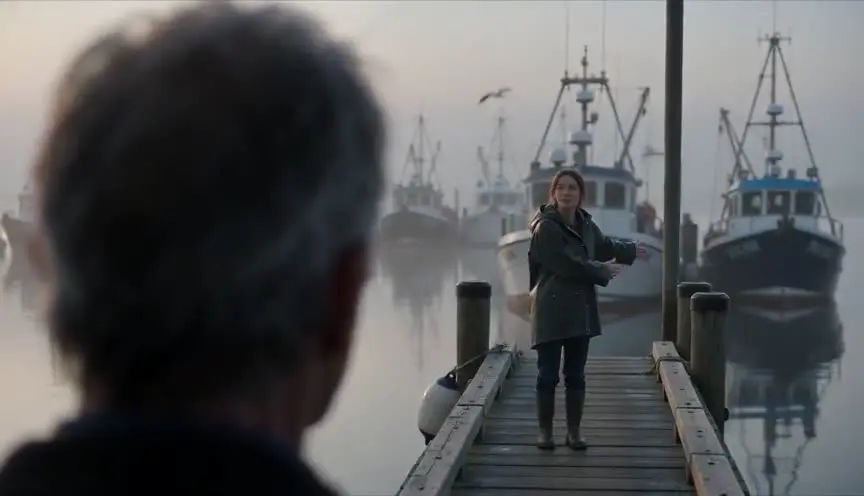
Cover the exchange in over-the-shoulder shots first, then break the pattern with a push in on one side. The change from static coverage to movement tells the audience this is the turning line.
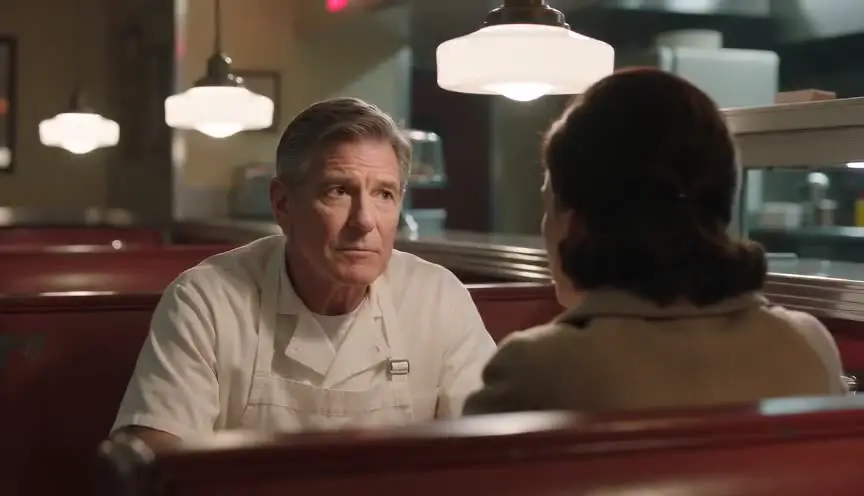
After pushing in on the speaker, cut to the reverse on the listener. If the reverse is static, the contrast isolates the one who moved; if it pushes too, the scene tightens on both.
Reference
Watch it in
The Godfather (1972)
In the restaurant, the camera eases toward Michael as a passing train grows louder, and his choice to shoot seems to close around him.
There Will Be Blood (2007)
The camera keeps drifting toward Daniel Plainview, cutting him off from the land and people around him as his hunger hardens into obsession.
ScreenWeaver
Set it up in ScreenWeaver
Write the turning beat as action and dialogue in your screenplay, and ScreenWeaver breaks the scene down into shots automatically. Open the shot where the character shifts, set the framing to start at medium, set the angle to eye level, choose a dolly in as the movement and set a duration that covers the line. The character and the location carry from the shots around it, so the push stays consistent with the coverage. Test the speed in the AI previsualization against the length of the dialogue.
Start writing for freeThe prompt behind this clip
This is the exact prompt that rendered the clip at the top of the page. Keep the description of the camera and the light, change the subject and the place.
Dolly in on a lone hitchhiker standing at the edge of a cracked desert highway at dusk, the camera mounted on a wheeled dolly moving steadily forward along the asphalt at a slow, even pace, closing the distance from a wide shot to a medium close-up over four seconds. The horizon stays level, the low orange sun flares gently behind the figure, and the background dunes and heat haze shift with natural parallax as the camera approaches, while the hitchhiker remains still, only their jacket moving in the wind. No text.
Common mistakes
- 01
Pushing on every line
If the camera creeps in on each speaker, the push stops meaning anything. Keep coverage stable and save the move for the one line or decision the scene turns on.
- 02
A jerky start or stop
A push that begins or ends with a bump draws attention to the dolly. Ramp the move in and out, and rehearse with the actor so the stop lands on a still moment.
- 03
Using a zoom instead
A zoom enlarges without moving and flattens the background. When the scene needs the feeling of approach, the camera has to travel. A slider or even a wheelchair gives you real parallax.