AI thriller movie generator

Make a thriller film with AI.Every clue in its place.

Decide who knows what and when, get a storyboard of every clue and every reveal, and keep faces and props exactly the same until the twist lands.
  • Free screenwriting
  • Clues storyboarded shot by shot
  • Faces that hold until the twist
Thriller rushes

Ready now: the screenplay editor, free, and Storyboard Beta at $9.99 a month, which turns your script into a storyboard.

On its way: video generation for every shot with the Filmmaker plan, targeted for 30 September 2026.

Examples

Suspense stills from the ScreenWeaver team.

Four finished frames, each the first image of a different kind of thriller.
  • Elegantly dressed guests stand around a man lying on a brick terrace by a pool and a laid table

    The Garden Party

    Everyone came dressed for lunch. A guest lies on the terrace, and nobody is calling for help.

  • High angle of two men in dark coats beside a police car with a red light in a wet fenced parking lot

    Seen From the Roof

    Two men by a patrol car in the rain, filmed from above. Someone is watching them, and now so are you.

  • A man leans on a parked car at night, one headlight blazing through red fog beside a dark house

    One Headlight

    A car idles in the red fog outside a sleeping house. The man leaning on it is waiting for someone.

  • A nurse seen from behind in an open doorway between two beds in a lamp-lit room with floral wallpaper

    Night Shift

    A nurse stands between two made beds, hands clasped behind her back. She has been there a long time.

The scene, shot by shot

Red: six shots, and the audience knows first.

A page written for this landing around six shots of Red, Episode 1, from the ScreenWeaver team. Watch the information: the audience learns about the knife in shot three. The wolf never does.
Screenplay · page 1

EXT. DEAD FOREST - FIRST LIGHT

Bare trunks, grey fog, a carpet of dead leaves. Far down the path, a small red shape: RED (13), walking alone.

At the end of the path, something waits in the fog. Four legs. Much too tall for a dog.

Red does not slow down. Under the cloak, her hand closes on the handle of a knife.

In a tangle of branches, two amber eyes open. They have followed her since the road.

THE WOLF

(low, pleased with itself)

You are a long way from home, little one.

It steps out of the fog. Twice her height. Its head blots out the sky.

Red looks up at it. Then, slowly, she smiles.

CUT TO BLACK.

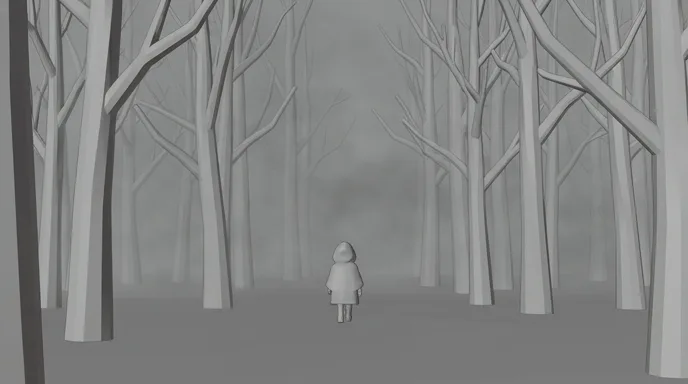
  1. A girl in a red hooded cloak walks alone down a path through a foggy dead forest
    Storyboard frame of the wide shot, in grey
    01

    Extreme wide · alone

    Symmetrical path through bare trees, a small red figure at the centre of frame, dense grey fog, no other colour anywhere: she is the only warm thing in this world

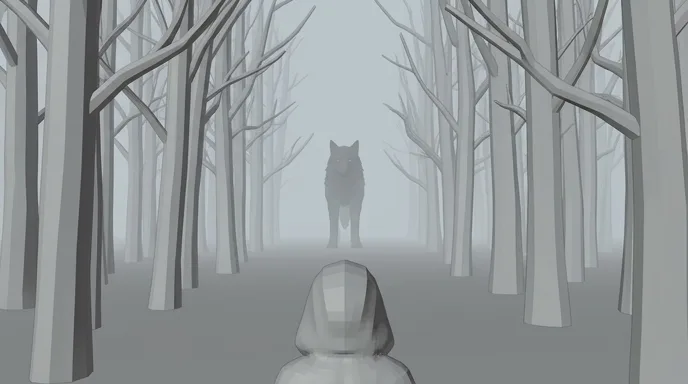
  2. Seen over a red hood, a dark wolf silhouette waits at the end of a forest path
    Storyboard frame of the over-the-shoulder shot, in grey
    02

    Over the shoulder · the threat

    Over her hood, the path runs straight to a dark wolf silhouette in the fog. We see it when she does. She keeps walking, and that is the first question

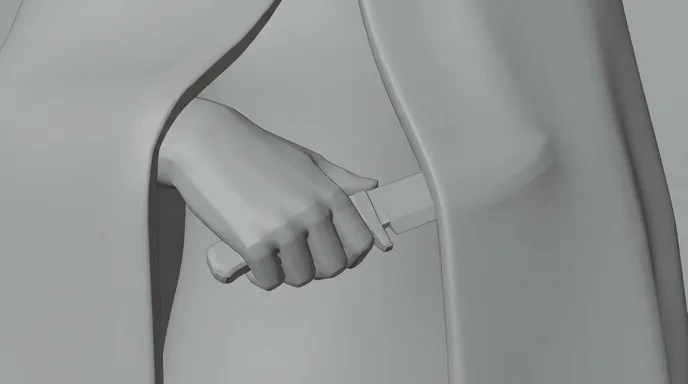
  3. A hand draws a knife from under a red wool cloak
    Storyboard frame of the knife insert, in grey
    03

    Insert · the knife

    Tight insert at hip height, her hand closes on a knife handle under the red wool. No face. From here on, the audience knows more than the wolf

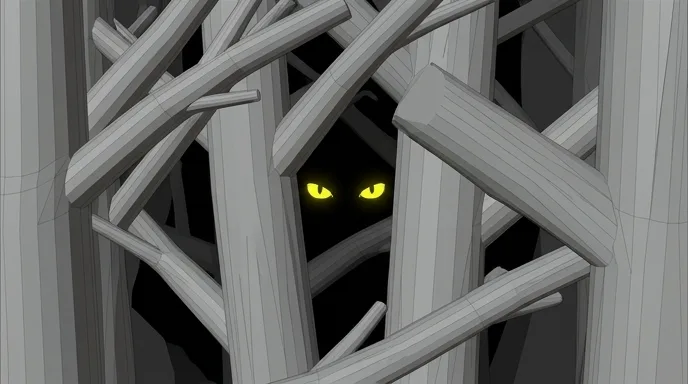
  4. Two amber wolf eyes glow in the dark behind a tangle of branches
    Storyboard frame of the eyes in the branches, in grey
    04

    Point of view · the watcher

    Through tangled branches, two amber eyes in the dark. We share the wolf's hiding place, so we know it has been watching

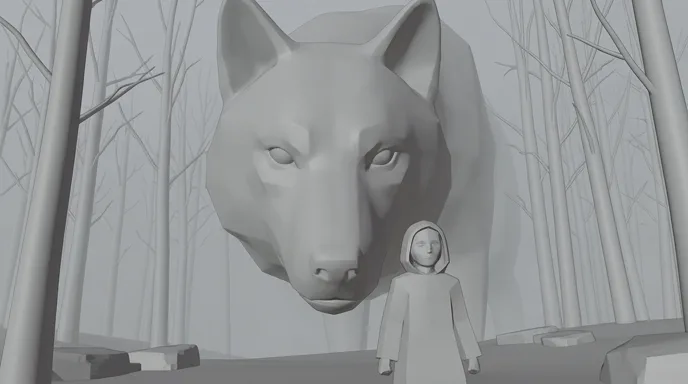
  5. A huge grey wolf looms over a small figure in a red hood in the fog
    Storyboard frame of the wolf over the girl, in grey
    05

    Low angle · the size

    The wolf's head fills the top of frame, eyes on camera, her red hood tiny at the bottom. Hold it. The knife is still in her hand, out of shot

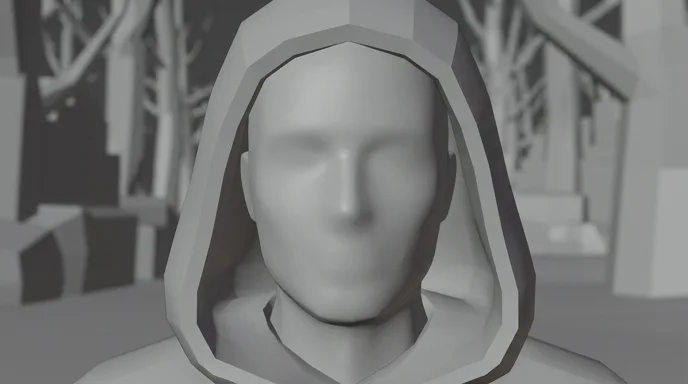
  6. Close-up of a freckled girl in a red hood smiling slowly
    Grey storyboard frame of Red's close-up
    06

    Close‑up · the reversal

    Frontal close-up, freckles, eyes up at the wolf. A slow smile, no line, no music sting. The audience rereads every shot before this one

The team's film of the full grid: nine shots, fifteen seconds, 480p. It adds a close-up of Red before the wolf appears, a shot of her walking on, and a last wide of the two of them face to face.

Writing thrillers

What an AI thriller movie generator needs from your script.

A model can light a corridor and a face. Suspense comes from the order in which the audience learns things, and only the script controls that.
  1. 01

    Decide who knows what, shot by shot

    Before you write a line, list what the hero, the threat and the audience each know at every moment. A thriller is an information budget. In Red, the audience is one step ahead of the wolf and one step behind the girl.

  2. 02

    Put the bomb under the table

    Hitchcock’s rule: show the audience the bomb and they sweat for ten minutes; hide it and they jump for two seconds. Suspense beats surprise for anything longer than a shot. The knife insert is the bomb.

  3. 03

    Start a clock

    A deadline turns waiting into tension: a last train, a phone battery, a tide, a guard’s round. Show it early and cut back to it each time the pressure should rise.

  4. 04

    Give every clue its own shot

    A clue that only lives in dialogue gets lost. Write it as an action line, and it becomes one insert in the storyboard, framed and lit so the audience can find it again at the reveal.

  5. 05

    Make the reveal turn something over

    A good twist does not add a fact, it changes the meaning of the facts already shown. Red’s smile works because every earlier shot reads differently once you see it. Test the twist by rereading the page backwards.

  6. 06

    Choose a point of view and hold it

    Stay with the hunted and you get fear. Share the watcher’s view and you get dramatic irony. Switch sides only on purpose, and only once per scene, or the audience stops knowing where to look.

Structure and pacing

The shape of a three‑minute thriller.

One question, one deadline, one reversal. Shots start at three or four seconds and shorten as the squeeze tightens, then the reveal gets a held frame.
  1. 15 %

    The normal day

    A routine and a person, plus one detail that will matter later.

  2. 15 %

    The question

    Something is wrong, and a clock starts. The audience wants one answer.

  3. 35 %

    The squeeze

    Options close one by one. The audience learns things the hero does not. Shorter shots, tighter frames.

  4. 15 %

    The reveal

    The answer, held long enough to register. Silence often works better than music here.

  5. 20 %

    The reversal

    The answer changes sides. Whoever looked safe is not, and the last frame proves it.

For a sixty-second teaser, keep the question and the reveal, show the clock once, and cut on the reversal.

Shot vocabulary

Eight shots that make it feel like a thriller.

Each comes with the prompt wording that produces it. Most of them are about who sees what, and when.
  • The planted insert

    The clue, alone in the frame. The audience will need to remember it.

    tight insert at hip height, a hand closing on a knife handle under a red wool cloak, no face, shallow depth of field, cold overcast light

  • The surveillance angle

    High, far and still: the frame of someone watching.

    high angle from a rooftop, two men in dark coats beside a patrol car in a wet fenced parking lot, one red light, blue-green night grade, long lens, static camera

  • The threat down the line

    Over the shoulder, a danger waiting at the far end of a straight line.

    over-the-shoulder from behind a red hood, a dark wolf silhouette waiting at the end of a straight forest path, dense fog, symmetrical framing

  • The figure they have not seen

    Sharp foreground, soft background, and someone walking in.

    man in a dark suit in profile in the foreground, a blurred silhouette walking toward him down a hazy corridor of vertical white light tubes, cold light, he has not turned

  • The clock insert

    The deadline, made physical. Cut back to it as time runs out.

    extreme close-up of an analog wristwatch, second hand moving, hard side light, numerals slightly out of focus, dark background

  • The hard key interrogation

    One light above the table. One face lit, one face lost.

    tight two-shot across a metal table, single hard overhead light, one face lit and sweating, the other in shadow, grey-green walls, no fill light

  • The headlight in the fog

    A car waiting at night. Neo-noir in one frame.

    night street, parked car with one headlight blazing through red fog, a man leaning on the door, sodium streetlight, wet asphalt, silhouettes, no readable signs

  • The reaction that turns it

    A face that knows something. The twist played on an expression, not an event.

    frontal close-up of a girl in a red hood, eyes locked on something above camera, a slow smile forming, cold overcast light, background soft

Light and palette

Cold light, hard shadows.

Thriller light decides what the audience is allowed to see. Use one hard source, cold and white or overcast, and let half of every face fall into shadow. Keep warm colour for what matters. The five colours below were sampled from the Red shots: in a grey forest, the only warm tones are the cloak and the wolf’s eyes, the two players. Name that rule in every prompt and the eye goes where the story needs it.

  • Cloak red

    #763531

  • Wolf eyes

    #E5D476

  • Morning fog

    #889CA5

  • Wet bark

    #38454A

  • Forest shadow

    #0C0E11

Where AI goes wrong

Six thriller traps, and how the script avoids them.

Video models want to show everything, clearly and at once. A thriller lives on what is held back. These are the failures to plan for.
  • The clue that changes

    The knife becomes a dagger, the watch jumps wrists, the car changes colour. At the reveal the audience notices. Give each key prop a fixed description and repeat it word for word in every prompt where it appears.

  • The model spoils the twist

    Describe the whole scene in a prompt and the first frame shows the answer. Prompt each shot with only what that shot may reveal. The storyboard is where you check it, before a single clip is made.

  • Letters, screens and maps in gibberish

    Thrillers run on documents: a text message, a file, an address. Models write fake text. Keep the page out of focus or at an angle, and put the readable words in the edit.

  • A face that drifts ruins the reveal

    The twist often depends on recognising someone: the stranger from scene two is the lawyer. If the face drifts, the reveal fails. One character sheet per suspect, carried from shot to shot, keeps them the same person.

  • Night that loses its shadows

    Models brighten dark scenes and fill in the shadows you wanted. Name the source and its direction: "single hard light from above", "one streetlight, left". Ask for no fill light.

  • Struggles that turn to mush

    Two bodies fighting over a gun merge into one shape. Keep the contact off screen: cut before the grab and after the fall, and let one insert of the weapon carry the struggle.

Sub‑genres

Crime, psychological, conspiracy, fairy tale.

  • Crime thriller

    A body, a lie, a deadline. Cold daylight or sodium night, and every scene asks who was where.

  • Psychological thriller

    The threat may be inside the hero's head. Hold one point of view and let small details stop matching.

  • Conspiracy thriller

    Too many people know something. High angles, long lenses, figures in corridors, documents seen from a distance.

  • Fairy‑tale thriller

    An old story told as a cat-and-mouse game, like Red. Everyone knows the tale, so the reversal hits harder.

The pipeline

Write. Board. Produce.

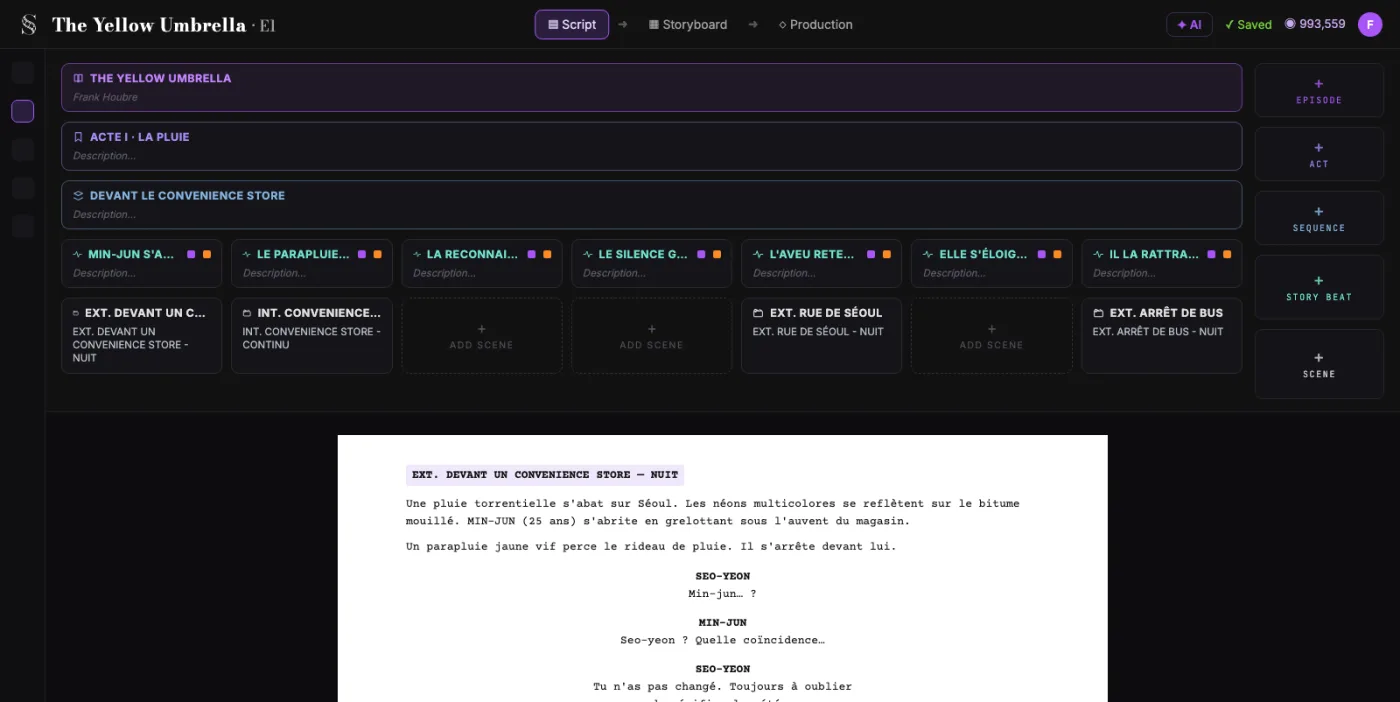
  1. ScreenWeaver screenplay editor: acts, sequences and beats above the formatted script of The Yellow Umbrella

    01The screenplay, enriched

    An industry-standard screenplay editor, and more: a visual outline and beat editor, your writing inspirations (notes, photos, audio) kept next to the page, and an AI researcher to support your writing, not replace it.

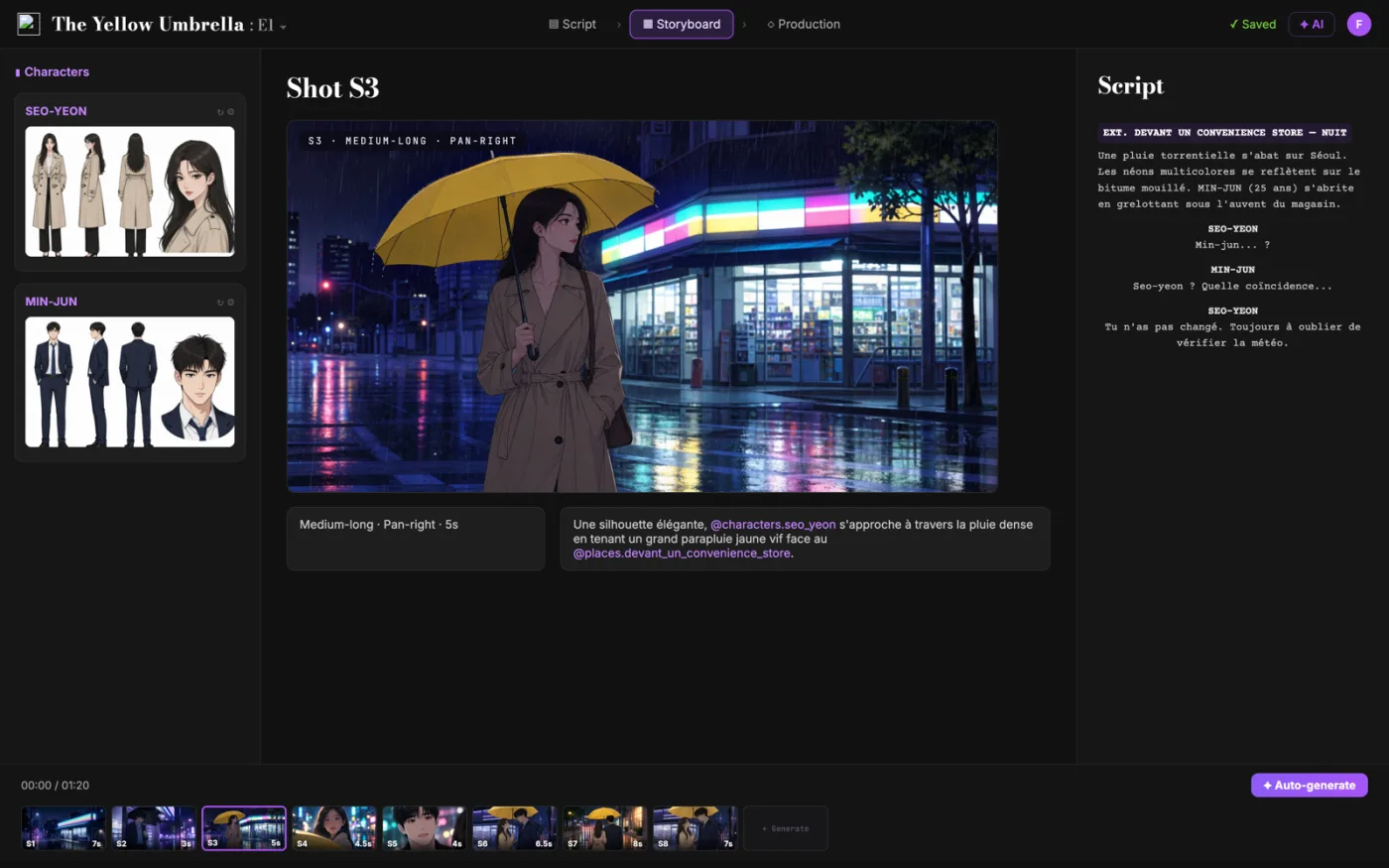
  2. ScreenWeaver storyboard: shot S3 of The Yellow Umbrella with characters, shot settings and the script beside it

    02The storyboard, made easy

    Shot breakdown generated from your screenplay, manual control over every shot (frame, angle, movement, duration), and generative AI previsualization in one click.

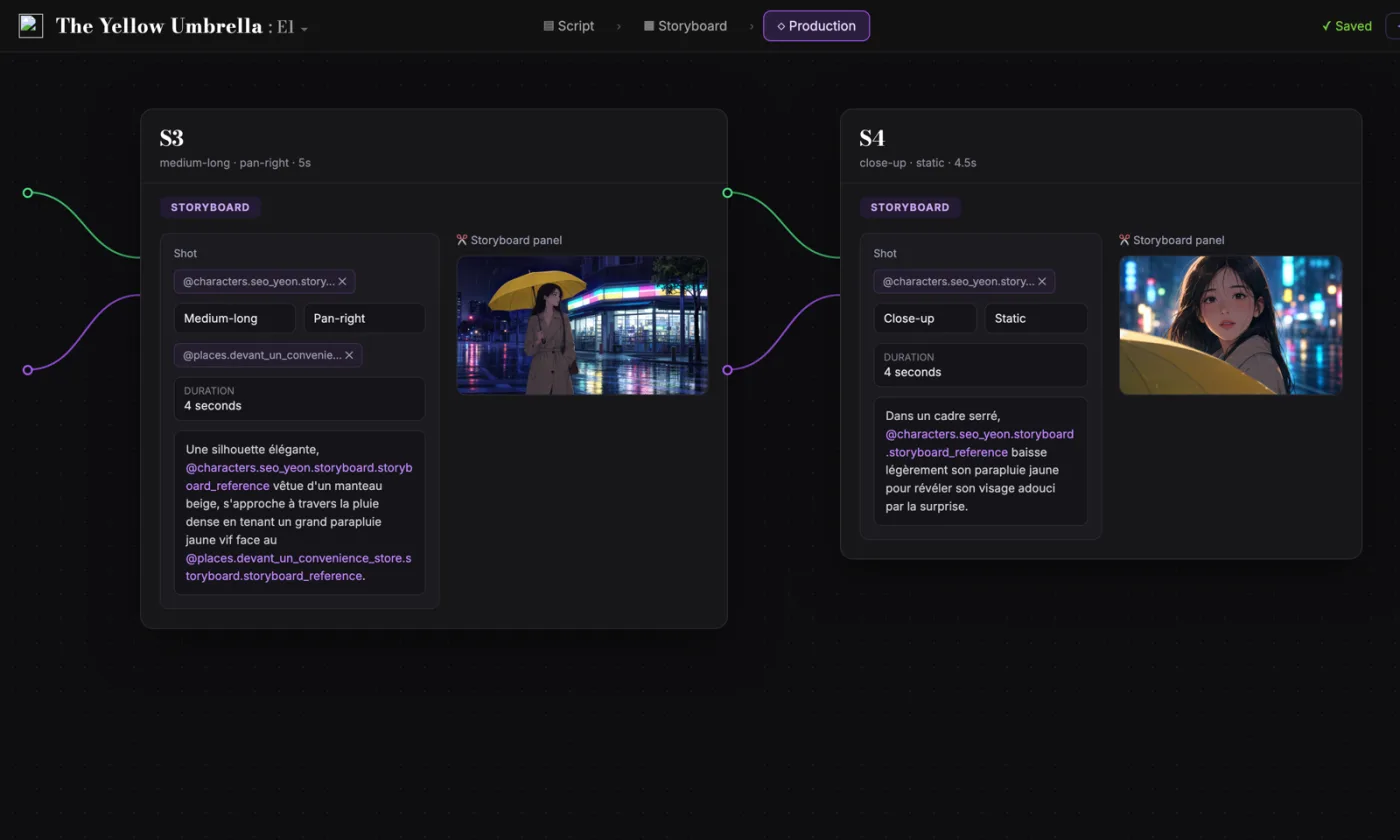
  3. ScreenWeaver production canvas: shots S3 and S4 as connected nodes carrying their storyboard panels and prompts

    03AI production, with finesse

    Footage generation pipelines connected to your screenplay and storyboard. Optimized out of the box, fully editable workflow.

FAQ

Thrillers with AI, your questions

Is ScreenWeaver an AI thriller movie generator?
It covers the whole chain, starting with the script. You write the thriller for free today, then storyboard every shot with Storyboard Beta at $9.99 a month. Generating each shot as video comes with the Filmmaker plan, targeted for 30 September 2026.
How do I build suspense in a short AI film?
Tell the audience about the danger before the character finds out, then make them wait. One insert of the threat, one clock, and shots that shorten as time runs out do more than any music.
How do I keep clues consistent from shot to shot?
Give each key prop and each suspect a reference. ScreenWeaver carries characters, locations and references across every shot of the scene, and you describe a prop with the same words everywhere it appears.
How many shots does a three-minute thriller need?
Roughly fifty to seventy. Three or four seconds each at the start, two in the squeeze, and one longer held frame for the reveal.
How do I write a twist ending that is fair?
Plant every piece in plain sight, in its own shot, before the reveal. A fair twist changes the meaning of what was shown without adding anything new. Reread the storyboard backwards and check each frame still makes sense.
Can AI video handle night scenes and hard shadows?
Yes, if you direct the light. Name one hard source and its direction, ask for no fill light, and take the blacks down in the grade rather than in the prompt.
Do I pay to write the screenplay?
No. The Screenwriter plan is $0 with no end date: unlimited projects and pages, industry-standard formatting, PDF and Final Draft export.
What powers the video side of ScreenWeaver?
The footage pipelines run on Seedance 2.0 and 2.5. They are linked to your screenplay and storyboard, tuned from the start, and every step stays editable.

Your twist is already on the page.

Plot the whole thing for free. Storyboard every clue when you are ready.