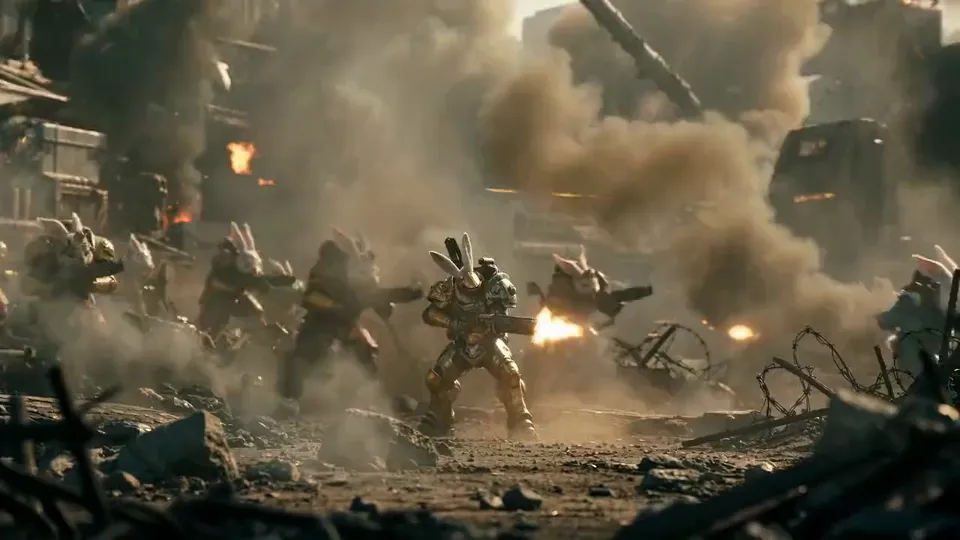
AI post‑apocalyptic movie generator

Make a post‑apocalyptic film with AI.After the end, shot by shot.

Start from the page: a survivor, a need, a road. ScreenWeaver turns it into a storyboard of every shot and keeps the ruins, the dust and the companion the same from one shot to the next.
  • Write for free
  • Storyboard from the screenplay
  • Ruins that stay put
Wasteland rushes

Available today: free screenwriting, and Storyboard Beta at $9.99 a month, which turns your screenplay into a storyboard.

Coming: the Filmmaker plan, targeted for 30 September 2026, generates the video of each storyboarded shot.

Examples

Wasteland shots from the ScreenWeaver team.

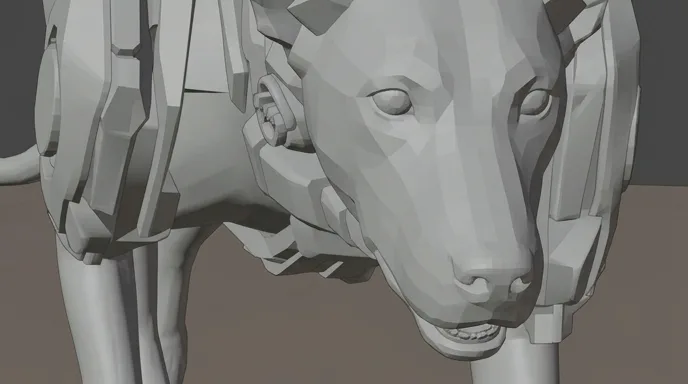
Two more moments from the Robot Hound world, a dead machine, and a face in the wind. The storyboard frame sits in the corner when there is one.
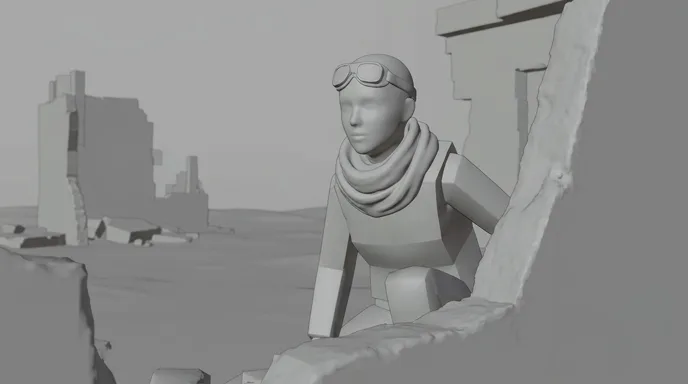
  • A young woman with goggles and a scarf crouches behind a broken concrete wall in ruins at dusk

    The Scavenger

    In the same ruins, a young woman in goggles hides from the hound behind a broken wall.

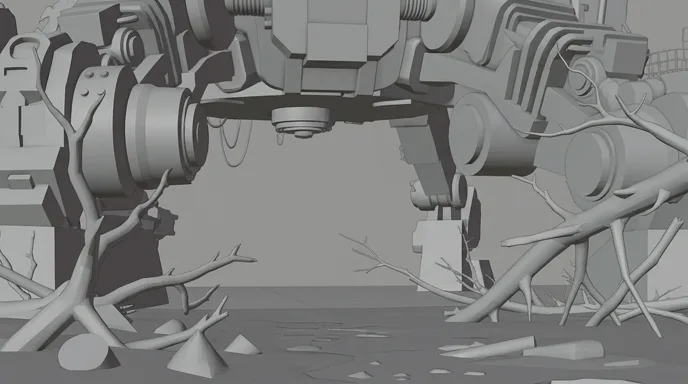
  • The underside of a giant rusted walking machine above dead trees and muddy water in the fog

    After the Machines

    Dead trees, black water, and the belly of a rusted walker in the fog.

  • Close-up of an old man with a dusty, scarred face inside a hood, sand blowing past

    Sandstorm

    An old survivor pulls his hood tight. The dust does the acting.

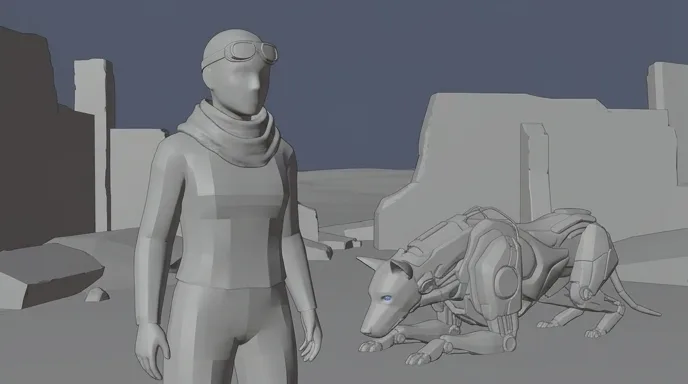
  • A robot dog in red armour with glowing blue eyes lies in the dust beside a crouching woman

    The Truce

    The hunt ends: the hound lies down beside her, its eyes turned from red to blue.

One scene, page to screen

Robot Hound: a post‑apocalyptic scene in five shots.

A scene written for this page around five shots from the ScreenWeaver team. It opens on the valley and ends on one stare, so the world comes first and the companion last. Under each shot, the direction note that goes with it.
Screenplay · page 1

EXT. THE BROKEN HILLS - NOON

Bleached sky. A valley of stone and dust where a highway used to run. Wind, then nothing.

Far below, one speck of dust moves against the wind. It is running.

Ground level. A paw lands on hot rock, the sun white behind it. Then another.

THE HOUND. A lean black dog inside scarred army plates, rust red, packed with grit.

On its shoulder, a white disc with a symbol no one alive can read. Somebody's unit. Somebody's country.

It stops ten feet from us. Lips back. Panting, or warning.

NELL (O.S.)

(throat full of dust)

Half a canteen. You drink first.

The wind drops. Neither of them moves.

CUT TO:

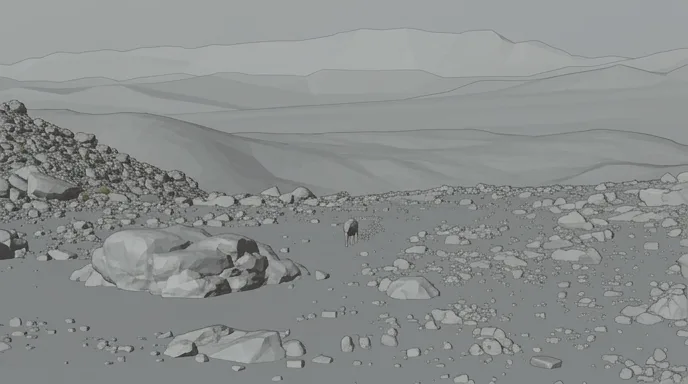
  1. A vast rocky valley under a pale sky, a tiny dog running far away
    Storyboard frame of the same extreme wide, in grey
    01

    Extreme wide · the valley

    Extreme wide of a bleached rocky valley at noon, heat haze on the far hills, one tiny dog running across the plain, no roads, no people, dust in the air

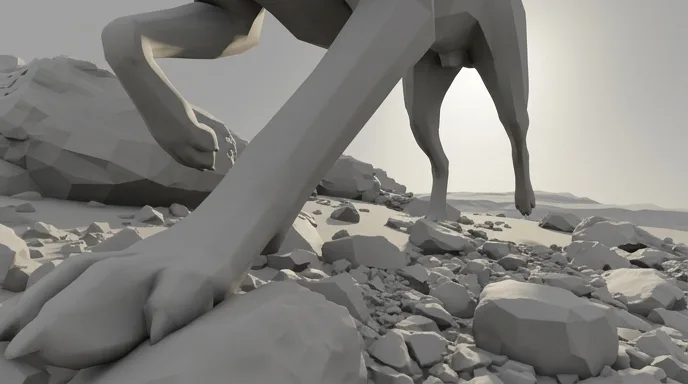
  2. Low angle from the ground: a dog's leg stepping over rocks against a white sun
    Storyboard frame of the ground-level shot, in grey
    02

    Ground level · the paw

    Camera on the ground among sharp rocks, a dog's leg steps over the lens, sun burning white behind, lens flare, grit kicked up

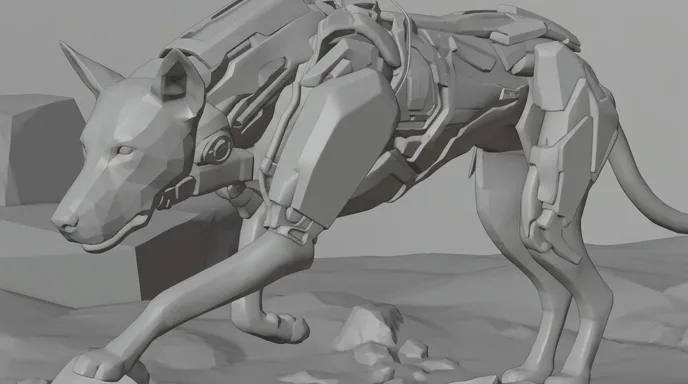
  3. A black dog in red and black armour plates running across dusty ground
    Storyboard frame of the running hound, in grey
    03

    Tracking · the hound

    Side tracking shot at dog height, lean black dog in scratched rust-red armour plates running over dusty ground, shallow depth of field, warm dust

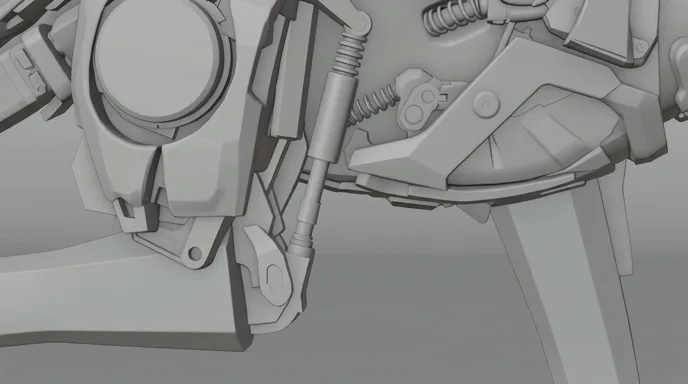
  4. Close-up of a worn red armour plate with a white disc symbol on a dog's shoulder
    Storyboard frame of the armour insert, in grey
    04

    Insert · the relic

    Macro insert on a worn red shoulder plate, a white disc with an abstract symbol, no letters, a piston and a cable, dust in the seams, soft background

  5. Close-up of a black dog in armour staring into the lens, teeth showing
    Storyboard frame of the stare, in grey
    05

    Close-up · the stare

    Close-up, the dog stops facing the lens, amber eyes, lips pulled back, panting, armour plates either side of its head, bleached background out of focus; hold three beats

The team's cut runs the other way: the hound first, the empty valley last. Twelve seconds, 16:9. Open wide and the world is the subject. End wide and the subject is how alone the hound is.

Writing the wasteland

Six rules for a post‑apocalyptic script.

The end of the world is only the setting. The story is what one person needs before nightfall.
  1. 01

    The world before, in one detail

    Skip the prologue about the war. One object from before does the work: a unit symbol on a dog's armour, a school bell half buried in sand, a traffic light lying on its side. The audience fills in the rest, and fills it better than a voice-over would.

  2. 02

    Scarcity is the engine

    Water, fuel, a filter, a battery. Put a number on it in the first scene: half a canteen, forty kilometres to the pump. Every choice after that spends it, so every scene has a clock.

  3. 03

    A lone survivor needs a companion

    Alone, a character has no one to speak to, and the thoughts end up in voice-over. A dog, a broken robot, a child who never answers: the companion lets the hero act out loud. Who drinks first tells us everything.

  4. 04

    Write the silence

    Wind, a loose sheet of metal, a dog panting. In a dead world, sound is often the only thing that moves. Put it in the action lines, in capitals, so the sound pass knows where it goes.

  5. 05

    Distance is time

    Nobody keeps a calendar after the end. The journey measures the story: the hills get closer, the canteen gets lighter, the light goes from white to red. Let the landscape change and the audience feels the days pass.

  6. 06

    Other people are the threat

    Ruins do not attack anyone. People do. The best scenes turn on one question: share or take. Keep violence rare, fast and costly, so the moments of trust weigh something.

Structure and pacing

How a wasteland short breathes.

Post-apocalyptic shorts move slowly, then snap. Wide shots hold four to six seconds, then the cuts shrink to one or two seconds when two people meet.
  1. 10 %

    The empty world

    A wide shot where nothing moves. Then one thing does.

  2. 20 %

    The need

    What runs out today: water, fuel, a battery. The clock starts.

  3. 30 %

    The road

    Travel, ruins, one relic from before. The longest stretch, and the quietest.

  4. 25 %

    The meeting

    Another survivor, or the companion. Share or take. The cuts get short.

  5. 15 %

    The horizon

    Walk on, changed. A wide shot again, with two figures instead of one.

For a sixty-second teaser, cut the road down to three shots and keep the meeting whole. It is the scene people remember.

Shot vocabulary

Eight shots that say the world has ended.

Each with the prompt wording that gets it from an image or video model. Put them in the storyboard, then reuse the same words for the same place.
  • The speck in the valley

    One moving thing in a landscape that has stopped. The scale tells the backstory.

    extreme wide, bleached valley of rock and dust, one tiny figure moving far away, heat haze, no roads, no vehicles

  • The ground-level step

    A camera in the dirt, a boot or a paw stepping over it, the sun behind.

    camera on the ground among rocks, a paw steps over the lens, sun white behind, lens flare, grit in the air

  • The relic insert

    The world before in one object, close enough to see the wear.

    macro insert on a sun-faded object from before, cracked paint, dust in the seams, no readable text, soft background

  • The footprint

    Proof that someone else is out here. Nothing in the genre is more frightening.

    close on a single boot print in dry sand, a metal paw stepping beside it, low sun raking across the ground

  • The peek from cover

    A survivor behind a broken wall, deciding whether to run.

    medium shot, young woman with goggles and scarf crouched behind a broken concrete wall, ruins behind, dusk, eyes on something off frame

  • The dead machine

    Something huge that used to work, now part of the landscape.

    low angle under a colossal rusted walking machine, dead trees in the foreground, fog, cold grey light, water pooled on the ground

  • The ration

    Hands measuring out water. The whole economy of the world in one close-up.

    close-up of cracked, dusty hands pouring a thin stream of water into a metal cup, careful, backlit, every drop visible

  • The walk away

    Two figures from behind, heading for a flat horizon. The genre's favourite last shot.

    wide from behind, a woman and a dog walking away through ruins toward a low sun, dust drifting, long shadows

Light and palette

Bleached light, one colour of rust.

The wasteland is overexposed. The sky goes almost white, the ground turns to dust, and saturation survives in one place: whatever still works. In Robot Hound, that is the armour. The five colours below were sampled from its shots. Keep the sky pale and the red rare, and every shot belongs to the same noon.

  • Armour rust

    #D35B36

  • Bleached sky

    #EDEBDD

  • Road dust

    #91795C

  • Scorched earth

    #483220

  • Noon shadow

    #0E0D0B

Where AI goes wrong

Six wasteland traps, and how the script avoids them.

Video models love a ruined city. They are bad at ruining it the same way twice.
  • Ruins that rebuild themselves

    A wall with a hole in shot 3 is whole again in shot 5. Describe the ruin once as a location with a layout: which wall is broken, where the sun sits. ScreenWeaver carries locations and references from shot to shot.

  • Survivors who look too clean

    Models polish everything: new jackets, clear skin, white teeth. Write the wear into the character sheet: sunburn, grit in the creases, a patched scarf. Then it stays.

  • The orange filter

    Ask for an apocalypse and everything comes back tinted orange. Real wasteland light is bleached, not orange. Ask for a pale sky, grey-beige dust and one saturated object.

  • Wreckage soup

    Burnt cars, barrels and debris in every corner, until nothing reads. Name two or three objects per shot. Empty ground is what sells an empty world.

  • Wind that changes sides

    Dust blows left in one shot and right in the next, and the cut feels wrong without anyone knowing why. Set the wind once, from the west, and keep it in every prompt of the scene.

  • A companion that changes breed

    The dog gains a plate, loses a colour, grows a new snout. Animals need a reference sheet too: front, profile, markings, gear.

Sub-genres

Four ways to end the world.

  • Wasteland road

    Vehicles, fuel and distance. Long lenses, heat haze, the horizon as the goal. Cut on motion.

  • Survival

    One person, one need, very few words. Hands, water, shelter. Close-ups carry the tension.

  • Dystopia

    The world did not end, it was organised. Walls, queues, uniforms. Symmetry and cold, even light.

  • After the machines

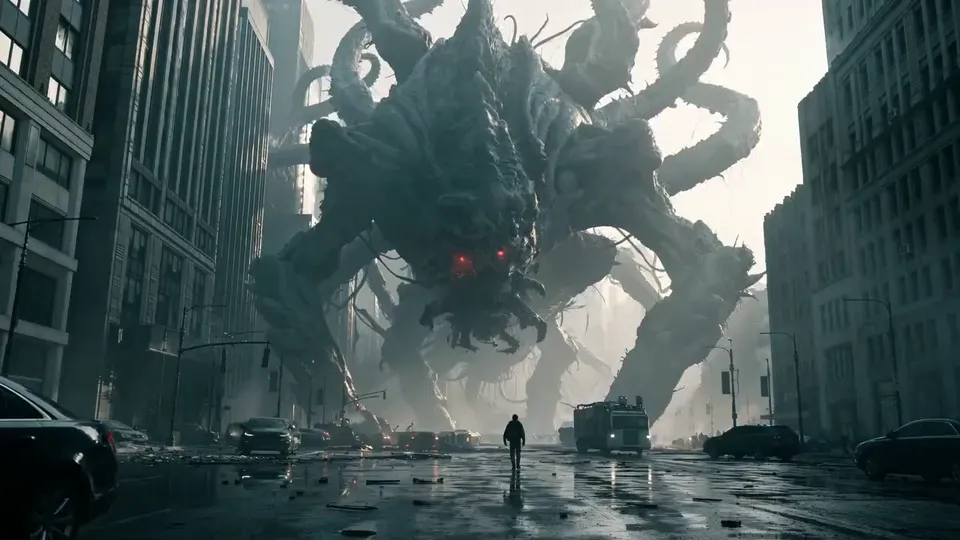
    The robots won, or broke down. Rusted giants in the fog, and a companion built from old parts, like the hound.

The pipeline

Write. Board. Produce.

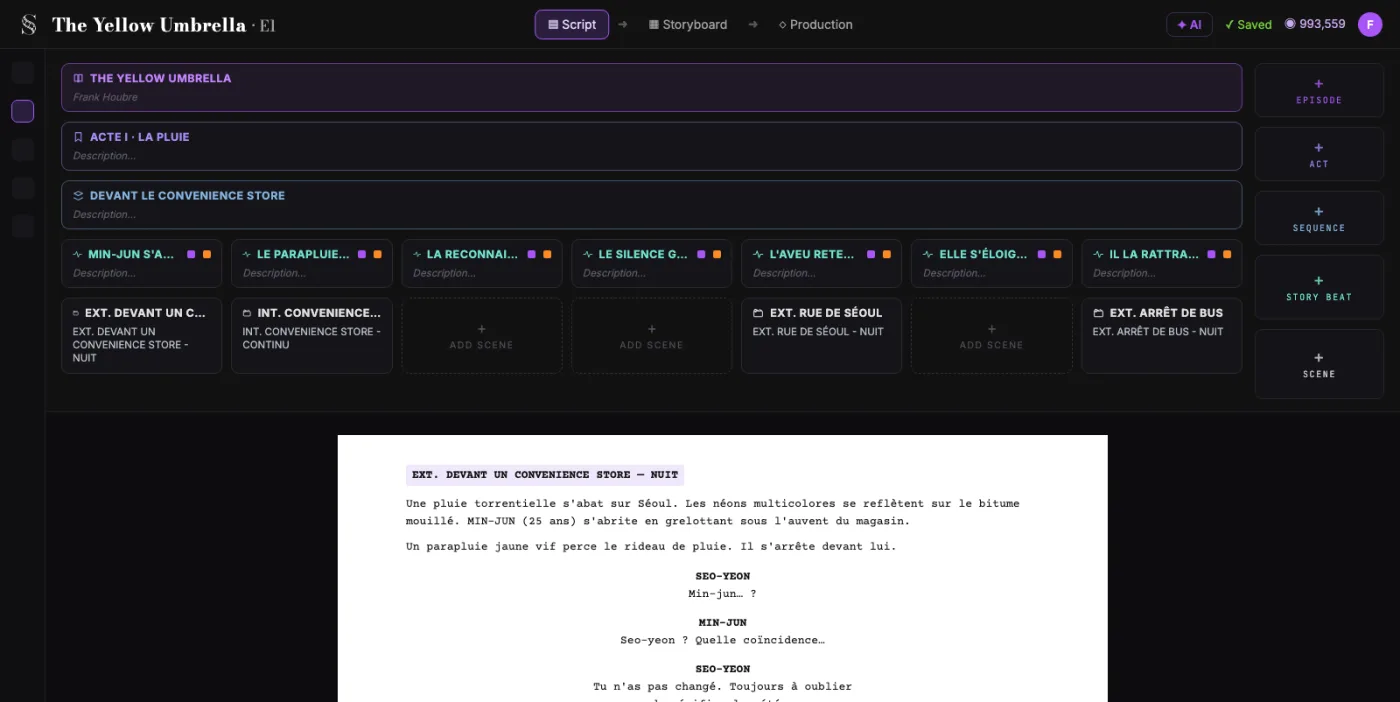
  1. ScreenWeaver screenplay editor: acts, sequences and beats above the formatted script of The Yellow Umbrella

    01The screenplay, enriched

    An industry-standard screenplay editor, and more: a visual outline and beat editor, your writing inspirations (notes, photos, audio) kept next to the page, and an AI researcher to support your writing, not replace it.

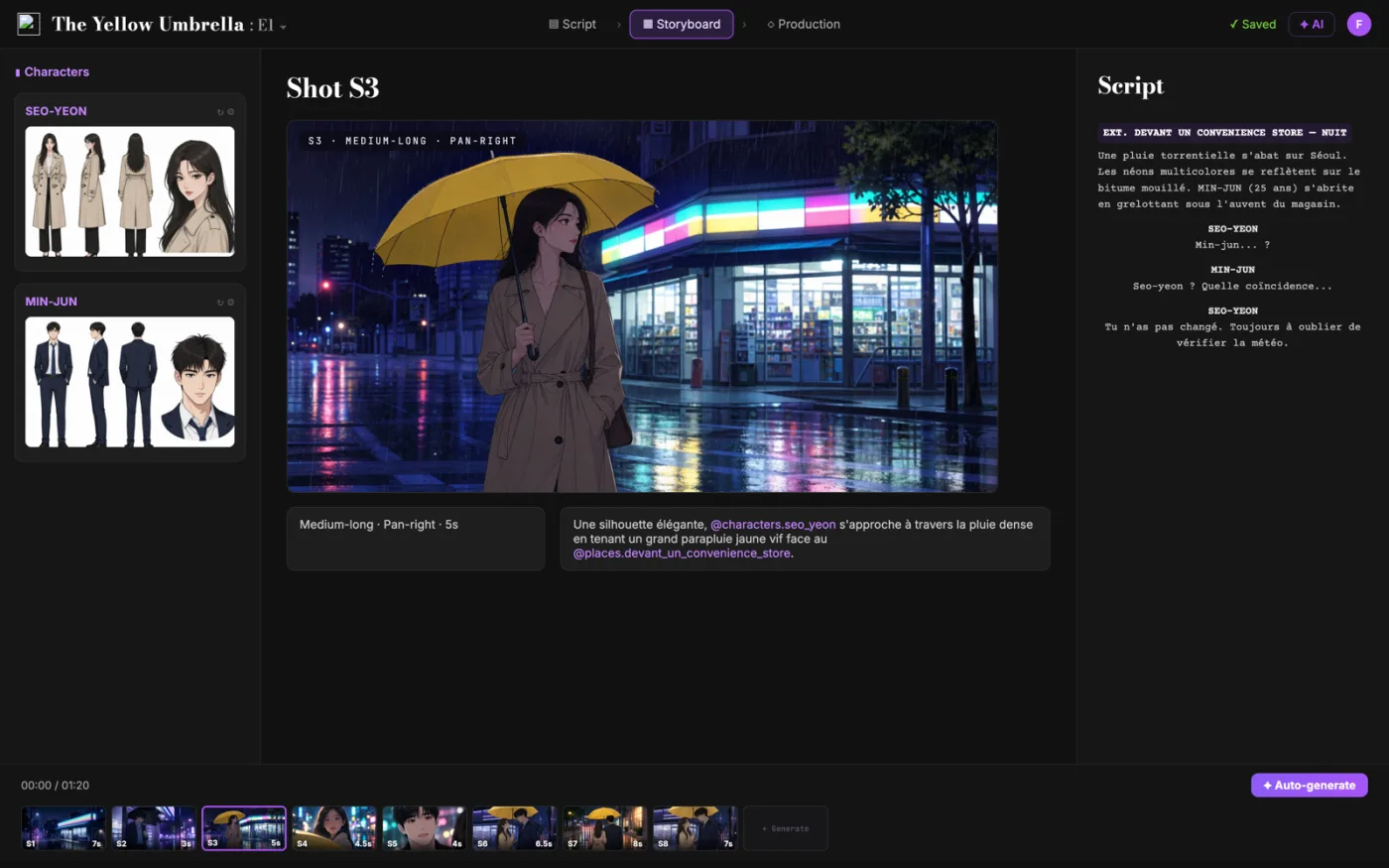
  2. ScreenWeaver storyboard: shot S3 of The Yellow Umbrella with characters, shot settings and the script beside it

    02The storyboard, made easy

    Shot breakdown generated from your screenplay, manual control over every shot (frame, angle, movement, duration), and generative AI previsualization in one click.

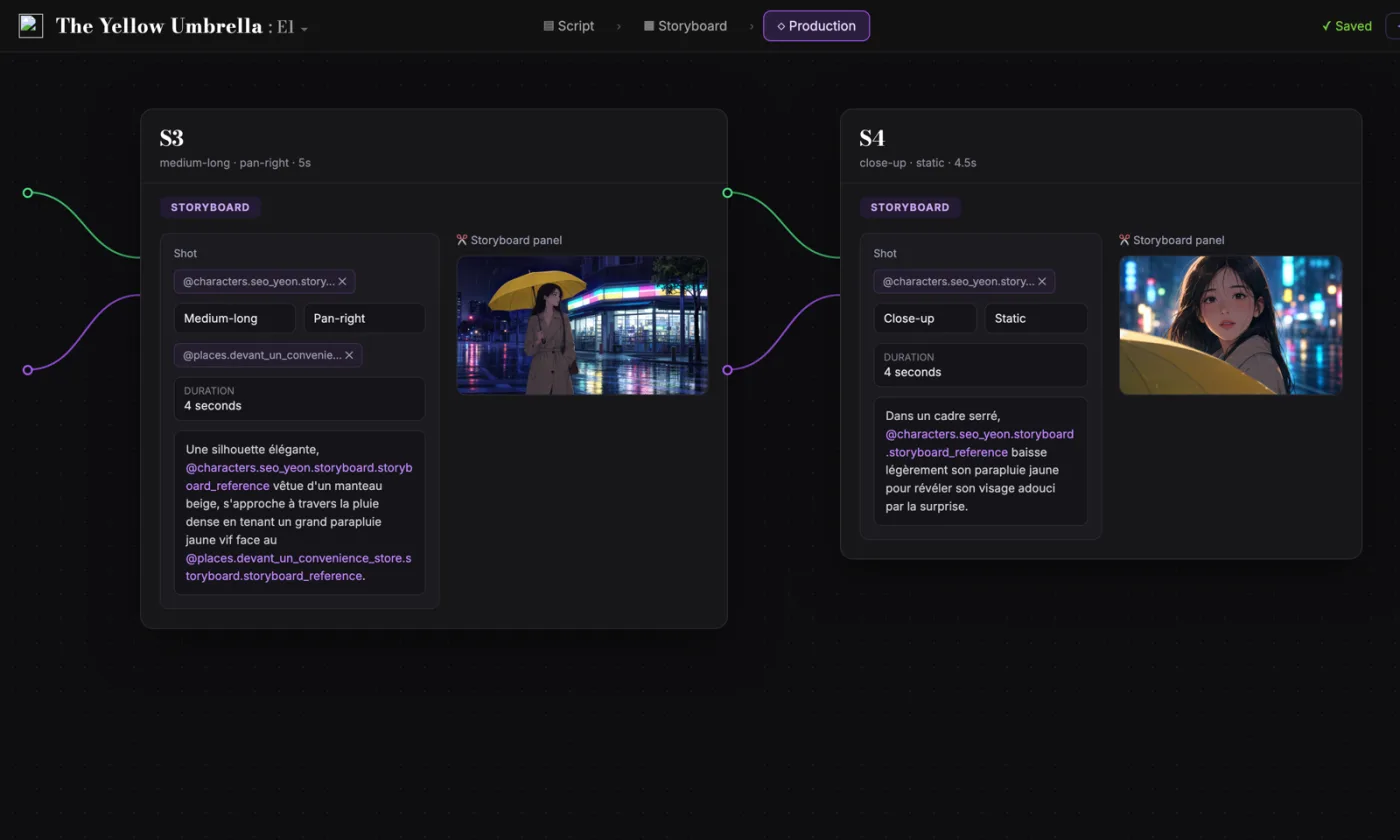
  3. ScreenWeaver production canvas: shots S3 and S4 as connected nodes carrying their storyboard panels and prompts

    03AI production, with finesse

    Footage generation pipelines connected to your screenplay and storyboard. Optimized out of the box, fully editable workflow.

FAQ

Post‑apocalyptic films with AI, your questions

Can I make a post‑apocalyptic film with AI in ScreenWeaver?
You can write the screenplay for free today and turn it into a storyboard with Storyboard Beta, $9.99 a month. Filming each shot comes next, with video generation in the Filmmaker plan, targeted for 30 September 2026.
How do I keep the same ruins from shot to shot?
Describe the location once and give it a reference. ScreenWeaver carries the characters, locations and references you set into every shot of the scene. Write the damage precisely, which wall, which crack, so the storyboard can hold it.
How do I keep an animal companion consistent?
Treat it as a character. Make a reference sheet with front and profile views, its markings and its gear, and use the same short description in every shot. The character consistency sheet tool helps you write it.
Why do my wasteland shots all come out orange?
Models read the word apocalypse as a colour grade. Ask for a pale, bleached sky and grey-beige dust, keep saturation for one object, and grade the scene at the end, not in the prompt.
How many shots does a wasteland short need?
Fewer than you think. Wide shots hold four to six seconds here, so a two-minute short can work with twenty-five to thirty-five shots. Spend the fast cuts on the meeting.
What does it cost to start?
Writing is free with the Screenwriter plan: $0, no expiry, unlimited projects and pages, PDF and Final Draft export. The storyboard comes with Storyboard Beta at $9.99 a month.
Can a post‑apocalyptic scene work with almost no dialogue?
Yes, and the genre suits it. Write sound and action in the lines: WIND, a CLANK, a dog panting. The storyboard breaks those lines into shots, so a silent scene is planned as precisely as a talking one.
What powers the footage?
ScreenWeaver is powered by Seedance 2.0 and 2.5, through pipelines connected to your script and storyboard. They are optimised out of the box, and every setting stays editable.

The world ended. Your story starts here.

Write the screenplay for free, then storyboard the road shot by shot.