AI romance movie generator

Make a romance film with AI.Two faces, one held look.

Write the meet and everything that keeps them apart, get a storyboard of every look and touch, and keep both faces on model from the first two-shot to the last reverse.
  • Free screenwriting
  • Shot and reverse shot storyboarded
  • Both faces stay on model
Romance rushes

Live now: write the screenplay for free, then build its storyboard with Storyboard Beta for $9.99 a month.

Next up: the Filmmaker plan turns each storyboard shot into video, targeted for 30 September 2026.

Examples

Love stories from the ScreenWeaver team.

Four finished stills in four looks, from photoreal to anime. No storyboard frame here: these are the final images.
  • A woman with long windblown hair and a man in a pale suit face each other on a rooftop at dusk, city lights blurred behind them

    The Last Night in the City

    A rooftop at dusk, a hand raised between them, the city going out of focus behind.

  • A young woman and a young man with messy hair smile sideways at each other in a corner shop lit by pink neon

    Night Shift Crush

    Rom-com in one frame: two night-shift clerks in a corner shop, both pretending not to smile.

  • A woman with long wavy hair in a red gown looks up at a man seen from behind, candles on the wall, illustrated look

    The Candlelit Room

    A woman in a red gown faces a man we only see from behind. Candles, velvet, a question in her eyes.

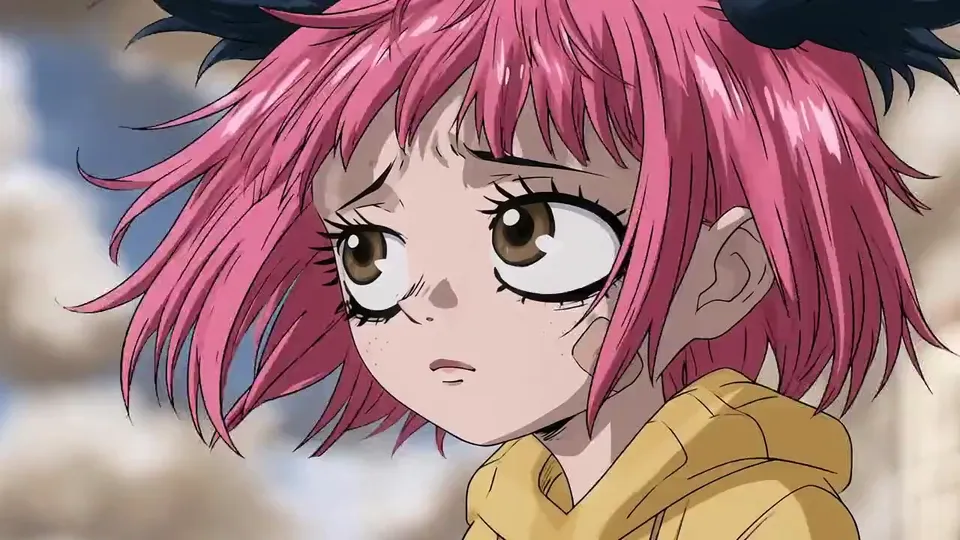
  • An anime girl wrapped in a brown blanket sits under a string of warm lights at night, chin on her fist

    Waiting Under the Lights

    An anime heroine wrapped in a blanket under string lights, waiting for someone who is far away.

A love scene, page to screen

The Café Table: one look, five shots, made with AI.

Five shots from the ScreenWeaver team, and a page of screenplay written around them. He is leaving. She knows. Neither of them says the real line. Each shot shows its grey storyboard frame, the final image and a direction note.
Screenplay · page 1

INT. CAFÉ DES LILAS, PARIS - NIGHT

Gold bulbs, a full room, flowers on every table. THÉO (20s, dark curls, olive jacket) leans across a small marble table. NADIA (20s, white headscarf, floral dress) rests her chin on her hand. She listens. She does not agree.

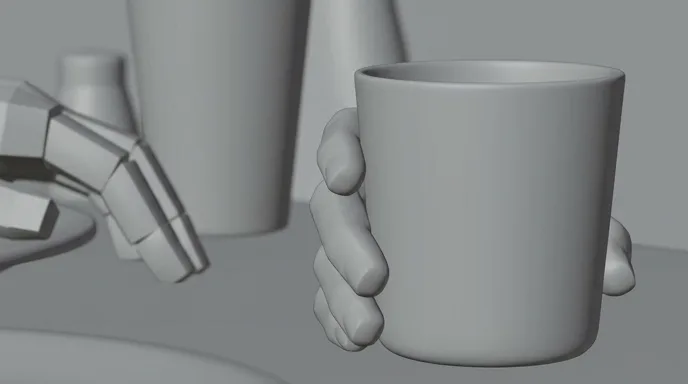
Her fingers turn her glass of water, a slow quarter turn. His hand stops halfway to hers.

THÉO

My train's at seven.

He looks down at the table. He cannot hold her eyes and say the rest.

NADIA

Then you should get some sleep.

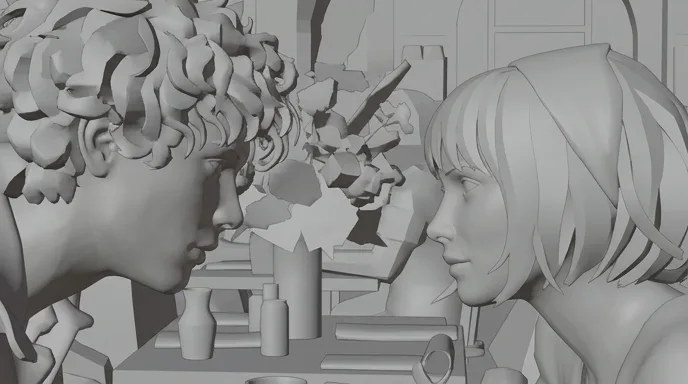
Neither of them moves. Their faces are closer than the table allows. The look lasts one beat too long.

Under the lamp, he slides a folded note beneath her fingertips. Her hand stays where it is.

CUT TO:

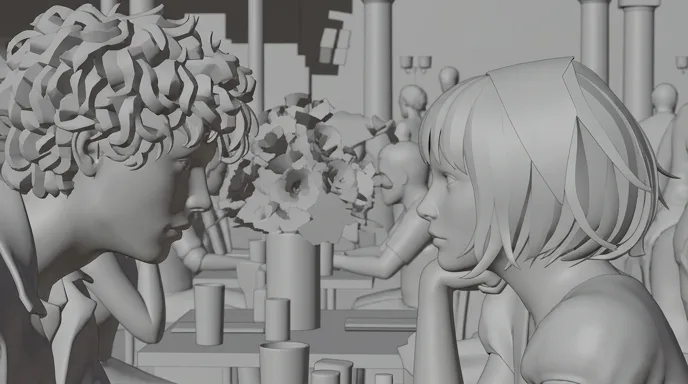
  1. A curly-haired young man leans toward a young woman in a white headscarf at a crowded café table, flowers between them
    Grey storyboard frame of the profile two-shot
    01

    Two‑shot in profile · the meet

    Painterly animated-film look, two-shot in profile at a Parisian café table, curly-haired young man leaning in, young woman in a white headscarf resting her chin on her hand, warm bulb light, flowers between them, shallow depth of field

  2. Close-up of fingers around a glass of water on a marble café table, another hand resting nearby
    Grey storyboard frame of the hand on the glass
    02

    Insert · the glass

    Tight insert on her fingers turning a glass of water on a marble table, his hand stopped at the edge of frame, warm bokeh behind, one small slow movement

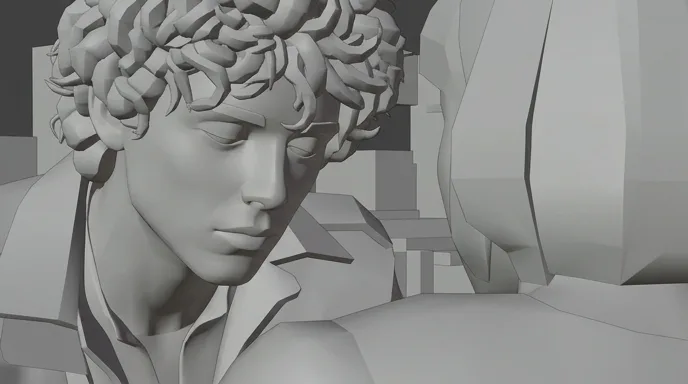
  3. The young man seen over the young woman's shoulder, eyes lowered, warm café light on his face
    Grey storyboard frame of the over-the-shoulder shot
    03

    Over the shoulder · his side

    Over-the-shoulder from behind her, his face in close-up, eyes lowered, curls falling on his forehead, warm side light, her shoulder soft in the foreground

  4. The young man and the young woman face to face, very close, looking into each other's eyes
    Grey storyboard frame of the tight two-shot
    04

    Tight two‑shot · the held look

    Tight two-shot, their faces inches apart across the table, eyes locked, nobody speaks, café bulbs out of focus behind them, hold the frame

  5. Two hands meet on a marble table, fingertips touching over a small folded note
    Grey storyboard frame of the hands
    05

    Insert · the note

    Macro insert on two pairs of hands on marble, his fingertips sliding a folded note under hers, she does not pull away, warm gold light, very little motion

The team's cut of the five shots: twelve seconds, 16:9, in a painterly animated-film look. The two lines live on the page. On screen, the note does the talking.

Writing romance

Before the AI romance movie generator: six rules for the page.

A model can render two beautiful people at a table. It cannot tell the audience why they should end up together, or why they can't.
  1. 01

    Give both of them a point of view

    A love story with one real character and one prize is a portrait. Nadia wants something too: to be asked to stay, not told. Write two wants that pull in different directions, and every shot has two sides to cover.

  2. 02

    Put the meet and the obstacle on the same page

    In a short, the obstacle cannot wait for act two. Here it arrives in five words: my train’s at seven. The sooner the audience knows what separates them, the sooner every look carries weight.

  3. 03

    Hold the look one beat too long

    Romance is timing. Write the pause into the action line: "The look lasts one beat too long." In the storyboard it becomes a shot with a duration, not a line of dialogue.

  4. 04

    Let the hands carry the scene

    A glass turned a quarter turn. A hand that stops halfway. Fingertips on a folded note. Small touches are easier to believe than a speech, and each one is one clear insert for the board.

  5. 05

    Make the dialogue say less than it means

    "Then you should get some sleep" means stay, and don’t. Write the line they can bear to say, and let the close-up play the one they can’t.

  6. 06

    Pass an object between them

    A note, a key, a borrowed coat. An object that goes from one to the other is a promise the camera can see. Name it once, keep the wording, and it stays the same prop in every shot.

Structure and pacing

A love story in three minutes: meet, pull, choose.

A short romance has room for one meeting and one obstacle. Spend the time on the looks, not the plot. Conversations run on singles of two to four seconds, with one held look much longer.
  1. 15 %

    Two separate lives

    Each of them alone, wanting something. One shot each is enough.

  2. 15 %

    The meet

    They collide. Something in the first exchange promises trouble.

  3. 30 %

    The pull and the obstacle

    Every scene brings them closer and shows why they can't. A train, a family, a rule.

  4. 25 %

    The choice

    One of them risks something, usually in silence, often with the hands.

  5. 15 %

    The last image

    Together, apart or undecided. The final frame tells us which.

For a one-minute film, open in the middle of the meet and end on the gesture. The audience writes the rest.

Shot vocabulary

Eight shots every love story needs.

Faces, gaps and hands. Each one comes with the wording that gets it from an image or video model, ready to paste into a storyboard frame.
  • Shot and reverse shot

    Two singles cut back and forth. The backbone of every conversation, and the hardest thing to keep consistent.

    clean single of a young woman at a café table, looking just left of camera, chin on her hand, warm bulb light behind, shallow depth of field, eyeline matching the reverse shot

  • The profile two‑shot

    Both faces in profile, turned to each other. The space between them is the story.

    two-shot in profile, a young man and a young woman facing each other across a small table, a vase of flowers between them, warm café light, background softly out of focus

  • The held look

    A close-up that runs past comfort. The eyes drop to the mouth and come back.

    close-up of a young man's face, eyes lifting slowly to meet someone off screen, lips slightly parted, warm side light, locked-off camera, hold for four seconds

  • The almost touch

    Two hands on a table, a centimetre apart. The cut comes before they meet.

    macro insert, two hands resting on a marble table, fingertips almost touching, a folded note between them, warm gold light, shallow depth of field, very slight movement

  • The night walk

    Two people talking down a street after dark, the camera moving back ahead of them.

    medium two-shot walking toward camera on a city street at night, shop windows and streetlights behind them, slow dolly back, they walk close but not touching

  • The glass between them

    A window, a train door, a rainy windscreen. They can see each other and cannot reach.

    a woman behind a rain-streaked café window, a man outside in the street looking in, reflections of neon on the glass, both faces visible, cold rain, warm interior light

  • The golden‑hour wide

    The couple small in the frame, the sky doing the talking.

    wide shot of two students standing on a school rooftop at sunset, city below, sun low between them, warm orange sky, gentle wind in their hair

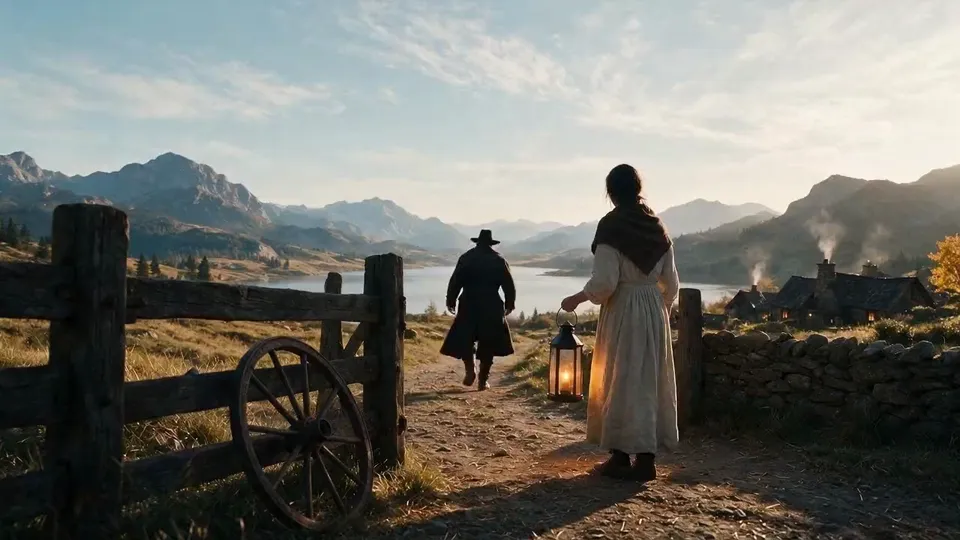
  • The look back

    One of them leaves, stops, and turns. The whole film in one movement of the head.

    medium wide, a man in a long coat walking away down a country road at dusk stops and looks back over his shoulder, a woman holding a lantern at a gate in the soft foreground

Light and palette

Warm practical light, skin first.

Romance is lit by lamps you can see: café bulbs, candles, a streetlight, a sunset. Put the source in the frame and name it in the prompt, then let everything behind the couple melt into bokeh. The five colours below were sampled from the Café Table shots: gold bulbs, a cream headscarf, warm skin, dark curls and a deep brown shadow. There is no cold note at all. The whole frame leans toward them. When the story turns against the couple, let the light cool with it.

  • Café bulb

    #E2B768

  • Headscarf cream

    #EDE0D4

  • Cheek in lamplight

    #AC7A4F

  • Dark curls

    #462B12

  • Back‑room shadow

    #130A03

Where AI goes wrong

Six ways AI breaks a love scene.

A romance asks for two faces, held steady, cut against each other dozens of times. That is exactly where video models are weakest.
  • Two faces that drift across the cut

    Each cut in a conversation is a new generation, so the face in the reverse shot slowly stops matching the two-shot. Théo’s face appears in three of the five shots, Nadia’s in two. One reference per character, carried from shot to shot, is the fix. In ScreenWeaver, both leads keep their reference in every shot.

  • Eyelines that miss each other

    Left alone, a model looks into the lens. Write "looking just left of camera" for one single and "just right" for the reverse, and draw it in the board. Keep the 180-degree line and they look at each other again.

  • Hands that merge at the touch

    When two hands meet, fingers fuse or multiply. Ask for fingertips, not interlaced hands, and one contact per insert. The storyboard frame gives the model the exact pose before it renders.

  • Perfume‑ad beauty

    Models make everyone flawless, glossy and posed. Real romance is awkward: messy hair, a chipped cup, a laugh at the wrong moment. Write the flaw into the prompt and the couple starts to feel like people.

  • The kiss that melts

    Faces this close tend to blend into one another. Cut on the moment before contact, play it in silhouette, or frame it from behind one of them. The almost kiss is usually the stronger shot anyway.

  • The line on the wrong mouth

    In a two-shot, the model may move the lips of the one who is listening. Give spoken lines to singles or over-the-shoulder shots, and keep the two-shot for silence.

Sub-genres

Romantic drama, rom‑com, period, long distance.

  • Romantic drama

    Love against a real obstacle: illness, class, a departure. Warm light that slowly cools, like The Café Table.

  • Rom‑com

    Banter, bad timing and a meet that goes wrong. Brighter frames, faster cutting, faces allowed to be silly.

  • Period romance

    Candles, gowns, letters and rules nobody may break. Slow looks across a room, and one touch of the glove.

  • Long‑distance romance

    Two places, two lights, cross-cut. Screens, trains and stations. The reunion is the only shared frame.

The pipeline

Write. Board. Produce.

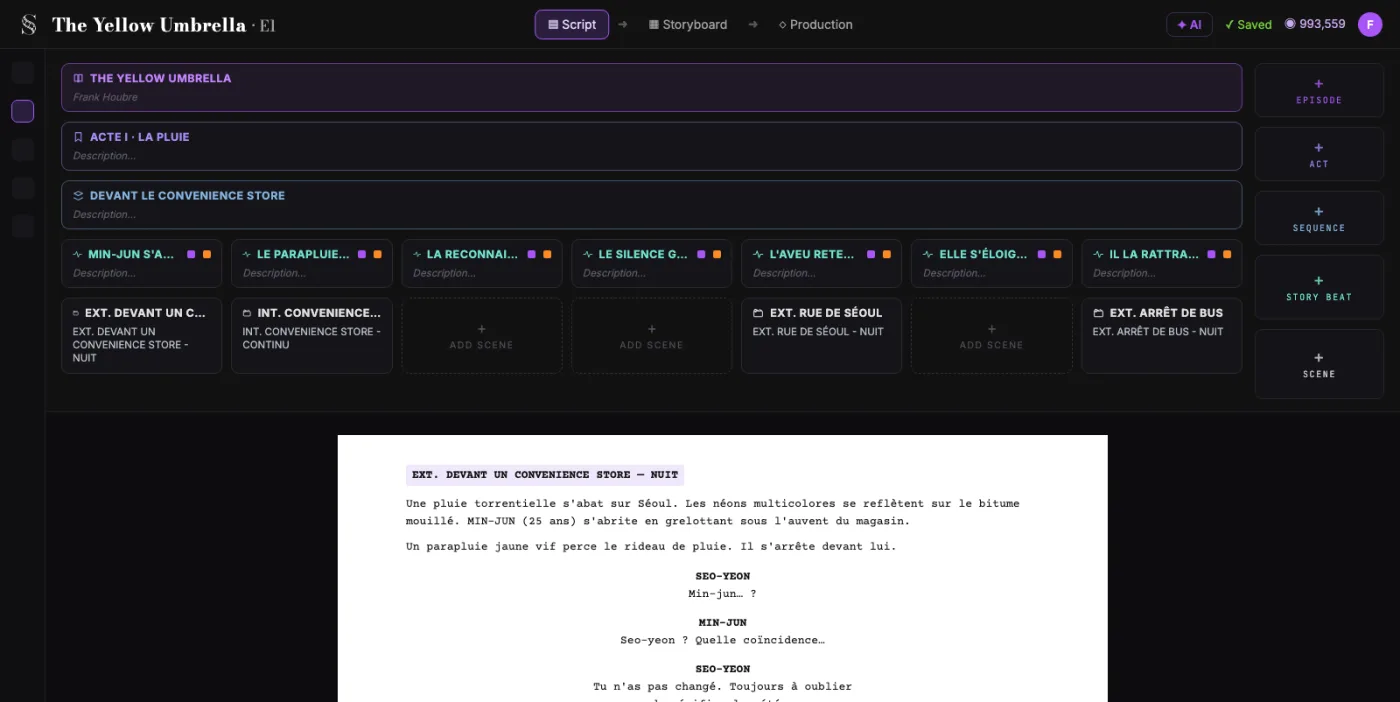
  1. ScreenWeaver screenplay editor: acts, sequences and beats above the formatted script of The Yellow Umbrella

    01The screenplay, enriched

    An industry-standard screenplay editor, and more: a visual outline and beat editor, your writing inspirations (notes, photos, audio) kept next to the page, and an AI researcher to support your writing, not replace it.

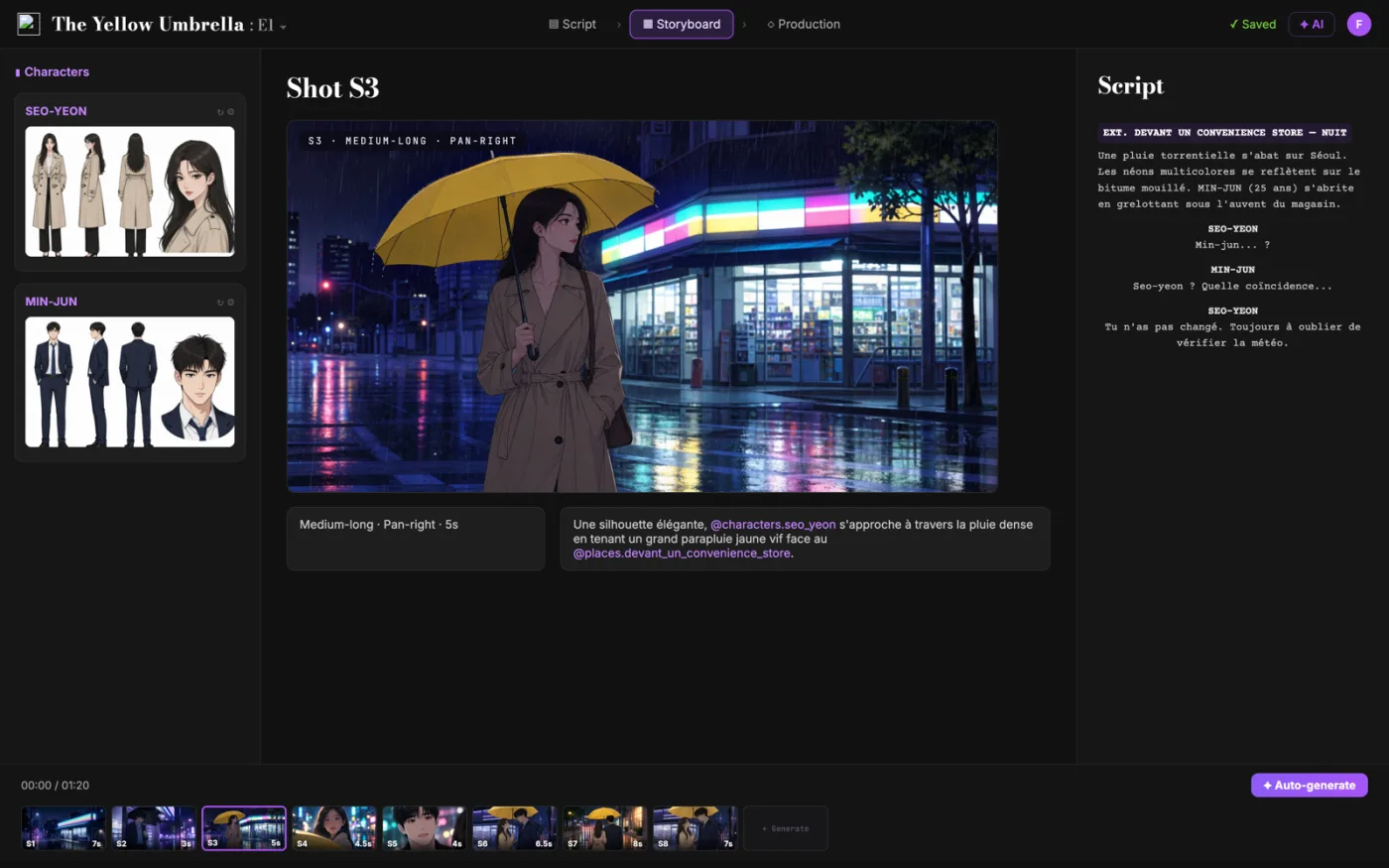
  2. ScreenWeaver storyboard: shot S3 of The Yellow Umbrella with characters, shot settings and the script beside it

    02The storyboard, made easy

    Shot breakdown generated from your screenplay, manual control over every shot (frame, angle, movement, duration), and generative AI previsualization in one click.

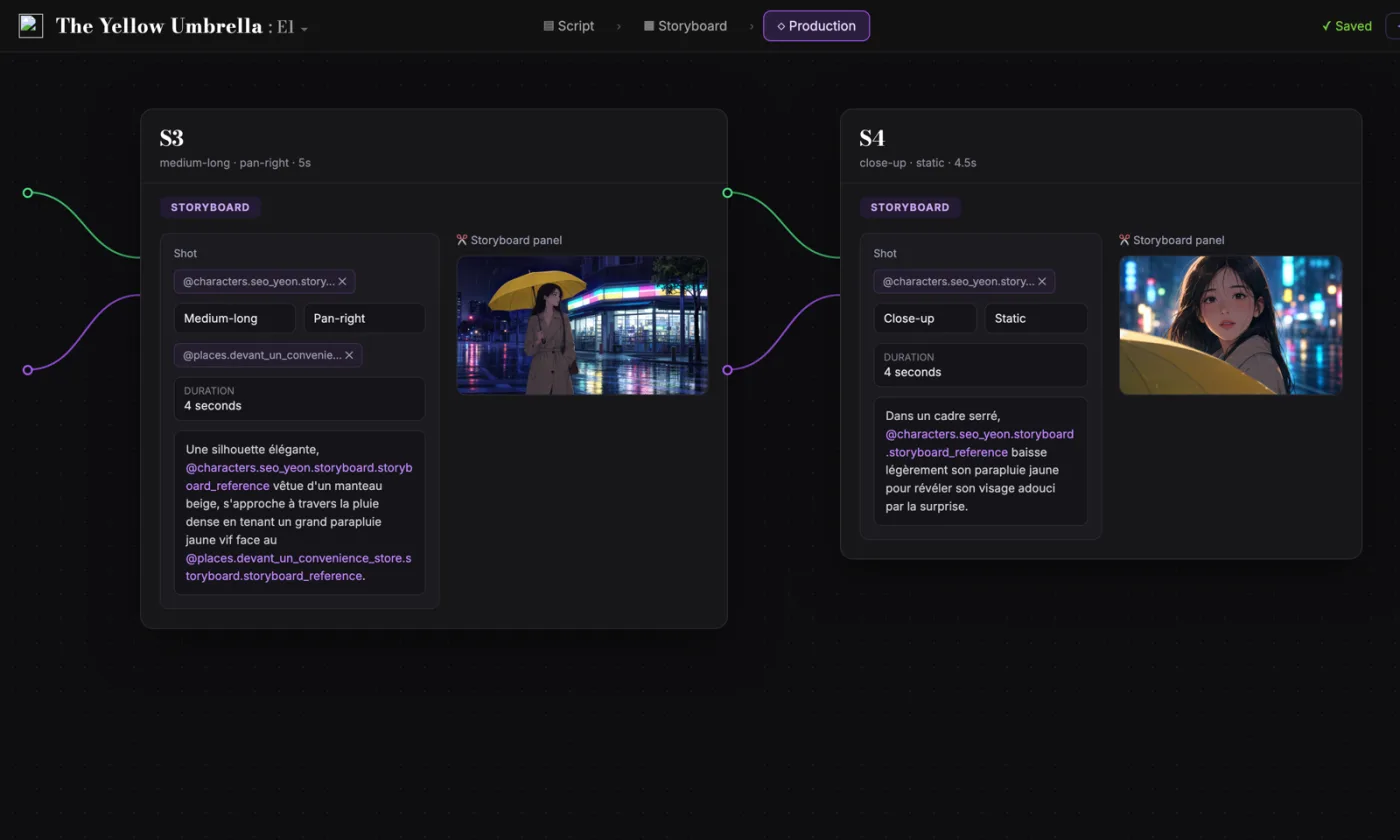
  3. ScreenWeaver production canvas: shots S3 and S4 as connected nodes carrying their storyboard panels and prompts

    03AI production, with finesse

    Footage generation pipelines connected to your screenplay and storyboard. Optimized out of the box, fully editable workflow.

FAQ

Romance with AI, your questions

Can an AI romance movie generator make a love story that feels real?
It feels real when the script gives both characters a want and an obstacle, so ScreenWeaver starts with the writing. Write for free today, then storyboard every look with Storyboard Beta at $9.99 a month. Shots become video with the Filmmaker plan, targeted for 30 September 2026.
How do I keep both faces the same across shot and reverse shot?
Create each character once, with a reference, and reuse it in every shot. In ScreenWeaver, characters, locations and references carry from shot to shot, so the Nadia of the reverse shot is the Nadia of the two-shot.
Can AI video film a kiss?
Close contact between two faces is still fragile: features can blend. Cut just before the lips meet, stage it in silhouette or from behind one character, or hold on the almost kiss. Audiences rarely miss the rest.
How much dialogue should a romantic short film have?
Less than a first draft usually has. The Café Table scene has two lines, and the note says the third. Keep lines short and put them where lip sync is safe: singles, over-the-shoulder shots, or off screen.
How many shots does an AI romantic short film need?
More than you expect, because every conversation splits into singles and reverses. For three minutes, plan on thirty-five to fifty shots, with one or two held looks that run much longer than the rest.
Can I make an animated or anime love story?
Yes. The Café Table uses a painterly animated-film look, and the same pipeline handles live action, anime and 3D animation. Romance also works in 9:16 short dramas, episode by episode.
Do I pay anything to write the love story?
No. The Screenwriter plan costs $0 and never runs out. Pages and projects are unlimited, formatting follows industry standard, and you can export to PDF or Final Draft (.fdx).
What renders the footage in ScreenWeaver?
The rendering runs on Seedance 2.0 and 2.5. ScreenWeaver wires them to your screenplay and storyboard through footage pipelines that work out of the box, and you can adjust any step.

Your love story starts with one look.

Write it for free. Storyboard every glance when you are ready.