AI movie trailer generator

Make a movie trailer with AI.Cut from your film, not a prompt.

Write the trailer from your screenplay's best scenes, storyboard every cut, and keep the faces and the world of the film. No stock clips, no random shots.
  • Free screenwriting
  • Storyboard every cut
  • The same cast as your film
Trailer cut

Available today: free screenwriting, and a storyboard generated from your screenplay with Storyboard Beta, $9.99 a month.

Coming: video generation of each shot with the Filmmaker plan, targeted for 30 September 2026.

Examples

Trailer shots from the ScreenWeaver team.

Four genres, four trailer moments. Each one shown as its grey storyboard frame and its finished shot.
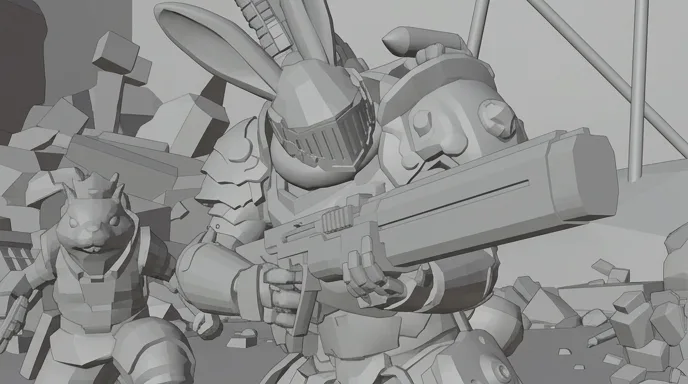
  • A rabbit soldier in battered brass power armour fires a heavy gun on a smoky battlefield

    Rabbit Gunner

    War. Muzzle flash, brass armour, smoke: the shot that lands on the biggest drum hit of act three.

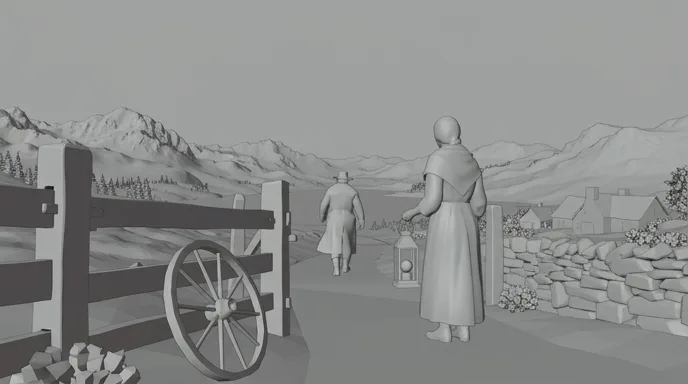
  • At a farm gate by a lake, a woman holding a lantern watches a man in a long coat walk away

    Lantern Gate Farewell

    Period drama. A lantern, a gate, a man walking away: the quiet image a drama trailer opens on.

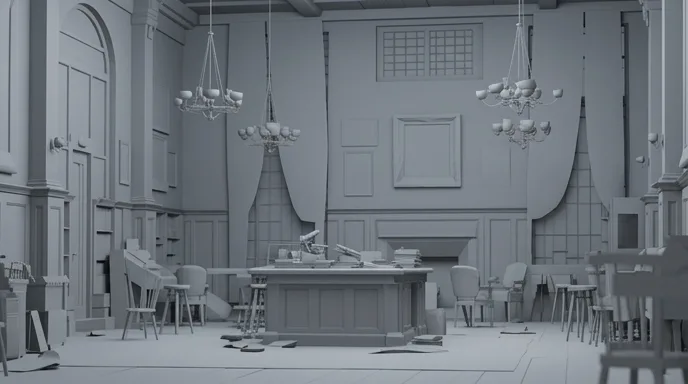
  • Shafts of light cross an empty gothic study with chandeliers, tall windows and a desk covered in papers

    The Gothic Study

    Mystery. Light sweeps an empty room full of papers. Room in the frame for a title card.

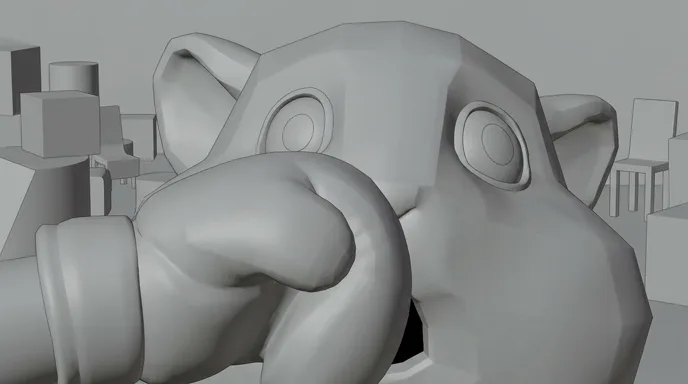
  • Close-up of a startled hamster taking a blue boxing glove to the face

    Hamster Fight

    3D animation. A glove to the face, held a beat too long: the button of a family comedy trailer.

One teaser, script to screen

Wolf Shore: an AI movie trailer in six cuts.

A teaser written for this page as a trailer script. Each cut is shown as its storyboard frame and its final shot, with a note on where it sits in the trailer and how it was directed.
Trailer script · page 1

COLD OPEN - EXT. FROZEN SHORE - DUSK

Wind, nothing else. MIRA (19), hooded, looks back. Her wolf keeps its eyes on the far shore.

A planet fills half the sky. Under it, the lights of a city no one has reached.

MIRA (V.O.)

They said the ice would hold till spring.

CARD: THIS WINTER

Torches crest the ridge behind them. A drum. The hunters are coming.

SOUND HIT. A boot lands on black ice. It cracks like a gunshot.

Faster: the wolf turns. Torches. Breath. Running.

SMASH TO BLACK. TITLE: WOLF SHORE

Silence. Mira, close. She lifts her eyes.

MIRA

Don't look back.

CUT TO BLACK.

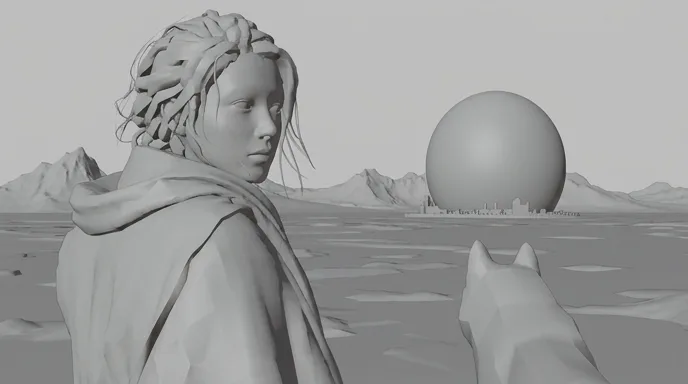
  1. A hooded young woman looks back over her shoulder on a frozen shore, a wolf beside her and a giant planet behind
    Storyboard frame of the same shot, in grey
    01

    Cold open · the look back

    Medium shot behind Mira as she looks back over her shoulder, wolf in the foreground, giant planet on the horizon, pink dusk, no music yet

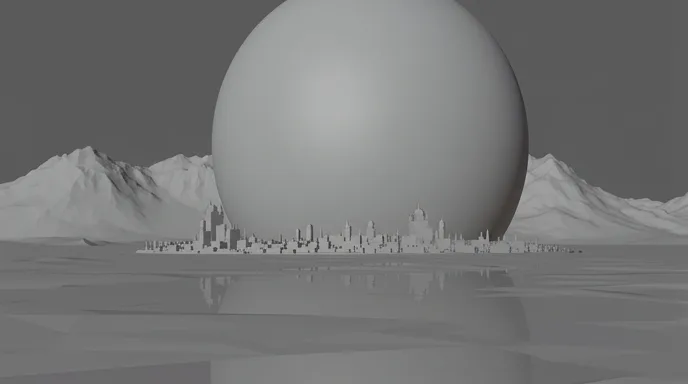
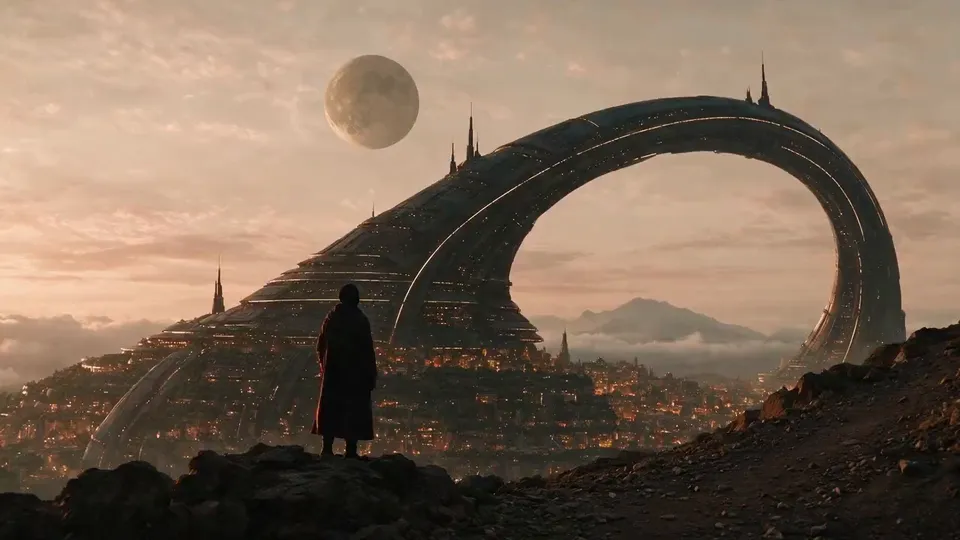
  2. A giant planet rises behind a small city of lights on a frozen sea at dusk
    Storyboard frame of the planet and the city, in grey
    02

    Act one · the world

    Extreme wide of a giant planet rising behind a distant city on a frozen sea, lights reflected in the ice, held long under the voice-over

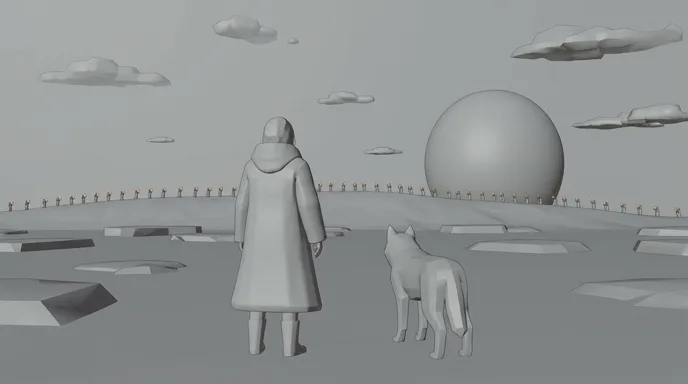
  3. A hooded woman and her wolf watch a line of torches on a snowy ridge at night
    Storyboard frame of the woman and the wolf facing the ridge, in grey
    03

    Act two · the threat

    Over the shoulder of Mira and her wolf, a line of torches cresting a snowy ridge, cold blue night, the drum comes in on the cut

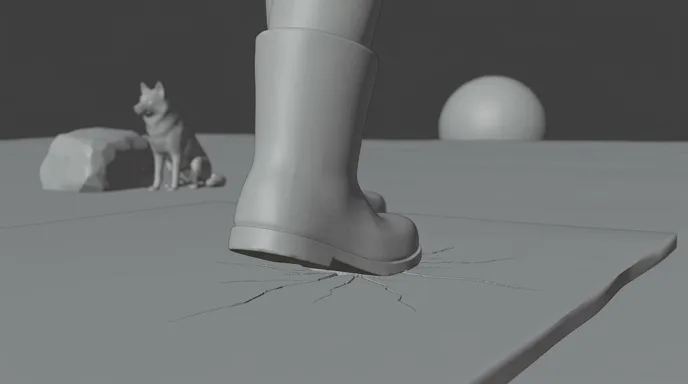
  4. Close-up of a leather boot landing on black ice as cracks spread
    Storyboard frame of the boot on the ice, in grey
    04

    Sound hit · the ice

    Low insert on a boot landing on black ice, cracks spreading from the heel, cut exactly on the impact

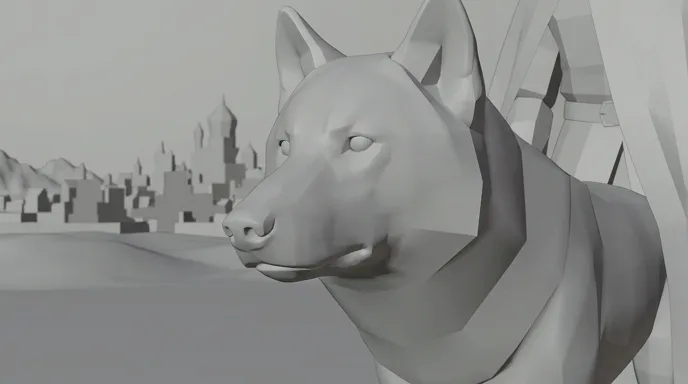
  5. Close-up of a grey wolf in the snow, a lit city blurred behind it
    Storyboard frame of the wolf, in grey
    05

    Act three · the montage

    Close-up of the wolf turning its head toward the city lights, one second on screen, cut on the movement

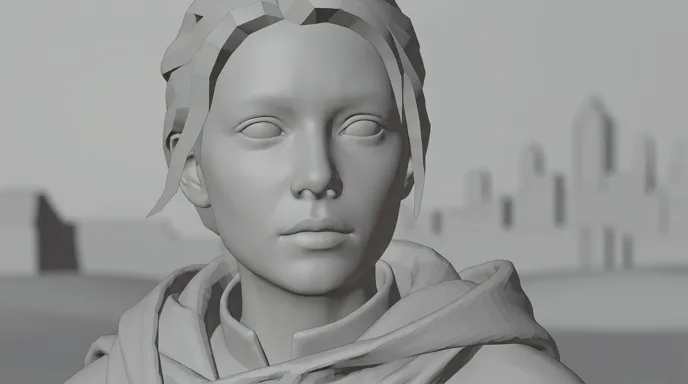
  6. Tight close-up of a young woman in a dark hood, windswept, city lights blurred behind her
    Storyboard frame of the close-up, in grey
    06

    After the title · the button

    Tight close-up of Mira, wind in her hair, city lights out of focus, she lifts her eyes, two beats of silence before the line

The six cuts edited like a teaser: ten seconds, 16:9. The black beat before the last shot is where the title card goes.

Writing a trailer

Four rules for a trailer that sells the film.

A trailer is a second screenplay, with its own structure. Write it before you generate a single shot.
  1. 01

    Sell the premise, hide the ending

    The trailer asks the question and the film answers it. Show who, where and what goes wrong. Never show the ending, the twist, the creature in full or who dies.

  2. 02

    Steal your best lines

    Pick five or six lines from the screenplay and play them out of order, over other images. A line from the last scene can open the trailer. In Wolf Shore, the button answers the cold open.

  3. 03

    Title cards are beats

    Two to four cards, three to five words each. They sit between beats and let the music breathe before the next hit. Write them in the trailer script and set the type in the edit.

  4. 04

    Always keep a button

    After the title, one more moment: a line, a joke, a scare. Three to five seconds, then black. It is the part people quote.

Structure and rhythm

The shape of a two‑minute trailer.

Three acts, then the title and the button. Cuts get shorter as the music climbs: three seconds at the start, under one second at the peak.
  1. 8 %

    Cold open

    One strange image or line before the music. Ten seconds to earn the next two minutes.

  2. 25 %

    Act one: the world

    Who, where, what they want. Longer shots, real dialogue, the first title card.

  3. 29 %

    Act two: the turn

    What goes wrong. The music drops in, a sound hit lands on each cut, the stakes rise.

  4. 25 %

    Act three: the montage

    Half-second cuts on the beat, the biggest images, one line at the peak.

  5. 13 %

    Title and button

    Silence, the title, then one last moment that sets the tone.

For a 30 to 60 second teaser, keep the cold open, one image of the world, a short montage and the title. For a 9:16 social cut, open on the strongest image: you have two seconds before the scroll.

Shot vocabulary

Eight shots every trailer needs.

Each one with the wording that gets it from an image or video model. Board them in the trailer script, cut by cut.
  • The cold open image

    A quiet, strange frame before any music. Held long, so the first cut hits harder.

    static wide shot, lone figure in a vast silent landscape, dusk, no camera movement, long held frame

  • The look back

    The lead turns toward the camera. The audience meets the face they will follow.

    medium close-up, character glances back over the shoulder toward camera, wind in the hair, shallow depth of field

  • The world reveal

    One wide image that says what kind of film this is. It carries the first voice-over line.

    extreme wide establishing shot, slow push-in, colossal landmark on the horizon, distant city lights, atmospheric haze

  • The threat on the horizon

    Danger seen from behind the hero, still far away. Act two starts here.

    wide shot from behind the hero, line of torches cresting a ridge at night, smoke, cold blue light

  • The sound-hit insert

    A short, violent detail cut exactly on a drum or an impact.

    extreme close-up insert, boot slams onto ice, cracks spreading, low angle, fast motion

  • The montage flash

    Under a second of motion. Eight of them in a row make act three.

    quick close-up, subject turning sharply, motion blur, high contrast, one second

  • The title plate

    A clean moving background with room in the middle for the title.

    slow drift over dark storm clouds, empty negative space in the center of the frame, no text, no letters

  • The button close-up

    The last face of the trailer, held in silence before the final line.

    tight close-up, character slowly lifts her eyes toward the lens, silence, soft backlight, held three seconds

Light and palette

One grade for every cut.

A trailer jumps between scenes, days and places in seconds. What makes sixty cuts feel like one film is the grade: a cold dominant, a warm note for danger, a neutral for the lead. The five colours below were sampled from the Wolf Shore shots. Keep them in every prompt and the whole trailer reads as one world.

  • Ice blue

    #486279

  • Planet dusk

    #AA7467

  • Torch fire

    #C07A54

  • Wolf fur

    #8E7A6D

  • Polar night

    #17242C

Where AI goes wrong

Four trailer traps, and how the script avoids them.

A trailer shows dozens of scenes in two minutes. Every weakness of AI video shows up at once.
  • A lead with three faces

    Cuts jump across the whole film, so face drift shows side by side. A character sheet with front, profile and back views, carried from shot to shot, keeps the same lead in every cut.

  • Misspelled title cards

    Models invent letters. Generate the title plate without text, then set the title, the cards and the date in the edit.

  • Clips that will not cut

    Trailers cut on action, to the frame. Set the length and the camera move of each shot in the storyboard, and generate a little longer than the cut so you have handles.

  • Shots that are not in your film

    A prompt-only trailer fills gaps with generic images. Build it from your storyboard, with the same locations and cast, so every cut promises the real film.

Formats

Teaser, trailer, pitch and social cut.

  • Teaser

    30 to 60 seconds. One image, one question, the title. No plot and no names. It comes out first and makes people wait.

  • Full trailer

    90 to 150 seconds. Three acts, title cards, a montage on the music and a button. It shows the premise, never the ending.

  • Pitch trailer

    60 to 90 seconds for investors, funds or a crowdfunding page. Tone, world and lead, with your own shots instead of clips from other films.

  • Social cut-down

    15 to 30 seconds in 9:16. A hook in the first two seconds, subtitles for muted autoplay, frames recomposed for vertical, never cropped.

More genres

Make a film in another genre.

The pipeline

Write. Board. Produce.

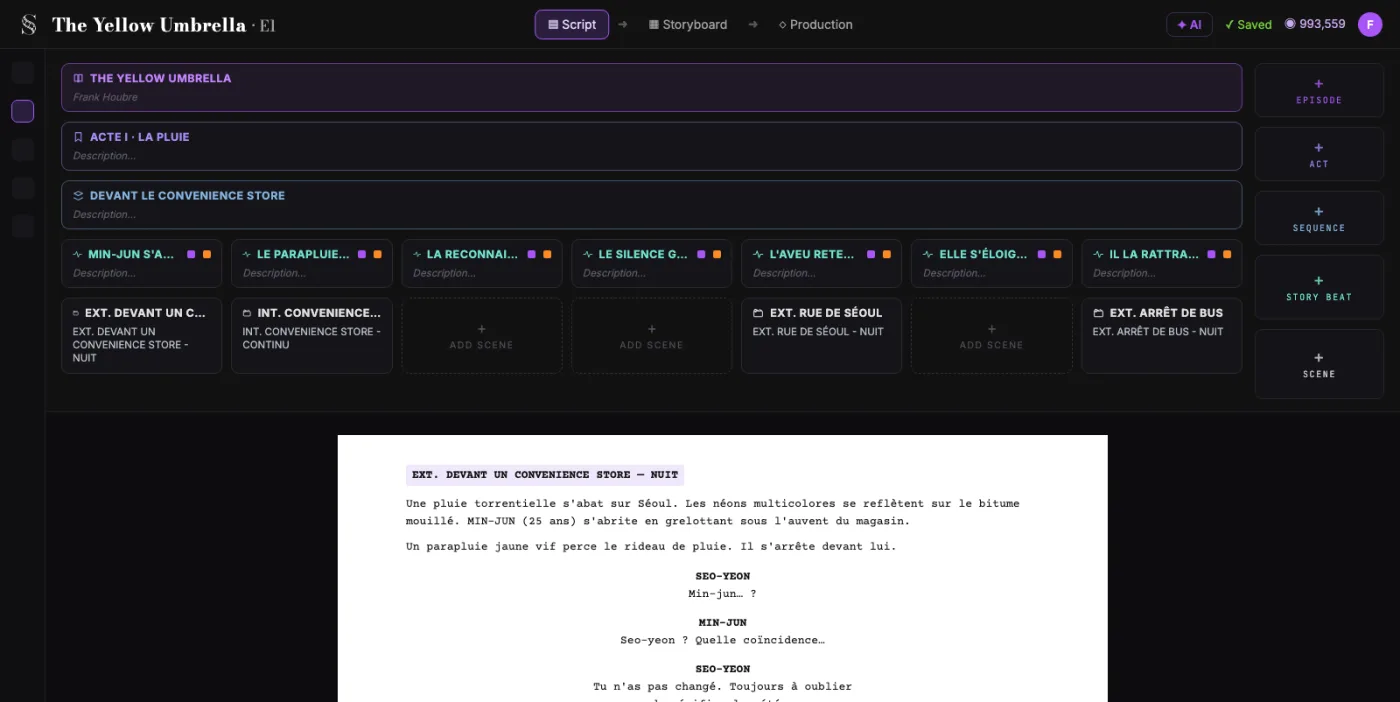
  1. ScreenWeaver screenplay editor: acts, sequences and beats above the formatted script of The Yellow Umbrella

    01The screenplay, enriched

    An industry-standard screenplay editor, and more: a visual outline and beat editor, your writing inspirations (notes, photos, audio) kept next to the page, and an AI researcher to support your writing, not replace it.

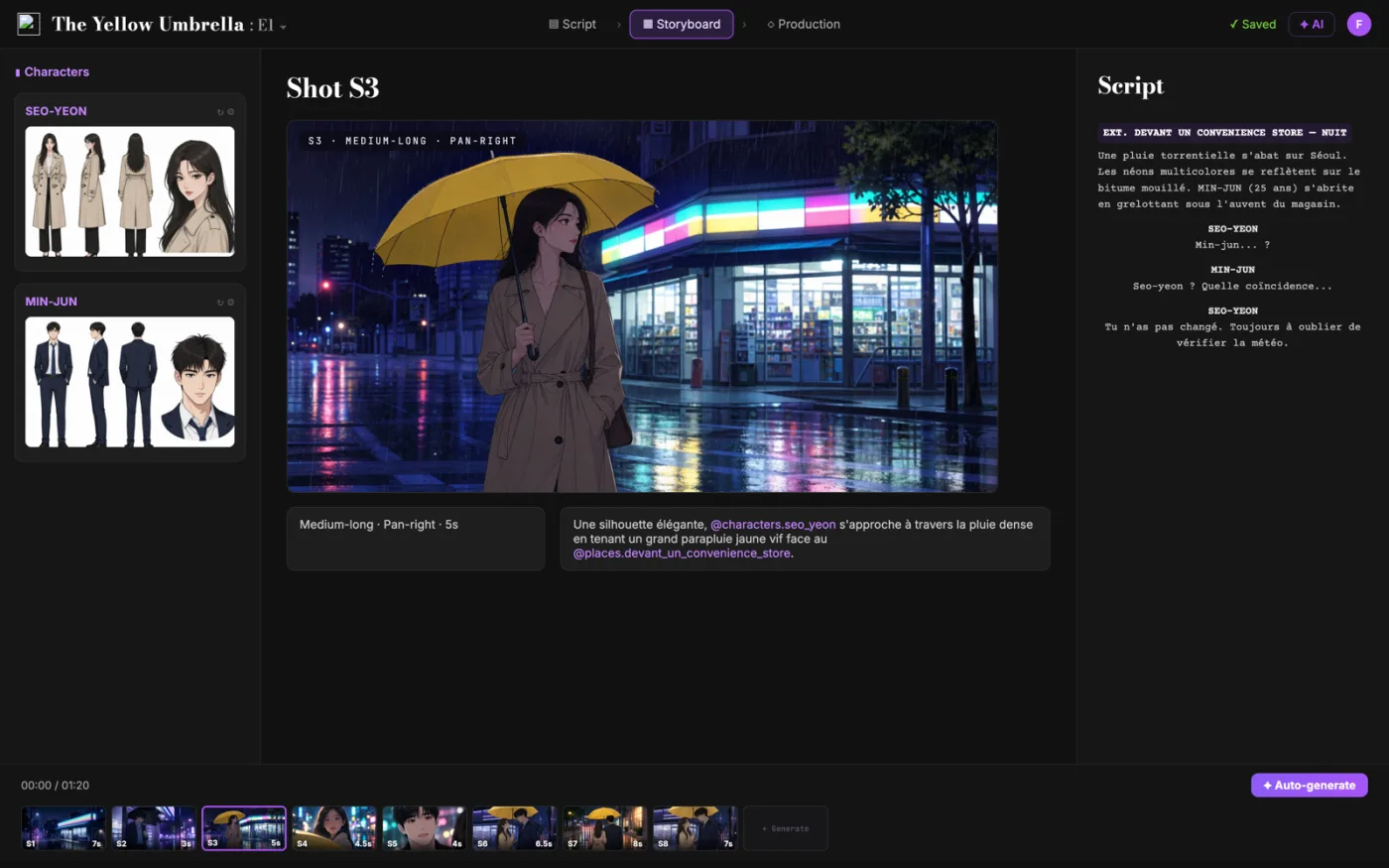
  2. ScreenWeaver storyboard: shot S3 of The Yellow Umbrella with characters, shot settings and the script beside it

    02The storyboard, made easy

    Shot breakdown generated from your screenplay, manual control over every shot (frame, angle, movement, duration), and generative AI previsualization in one click.

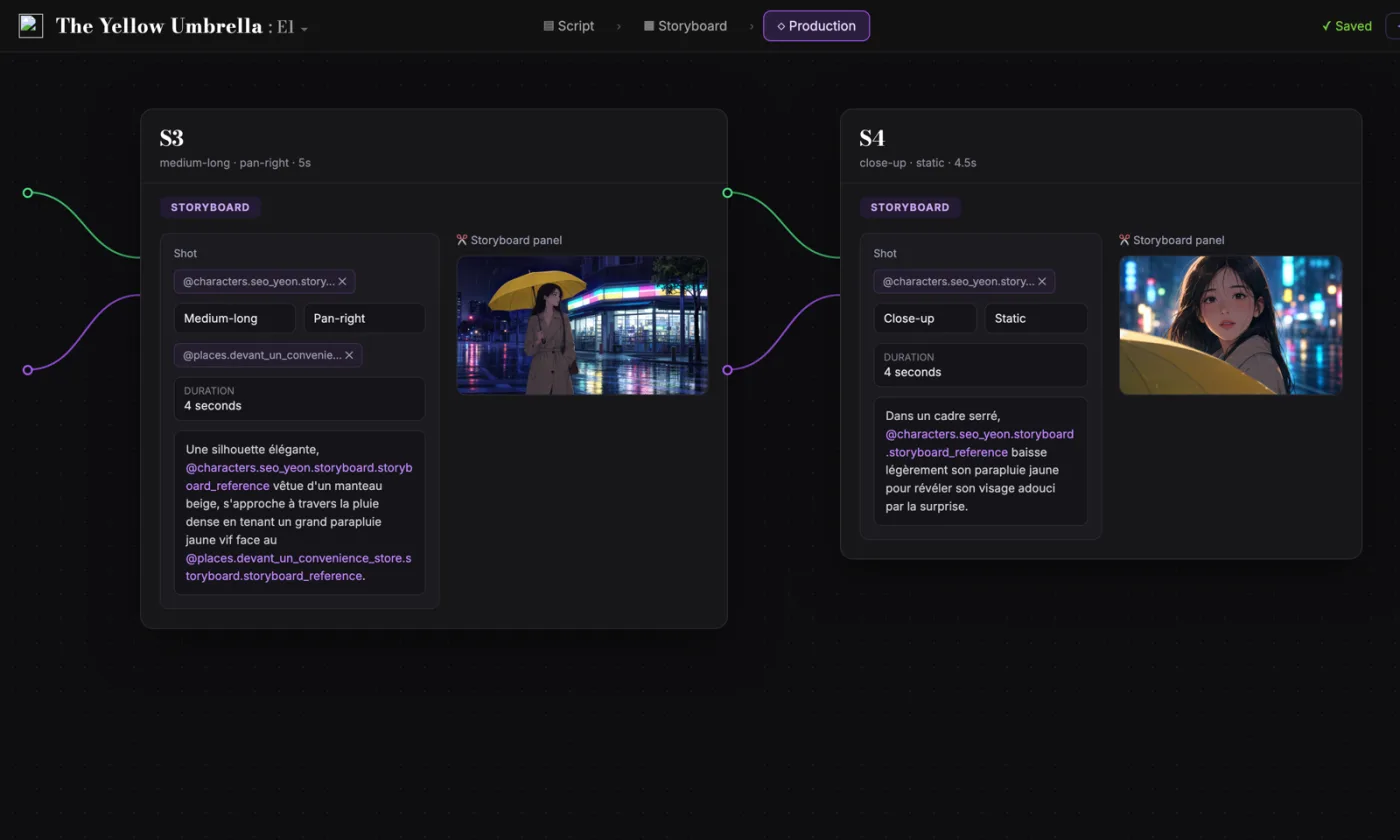
  3. ScreenWeaver production canvas: shots S3 and S4 as connected nodes carrying their storyboard panels and prompts

    03AI production, with finesse

    Footage generation pipelines connected to your screenplay and storyboard. Optimized out of the box, fully editable workflow.

FAQ

Trailers with AI, your questions

Is ScreenWeaver an AI movie trailer generator?
It makes the trailer from your own film. Write the trailer script for free today and storyboard every cut with Storyboard Beta at $9.99 a month. Video generation of each shot comes with the Filmmaker plan, targeted for 30 September 2026. You then cut the shots to music in your editing software.
How long should a movie trailer be?
A teaser runs 30 to 60 seconds, a full trailer 90 to 150 seconds, a social cut-down 15 to 30 seconds. With cuts of one to three seconds, a two-minute trailer holds sixty cuts or more.
How is it different from a prompt-to-trailer tool?
Prompt tools are quick for a promo: one sentence in, generic shots out. Here the trailer comes from your screenplay and your storyboard, with the characters, locations and references of the film carried from shot to shot.
Can I make a vertical 9:16 trailer?
Yes. ScreenWeaver works in 16:9 and in 9:16. Board the vertical version as its own frames: a 16:9 shot cropped to 9:16 loses the face or the action.
What should a trailer never show?
The ending, the twist, the creature in full, who dies and the last line of the film. Show the question, not the answer.
Can I make a trailer to raise money for my film?
Yes, that is a pitch trailer. Write it as a short script, storyboard it today and put the frames in your deck. The generated shots follow when the Filmmaker plan opens.
Is writing the screenplay free?
Yes. The Screenwriter plan costs $0 and does not expire: unlimited projects and pages, industry-standard formatting, PDF and Final Draft export.
Which video models does ScreenWeaver use?
ScreenWeaver is powered by Seedance 2.0 and 2.5. The footage pipelines are connected to your script and storyboard, optimised out of the box and fully editable.

Write the trailer before the first frame.

Screenwriting is free. Storyboard every cut when you are ready.