
One building. One night. One trap closing inch by inch. Single location thriller screenplay structure is a favorite of indie budgets and high-tension studio pitches because confinement concentrates conflict. Done poorly, it feels like a play with too many door exits and not enough escalation.
The trick is not staying in one place. The trick is making one place feel like it shrinks as the story advances.
Confinement is not a gimmick. It is a pressure chamber. Structure should tighten the lid scene by scene.
Free tool: use the Slugline Formatter to clean up and standardize your scene headings.
How It Works: Pressure Chamber Architecture
Single-location thrillers usually combine:
- A clear reason everyone is here (storm, job, family event, heist gone wrong)
- A clock (storm until dawn, oxygen running out, police en route)
- Information turns that reframe safe rooms as dangerous
- Spatial reversals (the attic is not refuge; the basement is)
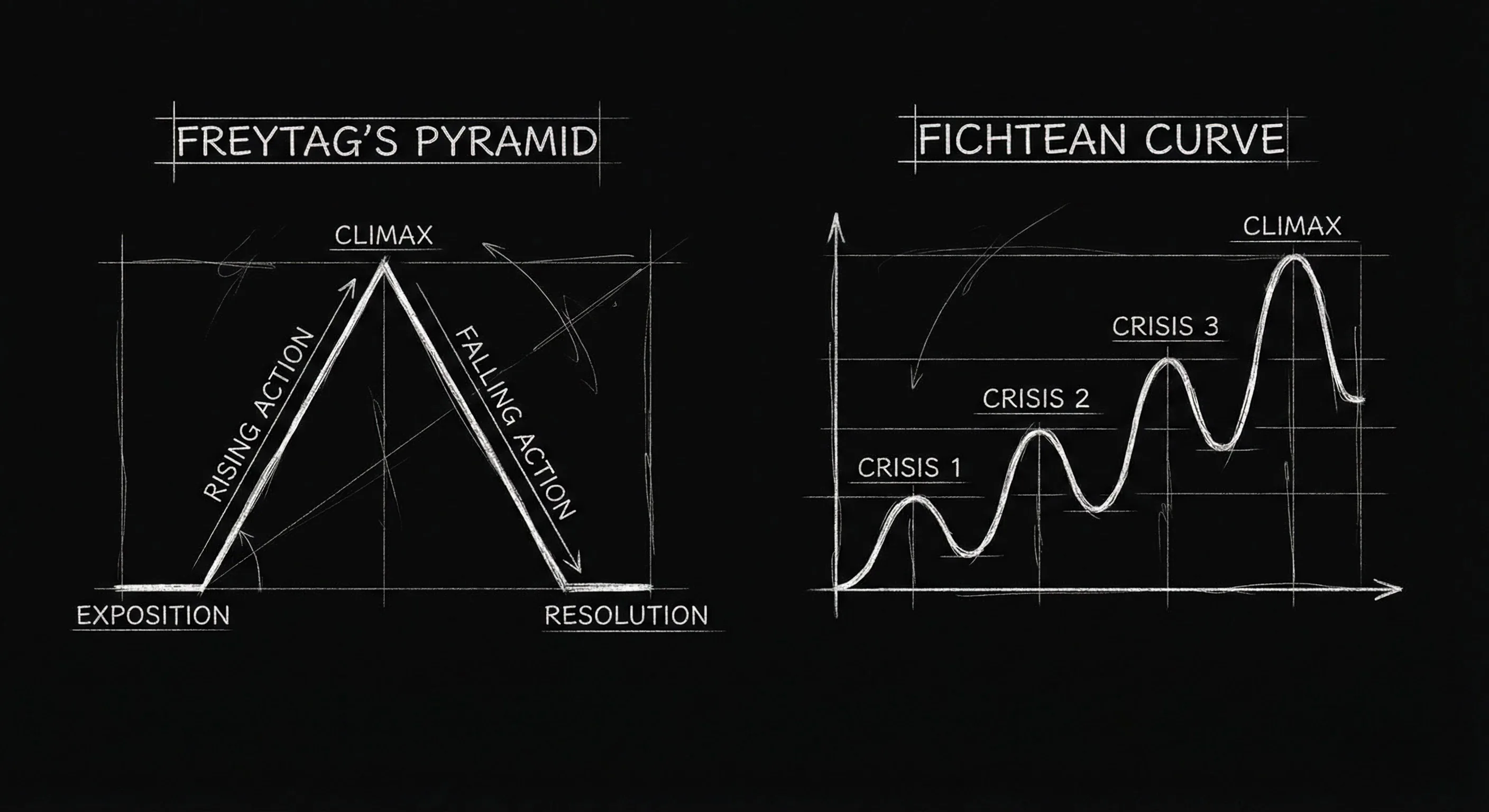
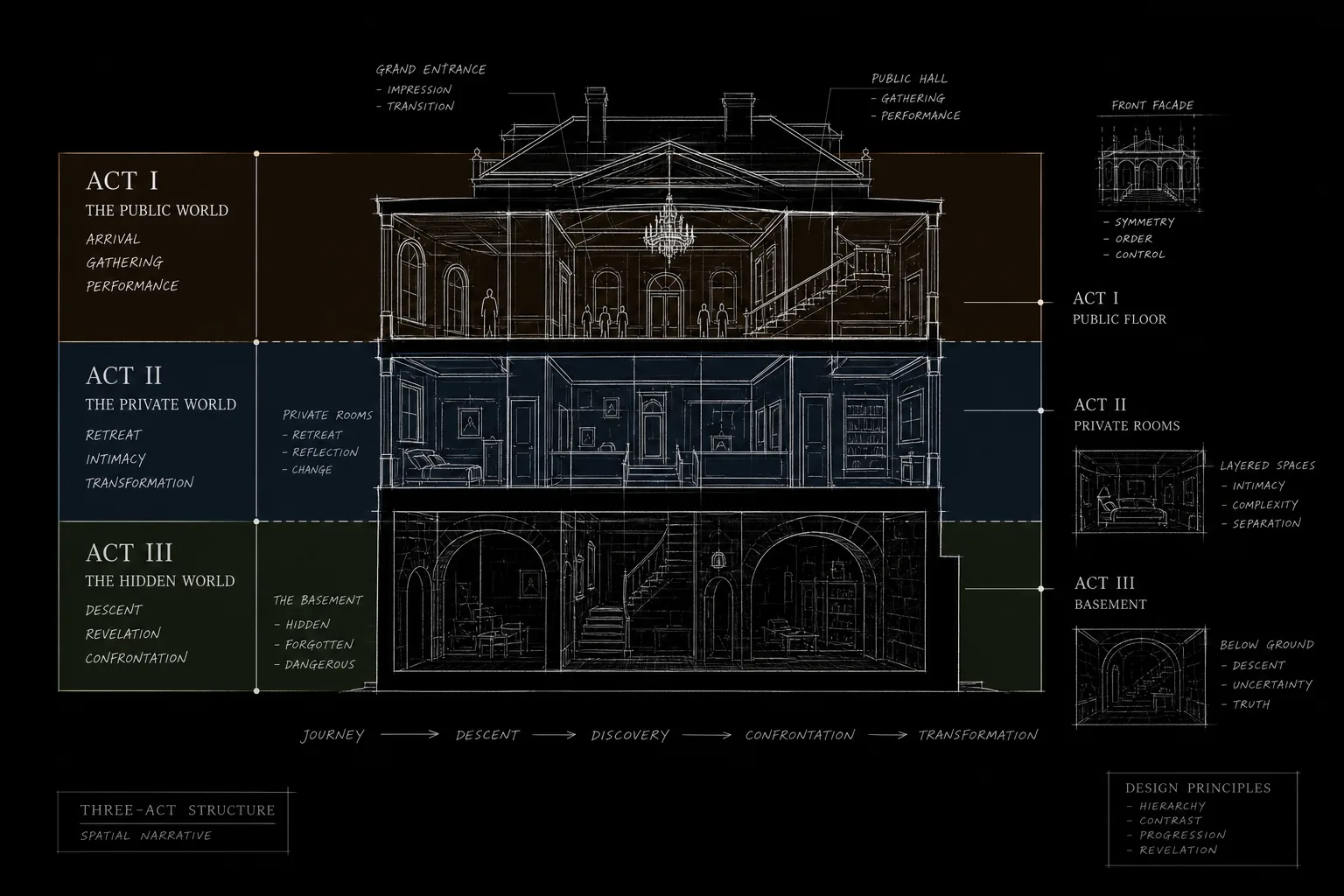
Acts still exist. Act one establishes geography and social map. Act two tests alliances and reveals secrets. Act three collapses options until one final confrontation or escape.
Platform and Use-Case Sections
Micro-Budget Indie Features
Indie producers love one-location thrillers for cost control. Your structure must show variety within repetition: different rooms, different power dynamics, different lighting sources. Format scene headings that move through the location so readers feel progression.
Study dinner scene single-room craft for dialogue tension tools that apply when characters cannot leave the table, literal or metaphorical.
Streaming Mid-Budget Thrillers
Streamers accept contained thrillers if premise snaps. Structure episodes if series: each episode can re-map the same location with new locked zone. For features, aim for act breaks that change who controls which floor or key.
Stage-to-Screen Adaptation Mindset
Single-location scripts often read theatrical. Film needs visual progression. Plan set pieces that use architecture: stairwell chase, window threat, power failure sequence.
Step-by-Step: Structuring a One-Location Thriller
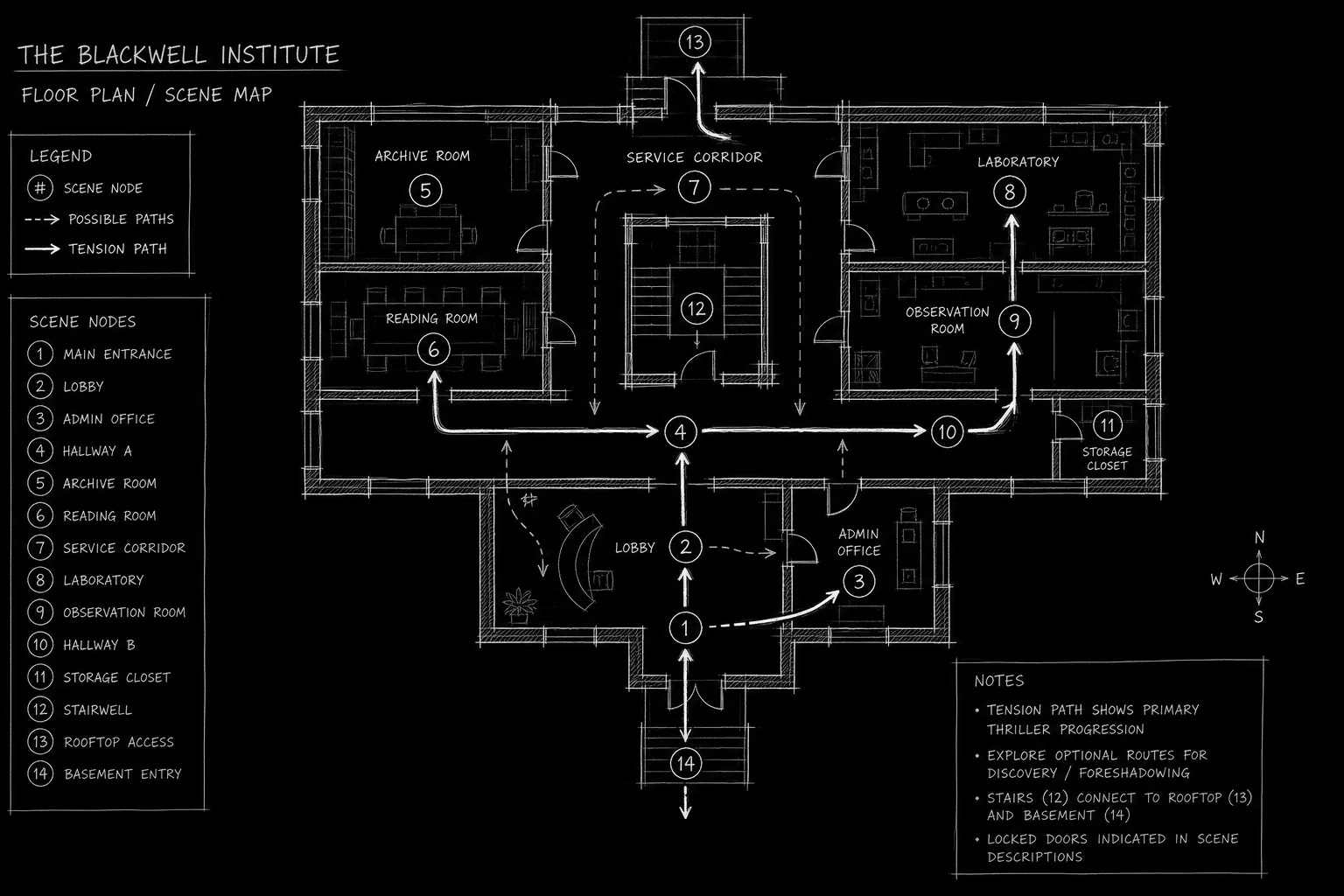
Step 1: Draw the map. Every room that matters labeled. Note entrances, locks, sightlines, dead zones.
Step 2: Assign act functions to zones. Act one in public space (living room). Act two splits characters into bedrooms and offices. Act three converges in lowest or highest point (basement, roof).
Step 3: Plant geography in act one. A character mentions the bolt on the side door. A fuse box flickers. Payoffs require plants.
Step 4: Build a clock on page ten or earlier. External deadline forces movement without random running.
Step 5: Schedule information reveals. Each reveal should change who is safe with whom. Avoid reveal stacking in one conversation unless climax demands it.
Step 6: Design the final space as thematic arena. The last room should embody the movie's question: trust, greed, survival, confession.
Operational Section: Formatting, Variety, and Reader Stamina
Scene headings as progression. INT. SAFE HOUSE - KITCHEN - NIGHT then INT. SAFE HOUSE - HALL OUTSIDE BATHROOM - NIGHT shows movement. Repeating the same slug for twenty pages without variation flattens pace.
Lighting and power as structure. Flip lights at act turns. Candlelight scene plays different from fluorescent hallway scene. Note light source when it changes mood or reveals.
Sound from other rooms. Off-screen thumps, voices, broken glass. Use sound craft to make the house feel larger than what we see.
Character count discipline. Too many characters in one location diffuses suspicion. Six strong suspects beat twelve wallpaper guests. Splitting the draft into French scenes, a new unit every time someone enters or exits, shows whether your suspects actually rotate through the space or clump in one room.
Exits and cheats. If a character could simply leave, explain why they cannot early: blocked road, injured, hidden identity, weapon standoff.
Page rhythm. Alternate dialogue pressure scenes with silent stalk sequences. Thrillers need lungs to breathe so scares land harder.
| Structure tool | Thriller function |
|---|---|
| Map plant | Makes payoffs fair |
| Clock | Forces decisions |
| Zone shift | Prevents sameness |
| Alliance flip | Fuels paranoia |
| Final arena | Thematic resolution |
Try it free
Try Screenweaver for free on your script
It is free. Import your existing project, get a clearer view of your outline, and regain control of your story structure in minutes.
Start FreeOutcome and Results: What Strong Structure Delivers
A well-structured single-location thriller delivers:
- Rising claustrophobia without new sets.
- Fair play mystery or suspense. Audience could map the space mentally.
- Production feasibility. Departments see how one location supports variety.
- Emotional crescendo. Ending feels inevitable, not trapped by budget.
Validate by explaining the house to a friend without showing the script. If they get lost, simplify map or add orienting lines in act one.
Use a table read to hear whether act two sags. Sag usually means insufficient alliance shifts or clock pressure.
Relatable Scenario: Storm Night at the Lake House
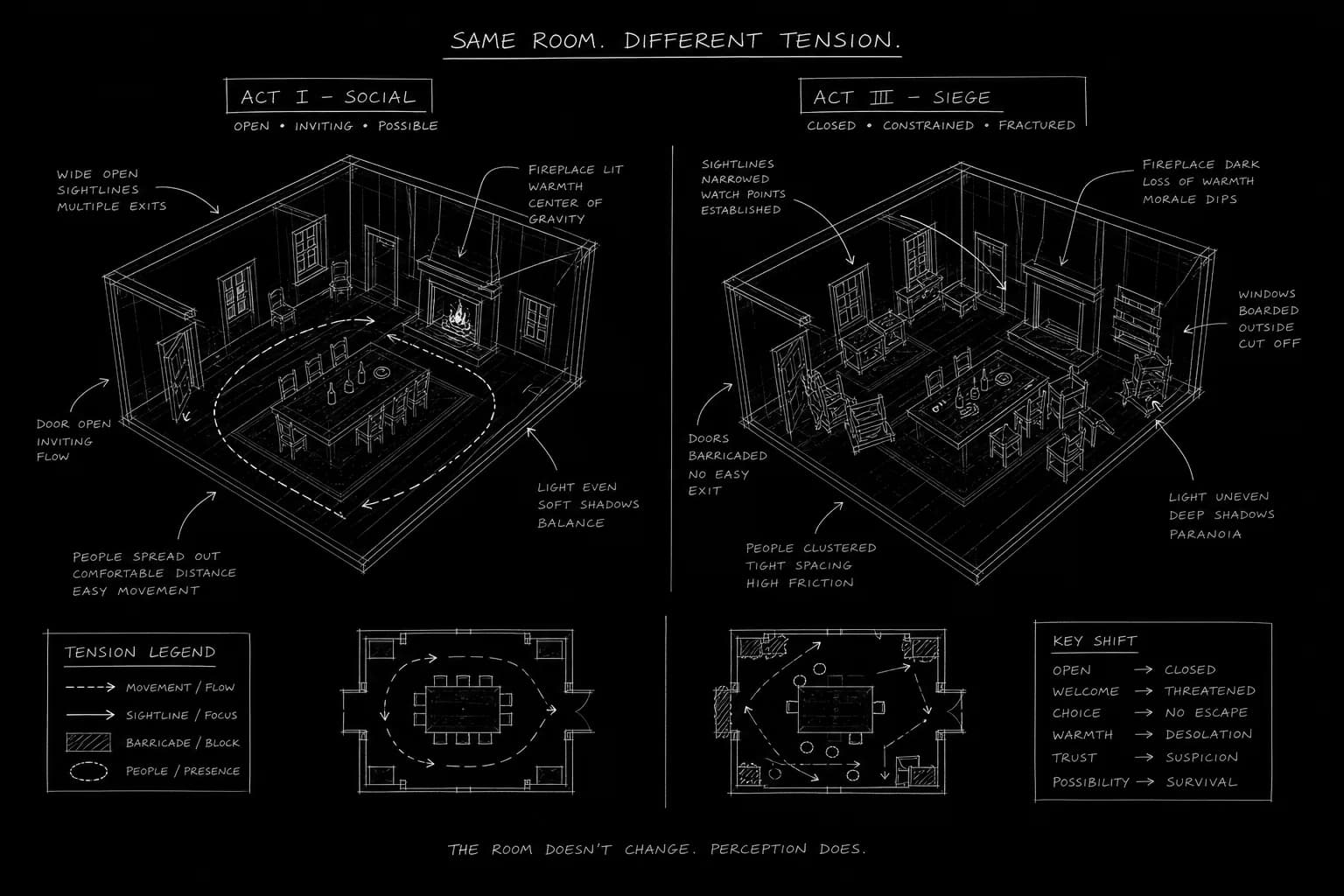
Six friends. One lake house. Road washed out. Act one: drinks, old stories, one locked study nobody enters. Act two: power flicker, missing phone, two people paired in bedrooms with different alibis. Act three: everyone in the basement because the upper floor is no longer safe after the truth about the locked study arrives.
The location never changed. The usable geography shrank. Format headings that track the shrink: UPSTAIRS HALL to BASEMENT STORAGE tells the reader the thriller is working.
Act Break Prompts for Contained Thrillers
End act one when: outside help is ruled out or the crime is discovered.
End act two when: alliances break and the safest room becomes the worst room.
End act three when: the protagonist chooses between escape and confession, not between two random shocks.
Use these prompts on your outline before you polish dialogue.
Paranoia Mechanics Without New Sets
Rotate who holds information. Rotate who has keys, phone signal, or weapon access. Rotate who is alone in a room. Each rotation is a scene turn without building a new location.
If your third act feels talky, convert one revelation into a physical chase through the house using pursuit clarity beats: who is cornered, which door locks, what object becomes a weapon.
Outline Test Before Drafting Dialogue
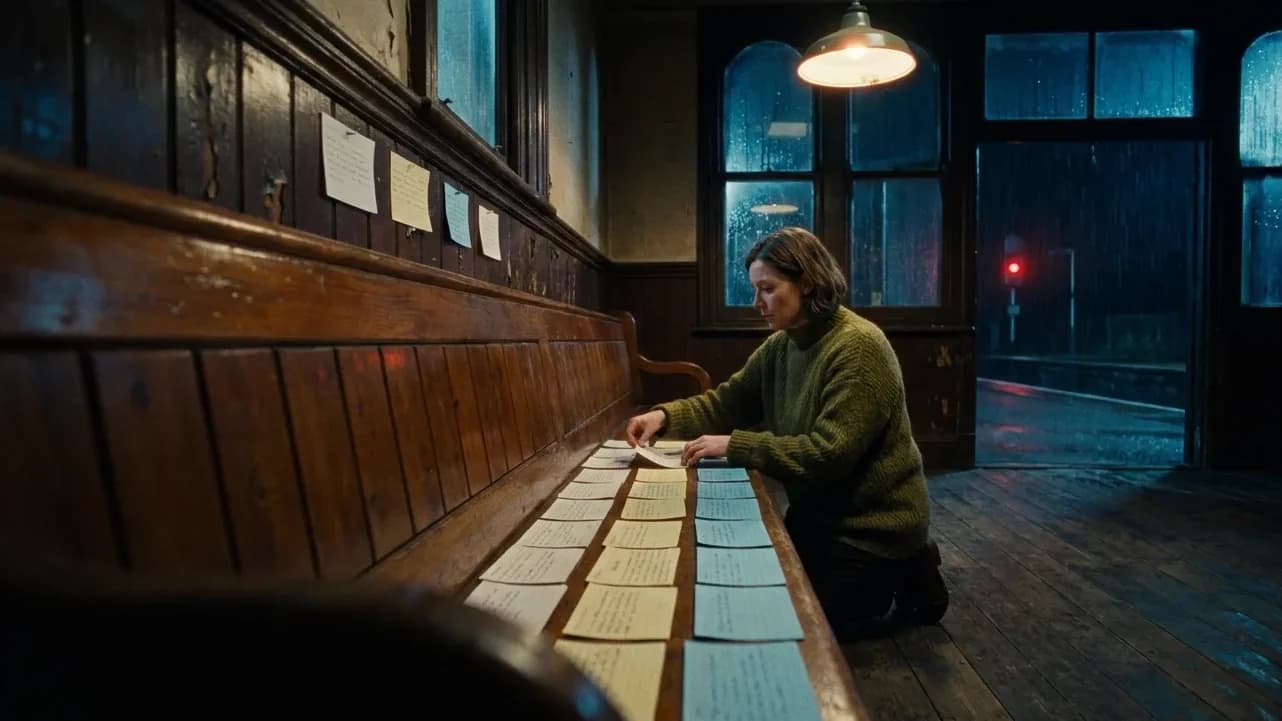
Write ten scene cards. Each card must list: room, characters present, what changes before they leave. If two cards change nothing but location within the same room, merge them. Single-location thrillers die from duplicate beats wearing different slug lines.
Props can structure repeats: the same knife on the kitchen counter in act one and act three should mean something different. The house does not change; the meaning of objects inside it does. That is how one location feels like three acts of escalation.
Windows and doors deserve names in act one. "Side door with the sticking lock" pays off when someone escapes or fails to escape later without a new slug line explaining architecture.
Why It Matters: Old Way vs New Way
The old way: Writers treated one location as an excuse for talky middles. Characters wandered rooms without strategic purpose. The thriller depended on a twist instead of escalating pressure.
The new way: Writers architect the building like a second screenplay. Each zone has job, clock tightens, geography pays off. Confinement becomes design, not limitation.
That design pairs with spec clarity: you are selling a readable experience before a dollar is shot. Readers must feel the walls close in on the page.
Final CTA and Conclusion
Sketch your location tonight. Mark act breaks. Ask what changes when the lights die, the door locks, or the truth arrives.
If act two repeats the same argument in different rooms, replace one argument with an action beat that uses architecture: someone barricades a door, someone eavesdrops through a vent, someone hides where they swore they would never go.
Single-location thrillers win when structure does the work of a city block. Build the pressure chamber. Then let your characters realize they have been inside it since page one.
Final Step
Build your next script with Screenweaver
Move from ideas to production-ready pages faster with timeline-native writing and AI-assisted story flow.
Try Screenweaver