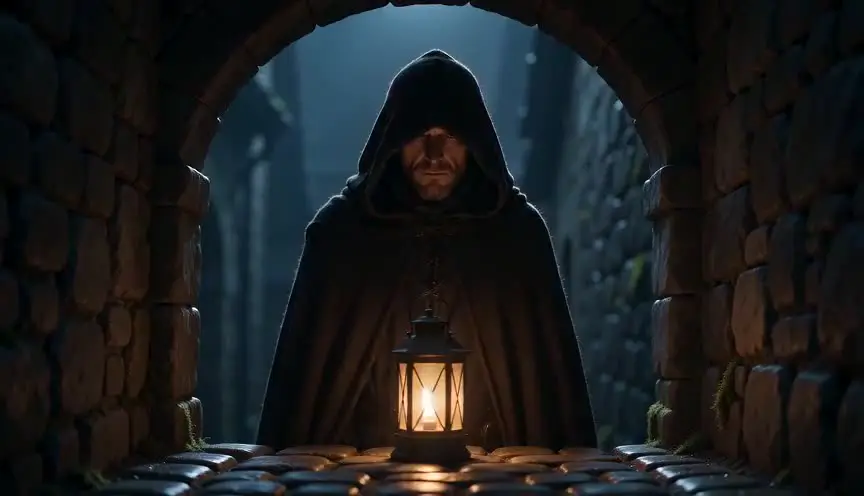
Low-key lightingLet the dark do the work
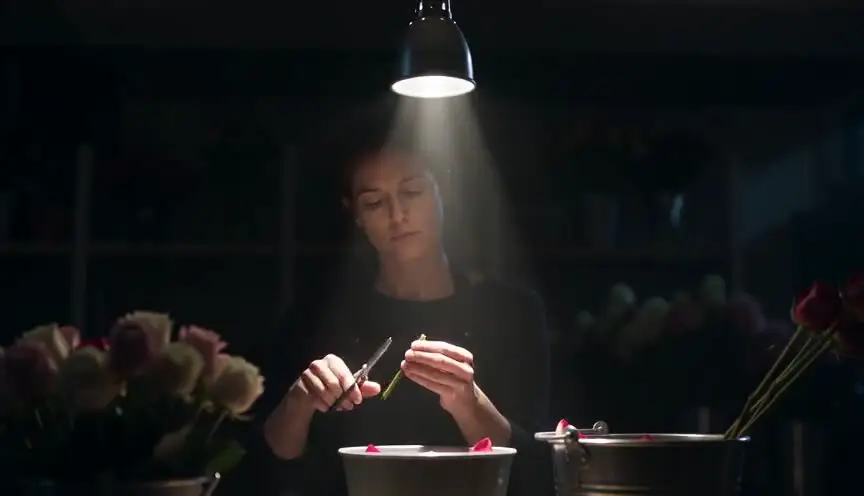
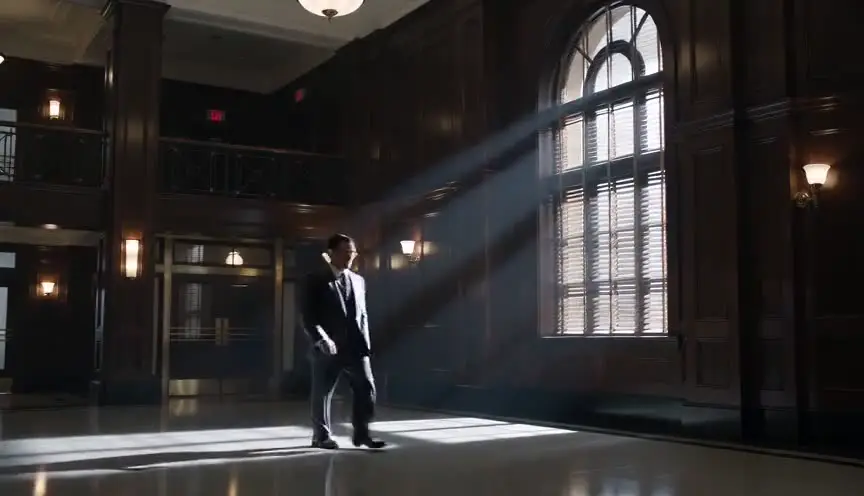
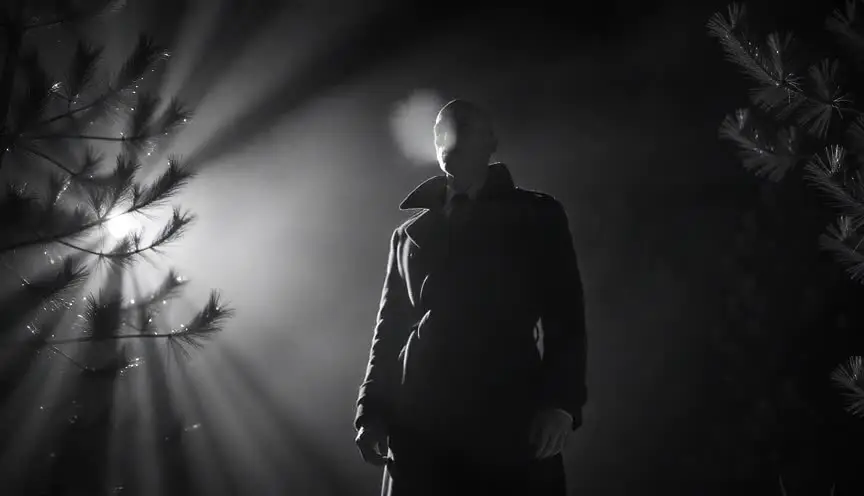
Low-key lighting keeps most of the frame in deep shadow and lets a few hard sources pick out faces, hands and objects. The audience leans in, unsure of what the dark is hiding.
Also calledLow-key lightDark lightingShadow lighting
Lighting
Why it works on screen
Reach for it when the story runs on fear, secrecy or moral weight. Crime, horror, thrillers and tragedies live in it, but so does any scene where a character is cornered or lying. Shadow gives the audience less information, and less information makes them anxious and attentive. It serves interrogations, confessions, threats, grief at night, and anything that happens after the characters have crossed a line. A scene earns it when what we cannot see matters as much as what we can: a figure in a doorway, a hand under a table, a face that turns away just before the answer.
The shot list line
- Size
- Medium close-up
- Angle
- Eye level or slightly low
- Movement
- Static
- Lens
- 50mm
- Duration
- 5 to 8 s
Keep one hard key motivated by the lantern, no fill, and flag the spill off the walls so the background falls to black.
Screenplay
On the page
Do not write "low-key lighting" in a spec script; it reads as a note to the crew. Give the scene its darkness through the world: a single bulb, a power cut, a boathouse lit by one lantern, streetlight through a dirty window. Describe what the dark hides from the character, not how deep the shadows are. The contrast ratio, the placement of the sources and how far to underexpose belong in the shot list and the lighting plan.
INT. BOATHOUSE - NORTHERN NORWAY - NIGHT
One storm lantern hangs from a hook. Beyond its circle, nothing but the sound of water under the planks.
EINAR HALVORSEN (70s) mends a net, his hands the only bright thing in the room.
A step on the dock outside. He stops.
The lantern swings. For a moment, a second shape shows at the door, then the dark takes it back.
EINAR
You came back for the boat, then.
Storyboard
In the storyboard
Shade most of the panel solid black before drawing anything else. Leave only the lit shapes white: part of a face, the hands, the source. Mark the key with a small lamp symbol and a single arrow. Write "low-key, no fill" in the margin, plus the ratio if you know it (8:1 or more). If something should hide in the dark, sketch it faintly and label it, so the crew knows what must stay just below visibility.
Pairs well with
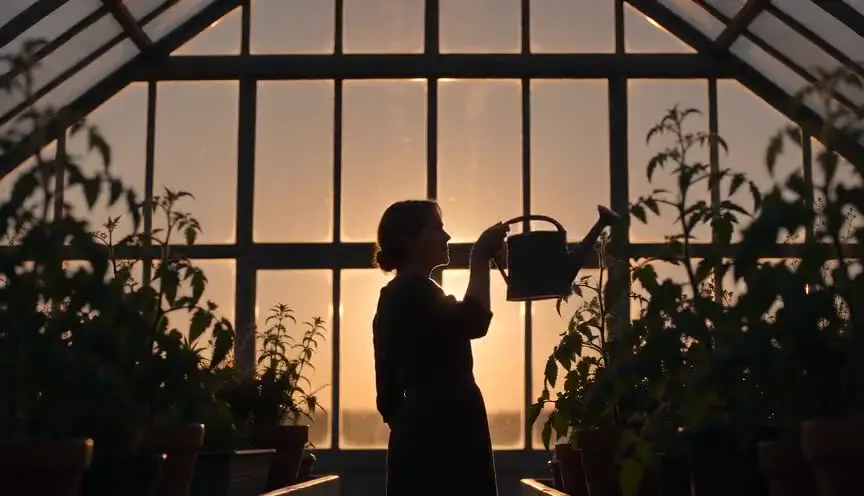
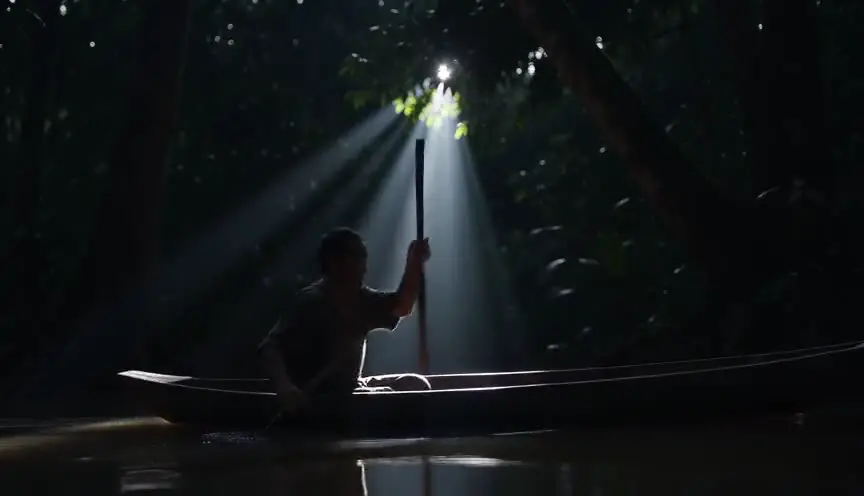
A silhouette in a doorway before the low-key close-up tells the audience a threat is present without showing a face. When the key finally catches the features, the reveal lands harder.
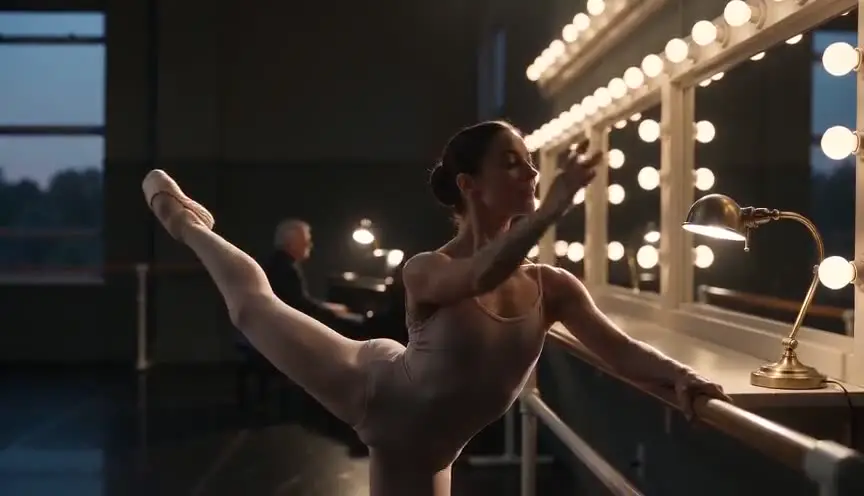
Show the lamp or lantern in a wider shot first. When the low-key close-ups follow, the darkness feels like the real room, not a style laid over it.
Reference
Watch it in
The Godfather (1972)
Gordon Willis hangs one source above the office confrontations and lets eyes sink into shade, so power feels hidden and private.
Blade Runner (1982)
Rooms and wet streets sit almost entirely in darkness, broken by a few hard, isolated sources in the spirit of noir.
Se7en (1995)
David Fincher keeps the city underlit, with narrow pools of light that keep the detectives and the audience uneasy from start to finish.
ScreenWeaver
Set it up in ScreenWeaver
Write the scene's one source into the action, a lantern, a bulb or a window, and ScreenWeaver breaks the scene down into shots automatically. Open each shot and set framing, angle, movement and duration by hand, holding the close-ups a beat longer so the audience searches the dark. Note "low-key, single source" on the shots. The character and location carry across the sequence, and the AI previsualization lets you check how much of the frame can go black before the scene stops reading.
Start writing for freeThe prompt behind this clip
This is the exact prompt that rendered the clip at the top of the page. Keep the description of the camera and the light, change the subject and the place.
Low-key lighting on a lone skateboarder standing at the top of a concrete skate park ramp as the sun drops behind the horizon. A single low, warm sidelight, like the last sunset ray, rakes across her face and one shoulder, while the rest of her body, the ramp and the background fall into deep, near-black shadow. The camera holds a static medium shot at eye level, 50mm lens, no camera movement. Contrast is extreme: only the lit half of her face, the edge of the board and a thin rim on the concrete are visible, everything else reads as dark silhouette. No text.
Common mistakes
- 01
Muddy instead of dark
Underexposing everything gives gray, noisy blacks rather than drama. Low-key needs contrast: strong highlights next to real darkness. Light the important shapes properly and let the rest fall away.
- 02
Losing the eyes
If the eyes vanish for a whole scene, the audience cannot follow the performance. Keep a catch light or a sliver of key in the eyes for the lines that matter.
- 03
Dark for no reason
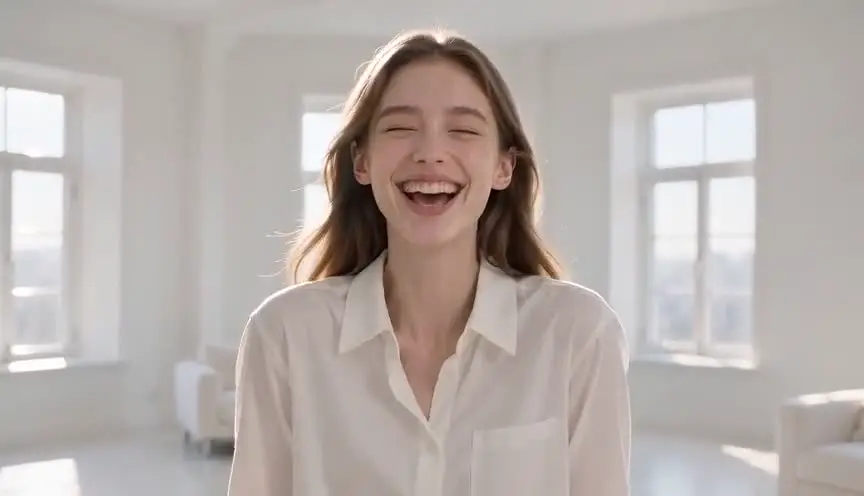
Low-key everywhere turns a film into one long mood with no shape. Save the deepest shadow for the scenes that turn, and let other scenes breathe with more light.