Hero image prompt: Dark mode technical sketch. Solid black background, thin white hand-drawn lines. A single figure stands between two overlapping, slightly shifted floor plans or doorways, same space drawn twice, misaligned. No neon, no glow. Minimalist, high-contrast. Sense of "which version is real?"
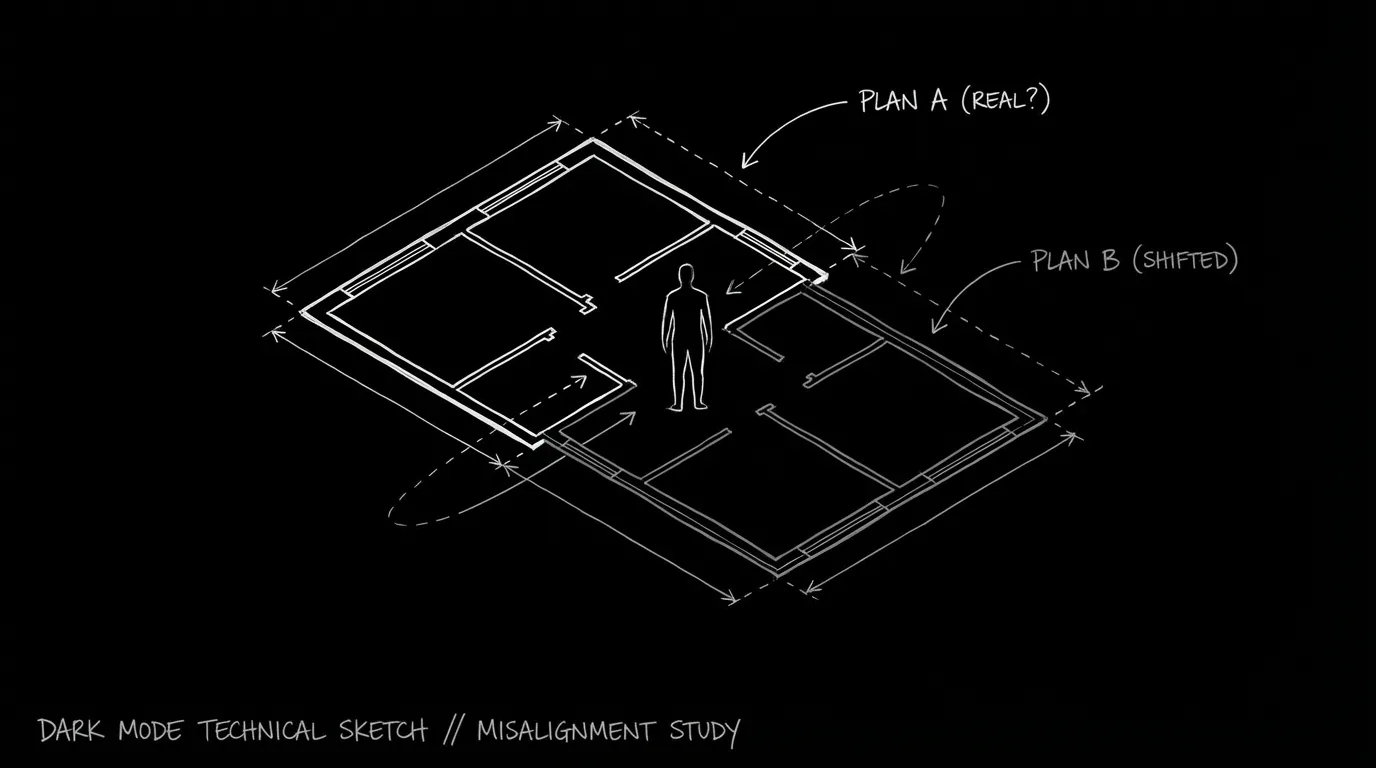
She’s sure she left the keys on the table. They’re on the hook. She’s sure she locked the door. It’s open. The audience doesn’t know yet whether the world is lying or she is. That’s the contract of the psychological thriller: we’re in someone’s head, and that head might be wrong. Not wrong about one fact, wrong about what’s real. The genre’s power is disorientation. You’re not just hiding a twist. You’re building a world that can fold in on itself. Here’s how to do it without cheating.
Gaslighting the audience only works if you’ve given them a reason to trust the narrator in the first place. The betrayal has to hurt.
The term “gaslighting” comes from the stage and film Gas Light: the husband dims the lights and insists they haven’t changed. The wife sees it. He says she’s mad. The audience sees it too. In a psychological thriller, you’re often doing something similar, but the audience is in the protagonist’s position. They see what the protagonist sees. They believe what the protagonist believes. When that reality cracks, they should feel the crack. Not “oh, a twist.” But “wait. What was real?” That feeling is what you’re building toward.
Why Unreliable Reality Works (When It’s Earned)
We trust point of view. When we’re in a character’s head, through voiceover, through subjective camera, through the way the script only shows us what they see, we adopt their sense of what’s true. The psychological thriller uses that trust. It doesn’t break it randomly. It asks: what if this person’s perception is being manipulated? What if they’re manipulating themselves? What if the world really is shifting? The best films in the space, Shutter Island, Fight Club, The Others, Black Swan, don’t reveal that “it was all a dream” or “they were dead the whole time” as a gotcha. They plant the possibility early. They let the audience notice inconsistencies. Then they pay off those inconsistencies in a way that recontextualizes everything. The audience gets to re-read the story. That’s the reward.
The line between earned and cheap is thin. If the twist is that the narrator was lying to us for no reason the story has established, we feel cheated. If the twist is that the narrator was wrong, misled, ill, or living in a reality that was always fragile, we get it. We’ve been with them. We’ve felt the same doubt. So the craft is in the planting. You’re not hiding the truth. You’re showing a truth that can support two readings. The “unreliable” part isn’t a lie. It’s a limited perspective that the full story will expand.
Techniques: Disorienting Without Confusing
Anchor one concrete reality. Even in the most subjective thrillers, something has to be solid. A place. A relationship. A goal. If everything is fluid, the audience has nothing to hold on to and they stop caring. So choose your anchor. Maybe the location is real, the house, the island, the hospital, and the events that happen there are what’s in question. Maybe the relationship is real, they really are married, they really did lose a child, and the question is what happened and who’s responsible. The audience needs one thing they can believe so that when other things slip, the slip matters.
Let secondary characters reflect back a different version. Other people don’t have to be lying. They can simply see things differently. “I never said that.” “You weren’t there that night.” “The door was always open.” When a character the audience has no reason to distrust says something that contradicts the protagonist’s memory, we don’t know who’s right. That’s the seed of unreliable reality. The script doesn’t have to tell us. It has to show us two incompatible accounts and let us sit in the discomfort. For more on how dialogue can carry hidden information, see our guide on subtext and the art of dialogue that hides the truth.
Use repetition with variation. The protagonist enters the same room twice. The first time, the painting is on the left. The second time, it’s on the right. Or the first time, there are three chairs. The second time, four. Don’t underline it. Don’t have a character say “that’s weird.” Just show it. The observant viewer (or reader) will notice. The payoff later will make them feel like they were part of the discovery. Repetition with variation is the visual equivalent of “I never said that”, the world itself is inconsistent, and we’re left to wonder why.
Withhold the protagonist’s backstory until it recontextualizes. We don’t need to know everything about the protagonist up front. In a psychological thriller, a late reveal, they were in the accident too, they’re the one who did it, they’re the patient, not the doctor, can flip the meaning of every scene we’ve seen. The key is that the reveal has to be supported by what we’ve already seen. The audience should be able to look back and think “that’s why that happened.” If they look back and think “that came out of nowhere,” the twist is unearned.
| Technique | What It Does | Risk If Overused |
|---|---|---|
| Anchor one concrete reality | Gives audience something to hold; makes the rest of the slippage feel consequential | None, this is your safety net |
| Secondary characters reflect different version | Creates doubt without making anyone clearly a liar | Can feel like everyone is gaslighting; use sparingly, with one or two key contradictions |
| Repetition with variation | Makes the world feel unstable; rewards attention | Too many inconsistencies feel like continuity errors |
| Withhold backstory until recontextualization | Makes the second half of the film re-read the first | If the backstory wasn’t hinted at, the flip feels cheap |
Try it free
Try Screenweaver for free on your script
It is free. Import your existing project, get a clearer view of your outline, and regain control of your story structure in minutes.
Start FreeRelatable Scenario: The Script That Doubles Back
You’re writing a thriller about a woman who’s convinced her neighbor is dangerous. She sees him at night. She finds things moved in her house. Her husband says she’s stressed, she’s imagining it. You want the audience to wonder: is he gaslighting her, or is she unraveling? So you plant both possibilities. She finds the keys in a different place, but we’ve also seen the husband come home late, acting odd. She sees the neighbor in the window, but we’ve also seen her miss sleep, forget things. The script never confirms which reading is right until the moment you choose. Until then, every scene has to work for both readings. That’s the discipline. You’re not writing one story and then slapping a twist on. You’re writing two stories in the same space and revealing which one we’re in.
Relatable Scenario: The Twist That Was Always There
Your protagonist is a detective. Or a patient. Or a ghost. You know the reveal from the start. So you go back and plant. The way no one touches them. The way they’re never in the same shot as the rest of the family. The way the dates don’t add up. You don’t make it obvious. You make it possible. When the reveal comes, the audience should be able to trace it back. “That’s why that scene was shot that way.” The unreliable reality isn’t a trick. It’s a second layer that was there all along. Our piece on the unreliable narrator and the distorted lens goes deeper on structuring that double layer.
The Trench Warfare Section: What Beginners Get Wrong
Relying on a single big twist. The script builds for 90 minutes and then drops “they were dead” or “it was all in their head.” If the first 90 minutes didn’t support that reading, the audience feels duped. They didn’t have a chance to question reality because you never gave them the tools. Fix: scatter small inconsistencies. A line that doesn’t match. An object that moves. A character who shouldn’t know something. Let the audience (and the protagonist) notice that something is off before the big reveal. The twist should feel like the answer to a question they were already asking.
Making the narrator a liar. There’s a difference between unreliable and dishonest. If the protagonist is deliberately lying to us, and we have no way to know, the audience feels betrayed in a bad way. Unreliable means they’re wrong, or they’re missing information, or their perception is distorted. They’re not trying to fool us. They believe what they’re showing us. That’s why we’re with them. When we discover the truth, we’re not angry at the character. We’re re-evaluating everything we saw.
Explaining the mechanism. “So I was in a coma the whole time?” “So you’ve been dead since the accident?” When a character spells out the twist in dialogue, the audience feels talked down to. They’ve already put it together, or they’re about to. Let the images and the structure do the work. The reveal can be a single shot, a single line, a cut. Trust the audience to get it.
Forgetting that the protagonist’s experience is still real. Even if the “reality” of the story is that they’re in a hospital, or they’re a ghost, or they’re two people, what they felt was real. The fear, the love, the loss. The psychological thriller works because we’ve been in their shoes. The twist doesn’t erase that. It reframes it. The emotional truth of the journey has to hold. If the twist makes everything feel pointless (“none of it mattered”), you’ve broken the contract. The journey mattered to them. It should still matter to us.
Step-by-Step: Building an Unreliable Reality
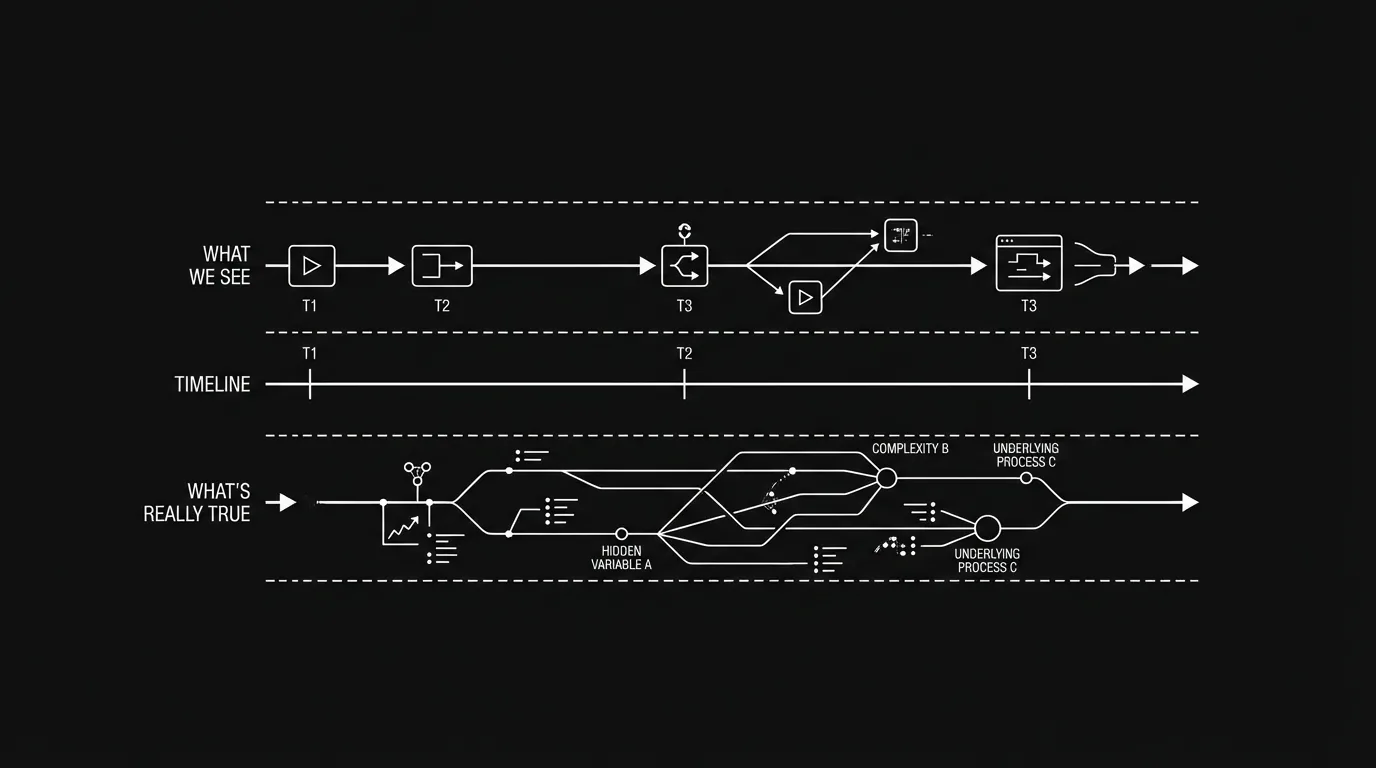
Start with the end. What is the “true” reality? Then work backward. What would the protagonist have to believe, or miss, or misremember, for the story we’re telling to make sense? List five to ten moments that could support both the “surface” reading and the “true” reading. A line of dialogue that’s ambiguous. A shot that could be from a different time or place. An absence, something we don’t see that we might have expected. Weave those into the first two acts. Don’t highlight them. Just let them sit. In the third act, when you reveal the truth, at least three of those moments should snap into place for the audience. If they do, you’ve earned the unreliability. If they don’t, you’re still hiding the ball. For structure that supports this kind of double reading, the Fichtean curve and modern thriller approach, crisis-driven, with repeated peaks of tension, fits well.
One External Resource
For a focused look at how narrative perspective and reliability work in fiction and film, the Wikipedia entry on unreliable narrator offers a short overview and examples. We link for reference only; not affiliated.
The Perspective
Unreliable reality isn’t a twist. It’s a lens. You’re not saving a secret for the end, you’re building a world that can hold two truths at once. The audience might not see the second truth until you show it. But when you do, they should feel like they could have. That’s the difference between a trick and a revelation. One surprises. The other rewrites. Your job is to make the rewrite feel inevitable.
Final Step
Build your next script with Screenweaver
Move from ideas to production-ready pages faster with timeline-native writing and AI-assisted story flow.
Try Screenweaver