AI historical movie generator

Make a historical film with AI.True to its century, shot by shot.

Write the screenplay, storyboard every shot of your period film, and keep the same faces, costumes and props from the first candle to the last.
  • Write for free, no time limit
  • A storyboard of every period shot
  • Costumes that stay in their century
Period rushes

Available today: free screenwriting, plus a storyboard generated from your screenplay with Storyboard Beta at $9.99 a month.

Coming next: the Filmmaker plan adds video generation of each shot, targeted for 30 September 2026.

Examples

Period shots from the ScreenWeaver team.

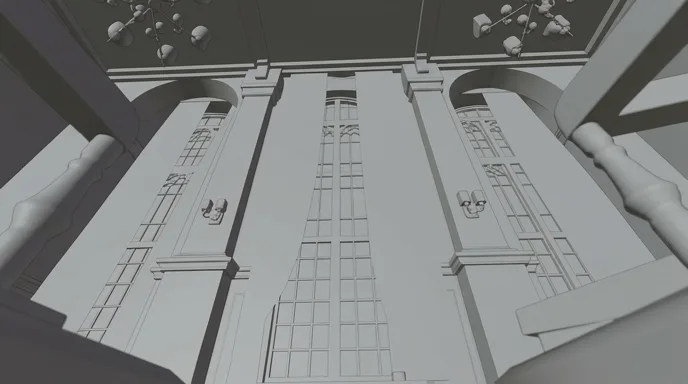
Four eras, four pictures. The Gothic Study is shown with its grey storyboard frame, the other three as finished stills.
  • A knight in plate armour and chain mail sits at the edge of a pond, a mace lying in the dirt beside him

    After the Battle

    Medieval. A knight in dented mail sits by a pond, mace in the dirt. The war is over, for him at least.

  • Low angle on tall arched windows and candle sconces in a dark gothic study

    The Gothic Study

    Gothic. Candles and tall windows seen from below: an empty room keeping its secret.

  • A girl in a red dress stands behind a caged lamp in an old tiled workshop, a technical drawing on the wall

    The Drawing Office

    Between the wars. A girl in a red dress, a caged lamp, a technical drawing pinned to the tiles.

  • Whalers in wool caps and heavy coats line the frosted rail of a sailing ship facing pack ice at sunset

    The Whalers

    The 1930s at sea. Frozen men along the rail of a sailing ship, facing the pack ice.

One scene, from page to frame

Lantern Gate Farewell: a period drama in six shots.

A scene written for this page around six shots from the ScreenWeaver team. No battle, no crowd: one woman, one lantern, one departure. This is how a period film fits a small budget.
Screenplay · page 1

EXT. LAKESIDE FARM - FIRST LIGHT

SUPER: "Autumn, 1887."

Chimney smoke over a stone wall. MAREN (30s), wool shawl over a linen dress, stands at the gate with a lit lantern. The sun is already up. She lit it anyway.

On the path to the lake, ELIAS (40s), long coat, does not look back.

MAREN

(not loud enough to reach him)

You said you'd mend the wheel first.

Her face. She holds the tears until he is too far away to see them.

Her knuckles whiten on the iron ring of the lantern.

Against the gate, the cart wheel. Split spokes, rust on the rim. It will wait all winter.

His boots on the gravel. The coat swings. One step, then the next.

The valley opens: the lake, the mountains, the farm, and two figures a road apart.

FADE OUT.

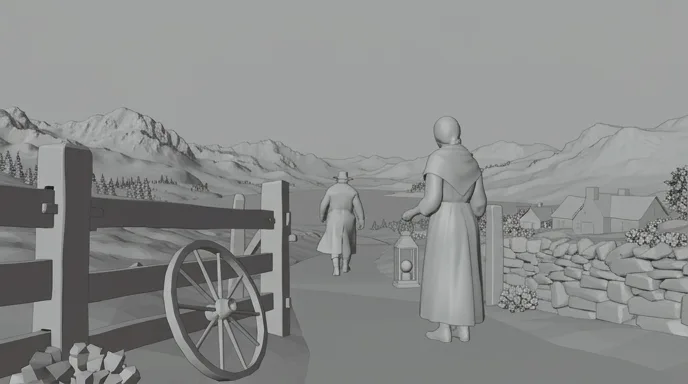
  1. A woman in a linen dress holds a lantern at a farm gate while a man in a long coat walks toward a lake
    Storyboard frame of the same wide shot, in grey
    01

    Wide · the farewell

    Wide shot from behind Maren at a wooden gate, lit lantern in her hand, Elias walking the dirt path toward the lake, cart wheel against the fence, chimney smoke, low morning sun

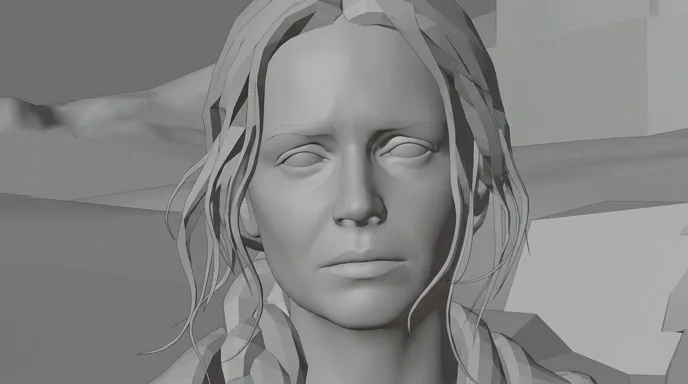
  2. Close-up of a tearful woman with loose dark hair
    Storyboard frame of the same close-up, in grey
    02

    Close-up · the tears she keeps

    Close-up of Maren, wet eyes, tears held back, loose dark hair, no makeup, weathered skin, shallow depth of field, the valley out of focus

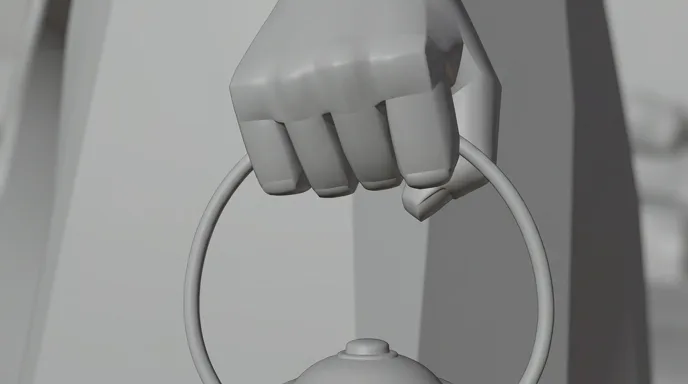
  3. A hand tightly gripping the iron ring handle of a lantern against a linen skirt
    Storyboard frame of the hand and the lantern, in grey
    03

    Insert · the lantern ring

    Insert on her hand gripping the iron ring of the lantern against a coarse linen skirt, knuckles tight, soft daylight

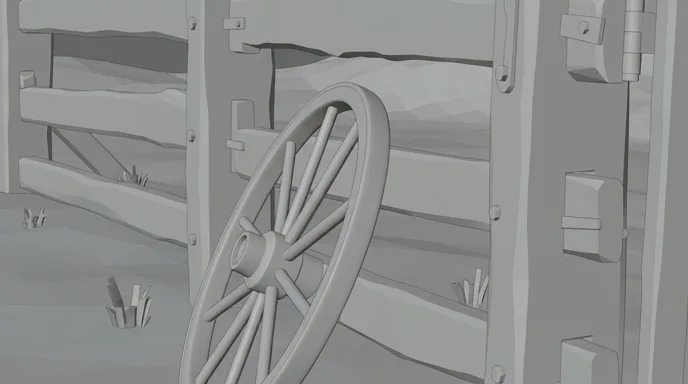
  4. A rusted wooden cart wheel leaning against an old fence
    Storyboard frame of the wheel against the fence, in grey
    04

    Insert · the broken wheel

    Static insert on a rusted cart wheel leaning against weathered fence posts, split spokes, hand-forged nails, dry grass at the base

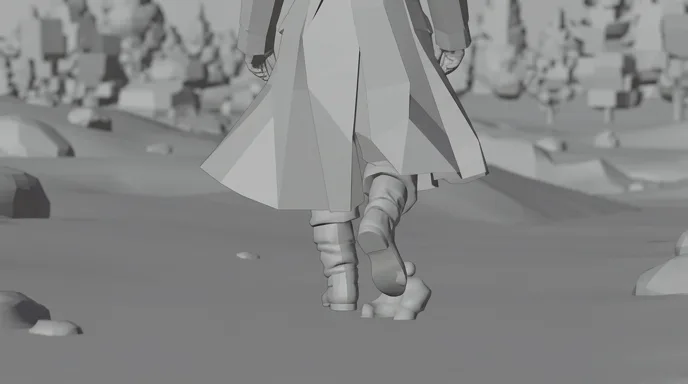
  5. Boots and the hem of a long dark coat walking away on a gravel path
    Storyboard frame of the boots on the path, in grey
    05

    Low tracking · his boots

    Low tracking shot behind Elias, only his boots and the hem of a long wool coat on a gravel path, dust at each step, dry grass on both sides

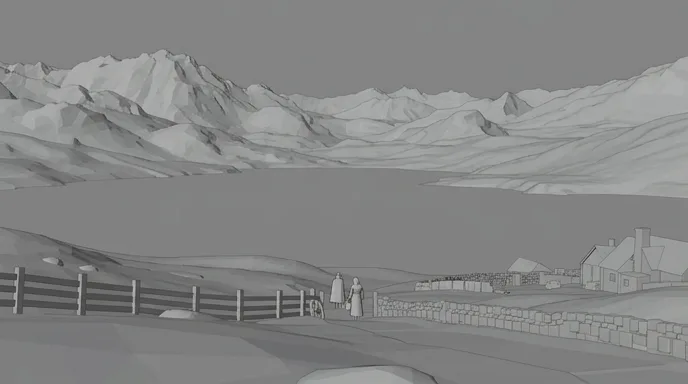
  6. A wide lake valley between mountains, a farm and two tiny figures on the road
    Storyboard frame of the valley, in grey
    06

    Extreme wide · the valley

    Extreme wide of the lake valley, mountains, farmhouse and fence line, two tiny figures far apart on the road, clear morning light, no power lines, no modern buildings

The six shots cut together: twelve seconds, 16:9, no dialogue. The broken wheel carries the line she never says out loud.

Writing a period film

Four rules for a period script that films true.

An image model knows what the past looks like on average. Your script has to know which year, which region and which class.
  1. 01

    Build the era file before page one

    Year, season, region, social class, trade. Write them at the top of the project, with the objects that belong there: oil lamp, not bulb; shawl, not scarf. Every prompt draws from that era file, so every shot lives in the same decade.

  2. 02

    Let objects tell the year

    A caption says 1887. A cart wheel waiting to be mended says it better. Choose two or three period props per scene and give each one a job in the story, like the wheel in Lantern Gate Farewell.

  3. 03

    Pick a register, not a costume accent

    Period dialogue is neither modern slang nor fake "thee" and "thou". Cut today's idioms (okay, reach out, process), keep sentences plain and a little formal. Readable first, then flavoured.

  4. 04

    Write the scale you can afford

    A battle told in two hundred shots will not hold together. Tell it through one soldier, one banner, one aftermath. A knight sitting alone by the water after the fight says more than a charge of ten thousand.

Structure and pacing

The shape of a three‑minute period short.

Period films breathe slower than most genres. Let the world settle, then let one private event carry the weight of history. Shots of three to five seconds suit the genre.
  1. 15 %

    The era

    An establishing image that dates the story without a caption: a road, a roof, a way of dressing.

  2. 20 %

    The daily ritual

    Work, prayer, a meal. The rules of the time, shown through habit.

  3. 15 %

    The rupture

    History reaches the character: a war, a debt, a letter, a departure.

  4. 30 %

    The choice

    The longest beat. What the era allows, and what the character does anyway.

  5. 20 %

    The trace

    What remains: an empty gate, a sealed letter, a lake in the morning light.

For a sixty-second period teaser, cut the ritual to two shots and end on the rupture, not on the choice.

Shot vocabulary

Eight shots that date a film at a glance.

Each with the wording that gets it from an image or video model. Name the century and the materials in every prompt: a model fills every gap with the present.
  • The lantern in daylight

    A practical light carried by a character. It anchors both the era and the colour of the scene.

    medium shot, woman in a linen dress and wool shawl holding a lit iron lantern at dawn, warm flame against cool daylight, 19th-century rural setting

  • Hands at work

    A craft dates a film faster than a costume: kneading, sewing, shoeing a horse, cutting a quill.

    close-up of weathered hands trimming a goose quill with a small knife by candlelight, ink pot, rough paper, no modern objects

  • The prop portrait

    One object filmed like a face. Rust, wood grain, wax, worn leather.

    static insert, rusted iron-rimmed cart wheel against a split-rail fence, hand-forged nails, moss, soft morning light

  • Window light in a dark room

    Before electricity, windows did the lighting. Shafts of light, dust in the air, deep shadow in the corners.

    wide interior, tall arched windows, shafts of daylight through dust, dark wood panelling, unlit chandeliers, no electric light

  • The tableau

    A group standing still, framed like a painting or a photograph of the time.

    wide frontal tableau of a family in 1880s working clothes in front of a stone farmhouse, symmetrical, flat overcast light, everyone still

  • The aftermath

    Scale by implication: one figure after the battle instead of the battle itself.

    medium wide, knight in dented plate armour and mail sitting alone at the edge of a pond, helmet on, mace in the dirt, harsh midday sun

  • The candlelit face

    One flame and a face half in shadow: the evening light of a world without switches.

    close-up, young woman reading a letter by a single candle, warm light on one side of her face, deep shadow, linen cap, 18th century

  • The empty road

    A tiny cart or rider in a landscape with nothing modern in it. Departure and distance in one frame.

    extreme wide, horse-drawn cart on an empty dirt road across moorland, overcast sky, dry stone walls, no power lines, no tarmac

Light and palette

Flame, daylight, and nothing else.

Before electricity there were three light sources: the sun, fire and the moon. A period image feels true when every light in the frame has a reason: a window, a lantern, a candle. The five colours below were sampled from the Lantern Gate Farewell shots, one warm flame against a cold valley. Write the light source into each prompt and the scene stays in its century.

  • Lantern flame

    #DC9045

  • Lake morning

    #668292

  • Homespun linen

    #AC9579

  • Wheel rust

    #62422D

  • Wool coat black

    #0D100F

Where AI goes wrong

Six anachronisms AI loves, and how the script stops them.

Video models learned the past from films, paintings and costume parties, and they mix centuries without noticing. These are their usual slips, with the cheapest fix for each.
  • Zips, sheen and perfect seams

    Models dress the past in today's fabrics. Name the materials in every prompt: wool, linen, leather, horn buttons, hand-stitched. When a costume is close to camera, add "no zips, no synthetic fabric".

  • Faces from this year

    Plucked eyebrows, white teeth, contouring, salon hair. Ask for weathered skin, no makeup, hair pinned or tied, and set it once in a character sheet: ScreenWeaver carries characters from shot to shot.

  • Armour from the wrong century

    A model will happily put fantasy pauldrons on a 12th-century foot soldier. Give the century and the kit, mail hauberk, nasal helmet, kite shield, and keep one reference image of the armour for the whole film.

  • Electric light in a candle world

    Warm bulbs, evenly lit rooms, a streetlight in the background. Write the one real light source of each shot, and add "no electric light" to every night interior.

  • Invented writing on every letter

    Letters, maps and shop signs come out in alphabets that never existed. Keep documents soft or at an angle, film readable text as an insert you make yourself, and set dates and places as captions in the edit.

  • A landscape full of the present

    Power lines, tarmac, wire fences, a vapour trail in the sky. Prompt dirt roads, stone walls, no power lines, and check every wide shot on the storyboard before any footage is made.

Sub-genres

Period drama, medieval, war epic, gothic.

  • Period drama

    Houses, families, letters, departures. Natural light, patient framing and costumes that show class. Lantern Gate Farewell is one.

  • Medieval

    Castles, mud, faith and steel. Grey skies, fire-lit interiors, and armour locked to a single century.

  • War epics of the past

    From ancient battlefields to the trenches. Tell the war through a few faces, and let one wide shot carry the scale.

  • Gothic

    Old houses, family secrets, candles. Window shafts in dark rooms, slow push-ins, and a letter that should have stayed sealed.

The pipeline

Write. Board. Produce.

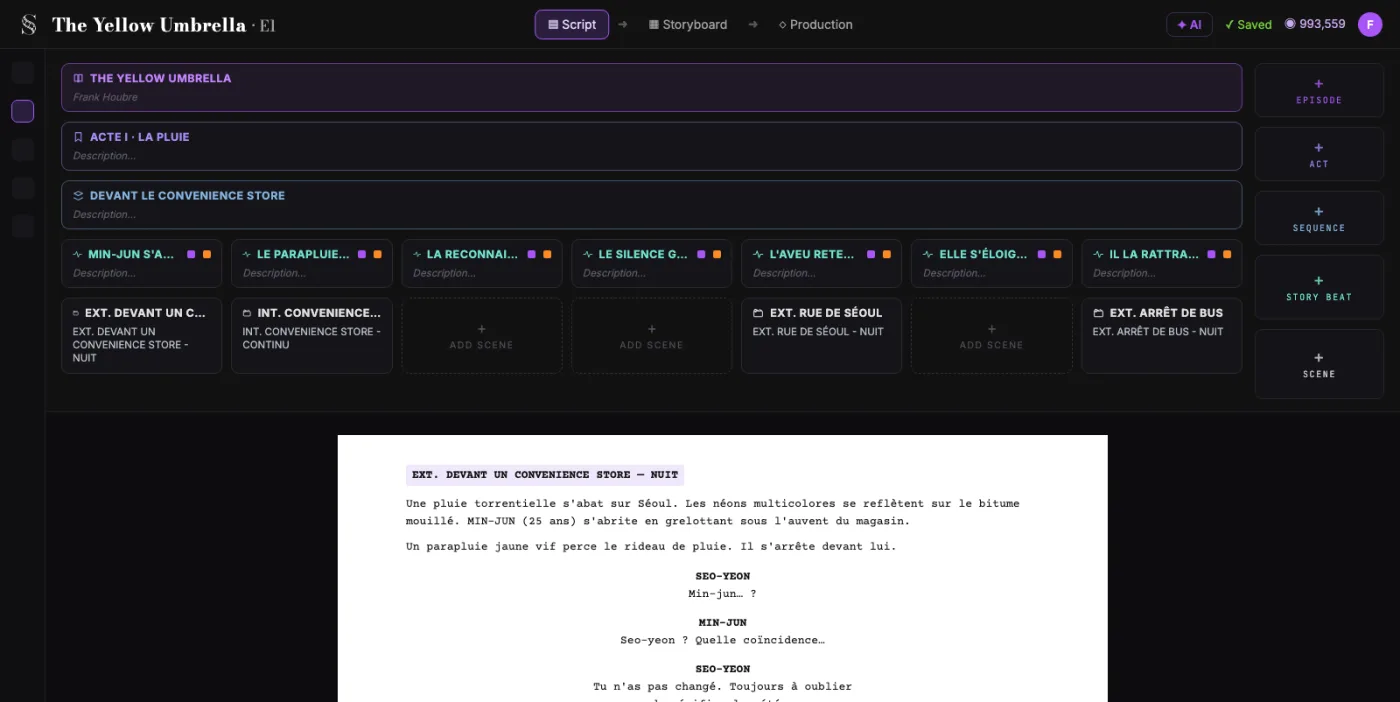
  1. ScreenWeaver screenplay editor: acts, sequences and beats above the formatted script of The Yellow Umbrella

    01The screenplay, enriched

    An industry-standard screenplay editor, and more: a visual outline and beat editor, your writing inspirations (notes, photos, audio) kept next to the page, and an AI researcher to support your writing, not replace it.

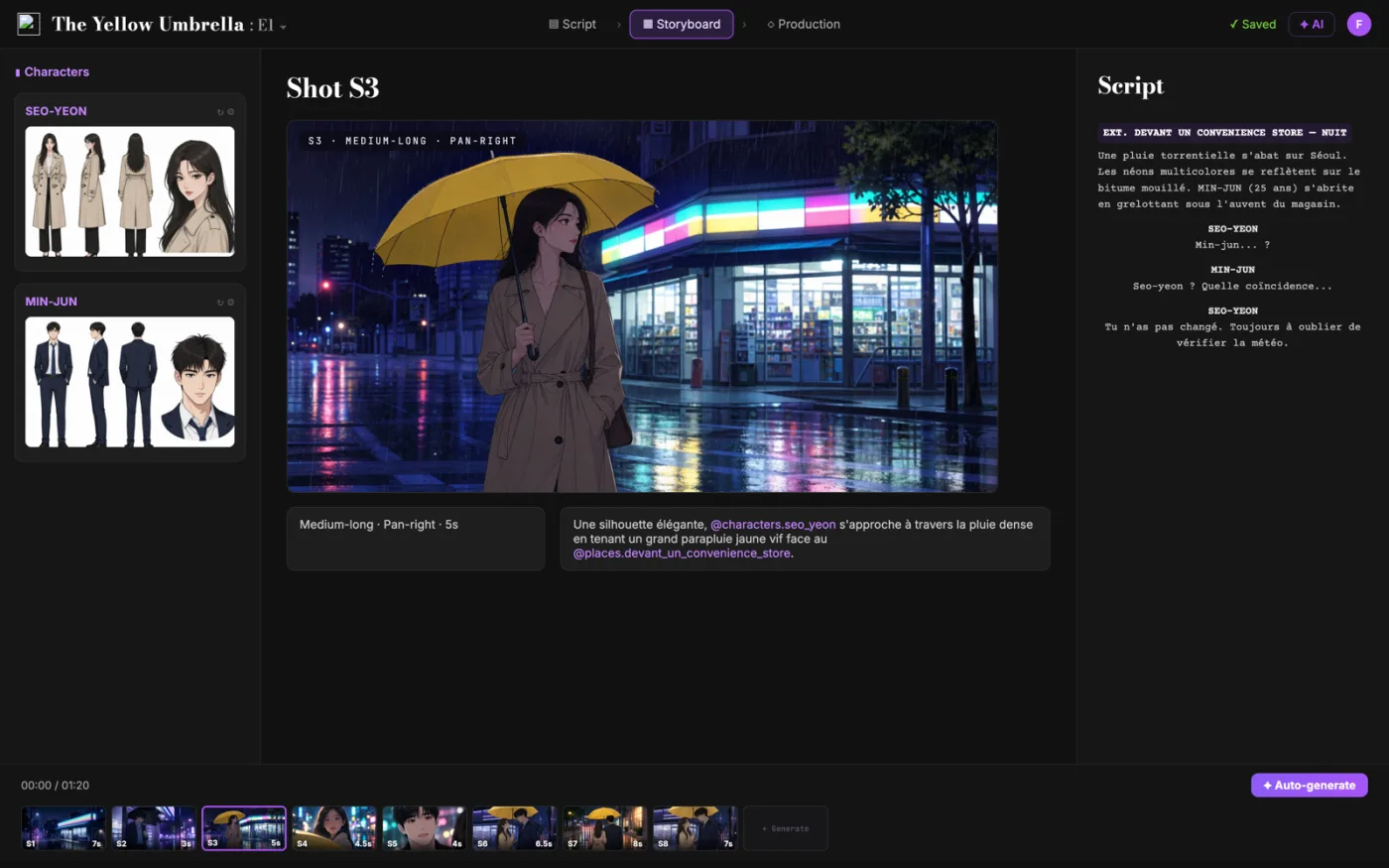
  2. ScreenWeaver storyboard: shot S3 of The Yellow Umbrella with characters, shot settings and the script beside it

    02The storyboard, made easy

    Shot breakdown generated from your screenplay, manual control over every shot (frame, angle, movement, duration), and generative AI previsualization in one click.

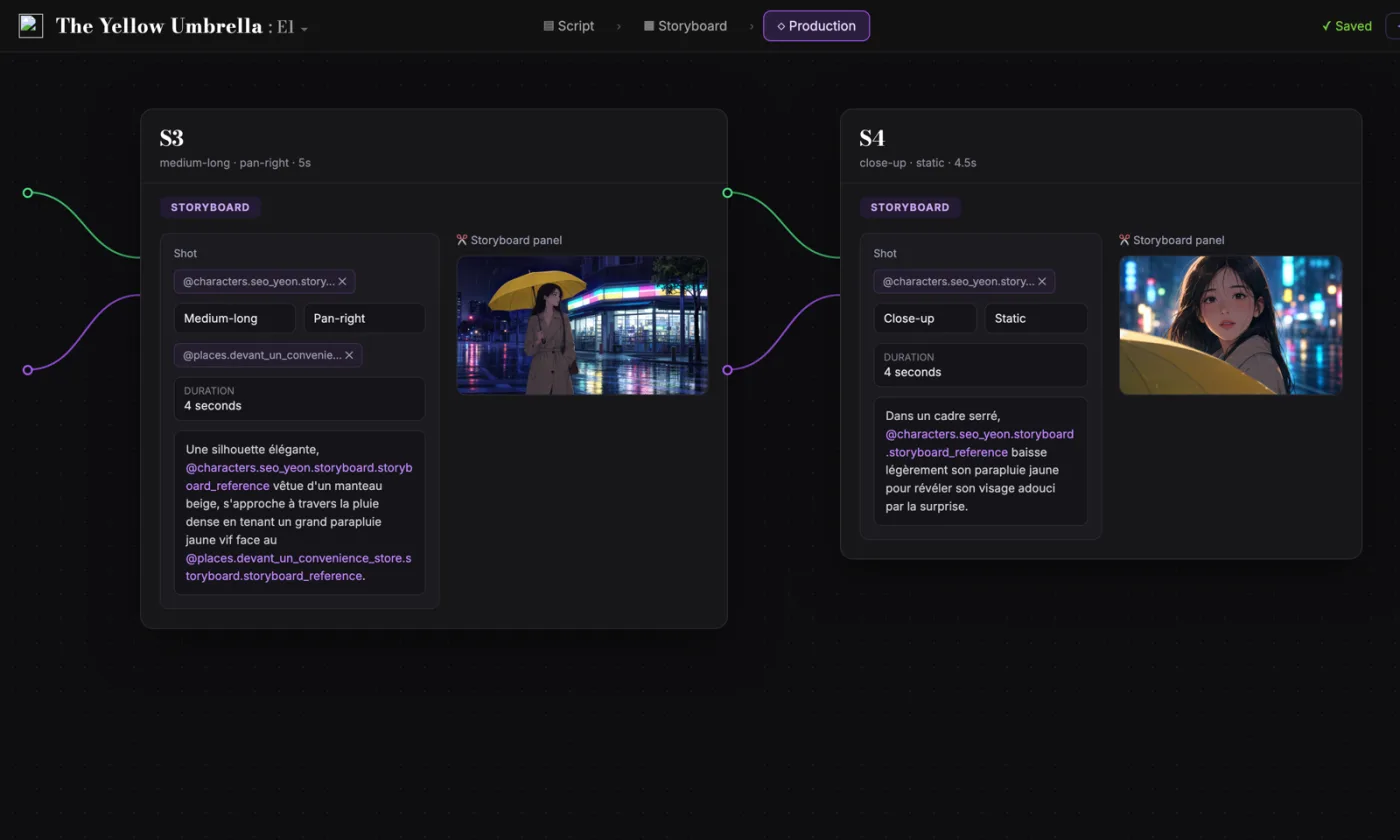
  3. ScreenWeaver production canvas: shots S3 and S4 as connected nodes carrying their storyboard panels and prompts

    03AI production, with finesse

    Footage generation pipelines connected to your screenplay and storyboard. Optimized out of the box, fully editable workflow.

FAQ

Period films with AI, your questions

How does an AI historical movie generator like ScreenWeaver work?
It starts from your screenplay, not from a prompt box. Write the period script for free today, then get a storyboard of every shot with Storyboard Beta at $9.99 a month. Video generation of each shot comes with the Filmmaker plan, targeted for 30 September 2026.
How do I stop AI from adding anachronisms?
Name the century, the region and the materials in every prompt, and list what must not appear: zips, electric light, power lines. Then check the storyboard shot by shot before any footage is generated. A mistake is cheaper to catch on a grey frame.
Can I make a medieval movie with AI?
Yes. Lock the armour to one century with a reference image, light interiors with fire and windows, and build battles from a few close shots and one wide rather than hundreds of soldiers in motion.
How do I keep costumes the same from shot to shot?
Describe each costume once, material by material, and attach it to the character. In ScreenWeaver, characters, locations and references carry from shot to shot, so the shawl in the last shot is the shawl of the first.
Does ScreenWeaver help with historical research?
The Filmmaker plan includes an AI research assistant to gather period details. Treat it like a good librarian: check dates, names and quotes against real sources before they go into the script.
How long should an AI period short be?
Two to four minutes is a good first target. Period films cut slower, with shots of three to five seconds, so a three-minute short is about forty to sixty shots.
What does it cost to write a period script in ScreenWeaver?
Nothing. The Screenwriter plan is $0 with no expiry: unlimited projects and pages, industry-standard formatting, export to PDF and Final Draft.
What powers the footage?
Seedance 2.0 and 2.5. ScreenWeaver's footage pipelines read your script and storyboard, come optimised out of the box and stay fully editable.

Your century starts on the page.

Write the screenplay for free. Storyboard it shot by shot once the research is done.