Split diopterTwo planes, one tension
A split diopter is a half lens placed in front of the camera, so one side of the frame focuses very close and the other side focuses far away. The audience sees a near subject and a distant one both sharp, and feels an unnatural pull between them.
Also calledDiopter shotSplit-field diopterSplit focus
Lenses and optics
Why it works on screen
The split diopter says: these two things are connected, look at both. A face in the foreground and a threat behind. A clue on the desk and the person who planted it across the room. A lover in close-up and a rival in the doorway. It serves suspense, paranoia, irony and dramatic tension, because the audience knows what the character may not. The image feels slightly wrong, since no eye sees that way, and that strangeness adds unease. A scene earns it when the relationship between two planes is the whole point, and a cut or a focus pull would break the connection.
The shot list line
- Size
- Close-up in the foreground, medium shot in the background
- Angle
- Eye level or slightly low
- Movement
- Static
- Lens
- 35mm or 50mm with a +1 or +2 split diopter
- Duration
- 4 to 8 s
Hide the blurred seam of the diopter along a vertical line in the set, such as a door frame, a pole or a dark area, and block the actors so neither crosses it.
Screenplay
On the page
Do not write "split diopter" in a spec script. Write the two elements and their relationship in the same action line: what is close to the character and what happens behind them at the same moment. "Behind her, unnoticed" or "in the background, at the same time" is enough. That gives the director a reason to hold both in one frame. The diopter, the split line and the focus distances are decided in the shot list and storyboard.
INT. CHESS CLUB - EVENING
Portraits of old masters. Tea glasses on every table.
NINO KAPANADZE (14) leans over the board, her face inches from her king, calculating.
Far behind her, at the window, her coach LEVAN (50s) takes an envelope from her opponent's father and slides it into his jacket.
Nino moves her queen. She does not look up.
NINO
Check.
Storyboard
In the storyboard
Draw the frame divided by a light vertical or diagonal dotted line where the diopter edge sits. On one side draw the near subject large and sharp, on the other the distant subject small and equally sharp. Shade a thin soft strip along the seam and note what in the set hides it. Write the diopter strength, the focus distances for each side and a note on what links the two subjects.
Pairs well with
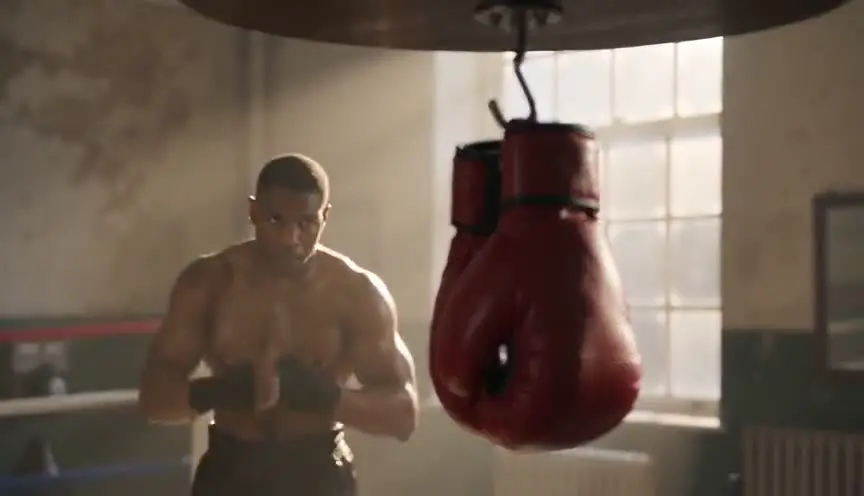
Use a rack focus earlier in the scene to shift attention from plane to plane, then hold the split diopter when both must count at once. The contrast makes the diopter shot feel like a climax of tension.

A standard two-shot sets up the characters in the same space. The split diopter can then pull them apart in depth while keeping both sharp, showing distance growing between them.
Reference
Watch it in
Blow Out (1981)
Brian De Palma makes the split diopter a trademark, holding a close object and a faraway clue equally sharp so paranoia builds in one frame.
Carrie (1976)
De Palma sets a close reaction against an event far behind it, so the audience's dread grows on two planes at the same time.
ScreenWeaver
Set it up in ScreenWeaver
Write the near and far elements in the same action line, and ScreenWeaver breaks the scene down into shots automatically. Open that shot, set the framing to hold both subjects, choose the angle, keep the movement static and set a duration long enough to take in the two planes. Add a split diopter note. Characters carry from shot to shot, so both people stay consistent, and the AI previsualization lets you judge where the seam falls in the composition.
Start writing for freeThe prompt behind this clip
This is the exact prompt that rendered the clip at the top of the page. Keep the description of the camera and the light, change the subject and the place.
Split diopter shot in a busy ramen kitchen: a line cook's hands chopping scallions fill the extreme foreground in sharp focus, four feet from the lens, while the head chef shouting orders at the pass stays equally sharp fifteen feet back near the steaming broth pots. A faint soft blur seam runs vertically along the edge of a hanging pot rack between them, invisible against the metal shelf. The camera stays locked off, steam drifting through both planes, no rack focus, no drift. No text.
Common mistakes
- 01
A visible seam
The soft band between the two halves is obvious on a plain background. Line it up with a vertical element of the set, or the audience sees the trick immediately.
- 02
Actors crossing the split
If a character walks across the diopter edge, they blur and snap into focus. Block the scene so each subject stays on their side.
- 03
No link between the planes
Two sharp subjects with no relationship just look odd. The shot needs a narrative connection, such as a threat, a secret or a reaction.