AI short drama generator

Make a short drama with AI.Vertical, hooked, to be continued.

Write episodes that hook in three seconds and stop on a cliffhanger, get a 9:16 storyboard of every shot, and keep the same cast from episode 1 to episode 80.
  • Free screenwriting
  • Storyboards framed in 9:16
  • One cast across every episode
Short drama rushes

Ready now: write every episode for free, then storyboard them in 9:16 with Storyboard Beta at $9.99 a month.

On the way: the Filmmaker plan generates each storyboard shot as video, targeted for 30 September 2026.

Examples

Short drama stills from the ScreenWeaver team.

Four finished 9:16 stills: the umbrella scene redrawn as anime, then three sub-genres of the format. These are stills with no storyboard frame, only the final images.
  • Anime key art of a young woman in a long beige trench coat under a yellow umbrella on a rainy neon street at night, a convenience store glowing behind her

    The Yellow Umbrella, anime version

    Same Seo-yeon, same trench, same yellow umbrella, redrawn as key anime art. The character survives the change of style.

  • In a gold-lit office elevator, a man in a dark suit loosening his tie leans toward a young woman in a white blouse holding a black folder

    Floor 38

    CEO romance: the boss loosens his tie in a crowded elevator, and the new assistant holds her folder like a shield.

  • A bride in a lace gown and veil, soaked by the rain, cries as she looks at her phone on the steps outside a hotel ballroom full of guests

    The Bride in the Rain

    A revenge series starts here: a jilted bride outside the hotel, reading the message that ends her wedding. Payback begins in episode 2.

  • A young woman in a red coat looks up at a dark-haired man in a black coat in a misty forest under a full moon

    Under the Full Moon

    Supernatural romance: a misty forest, a full moon, and a stranger whose secret the next episode will show.

An episode opening, page to screen

The Yellow Umbrella: six vertical shots and a cliffhanger, made with AI.

Six 9:16 shots made for this page by the ScreenWeaver team, and the page of screenplay they film. Rain in Seoul, a yellow umbrella, a man she has not seen in years. Each shot shows the final image, the grey storyboard frame drawn from it, and a direction note.
Screenplay · episode 1

EXT. CONVENIENCE STORE, SEOUL - NIGHT

Rain on neon. SEO-YEON (late 20s, beige trench) walks alone under a bright yellow umbrella. The store glows behind her.

She stops dead. Her eyes widen.

SEO-YEON

(barely a breath)

Min-jun.

By the store entrance, MIN-JUN (late 20s, black jacket) stands in the rain with no umbrella, soaked, already looking at her. Her hand tightens on the yellow handle.

She crosses to him and lifts the umbrella over them both. Faces inches apart. Nobody speaks. He looks up at the yellow canopy. A half smile.

MIN-JUN

You kept it.

CARD

(white on black, over the rain)

It was his gift. Seven years ago. The night he disappeared.

TO BE CONTINUED

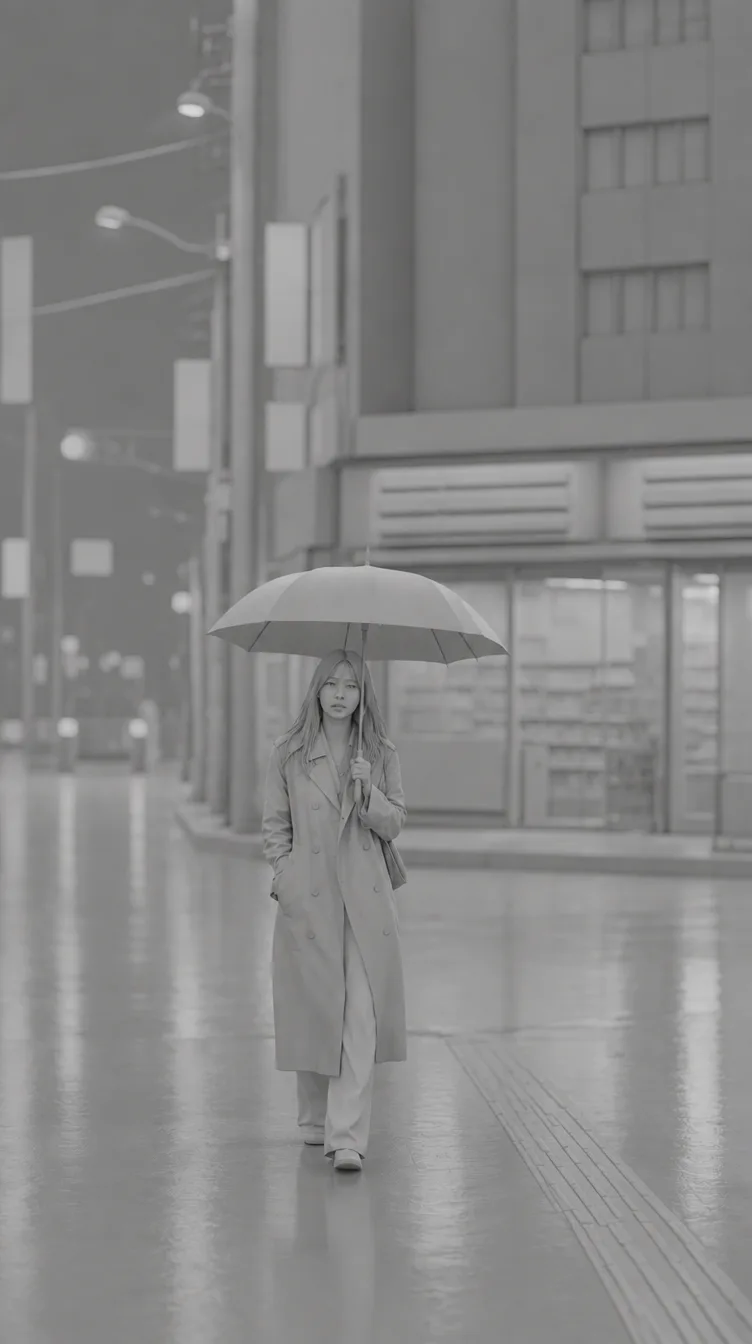
  1. A young woman in a beige trench coat walks alone under a yellow umbrella on a wet neon street at night, a lit convenience store behind her
    Grey storyboard frame of the full shot
    01

    Full shot · alone in the rain

    Vertical full shot, she walks toward camera down the middle of the frame, the yellow umbrella the only warm colour, convenience store lit behind her, neon streaks on the wet asphalt

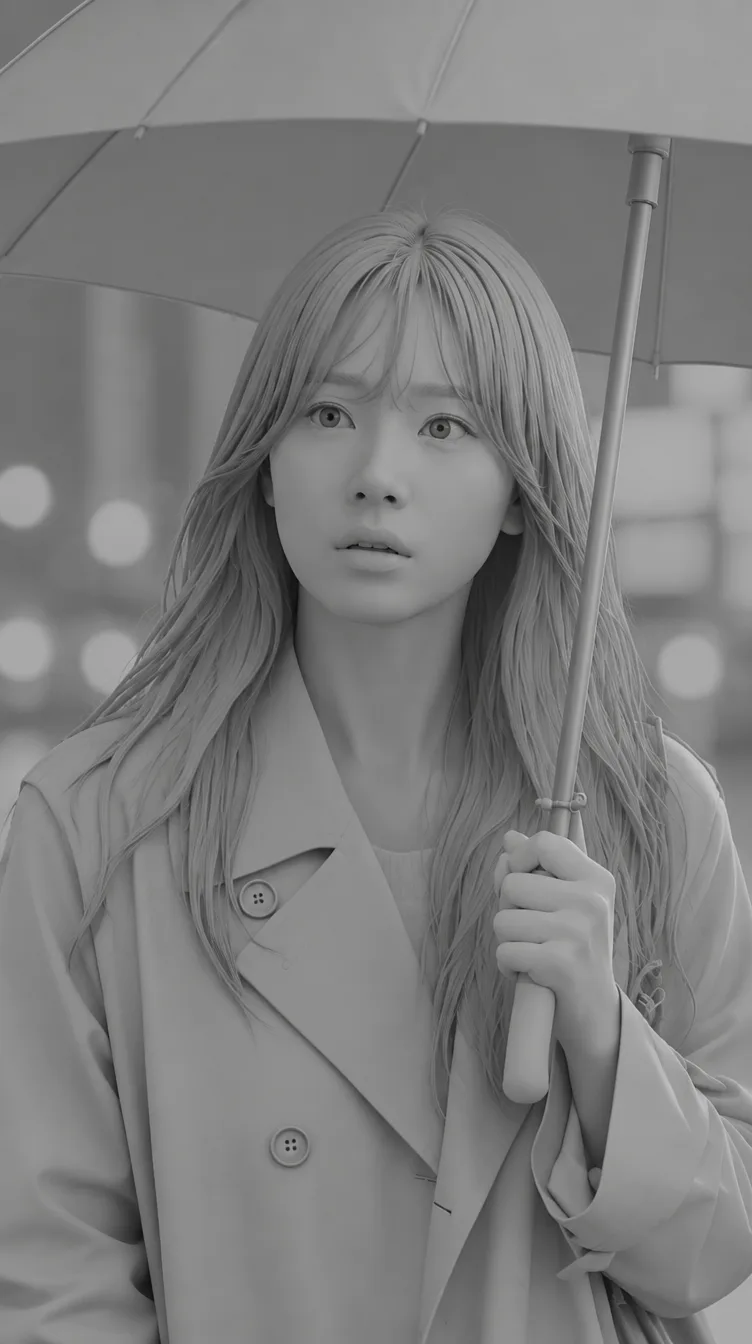
  2. Close-up of the young woman under the yellow umbrella, eyes wide, lips parted, city lights blurred behind her
    Grey storyboard frame of the close-up
    02

    Close‑up · the recognition

    Close-up, she freezes, eyes widening, lips parted, the umbrella handle in her fist, pink and cyan bokeh behind, face in the upper half to leave room for subtitles

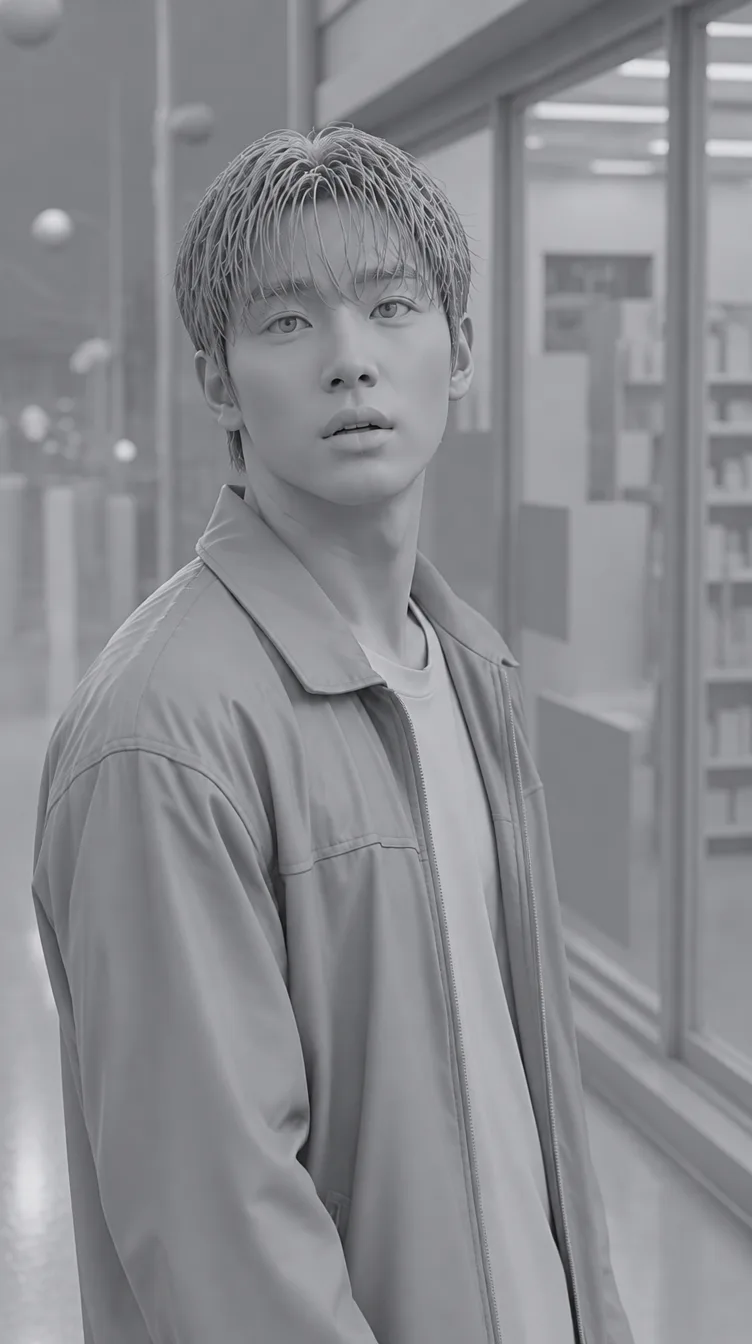
  3. A soaked young man in a black jacket and white T-shirt stands by a convenience store entrance at night, looking toward camera
    Grey storyboard frame of the medium shot
    03

    Medium · soaked at the door

    Medium shot, he stands by the shop entrance with no umbrella, hair flattened by the rain, wet black jacket over a white T-shirt, cold shop light on one side of his face, eyes on her

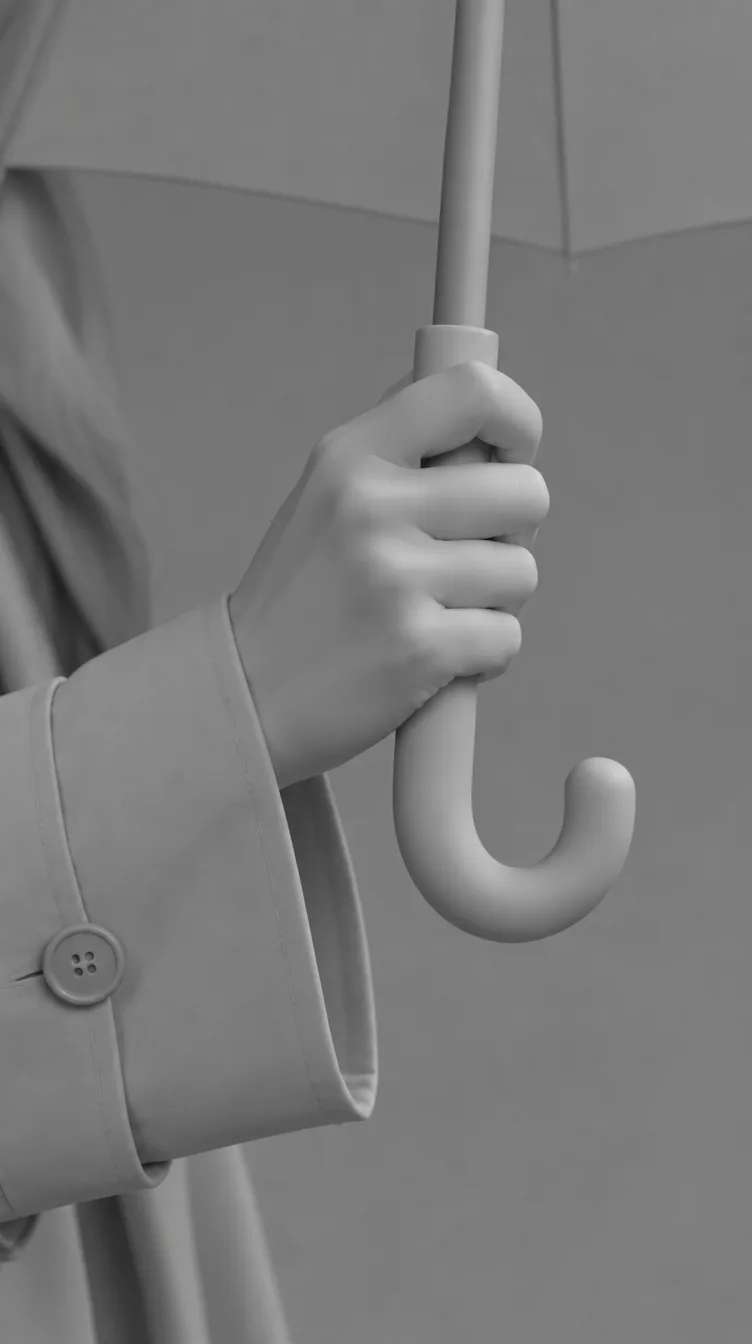
  4. A hand in a beige trench sleeve grips the curved handle of a yellow umbrella, rain dripping, pink and cyan lights behind
    Grey storyboard frame of the insert
    04

    Insert · the grip

    Tight insert on her hand closing harder around the curved yellow handle, trench cuff and button in frame, rain dripping from the plastic, one small movement

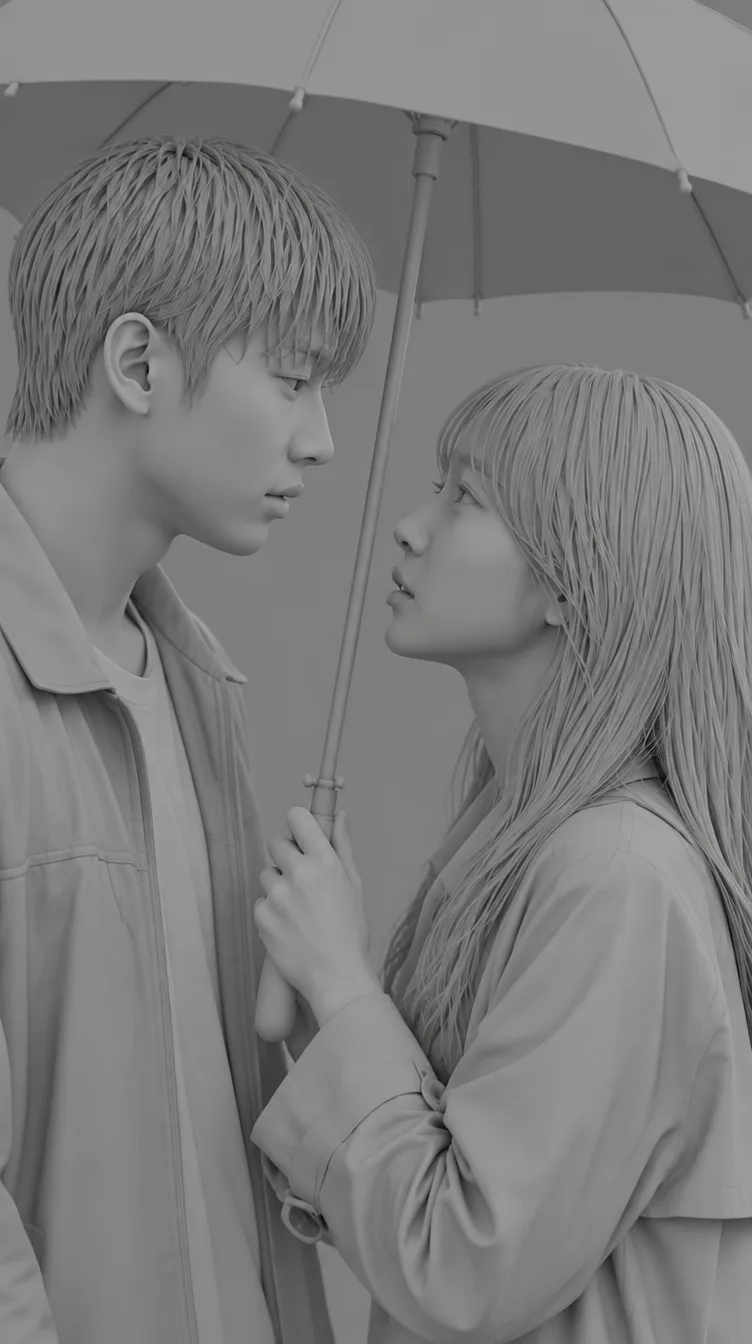
  5. The young woman holds the yellow umbrella over the soaked young man, their faces inches apart in profile, neon city behind
    Grey storyboard frame of the profile two-shot
    05

    Profile two‑shot · no one speaks

    Tight two-shot in profile, she holds the umbrella over both of them, faces inches apart, she looks up, he looks down, rain falling past the canopy, hold without a word

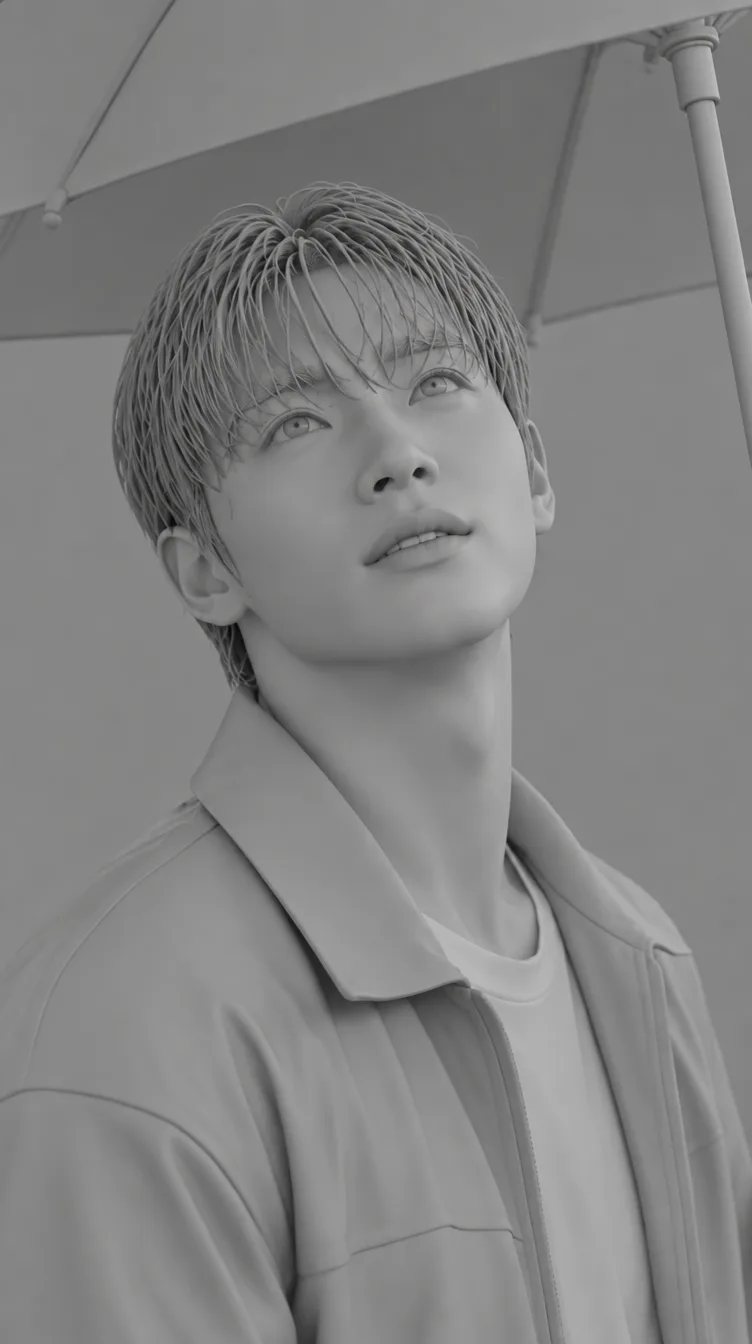
  6. Close-up of the soaked young man looking up at the yellow umbrella above him with a half smile, rain drops hanging from the rim
    Grey storyboard frame of the final close-up
    06

    Close‑up · the cliffhanger

    Low-angle close-up, he lifts his eyes to the yellow canopy, drops hanging from the rim, a slow knowing half smile, warm light on his face, hold as the last frame of the episode

The team’s cut of the six shots: twelve seconds in 9:16. Stills made with GPT Image 2.5, clips with WAN 3 at 480p. A real episode would run about ninety seconds and cut every two.

Writing short drama

Six rules for episodes an AI short drama generator can film.

Vertical series, the format that apps such as ReelShort and DramaBox made popular, are written for a thumb that can leave at any second. A model can render a face in the rain. It can’t decide where the episode ends.
  1. 01

    Hook in the first three seconds

    A viewer decides before the first line is over. Open on an image that asks a question: a woman alone in the rain who stops dead. The hook is a shot, not a speech, and it comes first in the storyboard.

  2. 02

    Write the cliffhanger first

    Every episode ends mid-turn: a reveal, a slap, a name. The Yellow Umbrella stops on three words that rewrite the past. Decide the last shot before the first, then build the ninety seconds toward it.

  3. 03

    Write for a phone held in one hand

    A vertical frame has room for one face, or two in profile. Stage people in depth rather than side by side, and keep the top and bottom of the frame clear for subtitles and the app’s buttons.

  4. 04

    Deliver the trope, then bend it

    Viewers pick a series by its trope: CEO, revenge, contract marriage, second chance, werewolf. Name it in the logline and give it to them, then change one detail. A first love who comes back is the trope. An umbrella he once gave her is the bend.

  5. 05

    Plan the season, not the episode

    A series runs 60 to 100 episodes. Before episode 1, write the grid: the paywall episode, the midpoint reversal, the finale. Each episode is one beat of the season, not a small film of its own.

  6. 06

    Keep lines short enough to read

    Many viewers watch with the sound off. A line has to be read in one glance at the bottom of the screen. “You kept it.” is three words, so the subtitle lands before the cut.

Structure and pacing

A ninety‑second episode: hook, push, clash, reveal, cliffhanger.

A short drama episode lasts one to two minutes, and every second competes with a swipe. Shots run 1.5 to 3 seconds. Only the last one is allowed to linger.
  1. 5 %

    The hook

    Three seconds. An image or a line that stops the thumb.

  2. 25 %

    The push

    A one-shot recap, then pressure: someone wants something, right now.

  3. 30 %

    The clash

    Face to face. An insult, a slap, a contract on the table, or a silence that hurts more.

  4. 25 %

    The reveal

    One fact changes what we thought we saw: a name, a ring, a gift from years ago.

  5. 15 %

    The cliffhanger

    Hold on a face. Card. The next episode is one tap away.

Episode 1 needs the strongest hook of the series. The episode just before the paywall needs the strongest cliffhanger.

Shot vocabulary

Eight shots every vertical series leans on.

Built for a tall, narrow frame and a small screen. Each comes with the wording that gets it from an image or video model, ready to paste into a 9:16 storyboard frame.
  • The cold‑open close‑up

    A face reacting before we know to what. The first shot of half the episodes on any feed.

    vertical 9:16 close-up, a young woman freezes mid-step, eyes widening at something off screen, rain in her hair, neon bokeh behind, face centred in the upper half, room below for subtitles

  • The slap

    The format’s most famous beat. Played on the reaction, never on the contact.

    vertical medium close-up, a woman in an evening dress, her head snapping sideways from an off-screen slap, hair swinging across her face, hand rising to her cheek, chandelier light behind, then hold

  • The elevator two‑shot

    Two people shut in one narrow box. CEO romance lives here.

    vertical tight two-shot inside a gold-lit office elevator, a man in a dark suit loosening his tie leans toward a young woman in a white blouse holding a black folder, colleagues out of focus behind, nobody speaks

  • The phone reveal

    A text, a photo, a wedding called off by message. Show the screen, then the face.

    vertical over-the-shoulder insert on a smartphone in a bride's hand, rain drops on the glass, a blurred message thread, lace sleeve in frame, slow rack focus up to her tear-streaked face

  • The entrance

    The heir, the CEO or the ex walks in and the room turns. Low angle, slow steps.

    vertical low-angle full shot, a tall man in a black coat walks through glass doors into a marble hotel lobby, staff turning to look, slow motion, cold white light, subject centred

  • The profile close call

    Two faces in profile, filling the narrow frame from edge to edge. Nobody moves first.

    vertical tight two-shot in profile, a young man and a young woman face to face under a yellow umbrella, noses almost touching, rain falling past the canopy, neon city out of focus, hold

  • The prop insert

    A ring, a contract, an umbrella. The object the season will pay off, shown once up close.

    vertical macro insert on a hand gripping a curved yellow umbrella handle, rain dripping from the plastic, coat cuff with a button, pink and cyan bokeh, fingers slowly tightening

  • The last‑frame hold

    The final face of the episode, held a beat longer than any other shot, then the card.

    vertical close-up from a low angle, a soaked young man looks up with a slow knowing half smile, drops hanging from the rim of an umbrella above him, warm light, camera still for three seconds

Light and palette

Night, neon, rain and one loud colour.

Short drama is shot at night more than almost any other genre, and the night grades the image for you: wet asphalt doubles every sign, rain catches the light, faces glow in shop windows. The five colours below were sampled from The Yellow Umbrella: the umbrella yellow, a magenta and a cyan from the neon, the beige of her trench and the blue‑black of a Seoul night. One saturated colour belongs to the story, here the yellow, and it must stay the exact same yellow in every episode that shows it. Name it in every prompt and keep the rest of the frame cooler, so it still reads on a small screen.

  • Umbrella yellow

    #E6B004

  • Neon magenta

    #F22874

  • Neon cyan

    #07CBF6

  • Trench beige

    #8A6E50

  • Seoul night

    #111821

Where AI goes wrong

Six ways AI breaks a vertical series.

A short drama asks for the same faces in hundreds of vertical shots, cut fast and watched on a phone. Every weakness of a video model shows up by episode ten.
  • A cast that drifts over eighty episodes

    One scene with a stable face is easy. Eighty episodes with the same Seo-yeon, the same trench and the same umbrella is the hardest problem in the format. One reference per character, per costume and per key prop, reused in every shot, is the fix. In ScreenWeaver, characters, locations and references carry from shot to shot.

  • Widescreen habits in a tall frame

    Models learned on widescreen footage. They put two people side by side and crop one of them. Ask for 9:16 in the prompt, stage in depth or in profile, and check the composition in the storyboard frame before you render.

  • Faces under the subtitles

    Burned-in subtitles and app buttons cover the bottom of the frame and its right edge. Keep the eyes in the upper half and write “room below for subtitles” into the prompt. Frame for the interface, not for the bare rectangle.

  • Melodrama that tips into parody

    Tropes need big feelings, and models overshoot: open-mouthed screams, cartoon tears. Ask for the moment before the outburst, a set jaw, wet eyes that do not spill. Restraint is what sells the trope.

  • Rain and neon that change at the cut

    Weather is continuity. If one shot has a downpour and the next a drizzle, the cut jumps. Repeat the same weather and light wording in every prompt of the scene, and save the location as a reference.

  • A budget that doubles on retries

    At 60 to 100 episodes, three tries per shot turns an affordable season into an expensive one. Lock the board first, render only approved shots, and budget per episode, not per clip.

Sub-genres

CEO romance, revenge, supernatural romance, family drama.

  • CEO romance

    A powerful heir, an ordinary heroine, an office or a contract marriage. Glossy interiors, elevator close calls, a slow thaw across the season.

  • Revenge

    Betrayed in episode 1, untouchable by episode 60. A humiliation, a new identity, then payback in public. The cliffhangers are reveals.

  • Supernatural romance

    Werewolves, vampires, fated mates. Moonlight, mist, glowing eyes, and a character design that has to match in both forms.

  • Family drama

    Hidden children, rival siblings, a will read aloud. Dinner tables and hospital corridors, framed tight on the one face that knows.

The pipeline

Write. Board. Produce.

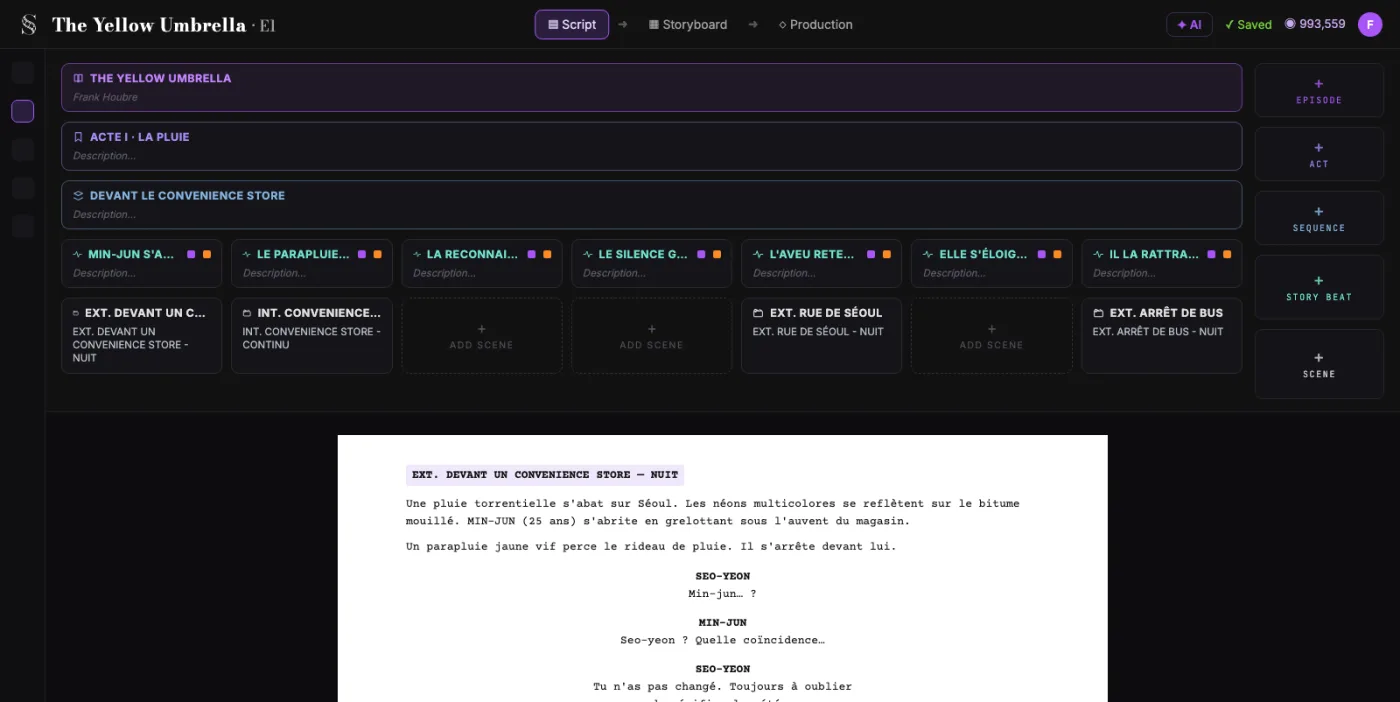
  1. ScreenWeaver screenplay editor: acts, sequences and beats above the formatted script of The Yellow Umbrella

    01The screenplay, enriched

    An industry-standard screenplay editor, and more: a visual outline and beat editor, your writing inspirations (notes, photos, audio) kept next to the page, and an AI researcher to support your writing, not replace it.

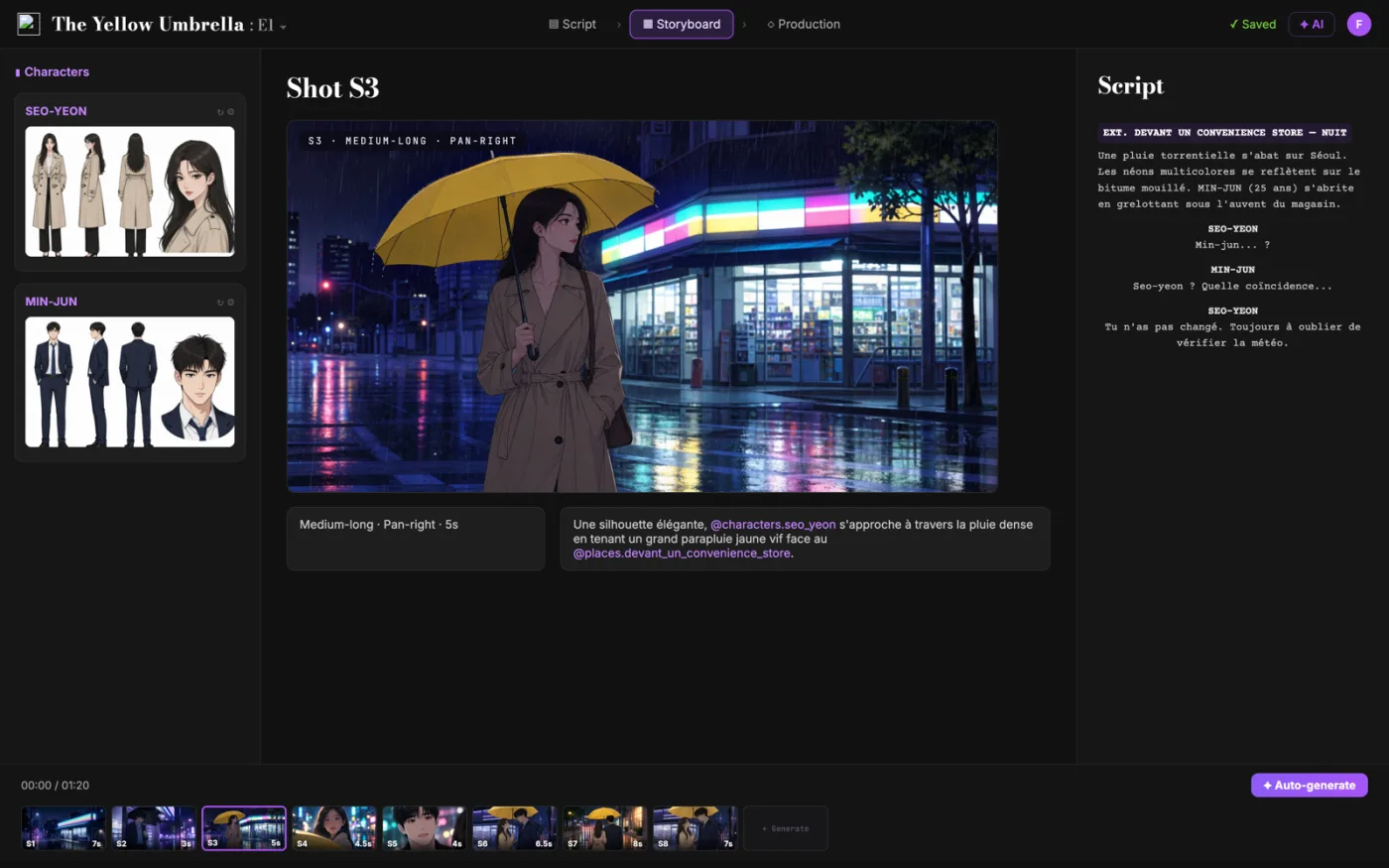
  2. ScreenWeaver storyboard: shot S3 of The Yellow Umbrella with characters, shot settings and the script beside it

    02The storyboard, made easy

    Shot breakdown generated from your screenplay, manual control over every shot (frame, angle, movement, duration), and generative AI previsualization in one click.

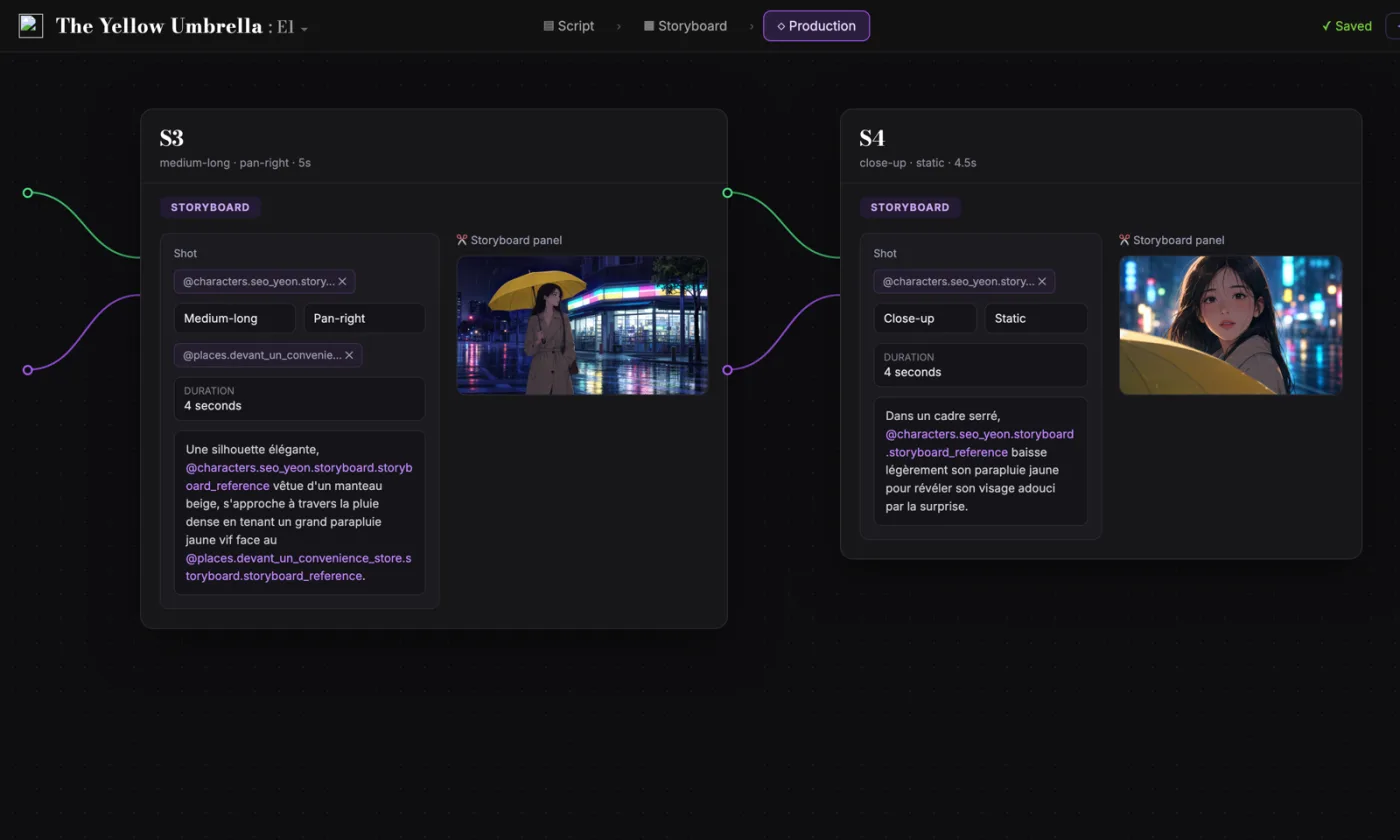
  3. ScreenWeaver production canvas: shots S3 and S4 as connected nodes carrying their storyboard panels and prompts

    03AI production, with finesse

    Footage generation pipelines connected to your screenplay and storyboard. Optimized out of the box, fully editable workflow.

FAQ

Short dramas with AI, your questions

What does the AI short drama generator in ScreenWeaver do?
It takes the series from the page to the screen: you write the episodes, storyboard each shot in 9:16, then film them. Writing is free today, and the storyboard runs on Storyboard Beta at $9.99 a month. Video generation comes with the Filmmaker plan, targeted for 30 September 2026.
How do I keep the same characters across 80 episodes?
Build each character, location and key prop once, with a reference, and reuse it everywhere. In ScreenWeaver, characters, locations and references carry from shot to shot, so the Seo-yeon of episode 60 is the one from the first shot. Give each costume its own reference too.
How long is a short drama episode, and how many episodes make a series?
Episodes run one to two minutes, and a series usually has 60 to 100 of them. That is about two hours of story, cut into pieces that each end on a hook.
How do I write the hook and the cliffhanger of a micro drama?
The hook is the first three seconds: an image that raises a question. The cliffhanger is the last shot: an answer that raises a bigger one. Write the cliffhanger first. In The Yellow Umbrella, three words reveal that the umbrella was his gift.
Can I make a vertical series in anime or another style?
Yes. The gallery shows the same Seo-yeon as key anime art. The pipeline handles live-action looks, anime and 3D animation, in 9:16 or 16:9. Pick one style per series and keep it to the finale.
How much does an AI short drama cost per episode?
It depends on the shot count and the retries. A ninety-second episode cut every two seconds or so is thirty to sixty shots. Lock the storyboard before rendering, keep a retry margin, and budget per episode. The writing itself costs nothing.
Do I pay anything to write the series?
No. The Screenwriter plan is $0 and never expires, with unlimited projects and pages, industry-standard formatting, and export to PDF or Final Draft (.fdx).
Which models film the episodes?
ScreenWeaver is powered by Seedance 2.0 and 2.5, wired to your script and your 9:16 storyboard. Short dramas in 9:16 are one of its formats. The clips on this page were made by the team with WAN 3 at 480p.

Episode 1 starts with three seconds.

Write the whole season for free. Storyboard it in 9:16 when you are ready.