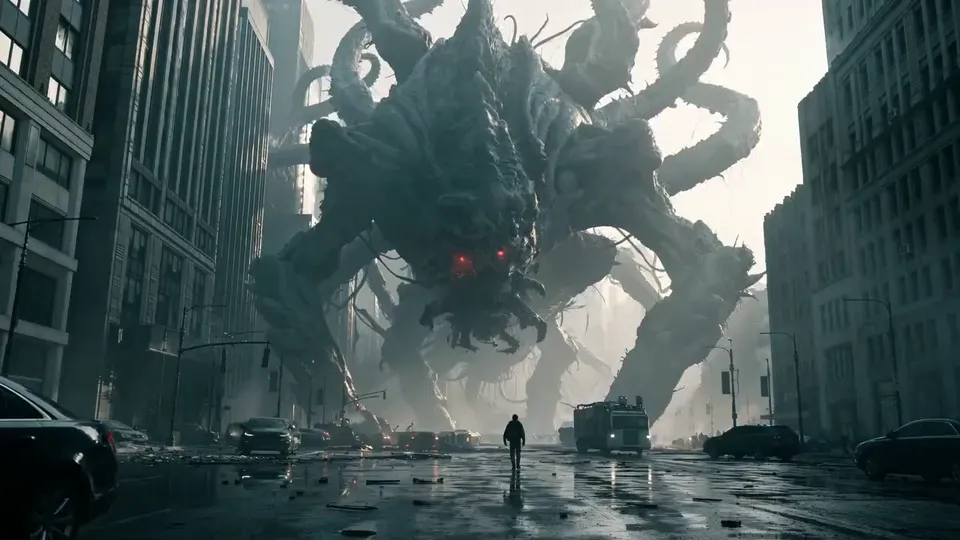
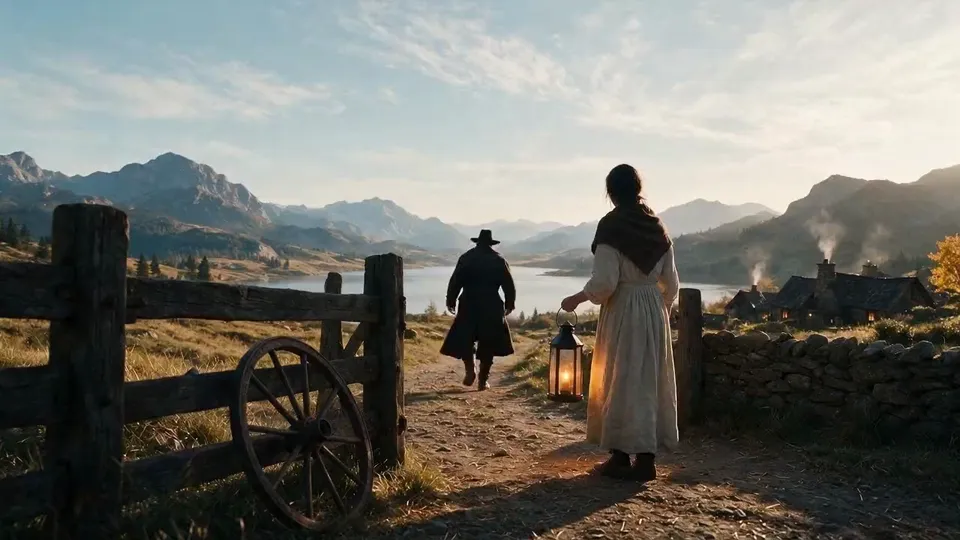
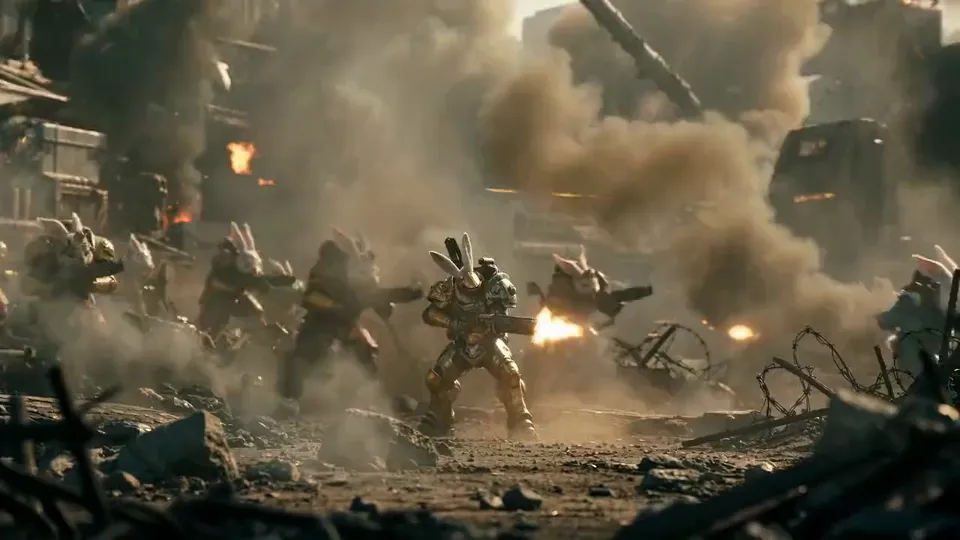
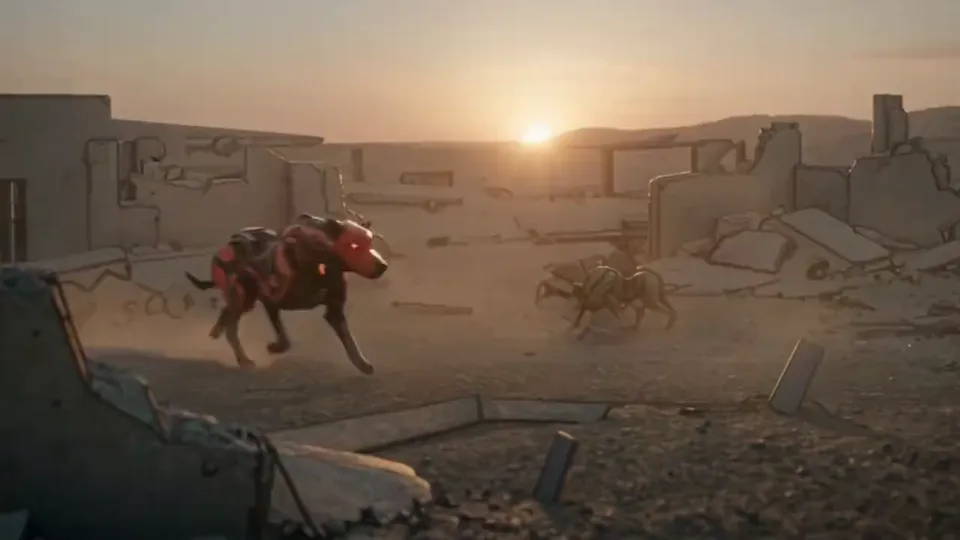
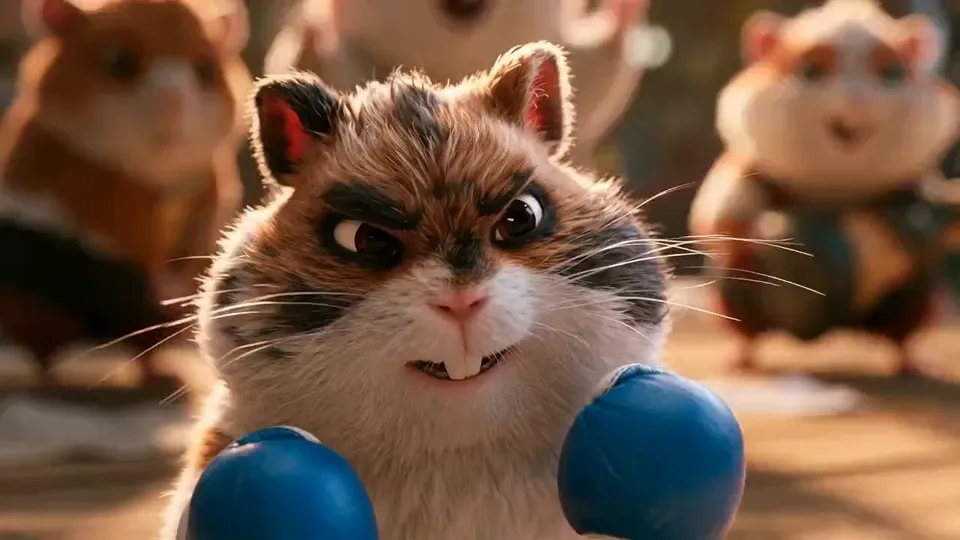
AI family movie generator

Make a family film with AI.Told at a child's height.

Write the screenplay, get a storyboard of every shot, and keep each child's face, each pet and each home the same from the opening scene to the goodnight.
  • Free screenwriting
  • Storyboard from your script
  • Faces that stay the same
Family rushes

Available today: free screenwriting, and a storyboard generated from your screenplay with Storyboard Beta, $9.99 a month.

Coming: video generation of each shot with the Filmmaker plan, targeted for 30 September 2026, well before the winter holidays.

Examples

Family and kids stills from the ScreenWeaver team.

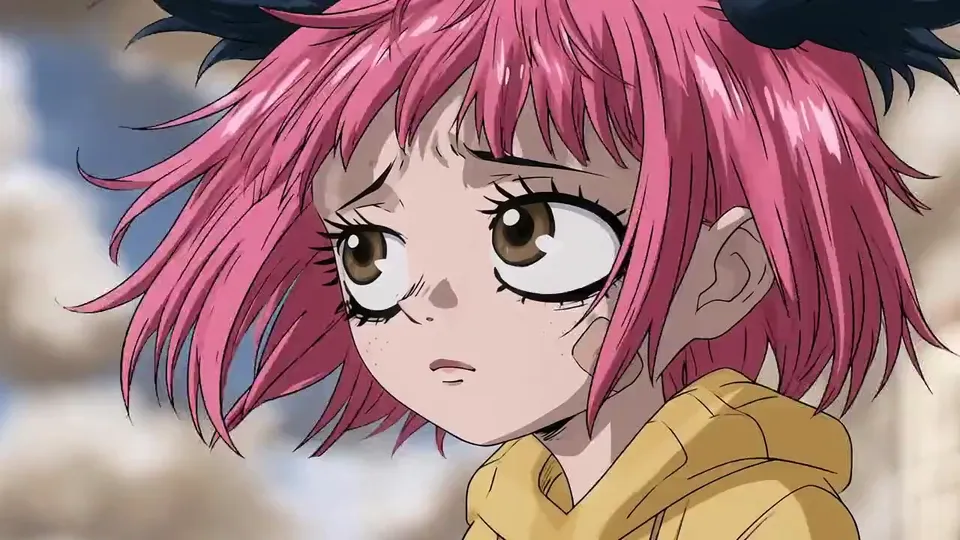
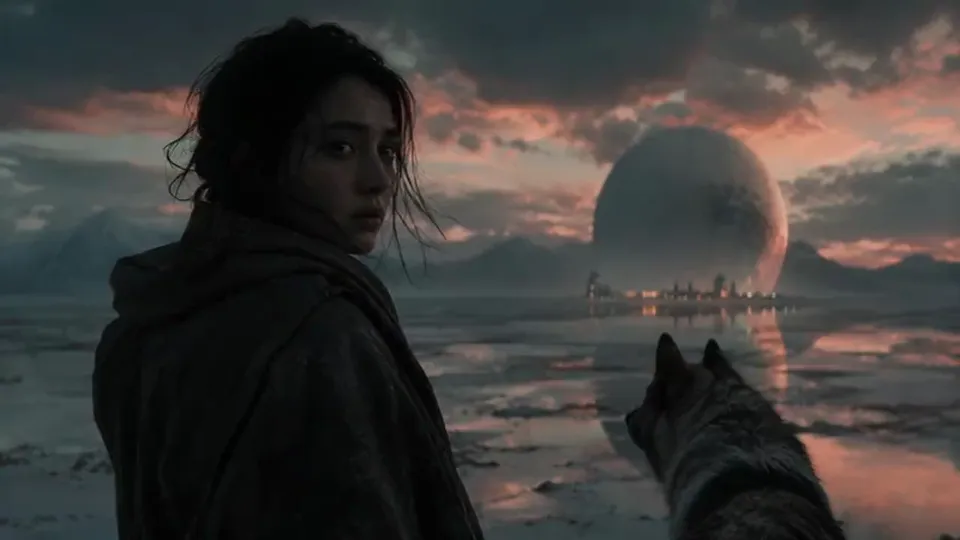
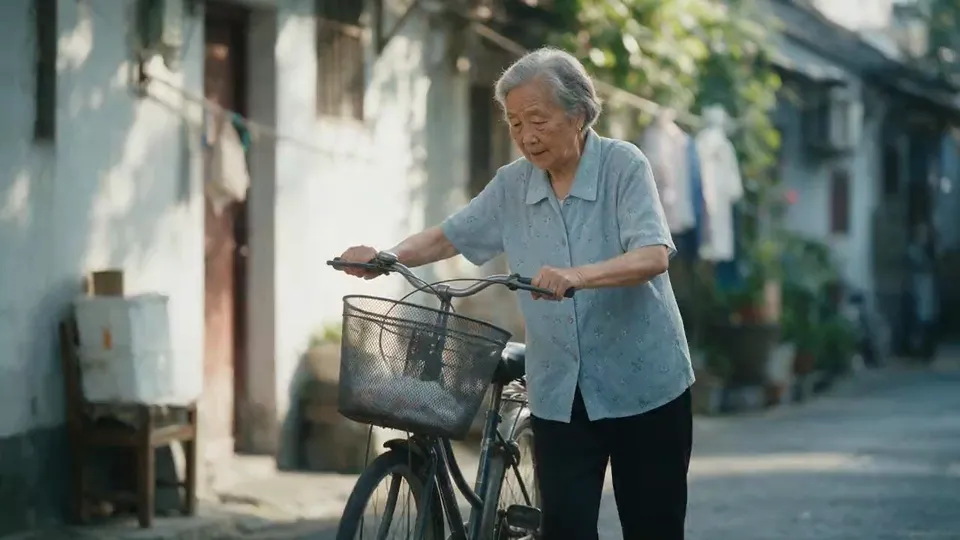
Four finished stills in other family looks: stop motion, 3D animation and anime. These ones have no storyboard frame yet.
  • A giant patchwork robot holds the hand of a small puppet, who holds the hand of a girl, on a hill lit by lanterns at dusk

    Lantern Hill

    A patchwork robot, a small puppet and a girl, hand in hand, under a string of lights.

  • A round fluffy teal creature with huge round eyes stands in a sunlit street crowded with small cartoon animals

    Market Day

    A round, fluffy creature with enormous eyes stops in the middle of a busy street of odd little neighbours.

  • Four children and a large white horned creature lean over a hand-drawn map on a cluttered table

    The Map

    Four children and a great white horned creature bend over a hand-drawn map. Each has a different opinion.

  • Two small blond children meet on a stone path among ruins and tall golden wheat

    The Wheat Path

    Two small children meet among old ruins overgrown with tall wheat. Summer light, no adults in sight.

One scene, script to screen

Kite Lakeside: six shots at a child's height.

The ScreenWeaver team made these six shots, and the scene was written for this page around them. The stakes are the size of a kite, and the camera mostly stays near the boy's eyes. Under each shot, the direction behind it.
Screenplay · page 1

EXT. LAKE SHORE - GOLDEN HOUR

Wind off the water. MEI (30s) and her son TAO (7) stand at the edge of the lake. Above them, a rainbow kite dips and climbs.

Tao looks up. From down here, the kite is the size of the whole sky.

His hands fight the red spool. The string runs through his fingers, faster than he can hold it.

TAO

It's pulling! It wants to leave!

Up there, the kite bucks, drops, and climbs again.

MEI

(not taking the spool)

Give it some string. It just wants to feel free.

Tao lets out string. Slack, then tight. The kite holds. He turns to her, beaming.

Mei's arm finds his shoulders. Two faces up, the same smile.

DISSOLVE TO:

  1. A mother and her young son fly a rainbow kite on a grassy lake shore at golden hour
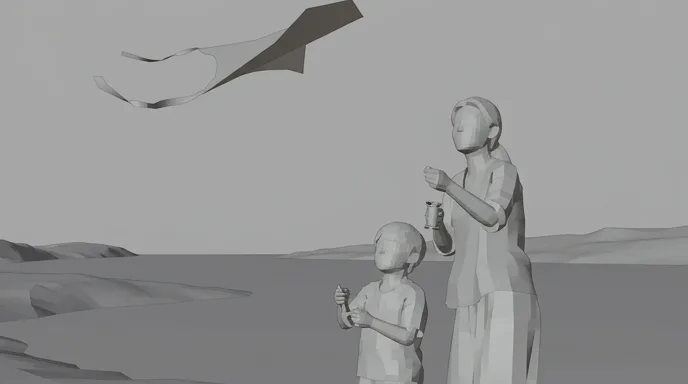
    The grey storyboard frame of this wide shot
    01

    Wide · the two of them

    Wide shot at golden hour, a mother and her seven-year-old son on a grassy lake shore flying a rainbow kite, low warm sun, calm water, soft light

  2. Close-up of a young boy looking up in wonder, the lake blurred behind him
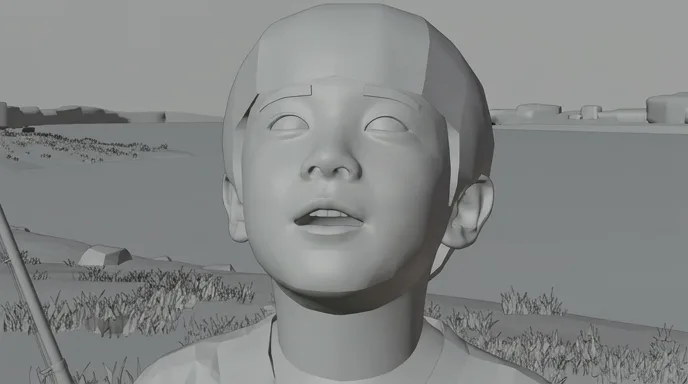
    The grey storyboard frame of the boy's close-up
    02

    Close-up · at his eye level

    Close-up of a seven-year-old boy looking up in wonder, camera at his eye level, lake out of focus behind him, warm backlight in his hair

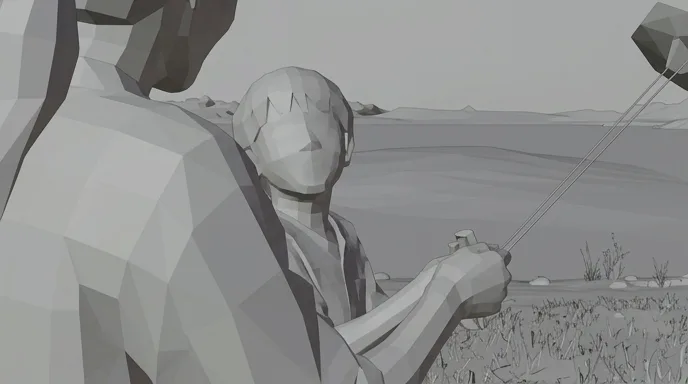
  3. A child's hands gripping a red kite spool as white string unwinds
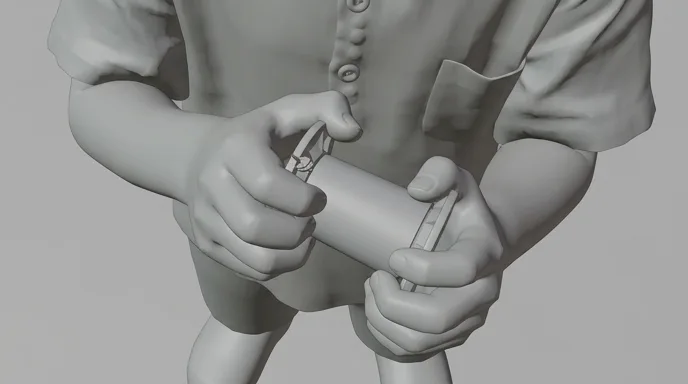
    The grey storyboard frame of the hands on the spool
    03

    Insert · the spool

    Insert on a child's hands gripping a red kite spool, white string unwinding, grass out of focus, shallow depth of field, simple grip

  4. A rainbow kite with a long tail against a pale blue sky
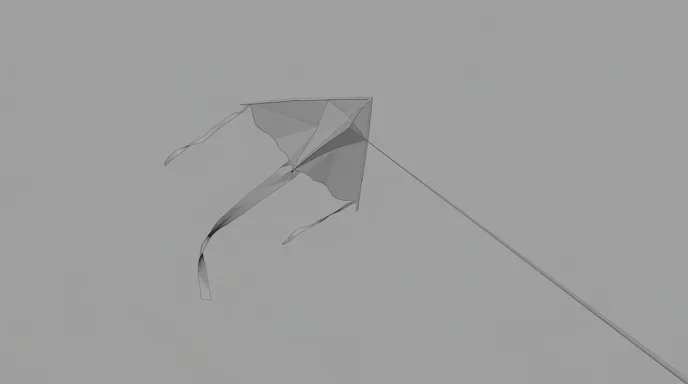
    The grey storyboard frame of the kite in the sky
    04

    His point of view · the kite

    Low angle from the boy's point of view, a rainbow diamond kite with a long tail against a clear pale blue sky, string running out of frame

  5. Over a woman's shoulder, a boy holds the kite string and grins at her by the lake
    The grey storyboard frame of the over-the-shoulder shot
    05

    Over the shoulder · the grin

    Over the mother's shoulder, soft and out of focus in the foreground, the boy holds the kite string and grins at her, lake behind, warm light

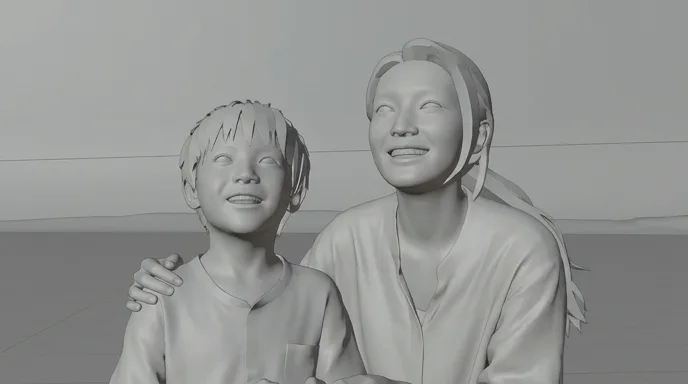
  6. A mother with her arm around her son, both looking up and smiling by the lake
    The grey storyboard frame of the mother and son together
    06

    Two shot · the warm ending

    Medium two shot, the mother's arm around her son's shoulders, both looking up and laughing, lake and treeline behind, golden hour, gentle handheld

The team's cut of Kite Lakeside: twelve seconds, 16:9, and not a word spoken. The scene above adds the lines. The pictures already tell the story, which is what young viewers need.

Writing for families

Six rules before you open an AI family movie generator.

Children forgive rough pictures. They never forgive a story they cannot follow. These rules keep it clear for them, and interesting for the adult on the sofa.
  1. 01

    Put the camera at their eye level

    A seven-year-old sees the world from about a metre off the ground. Write the frames from there: adults become shoulders and hands, and a kite fills the sky. Most of Kite Lakeside sits at the boy's height.

  2. 02

    Stakes the size of a child

    A kite that might get away, a lost tooth, a first night at a friend's house. Small for grown-ups, enormous at seven. Write the stake in one line a child could repeat.

  3. 03

    Feelings on faces, not in dialogue

    Young viewers read faces before they follow words. Write the reaction as action, "Tao looks up", and give each close-up one clear emotion. Wonder, worry, pride: never three at once.

  4. 04

    Jokes on two floors

    Kids laugh when the kite bucks. Parents smile at "It just wants to feel free", because they know who that line is about. Write one laugh for each audience per scene, and never make the child the joke.

  5. 05

    Kids who talk like kids

    Short sentences, fierce logic, the wrong word said with total confidence. Tao says "It wants to leave!", not "The wind is too strong." Avoid the precocious kid who talks like a small adult.

  6. 06

    Let the child make the last move

    The adult can guide, not rescue. Mei never takes the spool. When the child solves it, the young audience feels they solved it too.

Structure and pacing

How a family short breathes, beat by beat.

One child, one wish, one problem they solve themselves. Cut slower than you would for grown-ups: shots of three to five seconds, so a five-year-old never loses the thread.
  1. 15 %

    Home

    The child and the people who love them, in warm light. One image that says safe.

  2. 15 %

    The wish

    What the child wants, said out loud or plain on their face. Simple enough to repeat.

  3. 20 %

    The trouble

    Something gets in the way. Real to the child, never cruel. A comic setback works well.

  4. 35 %

    The try

    The child tries, fails once, then finds their own way. The adult nearby guides but does not take over.

  5. 15 %

    The warm ending

    Back together, a little changed. End on faces, then on a wide shot that lets the room breathe out.

For a bedtime story, soften the trouble to one gentle obstacle and let the last beat run long. The ending should settle the room, not wake it up.

Shot vocabulary

Eight shots from a child's side of the frame.

The prompt for each one sits underneath, ready to paste into a storyboard shot. Most of them put the lens where a child's eyes would be.
  • The child's eye level

    The camera at a metre high. Grown-ups are cut at the chest, the world looks big again.

    camera at a seven-year-old's eye height, adults framed from the chest down, child in sharp focus, soft daylight, lived-in family kitchen

  • The look up

    A face tilted toward something wonderful, just out of frame. The audience wants to see it too.

    close-up of a child looking up in wonder, camera slightly below eye level, warm backlight in the hair, background soft and bright

  • Small hands, one object

    An insert on the thing the child is holding on to. One object, one simple grip.

    insert on a child's small hands holding a paper boat, one object only, simple grip, shallow depth of field, warm window light

  • The giant everyday

    An ordinary room seen from the floor. Table legs like trees, a door handle out of reach.

    low angle from a child's height under a kitchen table, chair legs towering like tree trunks, warm afternoon light through a window

  • The shared reaction

    Parent and child in one frame, looking at the same thing. Two ages, one feeling.

    medium two shot, parent and child side by side looking up at the same thing, both smiling, soft golden light, gentle handheld

  • The animal friend, face to face

    The child and the animal at the same height, in profile. Neither one is the pet.

    a young girl and a small fox face to face in tall grass, both in profile, camera at their eye level, morning haze, soft focus background

  • The bedtime lamp

    One warm light in a blue room. The shot that tells a small viewer everything is fine.

    child's bedroom at night lit by one warm bedside lamp, child tucked in and listening, blue dusk in the window, soft shadows, low contrast

  • The whole journey in one frame

    Home, the goal, and the path between them. Children like to know how far there is to go.

    high wide shot, a winding path from a small house to a distant lighthouse, two tiny children halfway along it, clear afternoon light, storybook composition

Light and palette

Golden light, soft shadows, one bright toy.

A family film should feel safe before anything happens in it. That means a warm, low sun, lifted shadows and a gentle contrast. Save the one saturated colour for the object the child cares about: here, the red spool and the rainbow kite. The five colours below were sampled from the Kite Lakeside shots. Notice the darkest one is an olive meadow shade, not black. Ask for golden hour, soft light, low contrast in every prompt and the whole film stays in the same afternoon.

  • Lake blue

    #74A2B0

  • Linen shirt

    #D1C5AB

  • Golden hour

    #CB996A

  • Spool red

    #A7322C

  • Meadow shade

    #706332

Where AI goes wrong

Six ways AI video fails with children, and the fixes.

An audience forgives a wobbly dragon. It does not forgive a child whose face looks wrong. Plan for these failures before the first shot.
  • A face that becomes another child

    Children's faces are soft and alike, so small drift reads as a new kid. Give each child a character sheet once: ScreenWeaver carries characters and references from shot to shot. Repeat the same short description, "seven-year-old boy, short black hair, grey henley", in every prompt.

  • Age that slides between shots

    Models turn a seven-year-old into a teenager in the wide shot and a toddler in the close-up. Write the age as a number in every prompt, and keep the adult in frame for scale.

  • The uncanny smile

    Held too long, a laugh freezes: too many teeth, eyes that stop matching the mouth. Ask for a soft smile, keep laughing shots under three seconds, and cut on the peak, as the demo does.

  • Hands that melt into toys

    Small fingers merge with a spool, a cup or a teddy. One object per insert, a simple grip, shallow depth of field. Avoid hands that fiddle or pass things between them.

  • Motion that is too fast to follow

    Models add whip pans and busy camera moves. Young viewers lose track. Set static or slow moves in the storyboard, shot by shot, and keep the action in the centre of the frame.

  • Images a child should not see

    Build child characters from description and invented references, never from photos of real children. Keep peril suggested rather than shown, dress every child fully and for their age, and leave out anything you would not show at a school screening.

Sub-genres

Bedtime, adventure, animal friend, holiday.

  • Bedtime story

    A narrator, a soft world, a gentle ending. Slow shots, warm lamps, and a voice-over written to be read aloud.

  • Kids' adventure

    A gang, a map, a place grown-ups never go. Wide shots of the journey, low shots of each discovery, danger that stays fun.

  • Animal friend

    A child and an animal who understand each other. Eye-level framing for both, and a reference sheet so the animal keeps its markings.

  • Holiday film

    Snow, lights, a family together or apart. Warm windows against blue nights, and one tradition the whole story turns on.

The pipeline

Write. Board. Produce.

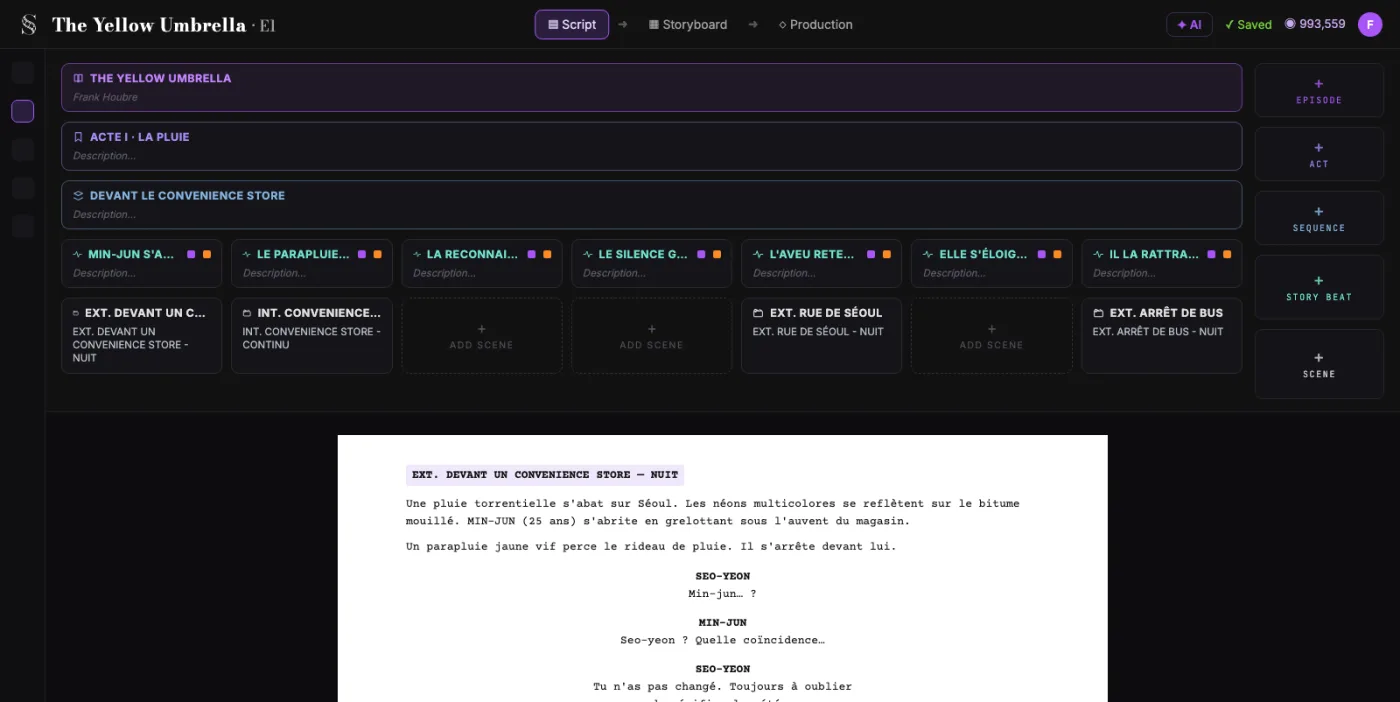
  1. ScreenWeaver screenplay editor: acts, sequences and beats above the formatted script of The Yellow Umbrella

    01The screenplay, enriched

    An industry-standard screenplay editor, and more: a visual outline and beat editor, your writing inspirations (notes, photos, audio) kept next to the page, and an AI researcher to support your writing, not replace it.

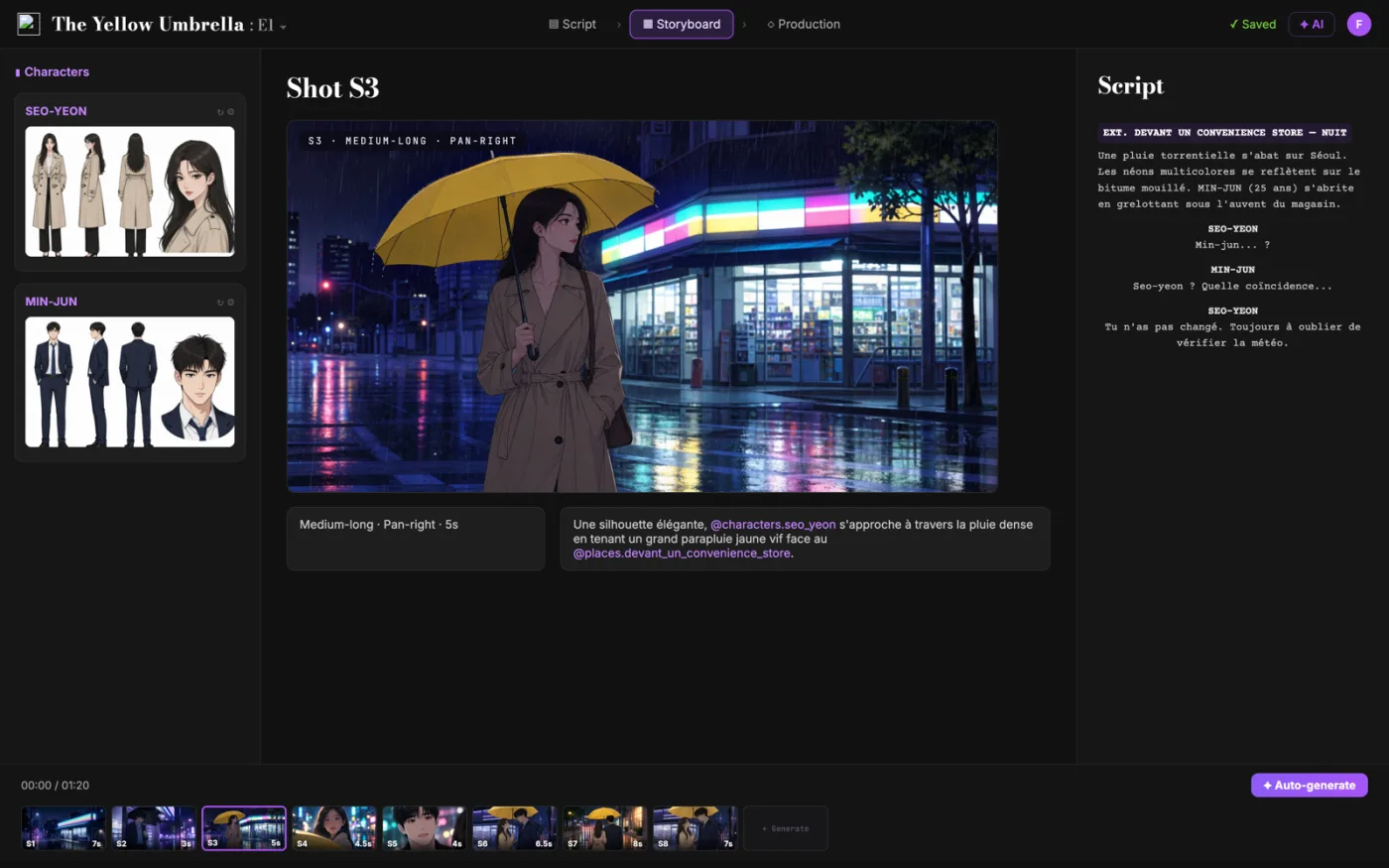
  2. ScreenWeaver storyboard: shot S3 of The Yellow Umbrella with characters, shot settings and the script beside it

    02The storyboard, made easy

    Shot breakdown generated from your screenplay, manual control over every shot (frame, angle, movement, duration), and generative AI previsualization in one click.

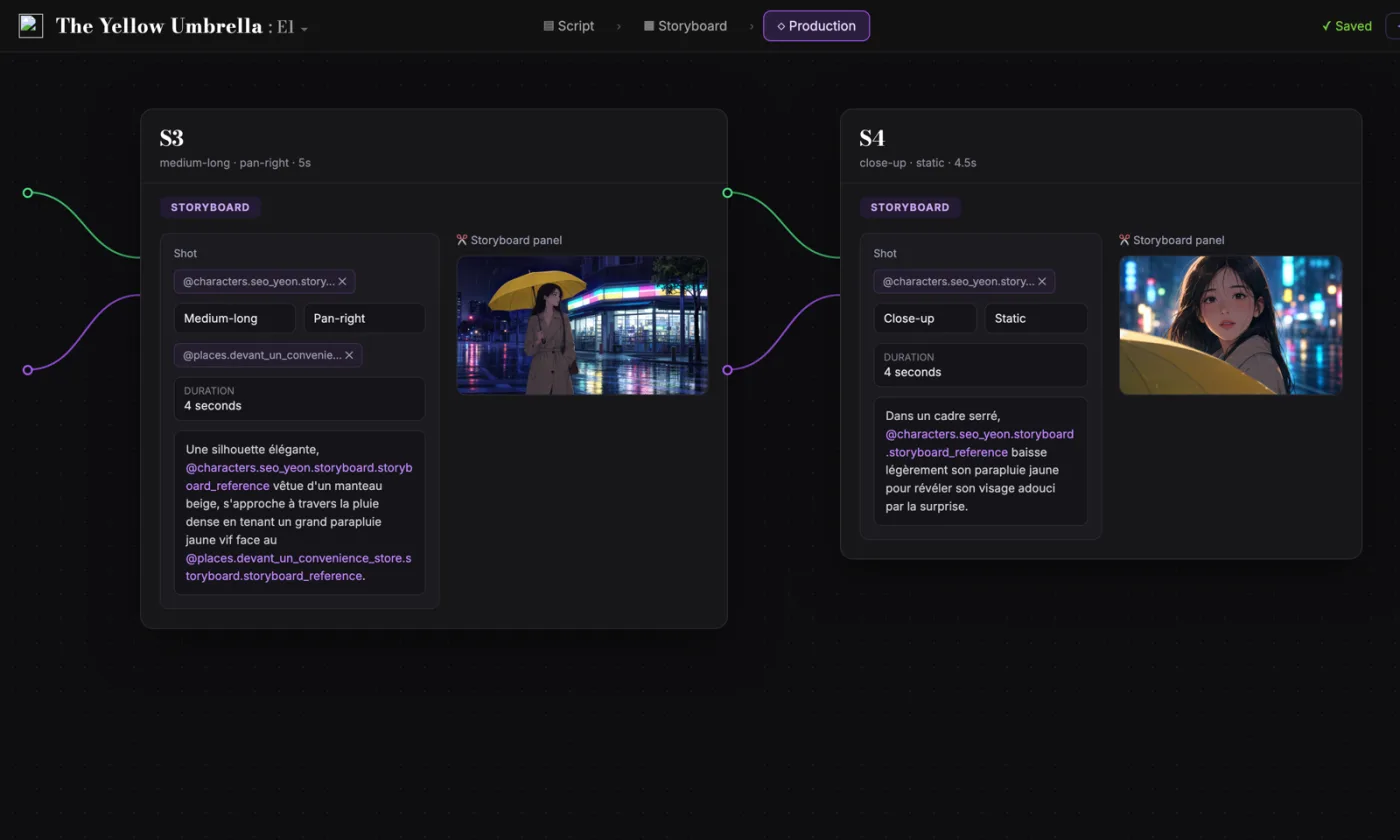
  3. ScreenWeaver production canvas: shots S3 and S4 as connected nodes carrying their storyboard panels and prompts

    03AI production, with finesse

    Footage generation pipelines connected to your screenplay and storyboard. Optimized out of the box, fully editable workflow.

FAQ

Family films with AI, your questions

Is ScreenWeaver an AI family movie generator?
It starts with the story, not a prompt box. You write the family screenplay for free today and turn it into a storyboard of every shot with Storyboard Beta at $9.99 a month. Video generation of each shot comes with the Filmmaker plan, targeted for 30 September 2026.
How do I keep a child's face the same from shot to shot?
Create the child once with a character sheet, then reuse it. In ScreenWeaver, characters, locations and references carry from shot to shot. Repeat the same age, hair and clothes in each prompt, and keep close-ups short: the longer a face is on screen, the more it can drift.
Can I make a bedtime story video with AI?
Yes. Write the narration as voice-over in the screenplay, keep one gentle obstacle, and let the shots run a little longer than usual. Many parents record the reading themselves: a child knows that voice.
Is it safe to put children in an AI film?
Make the characters up. Describe them in words and build them with character sheets, not from photos of real kids. Keep danger suggested, never graphic, and watch every shot for uncanny faces before anyone young sees the cut.
How long should a film for young children be?
For under-sixes, three to five minutes is plenty. With calmer shots of three to five seconds, that is roughly forty to seventy shots. Older kids can follow a faster cut.
Can I make a kids' film in 3D animation or anime style?
Yes. The same pipeline handles live-action looks, 3D animation and anime, in 16:9 or in 9:16 for vertical episodes. Pick the look in the references and it carries through every shot.
Can I make a holiday film for my family this year?
Start with the script, which is free, and storyboard it now with Storyboard Beta. Video generation is targeted for 30 September 2026, which leaves time before the winter holidays.
Do I have to pay to write the screenplay?
No. The Screenwriter plan is $0, with no time limit: unlimited projects and pages, industry-standard formatting, PDF and Final Draft export.

Every good bedtime story was written down first.

The script is free, for good. The storyboard is there when the story is ready.