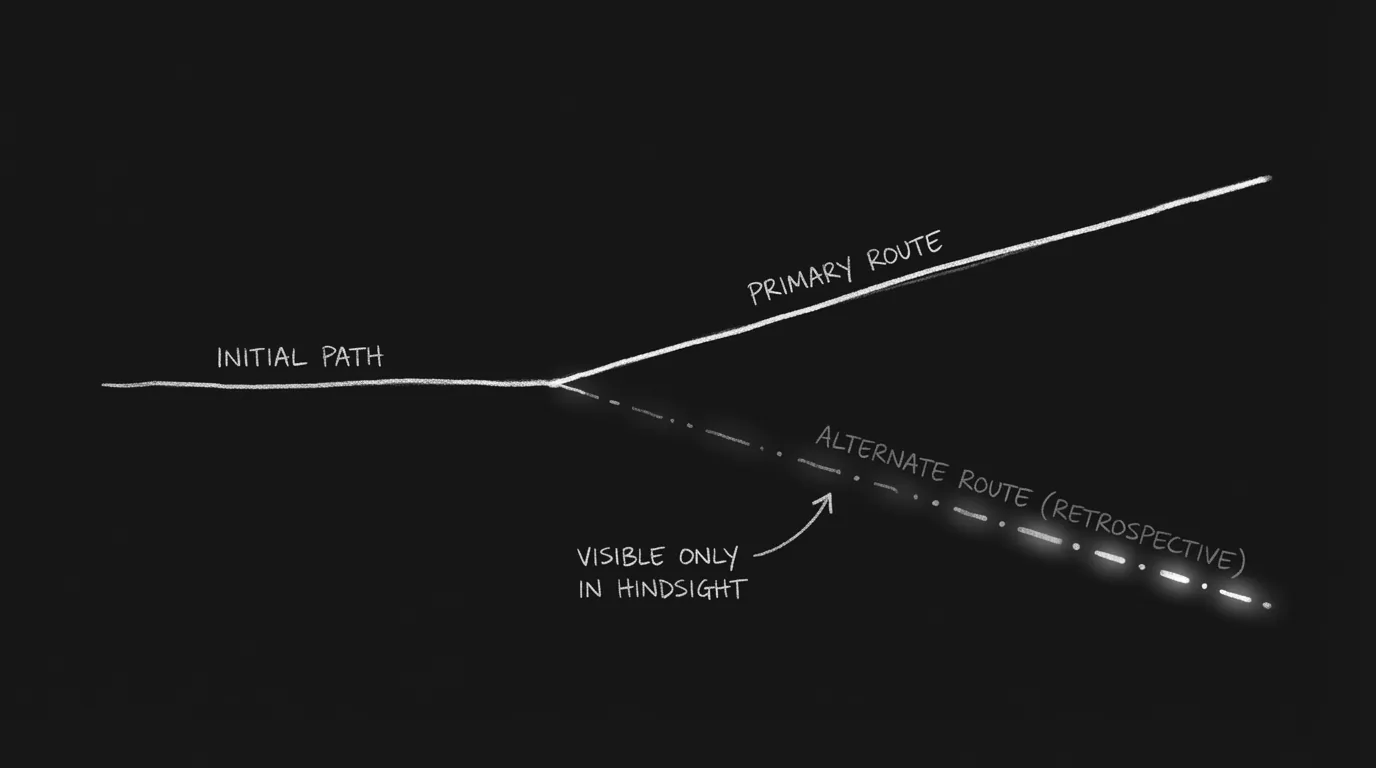
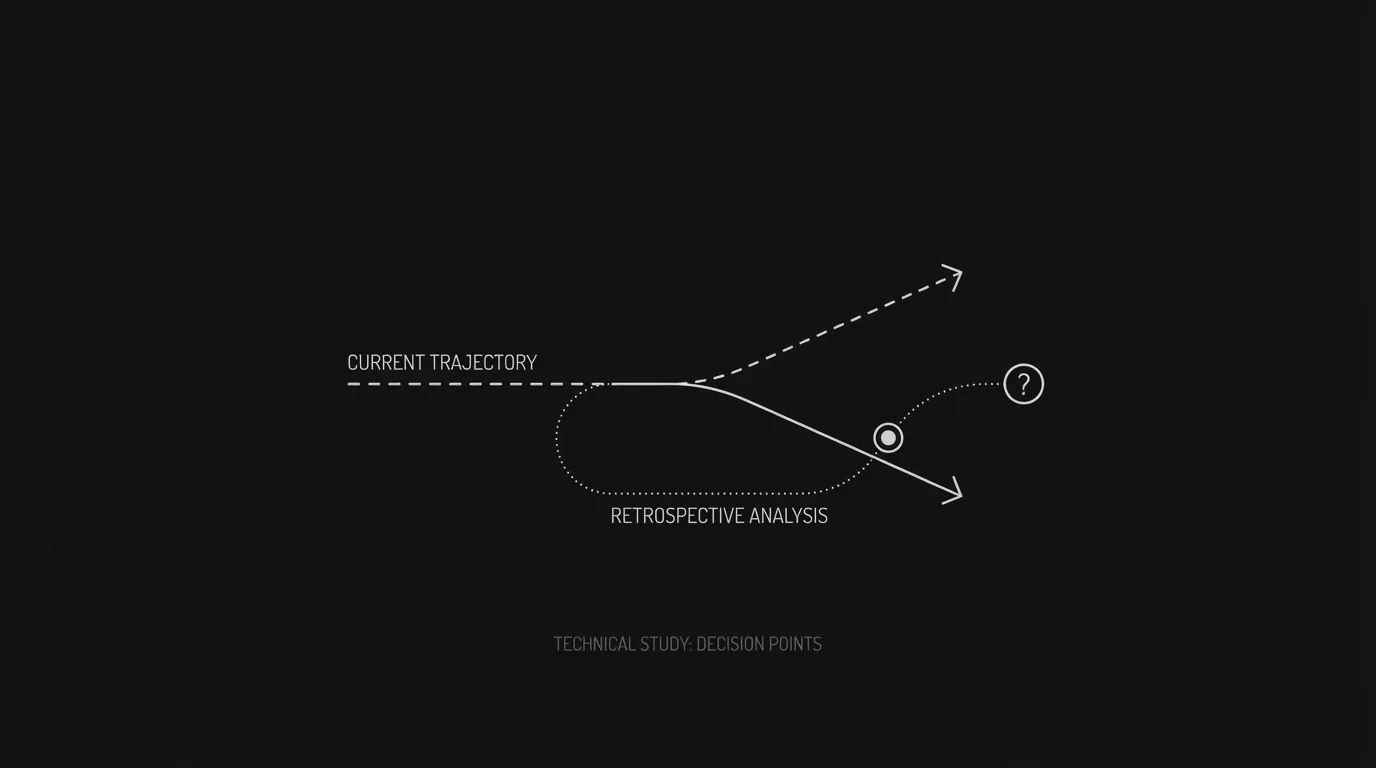
Hero image prompt: Dark mode technical sketch. Solid black background, thin white hand-drawn lines. A single path that splits into two, then the second path is revealed to have been there all along, drawn in a lighter or dashed line. The structure is visible only when you look again. Minimalist, high-contrast.
They’ve been dead the whole time. He’s the killer. She’s his sister. The twist ending can make a script unforgettable. It can also make an audience feel cheated. The difference isn’t how big the twist is. It’s whether the story has been building to it from page one. A twist that’s earned doesn’t come out of nowhere. It rewrites what we’ve already seen. Here’s how to construct the revelation so that when it lands, the audience doesn’t feel tricked. They feel the story click into place.
The best twists don’t add new information. They reframe information we already had. The audience should be able to look back and see the path they missed.
Think about The Sixth Sense. When we learn the truth, we don’t get a new fact that was never there. We get a new way to read every scene we’ve already watched. The twist works because the film has been consistent with both readings. It never lied. It showed us one thing and let us assume another. That’s the contract. You’re not hiding a card up your sleeve. You’re showing the card the whole time and only revealing what it means at the end. The craft is in the construction: planting the possibility, supporting both the surface reading and the true reading, and paying off in a way that feels inevitable.
Why Twists Fail (And How to Avoid It)
The twist that comes from nowhere. The killer is someone we’ve never met. The protagonist was in a coma and we had no way to know. The audience feels cheated because they couldn’t have seen it coming. Fix: plant the possibility. The twist should be one of the readings the story has allowed from the start. We might not have chosen it. But when we look back, it should fit. That means dropping clues. Not obvious ones, subtle ones. A line that could mean two things. A shot that could be from a different time. An absence, something we didn’t see that we should have questioned. For more on planting and paying off, see our guide on psychological thrillers and unreliable reality.
The twist that breaks the rules. The story has established that X is true. The twist says X was false, but we were never given a reason to doubt X. The audience feels like the writer changed the rules. Fix: make sure the world you’ve built can support both the surface truth and the twist. If the twist requires that the narrator was lying to us in a way we had no way to detect, you’ve broken trust. If the twist requires that we re-read ambiguous moments, you’ve earned it.
The twist that doesn’t matter. We get the reveal. So what? The story doesn’t change. The theme doesn’t deepen. The twist is a trick with no consequence. Fix: tie the twist to character or theme. When we learn the truth, something should shift. The protagonist’s journey. Our understanding of what the story was about. A twist that only surprises is a gag. A twist that recontextualizes is a revelation.
Building a Revelation List
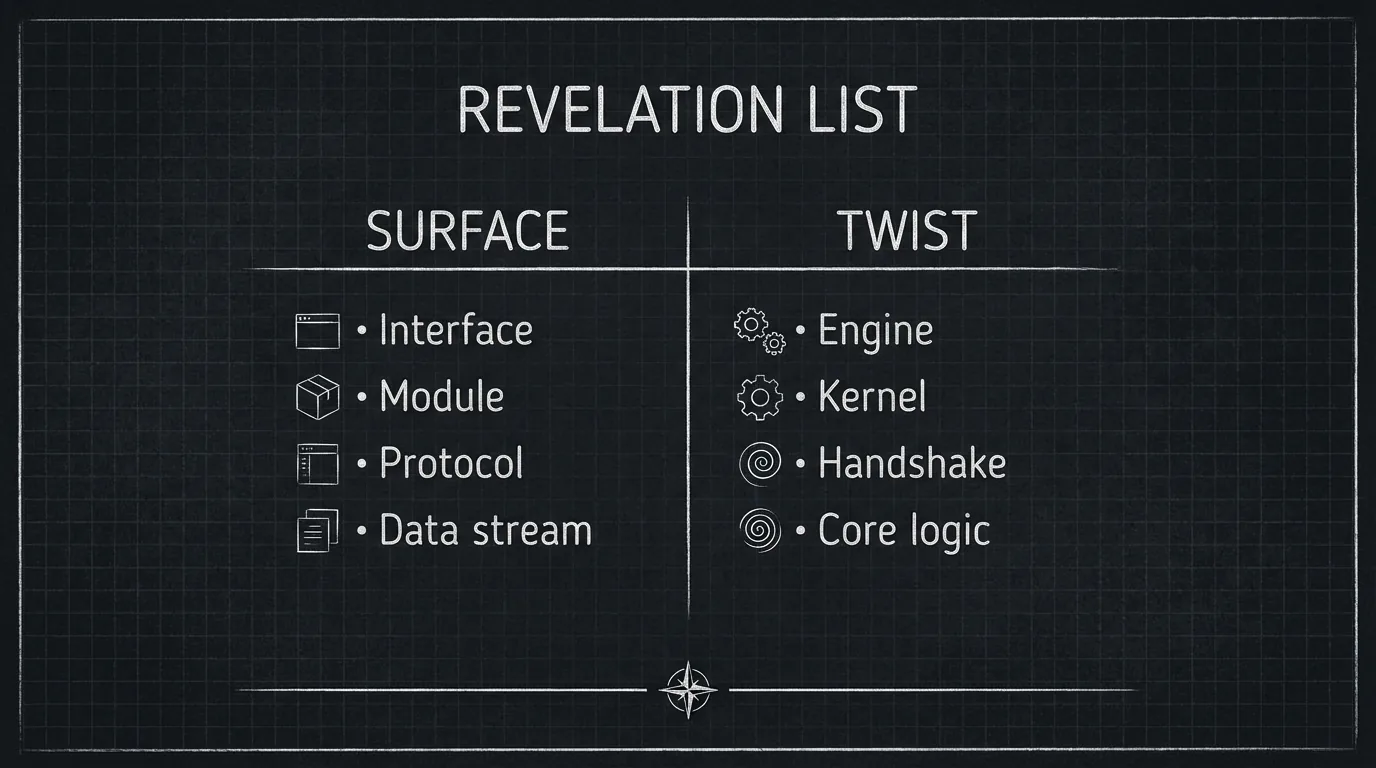
Before you write, or when you’re rewriting, build a revelation list. Go through your script scene by scene. For each scene, ask: what does the audience believe here? What would they believe if they knew the twist? If the scene only works with the surface reading and falls apart with the twist, you have a problem. Every key scene should be consistent with both readings. The audience might not see the second reading until the end. But when they look back, it should hold.
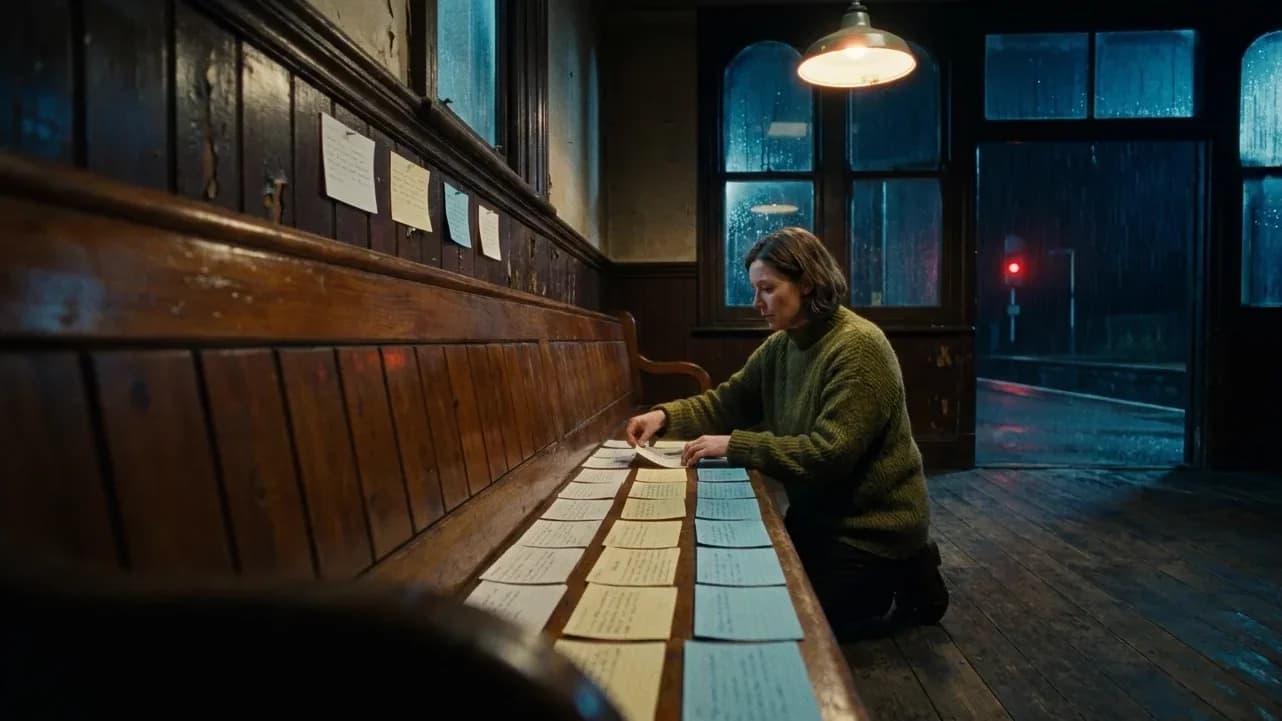
Then list the plants. What specific moments hint at the twist without giving it away? A line of dialogue that’s ambiguous. A choice that seems odd until we know the truth. An object or a detail that means something different in retrospect. You don’t need many. You need enough that the twist feels supported. A good rule: if you remove the twist, would the plants feel like loose threads? If yes, you’ve integrated them. If no, they’re too obvious or too vague.
| Step | What to Do |
|---|---|
| Define the twist | State it in one sentence. What is the true reality? |
| Revelation list | Scene by scene: does this work with both the surface reading and the twist? |
| Plants | List 5–10 moments that could support the twist without giving it away |
| Test | Remove the twist. Do the plants still make sense as part of the surface story? |
| Payoff | Does the twist change our understanding of character or theme? |
Try it free
Try Screenweaver for free on your script
It is free. Import your existing project, get a clearer view of your outline, and regain control of your story structure in minutes.
Start FreeRelatable Scenario: The Script That Doesn’t Support the Twist
You’ve written two acts. The twist is that the protagonist is the killer. But in act one they’re alone in a room when a murder happens elsewhere. So they can’t be the killer, unless you’ve planted that they could have been there, or that the timeline is wrong, or that we’re seeing something unreliable. If you haven’t, the twist breaks the story. So you go back. You add a moment that makes the timeline ambiguous. Or you add a moment that suggests we’re not seeing the full picture. Now the twist has room to land. The revelation list would have caught this: that scene wasn’t consistent with both readings. Fix the scene or fix the twist.
Relatable Scenario: The Twist That’s Obvious Too Soon
You’ve planted the twist. But your test audience guesses it by the midpoint. So you’ve either planted too heavily or the twist is too familiar. Fix: thin the plants. Keep the ones that are subtle, that only make sense in retrospect. Cut the ones that point too clearly. Or complicate the twist. Add a red herring that fits the theme. Give the audience another possibility so they’re not sure which reading is right until you choose. The goal isn’t to make the twist impossible to guess. It’s to make the audience not sure until you want them to be sure. Our piece on the unreliable narrator goes deeper on how to maintain that balance.
The Trench Warfare Section: What Beginners Get Wrong
Writing the twist first and filling in the rest. You know the ending. So you write toward it. But you don’t go back to make sure the early scenes support both readings. The result: a first act that only works if we don’t know the twist. Fix: use the revelation list. Every scene has to earn its place under both the surface reading and the twist reading.
Using the twist as a substitute for theme. The story doesn’t have much to say. But it has a big twist. The twist lands and the audience thinks “okay, and?” Fix: tie the twist to what the story is about. When we learn the truth, we should also learn something about the character or the world. The twist should deepen the theme, not replace it.
Explaining the twist in dialogue. A character spells it out. “So you’re saying I was dead the whole time?” The audience has already put it together. Or they’re about to. Let the images and the structure do the work. Fix: one line, one image, one cut. Trust the audience.
Twisting for the sake of twisting. You want a twist because the genre expects one. So you add one that doesn’t grow from the story. It feels tacked on. Fix: only use a twist if the story is better with it. Some of the best thrillers don’t have a twist, they have a slow reveal, or a confirmation of what we feared. The twist is a tool. Use it when the story calls for it.
Step-by-Step: Retro-Engineering Your Plot
Start with the twist. Write it down. Then list every scene in your script. For each scene, ask: if the audience knew the twist, would this scene still make sense? Would it mean something different? If a scene only works when we don’t know the twist, you have to revise it. Add ambiguity. Add a detail that supports the twist. Or cut the scene. Then list every plant. Where have you hinted at the truth? Are there enough hints? Are they too obvious? Read the script as if you don’t know the twist. Can you guess it? If you can’t, you might need one or two more plants. If you can guess it in act one, you might need to thin them or add a red herring. The structure of thrillers can help you place the plants at moments of crisis, when the audience is focused on something else, a small detail can slip in.
One External Resource
For a concise overview of plot twists in narrative, see Plot twist on Wikipedia. Reference only; not affiliated.
The Perspective
A twist isn’t a surprise. It’s a re-reading. The audience should be able to go back through the story and see the path they missed. If they can’t, the twist is unearned. If they can, the twist is the moment the story locks into place. Build the revelation list. Plant with care. Make sure every scene can hold both readings. Then when you reveal the truth, it won’t feel like a trick. It’ll feel like the story was always leading here.
Final Step
Build your next script with Screenweaver
Move from ideas to production-ready pages faster with timeline-native writing and AI-assisted story flow.
Try Screenweaver