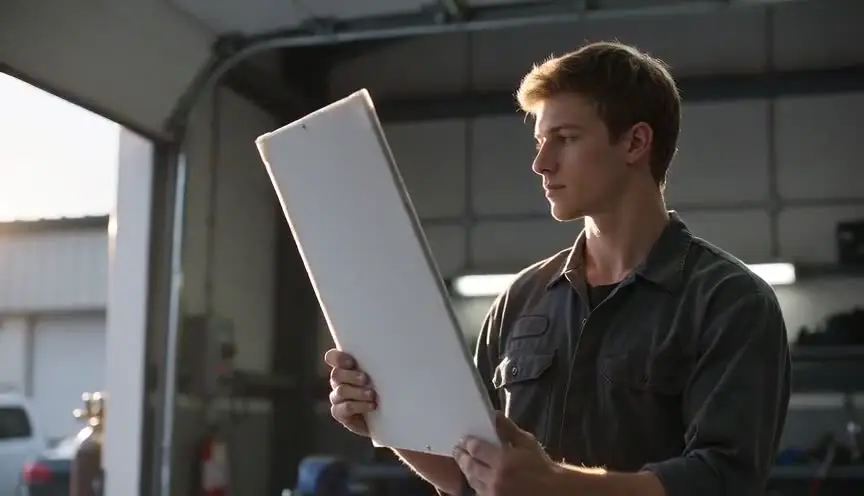
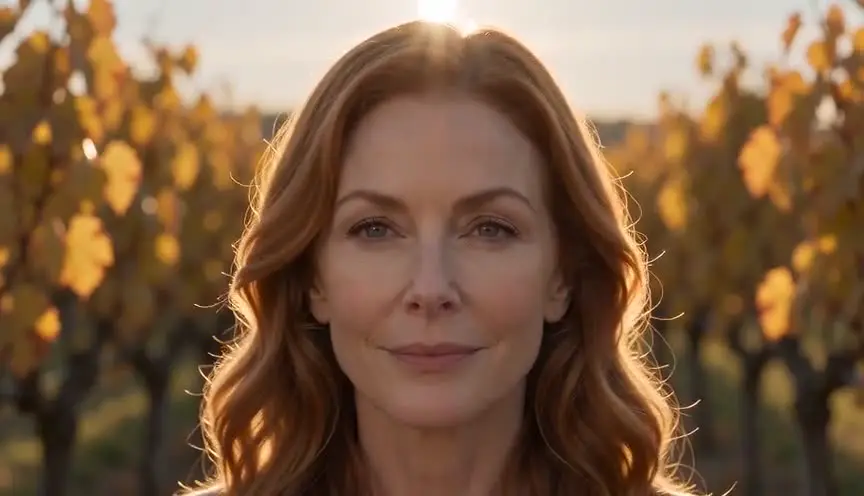
Soft lightTender light for close moments
Soft light comes from a large source relative to the subject, such as a cloudy sky, a big window or a diffusion frame, so shadows fade gently with no hard edge. Faces look calm and forgiving, and the audience relaxes into the scene.
Also calledDiffused lightSoft lightingFlattering light
Lighting
Why it works on screen
Soft light makes people look like themselves on a good day. It wraps around the face, keeps the eyes open and the skin kind. Use it for love, care, recovery, memory and quiet realization: a new parent, a reunion, a first morning after a long night. It also suits period and art-house films that want the look of old paintings and overcast days. A scene earns it when the emotion should feel safe and honest, or when you want a gentle surface that a later scene will break with harder, harsher light.
The shot list line
- Size
- Close-up
- Angle
- Eye level
- Movement
- Static or very slow push in
- Lens
- 85mm
- Duration
- 5 to 8 s
Use the window as a large key or add a big diffusion frame close to the actor; keep the ratio gentle and let the shadow side fade without a line.
Screenplay
On the page
A spec script does not need to say "soft light". Suggest it through weather, hour and place: an overcast morning, a white-curtained window, a hospital room at dawn, snow outside. Those details carry the softness to the reader. Write the emotion rather than the quality of light. The size of the source, the diffusion material and the distance to the actor belong in the shot list and the cinematographer's notes.
INT. MATERNITY WARD - TAMPERE, FINLAND - MORNING
Snow outside. The big window lets in a white, even light that seems to come from everywhere.
JUHANI LEHTO (40s), still in his work boots, holds his daughter for the first time.
He does not know what to do with his elbows. The midwife, AINO (60s), adjusts them without a word.
The baby opens one eye.
JUHANI
She's looking at me like she's heard about me.
Storyboard
In the storyboard
Shade with soft gradients only, no hard edges: a gentle falloff across the face from the lit side to the shadow side. Draw the source as a large rectangle (window or diffusion frame) near the subject, with several wide arrows fanning out from it. Note "soft key, large source" and the material (silk, frost, bounce). Add the weather or time of day if the softness comes from outside.
Pairs well with
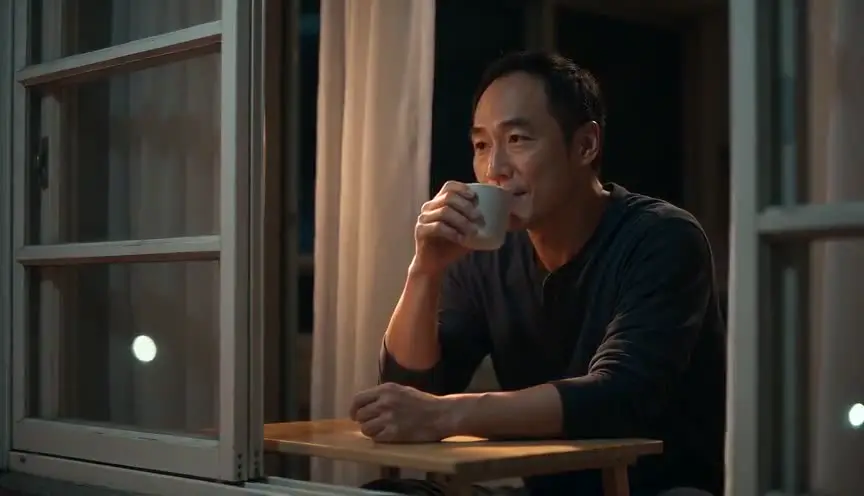
A large window on an overcast day is the simplest soft source there is. Establish it in a wider shot, and the gentle close-ups that follow feel natural to the room.
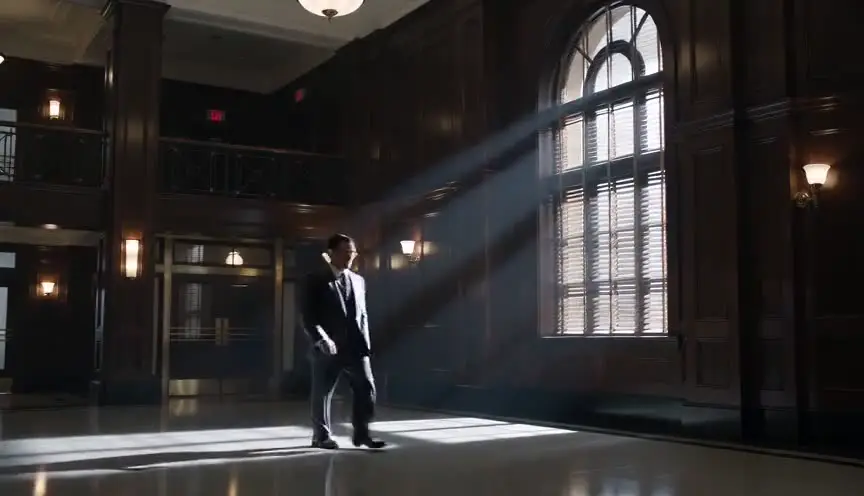
Cut from soft light to hard when the scene turns harsh, or from hard to soft when relief arrives. The change in shadow edges shifts the mood before a line is spoken.
Reference
Watch it in
Days of Heaven (1978)
Nestor Almendros liked overcast skies and diffused daylight, which gives the wheat fields and faces their wrapping, gentle glow.
Portrait of a Lady on Fire (2019)
Window light and cloudy coastal days keep every face soft and painterly, so looks and small gestures carry the drama.
ScreenWeaver
Set it up in ScreenWeaver
Describe the gentle source in your action line, a white window, an overcast morning, and ScreenWeaver breaks the scene down into shots automatically. Open the close-up, set framing and an eye-level angle, a static or slow push-in movement and a generous duration. Note "soft key" on the shot. Characters and the location carry from shot to shot, and the AI previsualization lets you check the mood of the faces before the shoot.
Start writing for freeThe prompt behind this clip
This is the exact prompt that rendered the clip at the top of the page. Keep the description of the camera and the light, change the subject and the place.
Soft light on a vast white salt flat under a thick overcast sky: the camera holds a static medium shot of a woman in a linen jacket standing on the cracked salt surface, her face and clothing lit evenly with almost no visible shadow, contrast so low that the horizon line nearly disappears into the pale sky. The overcast cloud layer acts as a giant diffuser, wrapping light around her jaw and shoulders with a gentle gradient, no hard edges anywhere in the frame, and the light quality stays constant as she slowly turns her head from profile to camera. No text.
Common mistakes
- 01
Soft means flat
Soft light from the front erases the shape of the face. Keep the large source to one side so there is still a gentle shadow side and some depth.
- 02
Spill everywhere
Big soft sources light walls and backgrounds as much as faces, and the image turns gray. Use flags and grids to control where the soft light goes.
- 03
Source too small
A small softbox far away is not soft. Softness comes from size relative to the subject, so bring the source close or make it bigger.