
They meet. Something happens. The reader feels it, the pull, the heat, the charge. You can't film "chemistry." You can only write what the audience will see and hear so that the director and the actors can create it. On the page, chemistry is behavior: looks, proximity, the line they don't say, the beat that holds too long. Here's how to describe connection so the script earns the chemistry instead of naming it.
Don't write "they have chemistry." Write what they do that makes us feel it.
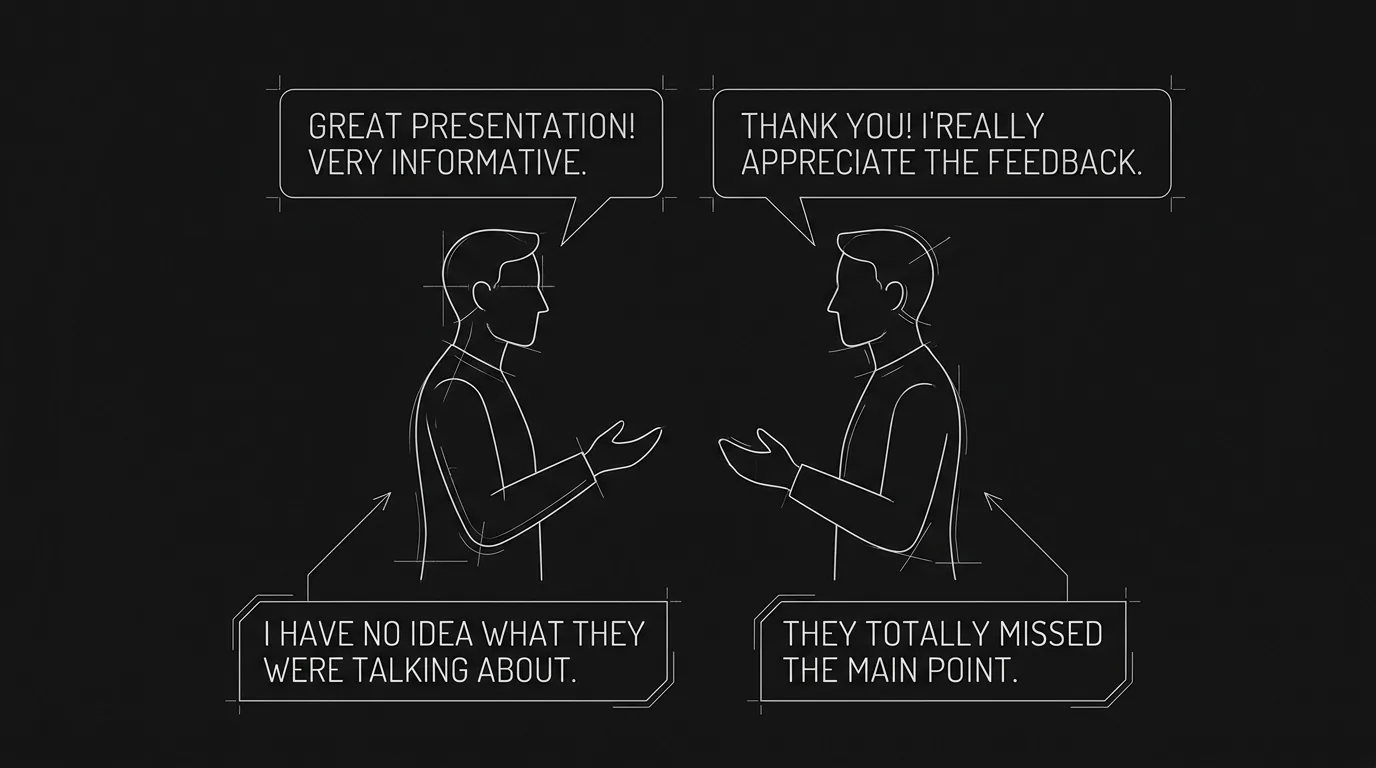
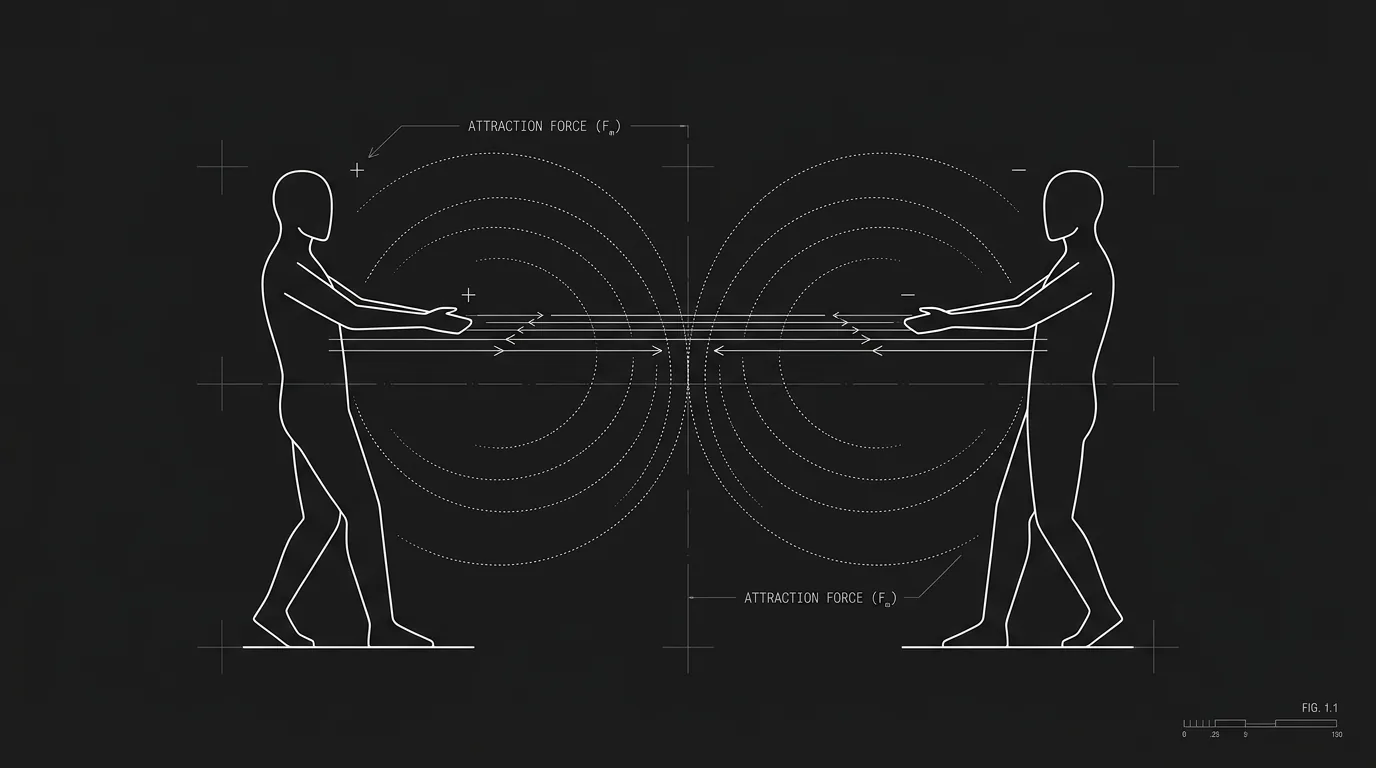
Think about it this way. In life we sense attraction or connection through signals: eye contact, leaning in, the way someone laughs at the other's joke, the pause before they answer. On the page, you're encoding those signals. You're not writing "they're attracted." You're writing the look, the distance, the reaction. The reader (and the actor) get the cue. The audience will feel it when it's performed. Our guide on subtext applies, chemistry often lives in what's not said. This piece is about the action line: how to describe the physical and behavioral cues of connection. For romantic tension over time, see will they/won't they.
Why "Chemistry" Isn't a Stage Direction
If you write "(they have chemistry)" or "there's a spark," you've named a result. You haven't given the actor or the director anything to play. Chemistry is built from choices: where they stand, how long they look, what they do with their hands, how they react to the other's presence. So your job is to write the building blocks, the beats that add up to connection. For writing for actors, see writing for actors, you're not directing the performance; you're giving the situation and the beats.
Relatable Scenario: The First Meeting
They see each other. Something shifts. To write it: action, not label. "Their eyes meet. Hold. She looks away first, but not before he sees it." Or "He's still looking at her when she turns back. Doesn't apologize. Doesn't look away." The hold, the who looks away, the return, those are playable. "They have instant chemistry" is not. For subtext in dialogue, see subtext, the first exchange might be ordinary words with a charge underneath.
Relatable Scenario: The Almost-Kiss
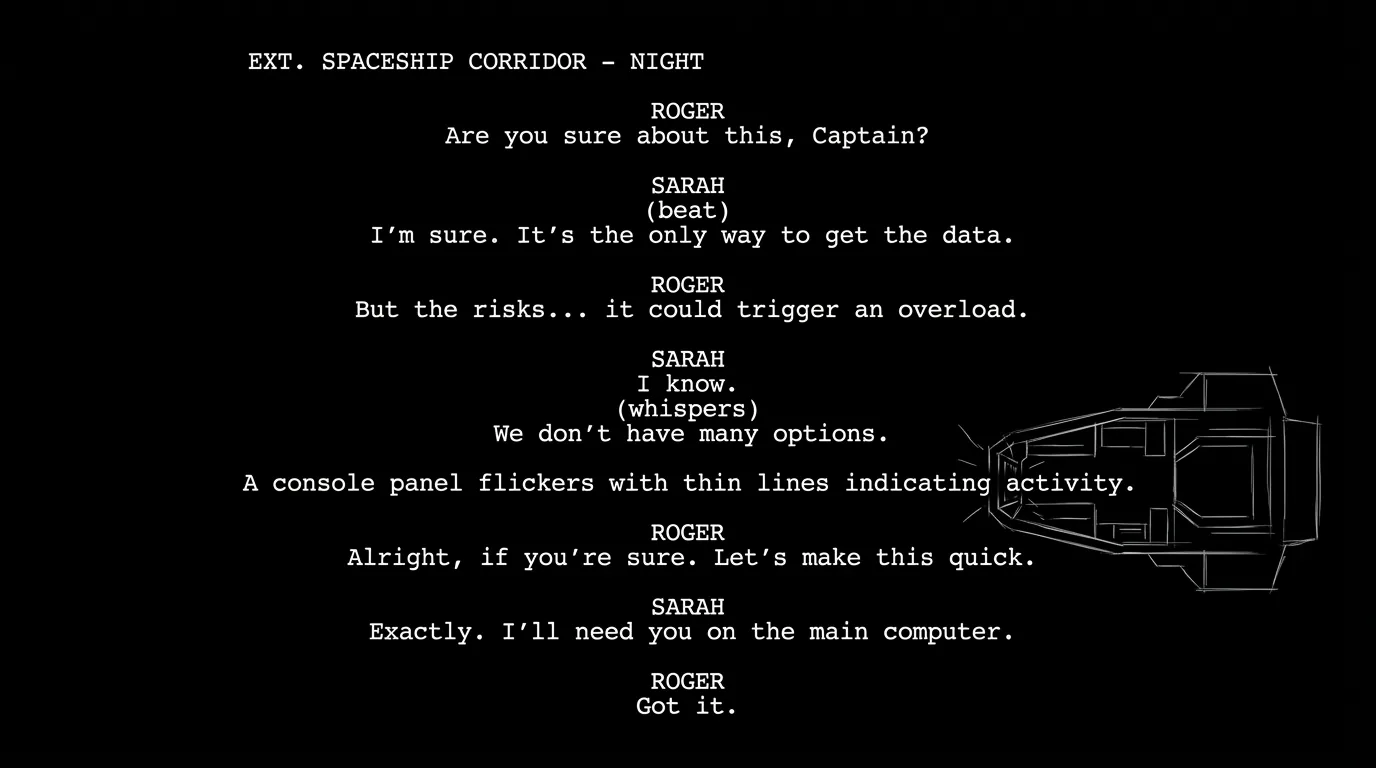
They're close. The moment could go either way. To write it: proximity, pause, interruption (or not). "She's close enough that he could close the gap. Doesn't. She doesn't move. The moment stretches. Then she steps back." Or "He leans in. She meets him halfway. And, " (then the interruption, or the kiss). You're not writing "sexual tension." You're writing the move and the hold and the release. For silence and beats, see writing silence.
Relatable Scenario: The Long-Term Couple Still in Sync
They've been together. The chemistry isn't "first meeting", it's ease. They touch without thinking. They know each other's rhythms. To write it: habit, comfort, small gesture. "She reaches for his hand without looking. He's already offering it." Or "He finishes her sentence. She doesn't mind." The connection is in the routine that only they have. For relationship dynamics, see toxic relationships when the bond is complicated.
The Trench Warfare Section: What Beginners Get Wrong
Naming the feeling. "She feels drawn to him." "There's electricity." Fix: Write the behavior. The look. The step closer. The reaction. Let the reader infer the feeling. For action vs. direction, see writing for actors.
Only using dialogue. They say flirty things and we're told they're into each other. Fix: Add action beats. The look that lasts too long. The touch. The way one of them orients toward the other. Chemistry is physical. Put it on the page. For silence, see writing silence.
Over-choreographing. Every beat is described. The actor has no room. Fix: One to three key beats per moment. The hold. The step. The look away. Leave the rest to performance. For writing for actors, see writing for actors.
Making it the same every time. Every scene has the same "they lock eyes" beat. Fix: Vary the signals. Sometimes it's proximity. Sometimes it's the way one laughs at the other. Sometimes it's silence. For will they/won't they, see will they/won't they, the chemistry has to sustain and shift.
No subtext in the dialogue. The lines are on-the-nose. "I'm really attracted to you." Fix: Let the dialogue be ordinary (or coded). Let the action carry the charge. For subtext, see subtext.
Try it free
Try Screenweaver for free on your script
It is free. Import your existing project, get a clearer view of your outline, and regain control of your story structure in minutes.
Start FreeChemistry: Label vs. Behavior
| Don't write | Write instead |
|---|---|
| They have chemistry | Their eyes meet. Hold. She looks away first. |
| Sexual tension | He's close. She doesn't step back. The moment stretches. |
| They're in love | She reaches for his hand without looking. He's already there. |
| Spark | He's still looking at her when she turns back. Doesn't look away. |
Step-by-Step: Writing Connection on the Page
First: Identify the moment (first meeting, almost-kiss, comfort, conflict). Second: Choose one to three physical or behavioral beats, look, proximity, touch, pause. Third: Write them as action lines. Clear. Playable. No labels. Fourth: Let the dialogue do less, or do the opposite (they say something neutral; the action says the rest). Fifth: Read it. Can an actor and director build the moment from this? If not, add one more beat. If it's overloaded, cut. For more on subtext and silence, see subtext and writing silence.
The Perspective
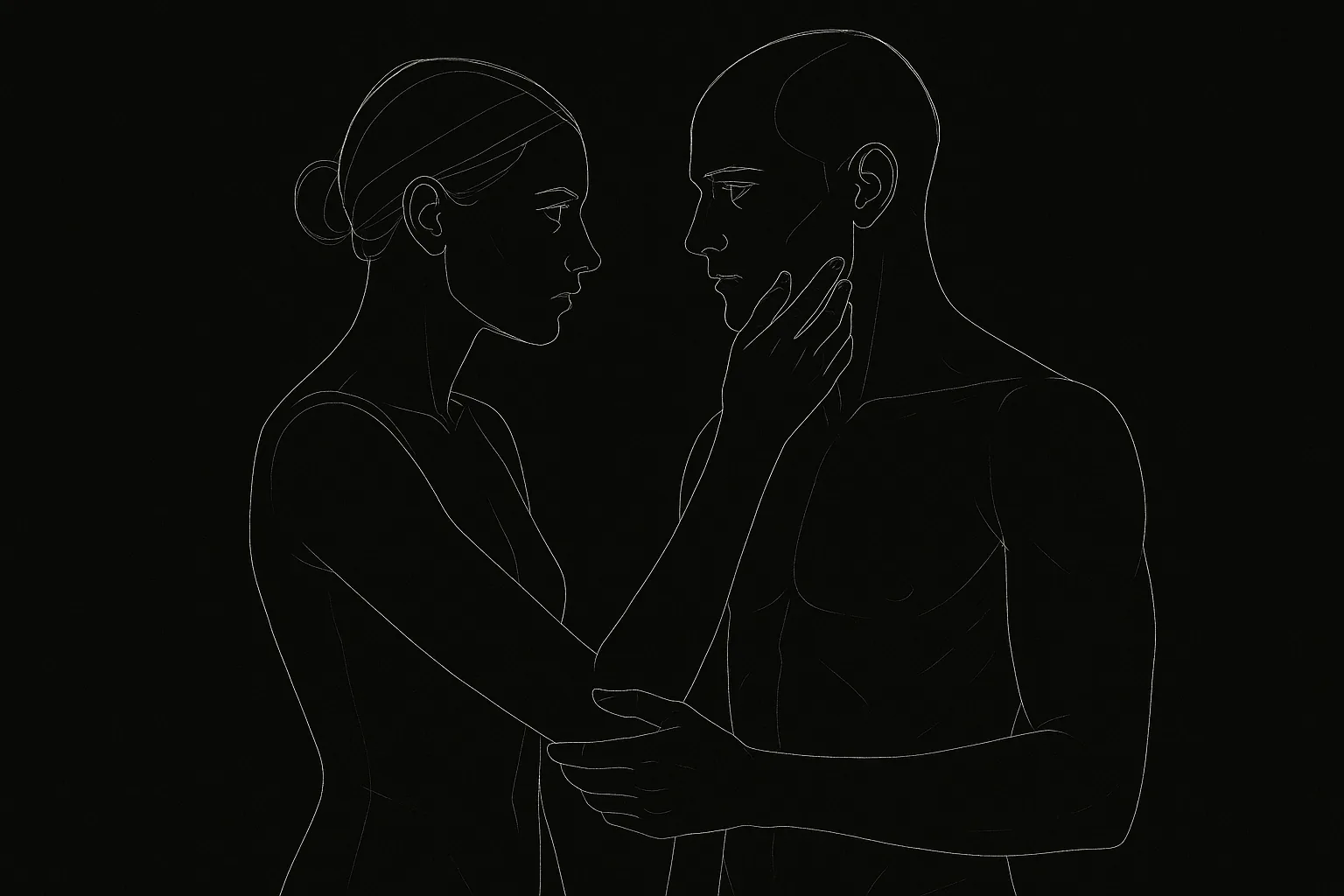
Chemistry on the page is behavior: the look that holds, the step that doesn't happen, the touch, the pause. Don't name the feeling. Write the beats. Give the actor and the director something to play. When the action lines build the charge, the script earns the chemistry. So write the look. Write the distance. Write the beat. And leave the label out.
Final Step
Build your next script with Screenweaver
Move from ideas to production-ready pages faster with timeline-native writing and AI-assisted story flow.
Try Screenweaver