Golden hourWarm light that will not last
Golden hour is the short time after sunrise and before sunset when the sun sits low, its light turns warm and soft, and shadows stretch long across the ground. Faces glow, landscapes deepen, and the audience feels that the moment is beautiful because it is ending.
Also calledMagic hourGolden lightSunset light
Lighting
Why it works on screen
Golden hour carries nostalgia, love, youth and farewell. Low, warm light makes everything look remembered. Use it for first kisses, last days of summer, homecomings, harvests, the end of a journey and the calm before a loss. It can also play against a scene: violence at golden hour feels even more wrong. Because the window is short, the look itself says that time is running out. A scene earns it when the story wants the audience to treasure a moment, or to feel a pang for something that is about to be gone.
The shot list line
- Size
- Medium wide shot
- Angle
- Eye level or slightly low
- Movement
- Slow tracking shot along the row
- Lens
- 50mm to 85mm
- Duration
- 6 to 10 s
Shoot in the last 30 to 40 minutes of sun, backlight or three-quarter backlight the actors, and bounce warm light into faces; rehearse early so takes happen inside the window.
Screenplay
On the page
The screenplay controls golden hour more than most lighting, because the scene heading holds the time of day. Write SUNSET or DUSK or LATE AFTERNOON with intention, and let the action mention the long shadows or the sun on the horizon if it matters. Do not write "golden hour" as an instruction. The production will schedule the scene inside that window; the exact minutes, the lens and any extra warmth go in the shot list and the call sheet.
EXT. VINEYARD - MENDOZA - SUNSET
The last row of the harvest. The sun sits on the Andes and pours across the vines.
ROSARIO QUIROGA (60s) cuts the final bunch and drops it in the crate.
Her granddaughter MILA (17), who leaves for university in the morning, lifts the crate with her.
Their shadows stretch all the way down the row.
ROSARIO
Next year, you'll tell me you were too busy to come.
Storyboard
In the storyboard
Draw the sun low at the edge of the frame, just above the horizon, with long shadows stretching from every figure toward the camera or across the ground. Shade the backs of the figures lighter at the edges to show the rim. Note "golden hour, sun at 5 to 10 degrees" and the direction. Add the real time window in the margin, for example 19:20 to 19:55, and mark the most important panel as the first take.
Pairs well with
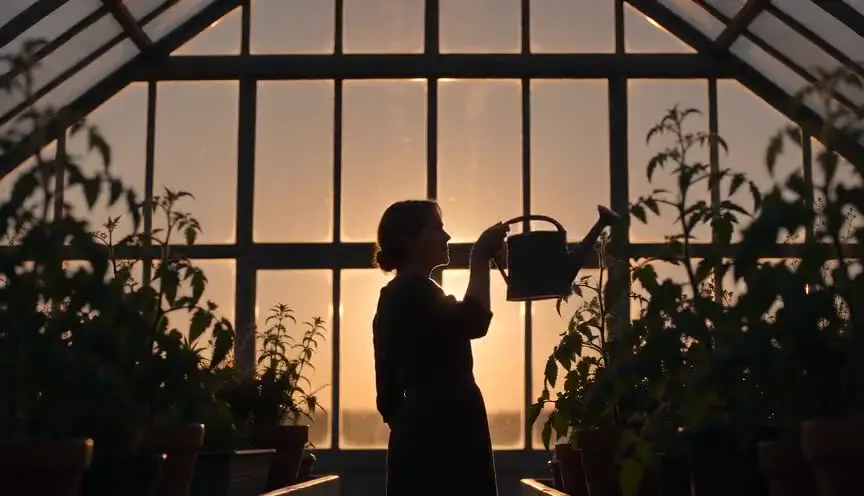
When the sun sits right on the horizon, turn the actors against it and expose for the sky. Moving from warm faces to silhouettes marks the last minutes of the light.
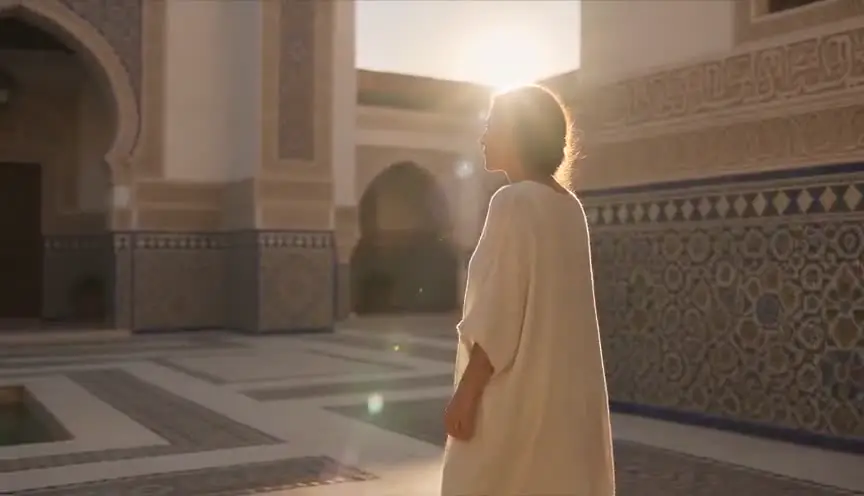
Low sun straight into the lens gives natural flares that heighten the warm, nostalgic mood. Let one flare cross the frame at a key moment rather than in every shot.
Reference
Watch it in
Days of Heaven (1978)
Malick and Nestor Almendros filmed the prairie in the brief glow around sunset, wrapping workers and wheat in low amber light.
The Tree of Life (2011)
Emmanuel Lubezki uses late natural light in the childhood yards and streets, giving the family a warm, soft, low glow.
The Revenant (2015)
Many exteriors were timed for short golden windows in natural light, giving Glass's ordeal a vast, luminous wilderness.
ScreenWeaver
Set it up in ScreenWeaver
Write SUNSET or a similar time in your scene headings, and ScreenWeaver breaks the screenplay down into shots automatically. Open each shot, set framing, angle, movement and duration, and note "golden hour" with the direction of the sun. Characters and the location carry from shot to shot, so you can group everything that needs the same window. The AI previsualization helps you decide which shots truly need the golden light and which can be shot earlier.
Start writing for freeThe prompt behind this clip
This is the exact prompt that rendered the clip at the top of the page. Keep the description of the camera and the light, change the subject and the place.
Golden hour lighting on a desert highway at dusk, a lone motorcyclist in worn leather gear standing beside their bike near the road shoulder, low sun sitting just above the horizon behind them casting a warm amber backlight and a long stretched shadow across the asphalt. Camera holds a static wide shot as heat haze shimmers faintly over the road, dust drifts through the low side light, and the sky graduates from orange to a soft violet at the edges. No text.
Common mistakes
- 01
Too many shots for the window
Golden hour lasts minutes, not hours. Planning a whole scene in it leads to rushed takes and mismatched light. Choose the few shots that need it.
- 02
Front light into squinting eyes
Low sun straight in the actors' faces makes them squint and flattens them. Put the sun behind or at three-quarter back, and bounce light into the faces.
- 03
Overcooked in the grade
Pushing orange in post to fake golden hour looks artificial. The real thing is in the angle and softness of the light, not only in its color.