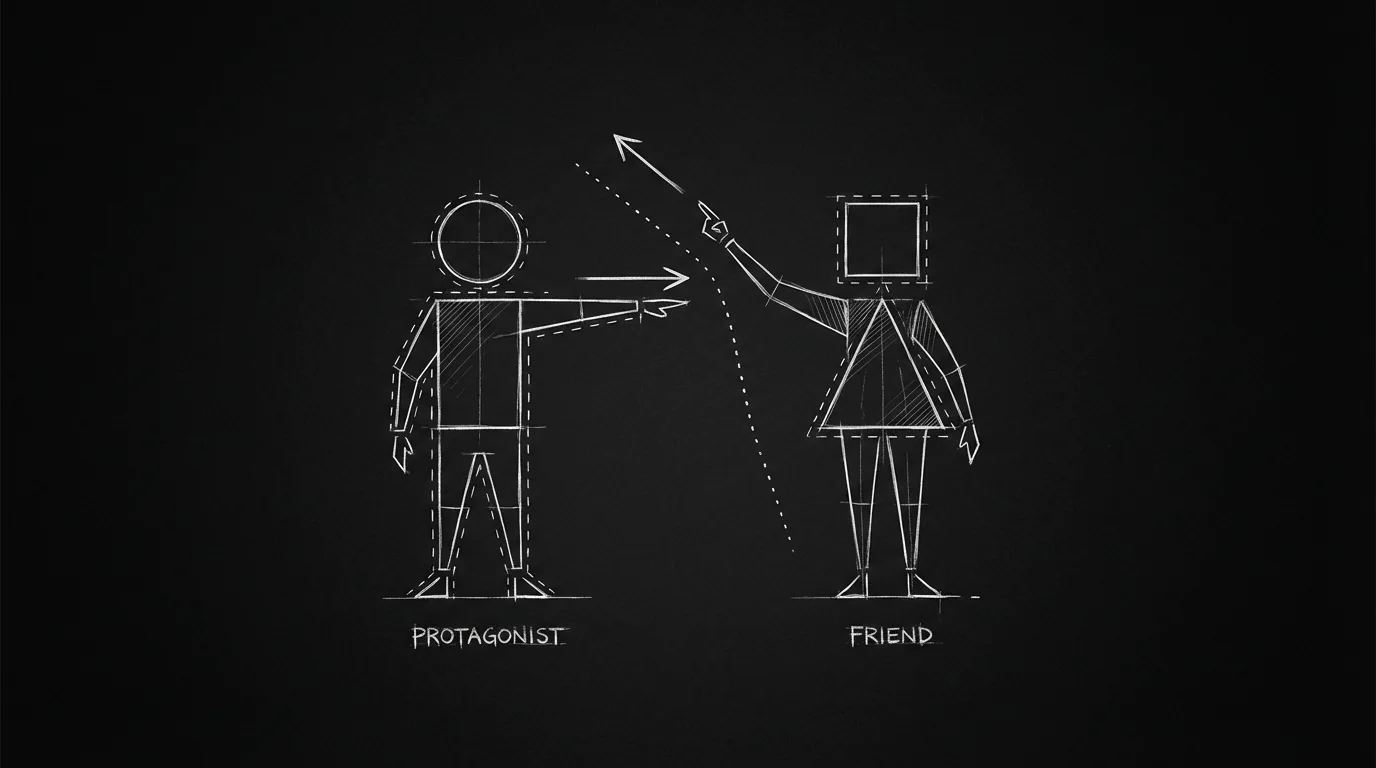
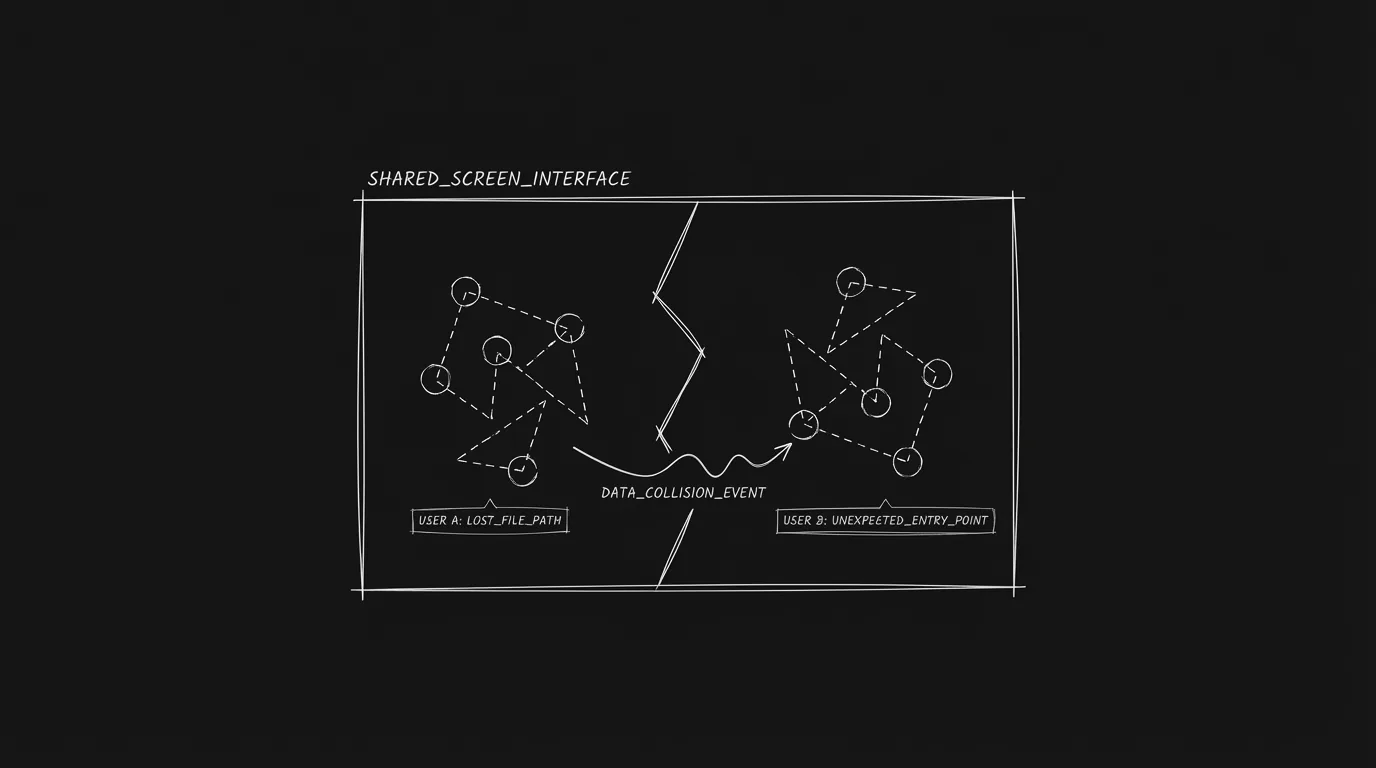
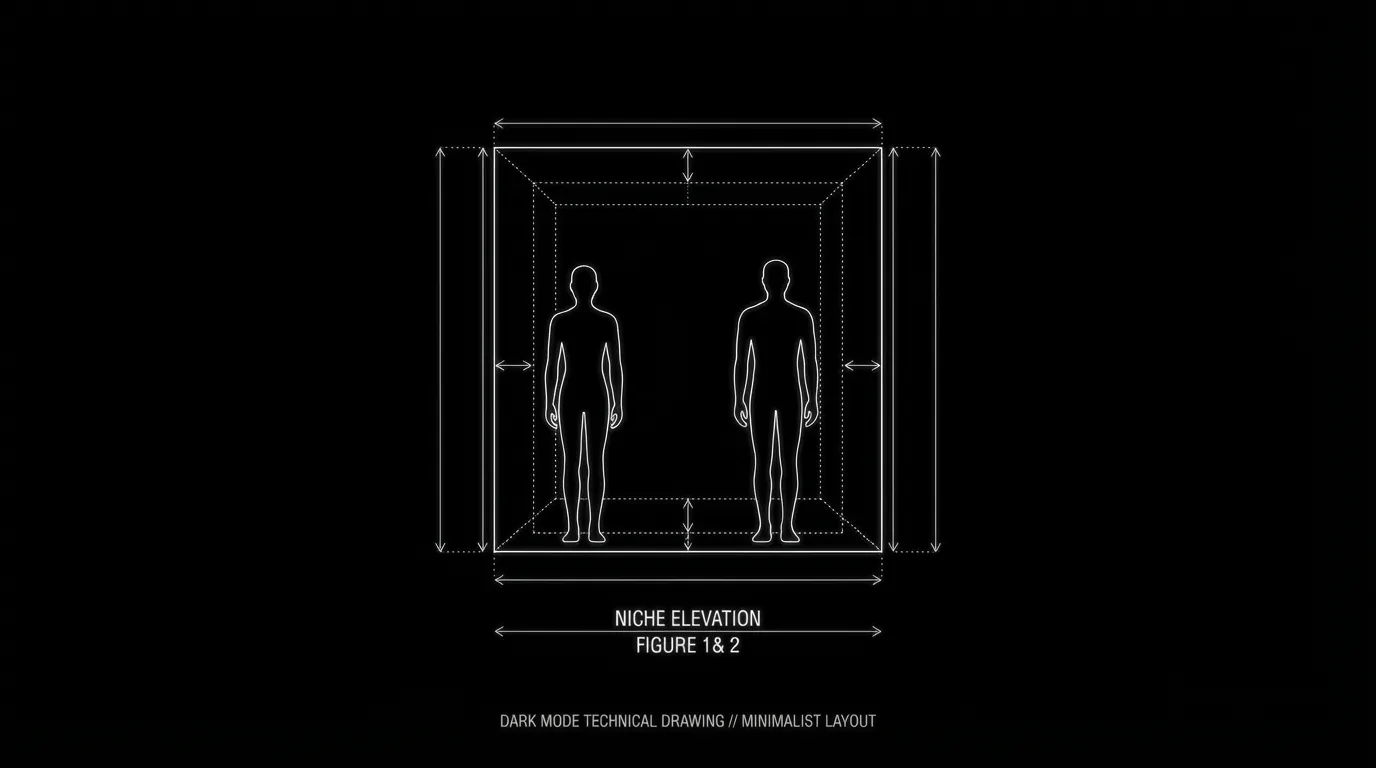
Hero image prompt: Dark mode technical sketch. Solid black background, thin white hand-drawn lines. Two figures, suggested by simple shapes, meeting in an unexpected context: not a café, but a niche space (e.g. a line, a wrong door, a shared screen). Minimalist, high-contrast. No hearts, no cliché.
They bump into each other. Coffee spills. They’re both reaching for the same book. If you’ve seen it once, you’ve seen it a hundred times. The meet cute is the rom-com’s opening move. It has to do two things: create a memorable first encounter and signal that these two will matter to each other. In 2026, the same old setups feel like reheated leftovers. The fix isn’t to abandon the meet cute. It’s to put it in a context that feels specific, to the characters, to the world, to the way people actually meet now. Here’s how to write a meet cute that doesn’t rely on the spilled coffee.
The best meet cutes don’t feel like “we need to get these two in a room.” They feel like “this could only happen to these two people in this world.” Specificity is the escape from cliché.
Think about Notting Hill. He runs a travel bookshop. She’s a movie star. She walks into his shop. The meet cute is tied to his job and her fame. It’s not generic. It’s their meeting. Or You’ve Got Mail: they meet online (in the era of AOL) and in person as rivals. The meet cute has two layers, the anonymous connection and the hostile face-to-face. The audience gets to see both. That’s the level of specificity that makes a meet cute stick. In 2026, the meet cute might happen on an app, at a niche event, in a professional collision, or in a moment of shared inconvenience. The key is that the context is something we haven’t seen a thousand times. Our guide on the modern rom-com structure and its seven beats sets the meet cute as beat two, the moment that has to hook us into the possibility of the couple. What follows here is how to make that moment fresh.
Why the Old Meet Cutes Feel Tired
The bookstore. The café. The elevator. The wrong number. They work in the sense that they get two people in the same place. They don’t work in the sense that they don’t tell us anything about the characters. When the meet cute could happen to anyone, it doesn’t feel like it’s happening to them. The audience has also seen these beats so many times that they don’t register. There’s no surprise. No “oh, I’ve never thought of that.” So the writer’s job is to find a context that’s both plausible and specific. Where would this character be? What would this character be doing? What would make the meeting memorable for them? When you answer those questions, you’re already ahead of the coffee spill.
The other trap is the meet cute that’s too clever. They’re both secret agents. They’re both after the same artifact. It’s so high-concept that it doesn’t feel like a romance. The meet cute should create chemistry or friction, and it should feel like it could happen in the world you’ve built. So the sweet spot is: specific enough to be memorable, grounded enough to feel real. Niche, not gimmicky.
Using Niches and Specific Worlds
Professional collision. They’re in the same industry. They’re on opposite sides of a deal, a case, a project. They meet because their jobs put them in the same room. The meet cute isn’t random. It’s structural. And it sets up the complication: how do you fall for someone you’re supposed to be competing with (or defending against)? The profession gives you dialogue, stakes, and a reason for them to keep crossing paths. For more on building conflict that feels real, see rivalry and professional conflict.
Shared inconvenience. They’re stuck. Same delayed flight. Same broken elevator. Same line at the DMV. The inconvenience is the excuse. The meet cute is what they do with the time. Do they argue? Do they help each other? Do they discover they have something in common? The inconvenience has to be specific, not “we’re both in an airport” but “we’re both on the last flight out and it’s overbooked and we’re fighting for the same seat.” Specificity creates the moment.
Digital first, real second (or the reverse). They’ve been talking online. Then they meet in person, and one of them doesn’t know it’s the other. Or they meet in person first, then realize they’ve been matching on an app for weeks. The double layer, digital and physical, is native to how people meet now. The meet cute can be the moment when the two worlds collide. For how to put apps and messages on the page, see formatting text messages and three methods.
Niche interest or space. They meet at something specific. A signing for a book they both love. A class. A support group. A very particular kind of party. The niche does two things: it makes the meeting feel earned (they’re both there for a reason) and it tells us something about the characters. They’re the kind of people who go to this thing. When the meet cute is tied to a shared interest or a shared space that’s not generic, we learn who they are at the same time we see them meet.
| Approach | What It Does | Risk |
|---|---|---|
| Professional collision | Puts them in the same room; sets up ongoing conflict | Can feel like “enemies to lovers” template, differentiate with specifics |
| Shared inconvenience | Gives them time together; creates friction or alliance | Inconvenience can feel contrived, make it specific |
| Digital + real | Uses how people meet now; double layer of recognition | Can feel gimmicky if the app is just a device |
| Niche interest/space | Tells us who they are; makes meeting feel earned | Niche has to matter to the rest of the story |
Try it free
Try Screenweaver for free on your script
It is free. Import your existing project, get a clearer view of your outline, and regain control of your story structure in minutes.
Start FreeRelatable Scenario: The Script That Opens in a Café
You’ve got a meet cute. They’re both reaching for the last croissant. Or they’re at adjacent tables and one of them is on a bad first date and the other is eavesdropping. It’s fine. It’s also forgettable. So you ask: what does the protagonist do? Where would they actually be? Maybe they’re a baker and the love interest is the health inspector who’s about to shut them down. Maybe they’re both at a terrible open mic and one of them is the only one who laughed. Maybe they’re at a memorial for someone they both knew, and they didn’t know the other was connected. The meet cute moves from generic space to specific situation. Now we have a moment that’s theirs. Our piece on chemistry on the page applies once they’ve met: how do you write the spark so it reads as real?
Relatable Scenario: The Meet Cute That’s Too Weird
You’ve avoided the café. They meet at a midnight screening of a cult film, and they’re both dressed as the same character. It’s memorable. It’s also so specific that the rest of the script can’t live up to it. Or the meet cute has nothing to do with the rest of the story. Fix: connect the meet cute to the complication or the theme. Why does this meeting matter for what comes next? If they meet at the cult screening, maybe one of them is hiding their fandom from their family. Maybe the other is the reason they have to choose. The meet cute should set up something. When it does, it doesn’t feel like a one-off gag. It feels like the first beat of the relationship.
The Trench Warfare Section: What Beginners Get Wrong
Relying on accident only. They bump. They spill. They drop. The meet cute is purely physical. There’s no character in it. Fix: add a choice or a trait. One of them does something that the other responds to. They’re both stubborn. They’re both kind. They’re both in a mood. The accident is the occasion; the response is the meet cute.
Making the meet cute too long. We’re ten pages in and they’re still meeting. The scene has to do its job and get out. Fix: the meet cute is one scene, maybe two. We need the moment. We need a hint of chemistry or friction. We don’t need the full first date. Save something for later. The meet cute is the hook. The rest of the first act is the setup. For pacing, see scene entry and exit, arriving late, leaving early.
Ignoring how people actually meet now. If your characters are under 40 and they meet “by chance” at a bookstore with no mention of apps or social context, it can feel dated. Fix: you don’t have to make the meet cute happen on an app. But the world can acknowledge how people meet. Maybe they’ve already seen each other’s profile. Maybe they’re both avoiding the app and that’s why they’re at this weird event. The world feels current when the options feel current.
No friction or spark. They’re nice. They’re pleasant. We don’t feel why these two would matter to each other. Fix: the meet cute has to create either chemistry or conflict. They’re drawn to each other, or they’re annoyed by each other (and we see the crack that will become attraction). Pleasant isn’t enough. We need a reason to care about the next time they meet.
Step-by-Step: Building a Fresh Meet Cute
Answer three questions. Where would the protagonist be? What would they be doing? What would make the meeting memorable for them? Then answer the same for the love interest. Where do those two answers overlap? That overlap is your meet cute. It might be a place. It might be an event. It might be a digital space that becomes physical. Once you have the context, write the moment. One of them does something. The other responds. We get a hint of who they are and why they might matter to each other. Keep it to a scene or two. Then move on. The meet cute is the door in. The rest of the script is what happens after they walk through. For the full shape of what comes next, see the modern rom-com structure.
One External Resource
For a short overview of the meet cute as a trope and its history, see Meet cute on Wikipedia. Reference only; not affiliated.
The Perspective
The meet cute isn’t dead. The generic one is. When you put the meeting in a context that’s specific to your characters and your world, the audience gets something they haven’t seen before. They also get a reason to believe that this couple is worth following. One scene. One moment. Make it theirs.
Final Step
Build your next script with Screenweaver
Move from ideas to production-ready pages faster with timeline-native writing and AI-assisted story flow.
Try Screenweaver