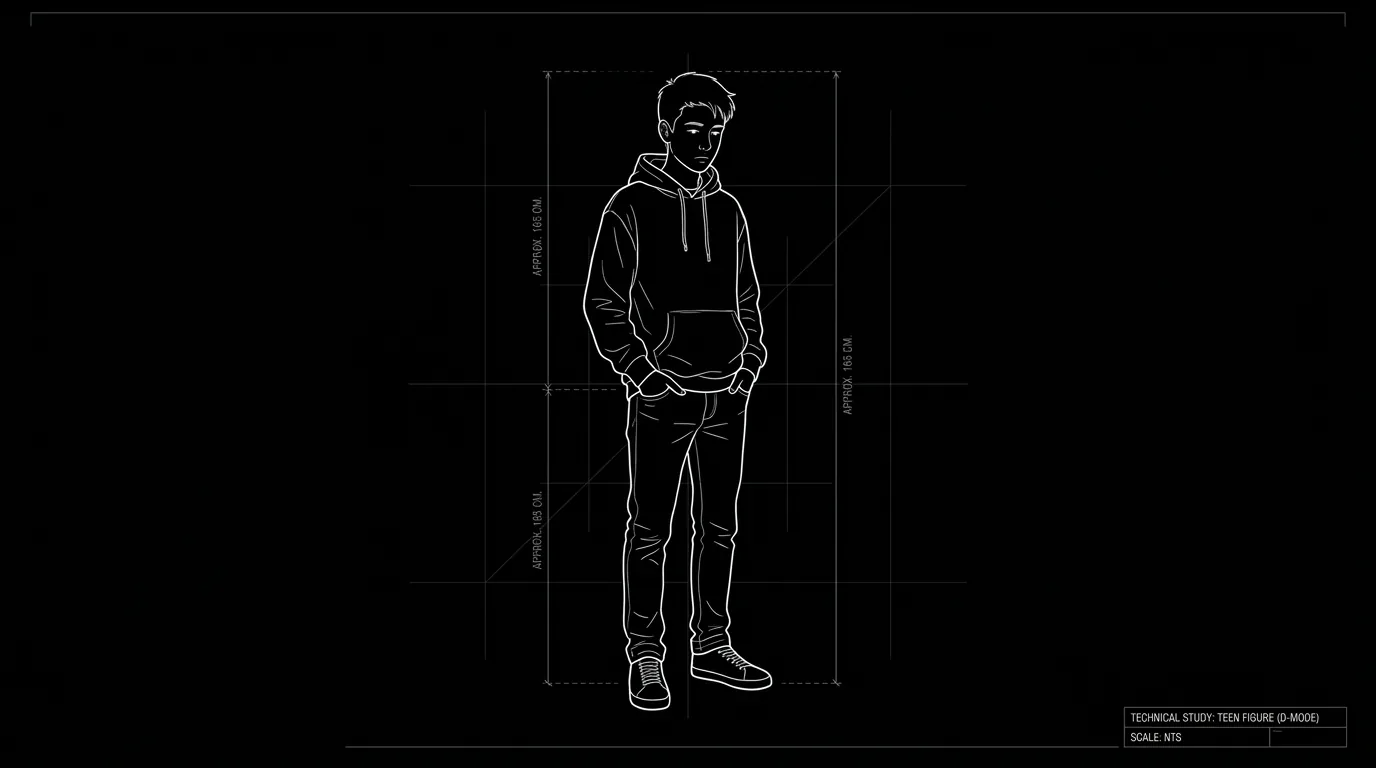

The kid speaks in full sentences. They make the joke the adult was supposed to make. They're wise beyond their years. That's the precocious trap, when young characters sound like adults in small bodies. Real kids and teens have different rhythms, different priorities, and different ways of getting things wrong. Here's how to write young characters who sound their age without making them cute or clueless.
A child or teen character should sound like they're that age, not like an adult's idea of that age.
Think about it this way. Young people don't have the same vocabulary or syntax as adults. They might be more direct or more indirect. They might fixate on one thing. They might not name their feelings, they show them. On the page, that means shorter or more fragmented sentences sometimes, different concerns (status, fairness, belonging), and reactions that don't always match the "right" adult response. Our guide on distinct voices applies: the young character's voice should be identifiable and consistent. This piece is about keeping that voice age-appropriate. For dialect and slang that can date or overwhelm, see dialect and slang.
Why the Precocious Trap Happens
Writers are adults. We default to adult logic and adult phrasing. We also want the kid to be useful to the plot, so we give them the line that explains everything or the joke that lands. The result is a mini-adult. The fix is to give the young character priorities and limitations that fit their age. What would they actually care about in this moment? What would they say, or not say? What would they get wrong? When the character has an inner logic that's consistent with their age, they feel real. For writing for actors, see writing for actors, young performers need material they can play, not material that sounds written.
Relatable Scenario: The Kid Who Has to Deliver Important Info
The plot needs the child to tell the adult something. It's tempting to have them say it clearly and fully. Fix: Let them get it wrong or tell it in their way. They might focus on the wrong detail. They might need to be asked twice. They might use words that don't quite fit. The info gets across, but the voice is young. For exposition, see exposition dump, even with a child, hide the info in character.
Relatable Scenario: The Teen Who Is Supposed to Be Relatable
They're angry. They're in love. They're confused. If they articulate it like a therapist, we don't believe it. Fix: Let them be inarticulate sometimes. They might deflect with a joke. They might say one word when they feel ten. They might act out instead of saying it. The emotion is there; the expression is limited. That's the age. For subtext, see subtext, teens often say one thing and mean another.
Relatable Scenario: The Child as Comic Relief
The kid says the funny thing. Once is fine. If every line is a punchline, they're a device. Fix: Give the child stakes. Something they want. Something they're scared of. Let the humor come from situation or reaction, not from the kid being a joke machine. For comedy structure, see rule of three.
The Trench Warfare Section: What Beginners Get Wrong
Giving them the adult's vocabulary. They use words and sentence structures that no kid their age would use. Fix: Simplify or shift. Shorter sentences. Different concerns. Or let them use a word wrong, they've heard it, they're trying it. For voice, see distinct voices.
Making them wise. They summarize the theme. They give the adult the lesson. Fix: Let them be wrong or partial. They might have a piece of the truth. They don't have to have the whole thing. For character arcs, see character arcs, a child can have an arc that's smaller in scope but real.
No stakes for the young character. They're there to make the adult look good or to deliver a line. Fix: Give them something they want. Something they're afraid of. When the young character has a goal, we care. For want vs need, see want vs need.
Writing them as cute or clueless. They're either adorable or they don't get it. Fix: Give them competence in some area and limitation in others. They might be sharp about one thing and blind about another. That's human. For foils, see character foils, the child can foil the adult in specific ways.
Ignoring the actor. The lines are unplayable for a young performer. Fix: Keep dialogue playable. Not too long. Not too abstract. For writing for actors, see writing for actors.
Try it free
Try Screenweaver for free on your script
It is free. Import your existing project, get a clearer view of your outline, and regain control of your story structure in minutes.
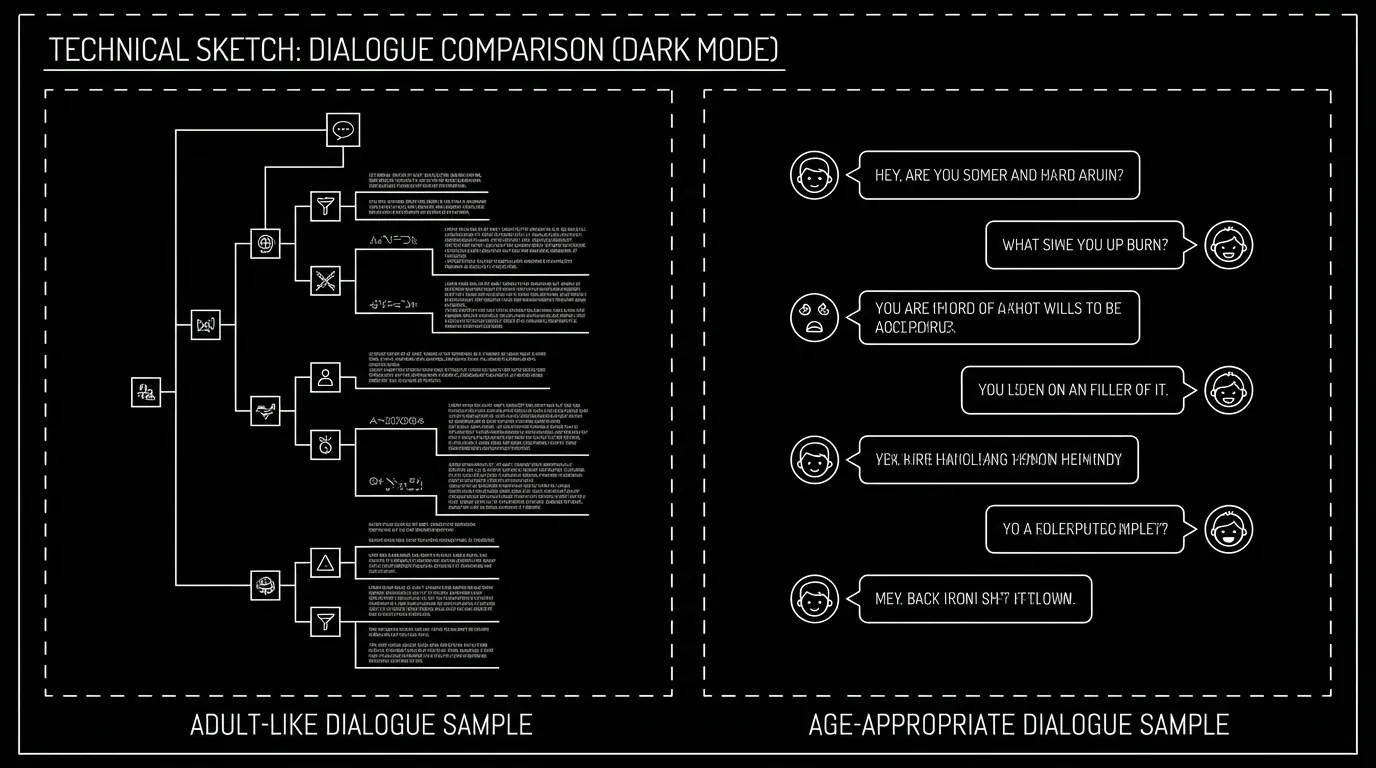
Start FreePrecocious vs. Age-Appropriate
| Precocious (avoid) | Age-appropriate (aim for) |
|---|---|
| Full, elegant sentences | Shorter or fragmented; occasional wrong word |
| Articulates theme | Shows feeling; might not name it |
| Always useful to plot | Has own want; sometimes gets in the way |
| Wise or cute | Competent in some ways, limited in others |
| Sounds like adult | Sounds like their age |
Step-by-Step: Writing a Young Character Who Sounds Their Age
First: Decide their age and what that means for vocabulary and focus. Second: Give them something they want, a goal, a fear, a need. Third: Write their dialogue with shorter or simpler structures than the adults. Let them get a word wrong or fixate on one detail. Fourth: Let them be wrong or inarticulate about emotion sometimes. They show; they don't always say. Fifth: Read it out loud. Would a kid that age say it? If it sounds like you, rewrite. For voice consistency, see voice consistency. For dialect, see dialect and slang.
The Perspective
Avoid the precocious trap by giving young characters age-appropriate voice (vocabulary, syntax, focus), stakes of their own, and limitations, they get things wrong, they're inarticulate sometimes, they're not wise. When they sound like their age and have something to want, they feel real. So simplify. Give them a goal. And let them be wrong.
Final Step
Build your next script with Screenweaver
Move from ideas to production-ready pages faster with timeline-native writing and AI-assisted story flow.
Try Screenweaver