Medium shotBody language and face together
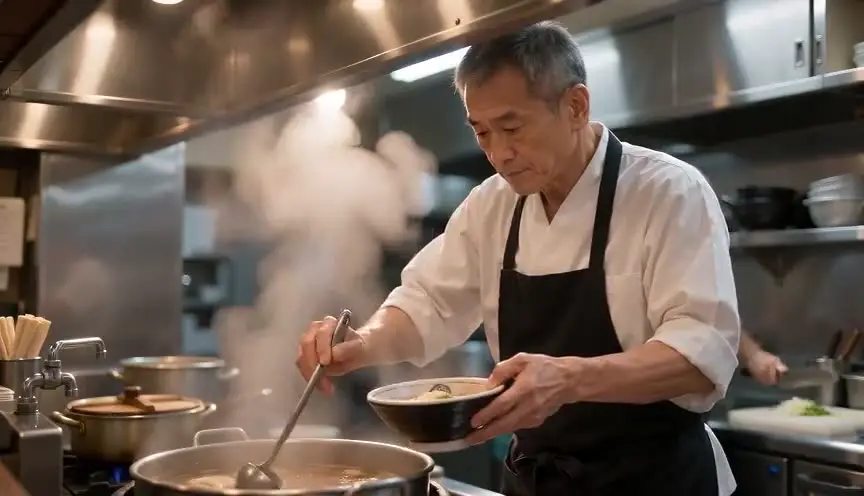
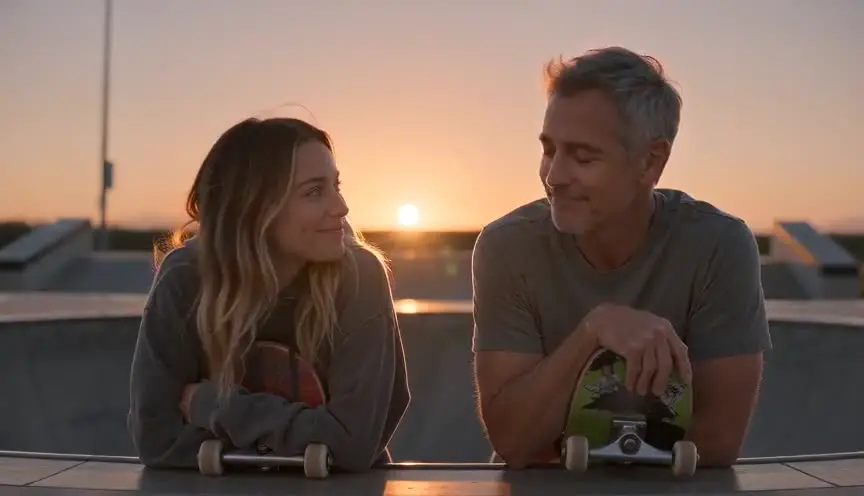
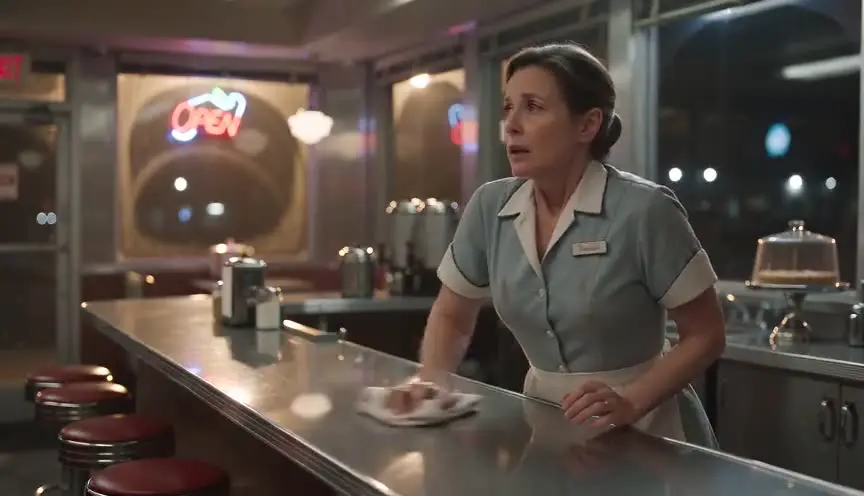
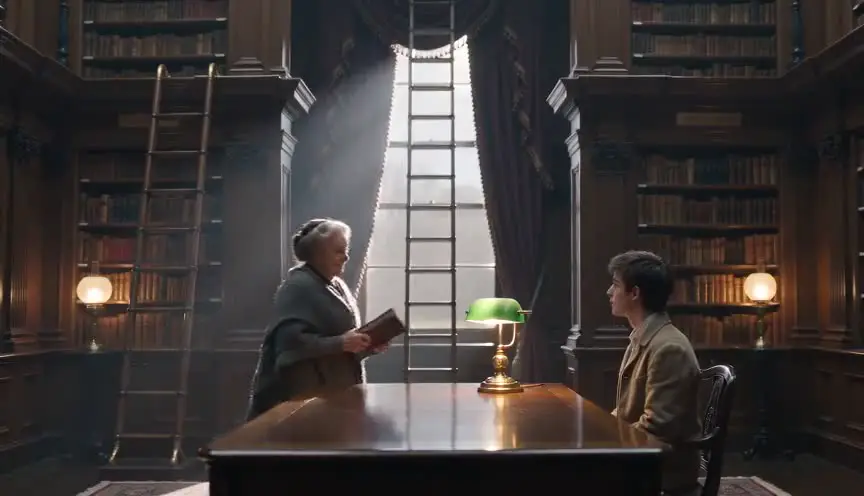
A medium shot frames a character from roughly the waist up. The audience sees the face, the hands and the posture at once, the way we see someone across a table.
Also calledMid shotMSWaist shot
Shot sizes
Why it works on screen
It is the most natural distance in cinema: close enough to read expressions, far enough to see how people use their hands, lean in, shrug or turn away. It serves conversation, humor, work, rituals and relationships in motion. Comedy lives here because timing is physical. So does everyday drama, where the way a man sets down a razor says as much as his words. A scene earns it whenever action and emotion share the frame, when the audience needs to watch what characters do with their bodies while they talk, and when the director wants to hold a moment without pushing it.
The shot list line
- Size
- Medium shot
- Angle
- Eye level
- Movement
- Static or a gentle drift
- Lens
- 35mm to 50mm
- Duration
- 5 to 15 s
Frame at the waist, keep the hands inside the frame when they carry action, and leave looking room in front of each character.
Screenplay
On the page
The medium shot is a directing choice, so it has no place in a spec script. The writer suggests it by writing physical behavior alongside dialogue: a character buttering toast, folding laundry, cutting hair while they talk. Those details give the director a reason to frame hands and faces together. Write them concisely, in the rhythm of the lines. The shot size itself goes in the shot list.
INT. FRESH CUTS BARBERSHOP - ATLANTA - SATURDAY
Clippers buzz. A game plays on a silent TV.
MARCUS BELL (58) edges a customer's hairline with total focus.
In the chair, his son DEVON (27) watches him in the mirror.
DEVON
I got the job in Denver.
Marcus switches off the clippers. Sets them down. Picks up the razor instead.
MARCUS
Hold still.
Storyboard
In the storyboard
Draw the character from the waist up, with room for the hands and any prop they use. Place the eyes around the upper third line. If two people share the frame, show their relative position and the distance between them. Add small arrows for gestures such as a hand reaching or a head turning. Note the lens, the angle and the action the shot covers.
Pairs well with
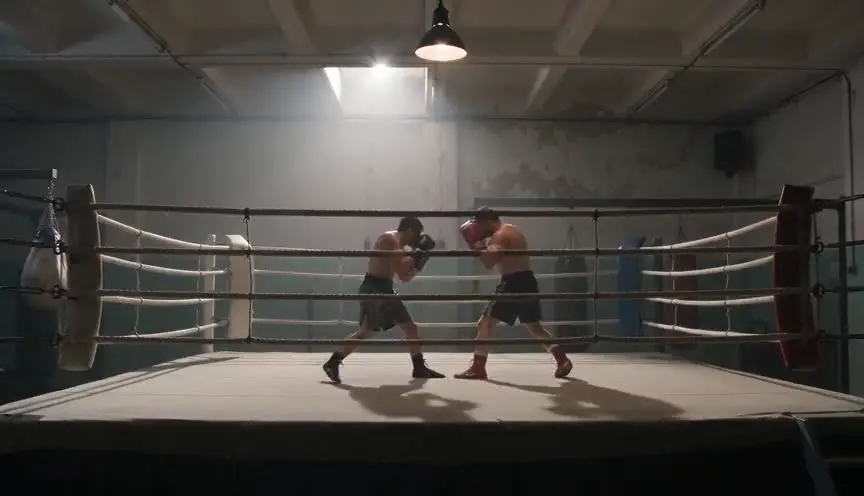
A wide shot before the medium shot sets up the place and the positions of the characters. The medium shot then brings the audience into the conversation at a comfortable distance.
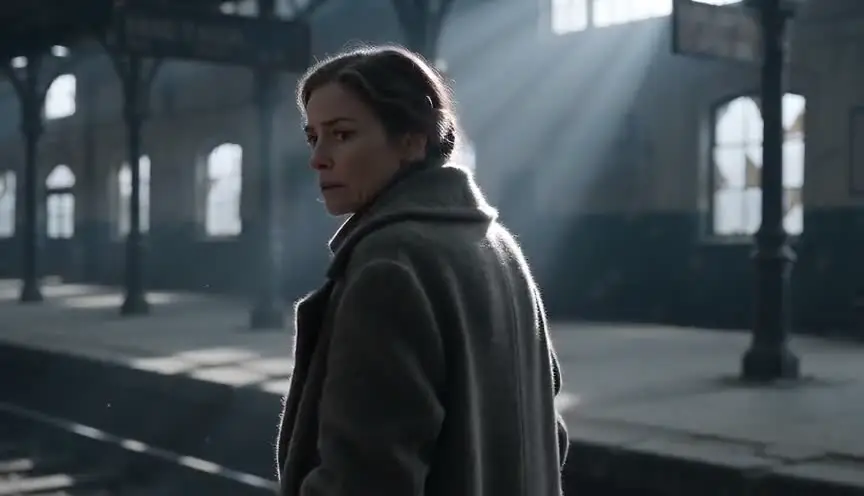
Stepping from a medium shot to a medium close-up tightens the scene as the conversation becomes personal, without jumping to the intensity of a full close-up.
Reference
Watch it in
Pulp Fiction (1994)
Many of the talky scenes in diners and cars sit at waist height, letting hand movements and slouched postures shape the comedy.
Before Sunrise (1995)
The long conversations while walking through Vienna are mostly framed mid-body, so gestures and body language carry the slow growth of intimacy.
ScreenWeaver
Set it up in ScreenWeaver
Write the characters' actions alongside their lines, and ScreenWeaver breaks the scene down into shots automatically. Open the shot, set the framing to medium shot at eye level, keep the movement static or gentle, and give it a duration that fits the beat. The characters, their props and the location carry from shot to shot, so the razor and the chair stay in place when you cut closer. Check the balance of the scene in the AI previsualization.
Start writing for freeThe prompt behind this clip
This is the exact prompt that rendered the clip at the top of the page. Keep the description of the camera and the light, change the subject and the place.
Medium shot, waist-up framing, of a woman in her fifties leaning on a stone parapet on a Parisian rooftop at golden hour, wind gently moving her loose hair and coat. Camera is static at eye level, 50mm lens, moderate depth of field with the city rooftops and a distant Eiffel Tower silhouette softly blurred behind her. She turns her head slowly toward camera and rests her forearms on the ledge, hands loosely clasped. No text.
Common mistakes
- 01
Cutting off the action
If a character is using their hands but the frame cuts them out, the audience loses half the scene. Adjust the framing so the gesture stays visible.
- 02
Dead space above
Too much headroom makes the character look small and lost. Place the eyes near the upper third line and reduce empty space above the head.
- 03
A whole scene at one size
A long scene held only in medium shots feels flat. Use wider and tighter framings to shape the emotional arc. Plan where the scene starts wide, where it moves to medium, and which beat deserves a tighter frame, so the framing follows the emotion.