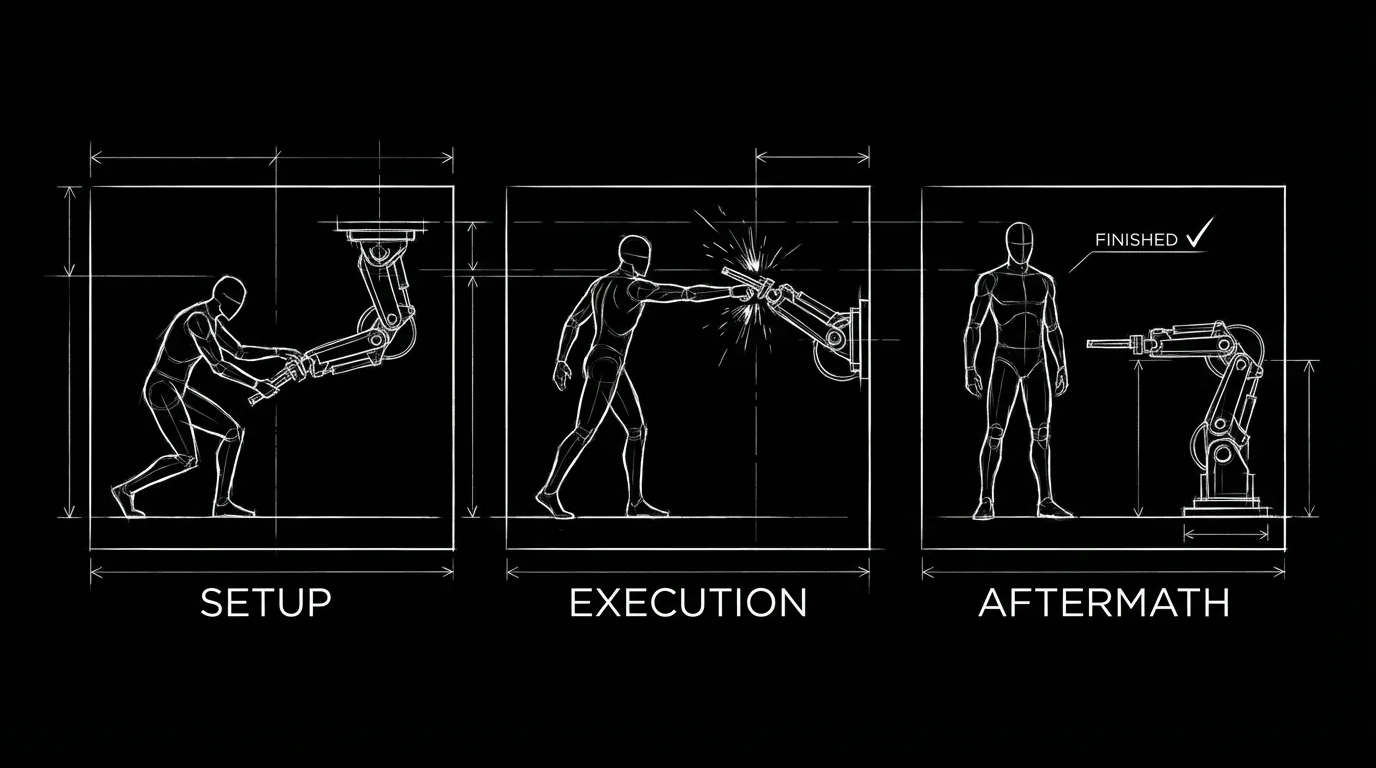
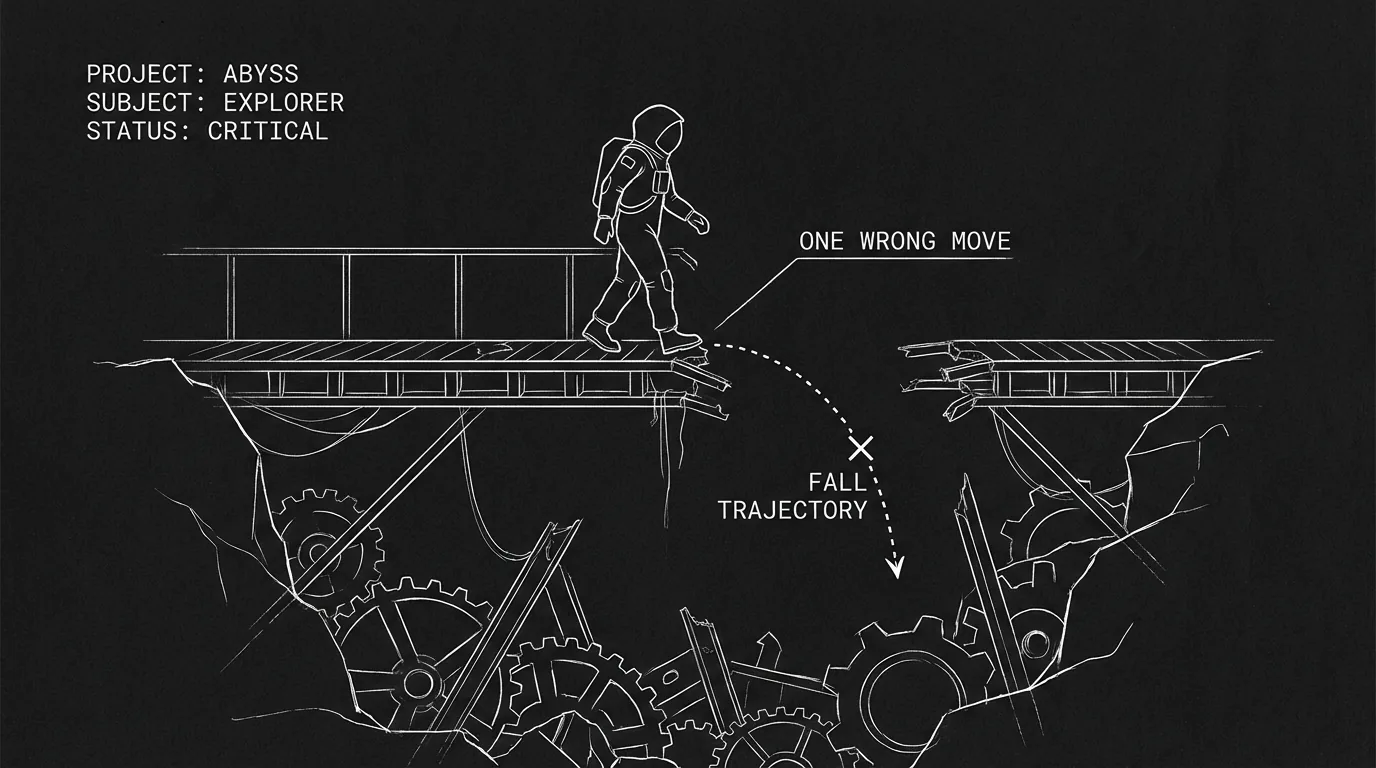
Hero image prompt: Dark mode technical sketch. Solid black background, thin white hand-drawn lines. A single figure in three poses, setup, execution, aftermath, like a storyboard. Minimalist, high-contrast. No cartoon style.
On the page, a pratfall is a few lines. On the screen, it’s timing, posture, and the exact moment the body gives way. The writer’s job isn’t to choreograph the stunt. It’s to give the reader (and the performer and the director) enough to see the beat: what’s set up, what goes wrong, and what the reaction is. Physical comedy that reads well on the page is physical comedy that’s clear in structure. Here’s how to format slapstick so it lands in the script and leaves room for the rest of the team to make it land on the set.
The reader has to see the joke in their head. That means: one clear setup, one clear payoff, and a reaction. If any of those is vague, the comedy won’t read, and it won’t translate to the floor.
Think about Buster Keaton or Jacques Tati. The gags are precise. We see the environment. We see the expectation. We see the subversion. On the page, you’re not writing every gesture. You’re writing the shape. “He steps onto the rug. The rug slides. He doesn’t.” That’s enough. The reader gets the beat. The performer gets the idea. The director gets the rhythm. The detail that makes it funny might be in the performance, the look, the pause, but the structure has to be on the page. Our guide on writing for actors and avoiding directing from the page applies: you’re giving the beat, not micromanaging the take. But for physical comedy, the beat has to be specific enough that the physical cause and effect are clear.
Why Physical Comedy Is Hard on the Page
Dialogue is easy to read. We hear it. Physical comedy is visual. We have to see it. So the writer has to translate the visual into action lines that create a picture. The trap is either overwriting (every micro-move, which reads like stage directions and kills the pace) or underwriting (“he slips” with no setup, so the reader doesn’t see why it’s funny). The sweet spot is: we know the setup, we know the environment, we know what goes wrong, and we know the reaction. Four beats. Clear. Then the performer can fill in the rest.
The other trap is tone. Physical comedy on the page can read as flat. “He falls.” So what? The comedy is often in the contrast, the character’s dignity, the buildup, the wrong thing at the wrong moment. So the action lines have to set up that contrast. The character is trying to look cool. The character is in a hurry. The character doesn’t see the banana peel. When the reader knows the intention and the obstacle, the fall lands. When they don’t, it’s just a fall. For more on pacing and clarity in action, see micro-pacing and white space, physical comedy needs room to breathe on the page so the reader can see each beat.
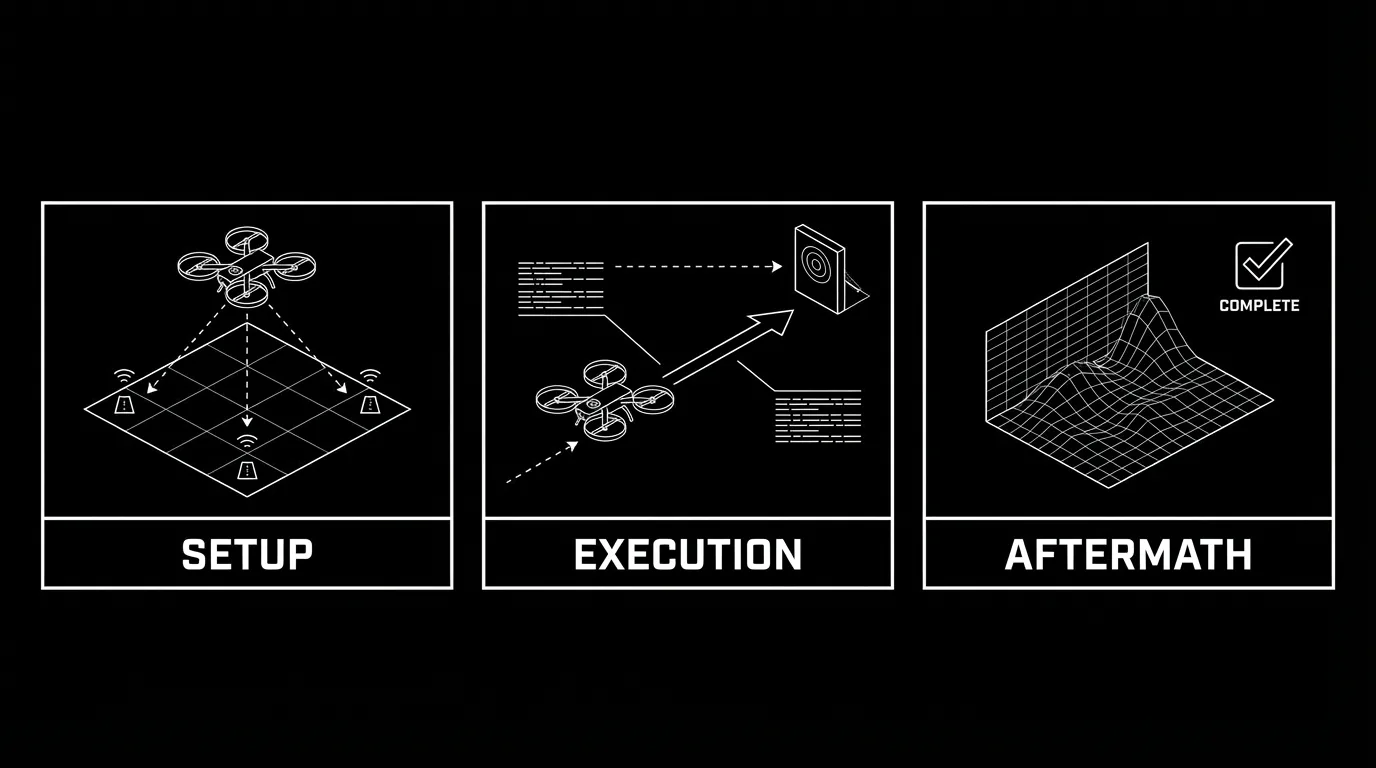
The Structure: Setup, Execution, Aftermath
Setup. What does the character want to do? What’s the environment? What’s the thing that will go wrong (visible or not)? The setup doesn’t have to be long. One or two lines. “Marcus crosses the lobby, eyes on his phone. The wet floor sign is behind him.” We have the intention (he’s not looking), we have the hazard. The reader is ahead of the character. That’s the setup.
Execution. What actually happens? The slip. The spill. The door that hits. Be specific enough that we see it. “His foot hits the wet patch. Both legs go out. He lands on his back, phone in the air.” We don’t need every frame. We need the cause and the effect. The reader should be able to picture it. For more on writing action that reads clearly, see formatting fight scenes, the same principle of cause-and-effect clarity applies to slapstick.
Aftermath. What’s the reaction? The character’s. The others in the scene. The beat of silence before someone laughs. The aftermath is where the comedy often lands, the look, the line, the attempt to pretend it didn’t happen. So don’t skip it. One or two lines. “He lies there. The phone lands on his chest. The security guard doesn’t look up.” The aftermath completes the gag. Without it, the reader is left mid-fall.
| Beat | What to Write |
|---|---|
| Setup | Intention + environment + (optional) hazard we see |
| Execution | What goes wrong; cause and effect; clear and brief |
| Aftermath | Reaction; the beat that lets the gag land |
Relatable Scenario: The Script Where the Fall Is a Single Line
You’ve written “He slips and falls.” The reader doesn’t see it. There’s no setup, so there’s no anticipation. There’s no aftermath, so there’s no release. So you add. Setup: he’s carrying something fragile, or he’s trying to impress someone, or he’s in a hurry. One line. Execution: what exactly happens? One foot, the other, the landing. One or two lines. Aftermath: what does he do? What do they do? One line. Now the gag has a shape. The reader can see it. The rule of three in comedy applies: setup, reinforce (or subvert), payoff. Physical comedy is the same structure in action.
Try it free
Try Screenweaver for free on your script
It is free. Import your existing project, get a clearer view of your outline, and regain control of your story structure in minutes.
Start FreeRelatable Scenario: The Script Where the Choreography Is a Paragraph
You’ve written every step. “He takes a step. His left foot goes forward. His right foot catches on the edge of the rug. His weight shifts. His arms windmill. He falls left. His elbow hits the table. The vase tips.” The reader is exhausted. The performer will ignore half of it. Fix: compress. One sentence for the setup. One or two for the execution. One for the aftermath. The key detail might be the vase, so the setup is “the vase is on the table,” the execution is “he goes down, takes the table with him,” the aftermath is “he lies in the wreckage.” Let the rest be implied. Clarity over choreography.
The Trench Warfare Section: What Beginners Get Wrong
No setup. The character falls and we don’t know why we’re supposed to care. Fix: give us the intention or the context. What were they trying to do? What’s at stake (dignity, a job, a date)? One line of setup makes the fall pay off.
No aftermath. The fall happens and we cut away. The gag has no landing. Fix: add a beat. The character’s reaction. The silence. The line. The aftermath is where the audience laughs. Give it space on the page.
Mixing verbal and physical in the same moment. He’s falling and delivering a punchline. The reader can’t track both. Fix: let the physical beat complete. Then the line. Or the line before the fall. One thing at a time so the reader can see it.
Over-directing. “He falls in a way that’s both painful and hilarious.” That’s the performer’s job. Fix: write what happens. “He falls. The coffee goes everywhere. He sits up. ‘I’m okay.’ He’s not.” The tone comes from the structure and the reaction, not from adjectives telling us how to feel.
Step-by-Step: Writing a Single Slapstick Beat
Choose the gag. What goes wrong? Then write the setup in one or two lines. Where are they? What do they want? What’s the hazard (if we see it)? Then write the execution. What exactly happens? Cause and effect. Clear. Brief. Then write the aftermath. What’s the reaction? One or two lines. Read it back. Can someone picture it? If yes, stop. If no, add the missing piece, usually the setup or the aftermath. For more on keeping action readable, see writing car chases and clarity in chaos, the same need for clarity applies to any physical sequence.
One External Resource
For a short overview of slapstick and physical comedy in film, see Slapstick on Wikipedia. Reference only; not affiliated.
The Perspective
Physical comedy on the page is structure. Setup, execution, aftermath. Give the reader enough to see the beat. Give the performer and director enough to build on. Don’t overwrite the choreography. Don’t leave the gag as a single vague line. When the shape is clear, the comedy reads, and it can translate to the screen.
Final Step
Build your next script with Screenweaver
Move from ideas to production-ready pages faster with timeline-native writing and AI-assisted story flow.
Try Screenweaver