Whip panSnapping attention from one thing to another
A whip pan swings the camera sideways so fast that the image smears into streaks of motion blur, then stops sharply on a new subject. The audience feels a jolt of speed, as if their head had snapped around at a sound.
Also calledSwish panFlick panZip pan
Camera movement
Why it works on screen
Use it when energy and connection matter more than calm. Inside a scene, a whip pan links a question and its answer, a joke and the person who hears it, a threat and its target, without the pause of a cut. Between scenes, it can hide an edit, carrying the audience from one place or time to another in a blur. It serves comedy timing, action beats, arguments and fast montage. A scene earns it when the rhythm is already quick and the film has a lively, visible camera. Dropped into a slow scene, it feels like a hiccup.
The shot list line
- Size
- Medium or close-up on both ends
- Angle
- Eye level
- Movement
- Very fast pan left or right, with blur between subjects
- Lens
- 35mm to 50mm prime
- Duration
- Swing under 0.5 s, shot 2 to 5 s
Open the shutter angle or keep it standard at 180 degrees so the swing blurs cleanly, and land hard on the end frame without overshooting.
Screenplay
On the page
Spec scripts should not name the whip pan. You can suggest the snap with rhythm: a line of dialogue, then an instant reaction on its own line, or a sudden sound that makes someone turn. If the whip pan is a transition between scenes, a screenwriter can occasionally write "WHIP PAN TO:", but most readers prefer a plain cut. Keep it in the shot list, with the start subject, end subject and the direction of the swing.
INT. NEIGHBORHOOD MILONGA, SAN TELMO, BUENOS AIRES - NIGHT
A bandoneon wheezes. Couples turn under a mirror ball missing half its tiles.
On the floor, VALERIA SOSA (40s, red shoes) stops dancing mid-step.
VALERIA
You told her.
Across the room, at the bar, OMAR BRITOS (60s, pencil moustache) chokes on his wine.
The band keeps playing.
Storyboard
In the storyboard
Draw the start frame and the end frame side by side. Between them, draw thick horizontal speed lines, like a smear, and an arrow showing the direction of the swing, labeled WHIP PAN. Note the subject on each end and the dialogue or sound that triggers the move. If the whip pan hides a cut between two scenes, mark CUT INSIDE BLUR on the speed lines.
Pairs well with
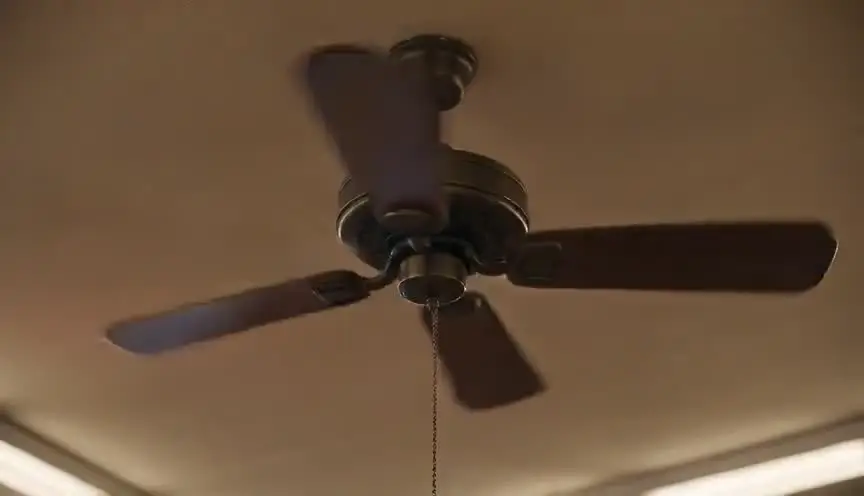
Two whip pans in the same direction, one ending a scene and one starting the next, can be joined inside the blur. The match hides the cut and makes the transition feel like one gesture.
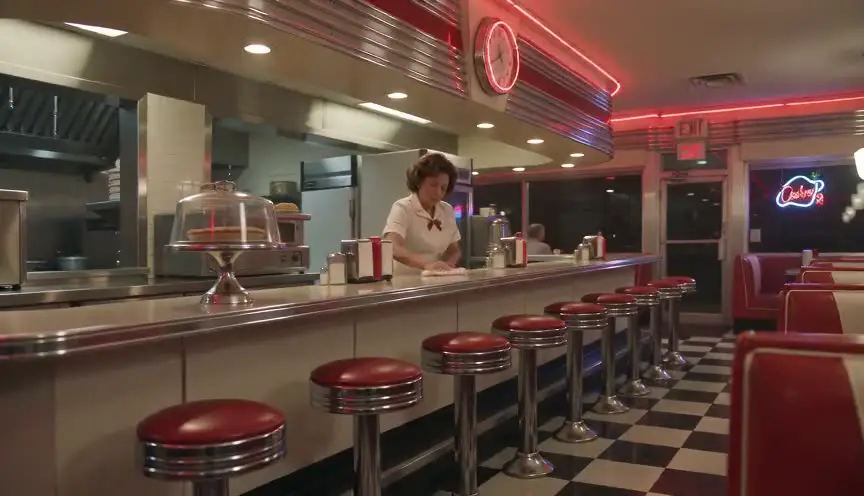
Stopping a whip pan and immediately crash zooming into a face adds a second hit. Save this double punch for a big comic reveal or a shocking entrance.
Reference
Watch it in
Kill Bill: Vol. 1 (2003)
Tarantino flicks the camera back and forth between opponents in a nod to seventies kung fu films, giving the fights a rough, pounding rhythm.
Shaun of the Dead (2004)
Edgar Wright swings the camera between everyday chores and places in quick montages, so brushing teeth or opening a door becomes a visual gag.
ScreenWeaver
Set it up in ScreenWeaver
Write the quick exchange in your screenplay, and ScreenWeaver breaks the scene down into shots automatically. Open the shot, set the framing on the first subject, choose a whip pan as the movement and keep the duration short. Characters and the location carry from shot to shot, so the person you land on keeps their look and position in the room. Play it with the neighboring shots in the AI previsualization to check the timing of the snap.
Start writing for freeThe prompt behind this clip
This is the exact prompt that rendered the clip at the top of the page. Keep the description of the camera and the light, change the subject and the place.
Whip pan across a rainforest river at midday. The camera starts locked on a weathered wooden canoe drifting near the near bank, holds steady and sharp for half a second, then snaps horizontally to the right in a fast blur, streaking the green canopy and brown water into motion lines, and lands sharply on a barefoot guide standing on a moss covered rock pointing downstream. The whip takes under half a second, the frame is crisp before and after the blur, water keeps flowing at normal speed, no camera shake once it settles. No text.
Common mistakes
- 01
Overshooting the end frame
A whip pan that swings past the subject and drifts back loses its snap. Mark the end position on the head and rehearse until the operator lands cleanly.
- 02
Too little blur
If the swing is not fast enough, the image judders instead of smearing, and the move looks like a mistake. Commit to real speed, or slow it into a normal pan.
- 03
Style without a reason
A whip pan in a still, emotional scene breaks the mood. Use it where the tone already has energy or humor, or where it hides a transition on purpose.