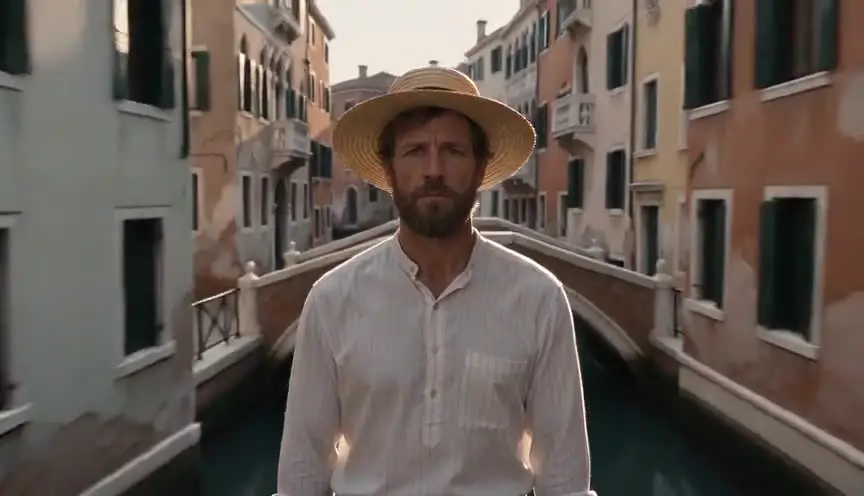
Reaction shotThe scene lands on a face
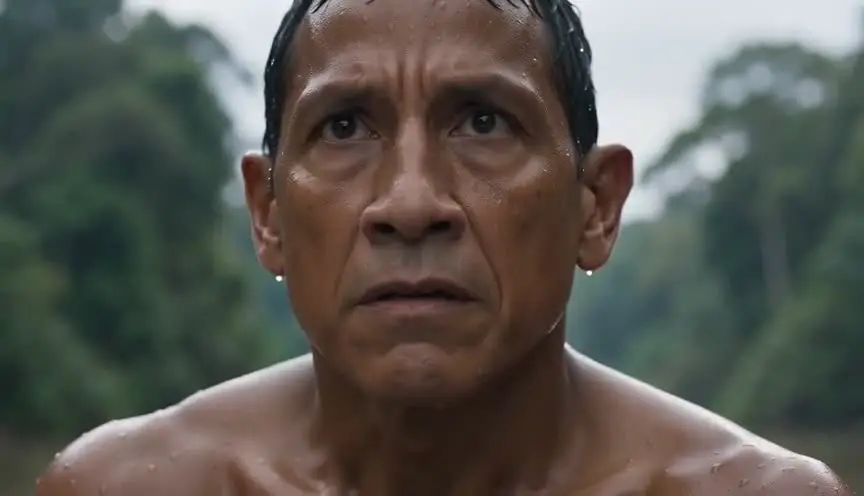
A reaction shot shows a character responding to something they have just seen or heard, instead of showing the action itself. The audience learns what an event means by watching it arrive on someone's face.
Also calledReaction cutCutting to the listenerReaction close-up
Shot sizes
Why it works on screen
Often the reaction is more important than the action. A son announces news at a family party, and the story is in his father's face. A verdict is read, and we watch the mother rather than the judge. Reaction shots serve empathy, comedy, suspense and dramatic irony. They tell the audience how to feel, or show the gap between what one character hopes and another feels. A scene earns a strong reaction shot at its turning point: a revelation, a joke, a threat, a gift. Holding on a listener while another character talks can be the most powerful choice in the scene.
The shot list line
- Size
- Close-up or medium close-up
- Angle
- Eye level, matched to the eyeline of the speaker
- Movement
- Static
- Lens
- 85mm
- Duration
- 2 to 6 s
Shoot the listener's reactions during the full scene, not only on their lines, so the editor can choose the exact moment the face changes.
Screenplay
On the page
Screenwriters can write reactions directly, because they are behavior: a face falling, a laugh stopping, someone looking away. Give the reaction its own action line right after the line of dialogue or event that triggers it. That tells the director whose face matters. Avoid writing REACTION SHOT; describe the reaction itself. Which character gets the shot, the size and the timing of the cut are decided in the shot list and in the edit.
INT. MĀNGERE COMMUNITY HALL - AUCKLAND - NIGHT
Balloons, a banner: HAPPY 60TH SEFO. Forty relatives with paper plates.
SIONE TUILAGI (24) taps a glass and stands.
SIONE
I didn't get into law school. I'm going to be a chef.
Silence. Every head turns to the table of honor.
SEFO TUILAGI (60) stops chewing. Sets down his fork. Looks at his son for a long time.
Then he raises his plate. Empty. Holds it out.
Storyboard
In the storyboard
Draw the reaction panel next to the panel that triggers it, with an arrow between them. Write the line or event that causes the reaction under the first panel. In the reaction panel, sketch the key change in expression and mark the eyeline toward the speaker. Note the size, the lens and how long to hold. If the reaction evolves, draw two frames: before and after.
Pairs well with

An insert shows the audience a clue, and the reaction shot that follows tells them whether a character has noticed it too.
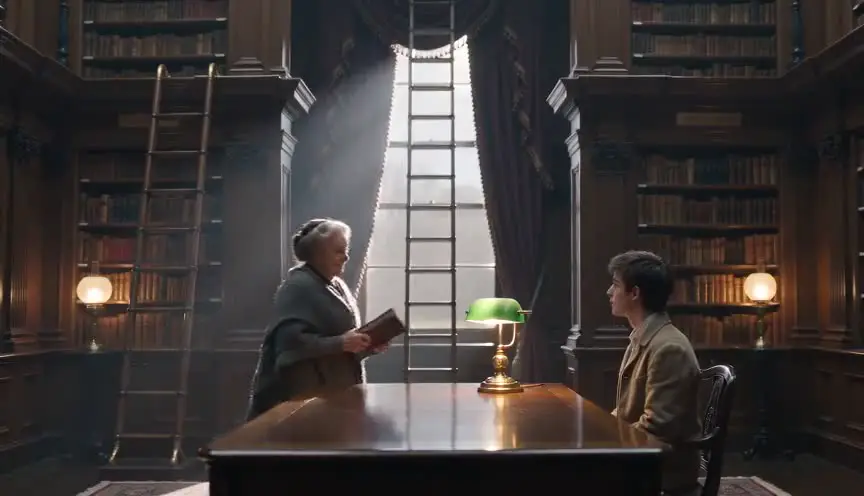
The master shows the whole room when the news drops, then the reaction shot isolates the one person whose response carries the scene.
Reference
Watch it in
Jaws (1975)
The warping beach shot is also a reaction: the frame closes on Brody's face at the instant he understands the shark has attacked again.
The Silence of the Lambs (1991)
In the prison visits, tight shots of Clarice between Lecter's lines let the audience watch her fear, sharpness and resolve take shape.
ScreenWeaver
Set it up in ScreenWeaver
Write the reaction as its own action line after the trigger, and ScreenWeaver breaks it down into a separate shot automatically. Open the reaction, set a close-up or medium close-up at eye level, keep it static and give it a few seconds. The character carries from shot to shot, so the face, costume and light match the master. Use the AI previsualization to try how long to hold before cutting back.
Start writing for freeThe prompt behind this clip
This is the exact prompt that rendered the clip at the top of the page. Keep the description of the camera and the light, change the subject and the place.
Reaction shot, medium close-up on a young woman's face at an arcade cabinet, 50mm lens, camera locked off and level with her eyes. Colored neon light from the game screen flickers across her skin in pink and cyan. Her eyes widen, her mouth opens slightly, then curls into a disbelieving grin as she registers a high score flashing off-screen to her left. Background stays soft and dark, out of focus arcade machines glowing behind her. No text.
Common mistakes
- 01
Reactions cut too short
Cutting away before the face changes loses the moment. Let the reaction breathe, even a second longer than feels comfortable. The pause is where the audience feels with the character.
- 02
The wrong face
The reaction should go to the character whose feelings matter most at that moment, not always to the obvious one. Decide whose scene it is.
- 03
Mugging for the camera
Big, obvious reactions feel false in close-up. Ask actors for smaller, more precise responses; the camera magnifies them. A slight change in the eyes often says more than a gasp or a hand to the mouth.