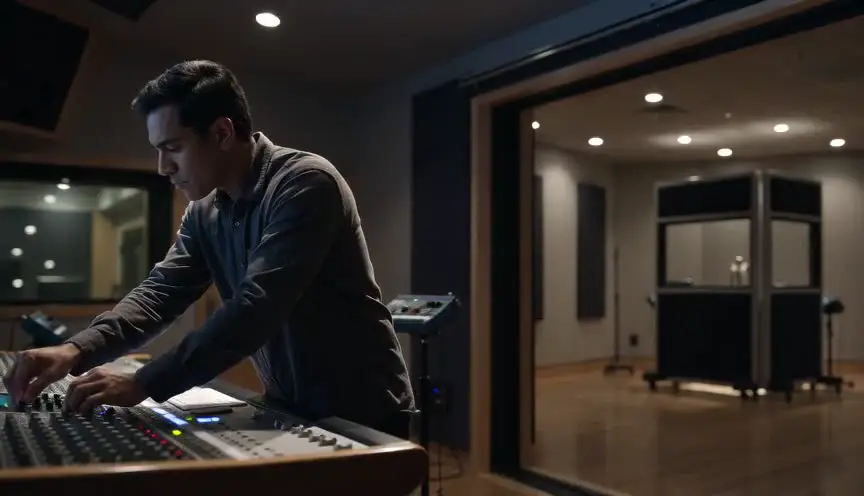
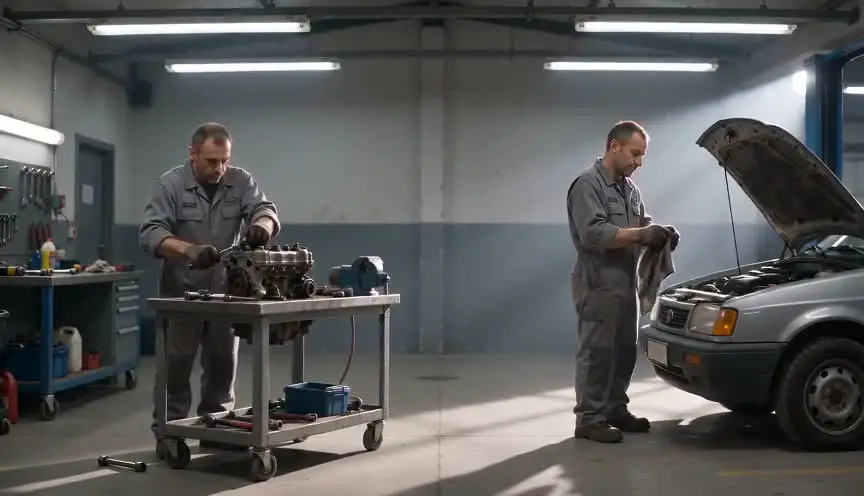
Over-the-shoulder shotTwo people, one shared space
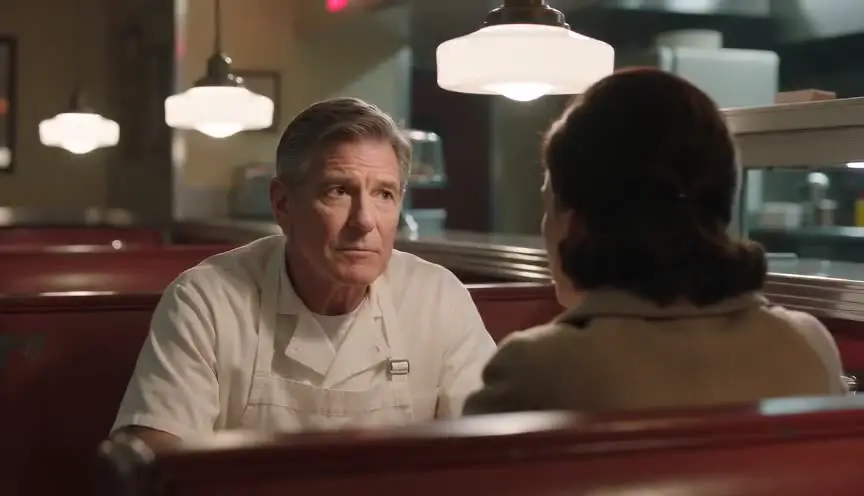
An over-the-shoulder shot frames one character past the shoulder and head of another, who stays soft in the foreground. The audience sits right behind the listener, so every line lands as if it were spoken to them.
Also calledOTS shotOTSOver-shoulder framingDirty single
Shot sizes
Why it works on screen
It is the workhorse of conversation, and it serves any beat where two people are measuring each other: a negotiation, an interrogation, a first date, a confession across a kitchen table. The foreground shoulder keeps the listener physically present, so the scene never splits into two separate people talking into empty air. It builds tension through proximity and makes power visible, since the character who fills more of the frame seems to own the room. A scene earns tight OTS coverage when the relationship itself is the subject, and when the audience needs to feel both sides at once.
The shot list line
- Size
- Medium close-up, foreground shoulder in frame
- Angle
- Eye level, slightly off the line between the actors
- Movement
- Static, or a slow drift toward the speaker
- Lens
- 50mm to 85mm
- Duration
- 4 to 10 s per setup
Keep the foreground shoulder on the same side of frame for each character across the scene and never cross the 180-degree line between them.
Screenplay
On the page
Do not write "over the shoulder" in a spec script. A dialogue scene already tells the director that coverage will alternate, and OTS is the default. What you control on the page is distance and orientation: who sits across from whom, who leans in, who refuses to turn around. Those details decide whether the coverage is loose or tight. Put the specific setups, the shoulder side and the lens in the shot list, where the camera team and the script supervisor track the eyeline.
INT. RECORD STALL, COVERED MARKET - LATE AFTERNOON
Crates of vinyl under a single hanging bulb.
BABAJIDE ADEYEMI (60s) stands behind his counter, arms crossed.
NKECHI OBI (20s) holds a sleeve out across the counter, close enough that he has to look at it.
He does not take it.
NKECHI
My mother sold you this. I want to know what you paid her.
Babajide finally looks up, at her and not at the record.
Storyboard
In the storyboard
Draw the foreground character as a dark mass filling one lower corner of the panel: back of the head, the curve of the shoulder, maybe an ear. Place the speaking character in the opposite third, looking toward that shoulder. Mark the eyeline with a short arrow. Draw the reverse panel next to it with the shoulders swapped, and add a small overhead diagram with both actors, the 180-degree line and the two camera positions. Note which character is in focus.
Pairs well with
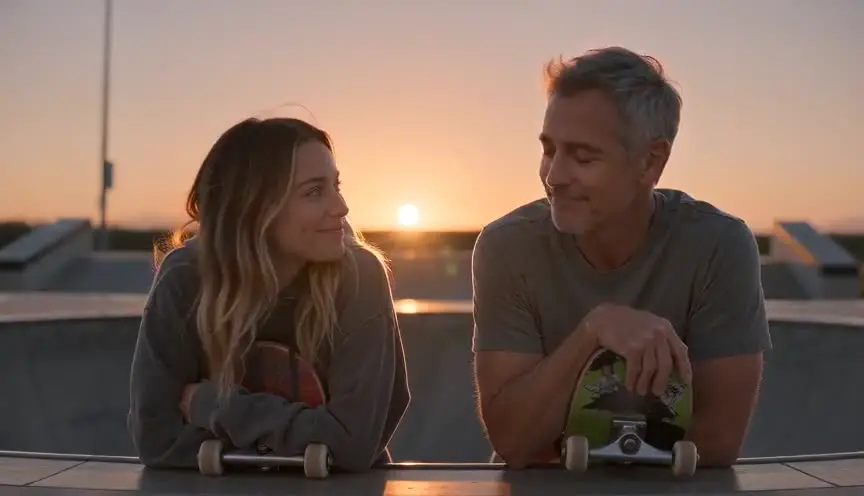
Open the conversation with a two-shot that shows where both people stand and how far apart they are. The OTS setups that follow then feel anchored in a space the audience already understands.
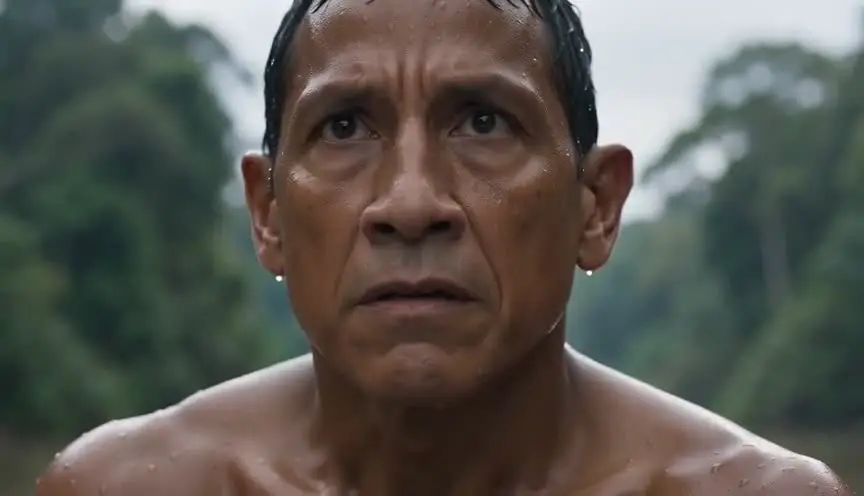
When the conversation reaches its turning point, leave the shoulder behind and cut to a clean close-up. Losing the other person from the frame isolates the character at the moment the stakes become personal.
Reference
Watch it in
The Godfather (1972)
Coppola frames the talks in Vito's office and the restaurant scene in close over-the-shoulder setups, so every negotiation feels like a physical standoff.
Heat (1995)
Michael Mann alternates over-the-shoulder coverage across the diner table, and each cut lets us feel one man reading the other.
ScreenWeaver
Set it up in ScreenWeaver
Write the conversation with clear blocking in the action lines, and ScreenWeaver breaks the scene down into shots automatically. For each line that needs coverage, open the shot and set the framing to a medium close-up over the listener's shoulder, the angle at eye level and the movement to static, with a duration that fits the line. Both characters and the location carry from shot to shot, so the reverse keeps the same room. Run the AI previsualization to check the eyelines match before you lock the shot list.
Start writing for freeThe prompt behind this clip
This is the exact prompt that rendered the clip at the top of the page. Keep the description of the camera and the light, change the subject and the place.
Over-the-shoulder shot at a fishing harbor at dawn: the camera is positioned close behind a middle-aged man's left shoulder and the back of his head fills the lower left of the frame, soft and slightly out of focus, an 85mm lens holding shallow depth of field. In the middle distance, in sharp focus, a young woman in a rain jacket stands on the dock facing him, gesturing toward the moored fishing boats as pale gray light and low mist sit over the water. The camera holds almost still, drifting a few centimeters forward, gulls crossing behind her in soft focus. No text.
Common mistakes
- 01
Crossing the line
If the camera jumps to the other side of the axis between the two actors, both seem to look the same way and the audience loses the geography. Plan the 180-degree line before the first setup.
- 02
Shoulder that swallows the frame
A foreground shoulder that covers half the image hides the speaker's face and reads as a mistake. Keep it to a clear corner, soft and dark, so it frames the speaker instead of competing.
- 03
Mismatched sizes
When one character gets a tight OTS and the other a loose one without a reason, the cuts feel uneven. Match lens and distance on both sides, unless the imbalance is a deliberate statement about power.