
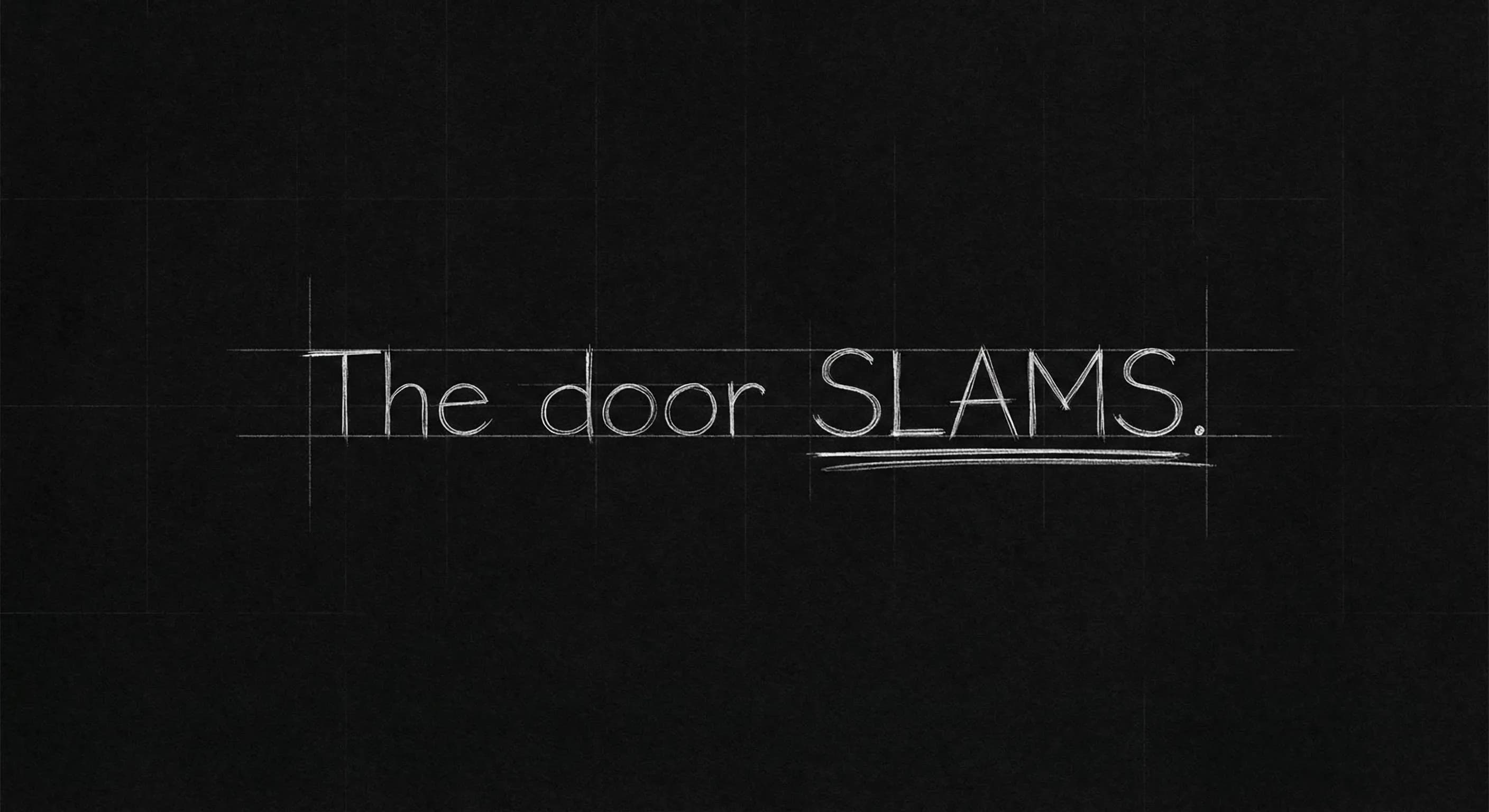
A door slams. The reader hears it. You didn't write "door slams." You wrote "The door SLAMS." Or you wrote "She closes the door behind her" and left the sound implied. The difference is tiny on the page. On screen it's the difference between a moment that lands and one that disappears. Sound in a screenplay is a negotiation. Too much and you're directing the mix. Too little and you're leaving money on the table. The reader,and eventually the sound designer,needs to know what matters. Your job is to tell them without cluttering the read.
Most writers underuse sound. They focus on what we see. They forget that half of the experience is what we hear. A script that only describes visuals reads flat. One that weaves in the right sounds at the right moments reads like a movie. The trick is knowing which sounds to name and how to put them on the page.
Why Sound Belongs in the Script
Sound does story work. It can establish place (rain on the roof, traffic outside). It can signal threat (footsteps, a engine cutting out). It can underline emotion (silence after an argument, the hum of a fridge at 3 a.m.). If you don't indicate it, the sound designer will invent something,or nothing will be specified and the moment will feel generic. When you write the sound, you're not just describing the world. You're directing attention. You're saying "this is what we hear, and it matters."
The script isn't a sound mix. You're not listing every ambient noise. You're highlighting the sounds that carry meaning. The creak of a floorboard when the character is supposed to be alone. The dial tone after a hang-up. The absence of sound when we expect it. Those choices are narrative. They belong to the writer.
The best sound design in a script is invisible until you notice it,then you can't unhear it.
Conventions: How to Put Sound on the Page
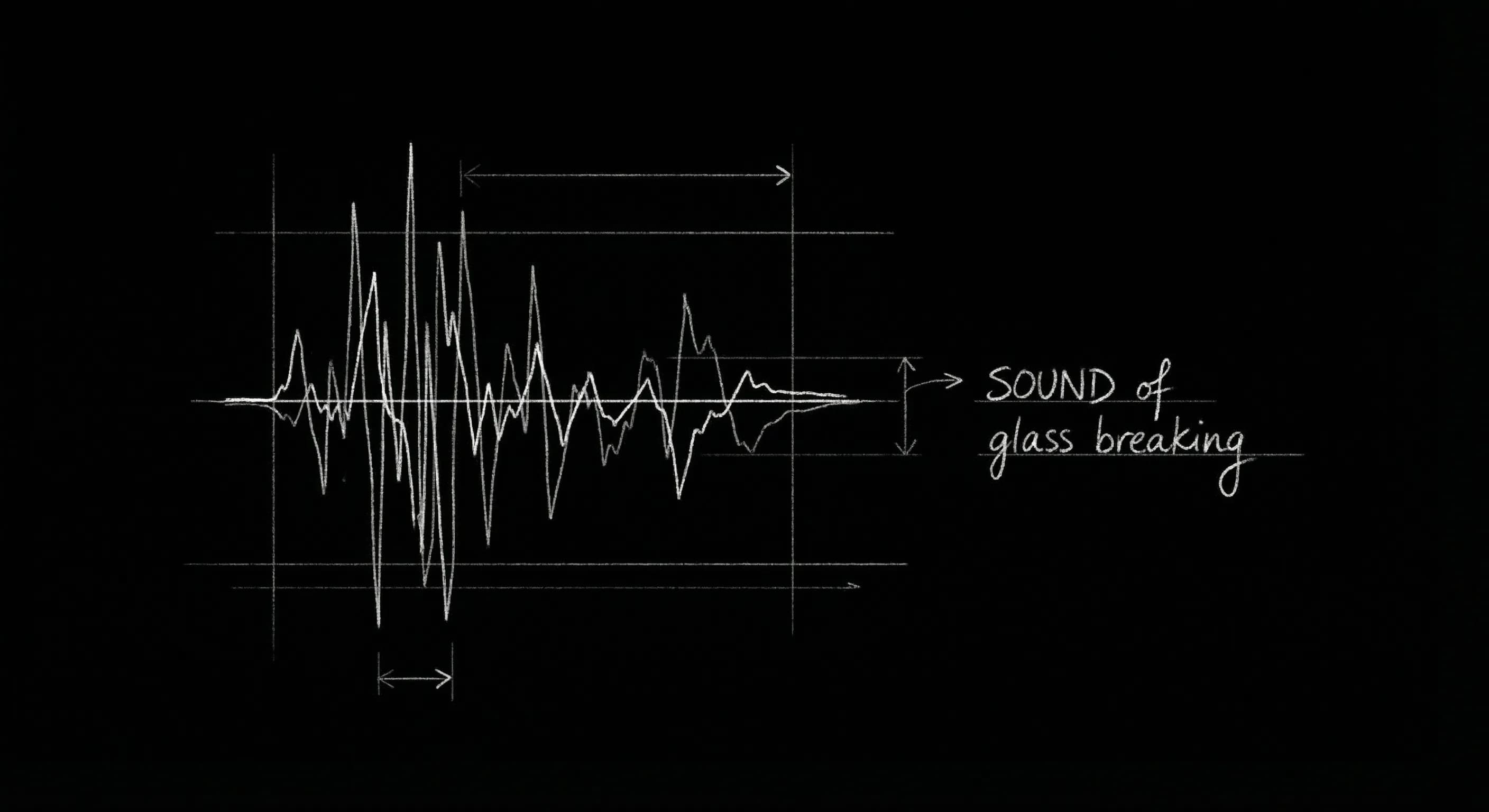
Industry custom: sound effects are often written in CAPS when they're important. "The door SLAMS." "Glass SHATTERS." "A car ENGINE CRANKS, fails." The caps say "this is a sound moment." Not every noise needs caps. "She walks across the gravel" might be enough; we hear the gravel. But when the sound is a beat,when it punctuates the action or carries information,caps help the reader (and the post team) see it.
You can also use a sound cue as its own line. "SOUND of a distant siren." "The PHONE RINGS. She doesn't move." That makes the sound a distinct story beat. Use it when the sound is the event, not just the byproduct of action.
Parentheticals under dialogue are for performance, not for sound. Don't write (door slams) under a character's line unless the door slamming is part of the performance (e.g., they slam it on the way out). For ambient or offscreen sound, put it in the action block. Keep the action block in present tense. "The alarm BLARES." "Wind WHIPS the windows." Present tense. We're in the moment.
What to Include vs. What to Skip
Include sounds that advance the story or the mood. The gunshot. The baby crying in the next room. The tape recorder clicking off. The silence when the power goes out. Include sounds that are unusual or that you need for a payoff later (e.g., a specific melody, a specific engine). Include sounds that define the space,the kind of room tone, the kind of outside world.
Skip the obvious. You don't need to write "SOUND of footsteps" every time someone walks unless the footsteps are the point (e.g., someone following). Skip the wallpaper. "Birds chirp, cars pass, a dog barks",if it's just background, you can say "The sounds of a suburban morning" or leave it to sound design. Skip the mix. You're not writing "the sound of the door is balanced at -12dB with reverb." You're writing "The door SLAMS." Let the sound team do their job. Your job is to flag what matters. For more on how much detail to put in action and how to stay readable, our guide on the spec script vs. the shooting script touches on the same principle: give the reader and the production what they need, nothing more.
Relatable Scenario: The Break-In
Your character is alone at night. Someone is trying to get in. You want tension. So you write the visuals: she freezes, she looks at the door. You also write the sounds. "A key SCRAPES in the lock." "The doorknob RATTLES." "Silence. Then the SCRAPE of a window being forced." The reader hears the scene. The sound designer knows what to build. You didn't write "tense music" or "heartbeat." You wrote the sounds of the threat. That's enough. The rest is post.
Relatable Scenario: The Phone Call Aftermath
Two people hang up. We're with one of them. You want the weight of the conversation to sit in the room. So you don't cut away. You write: "She holds the phone. A beat. The dial TONE kicks in. She lowers the phone. The tone continues, tinny, until she ends the call. Silence." The dial tone is a sound effect. You named it. Now it's a story beat,the emptiness after the voice is gone. Without it, the moment might be written as "She hangs up and sits there." Weaker. The sound does the work.
What Beginners Get Wrong (The Trench Warfare Section)
Overwriting the mix. "The sound of the door slamming echoes through the hallway, reverb tail about two seconds, while the distant traffic provides a low bed." That's a note for the sound designer, not script prose. In the script, "The door SLAMS" is enough. Echo and reverb are their call.
Writing music instead of sound. "Tension builds." "The music swells." Unless you're specifying a piece of source music (radio, jukebox, character plays piano), leave score to the composer and the director. You can suggest tone: "The room is dead silent." "The only sound is the hum of the fridge." That's sound design. "Ominous music" is not. If you need a specific song for story reasons, name it. Otherwise, stay in sound and silence.
Forgetting silence. Silence is a sound. "Nobody speaks. The only sound is the clock." "The line goes dead. No dial tone. Just silence." When you want the audience to feel the absence of sound, say so. Otherwise the moment may get filled with ambient by default.
Inconsistent caps. If you cap important sounds, do it throughout. Don't cap "SLAMS" in one scene and write "the door slams" in the next. Consistency reads as intentional. Inconsistency reads as sloppy.
Sound that contradicts the action. "She tiptoes across the room." Then "Her heels CLACK on the floor." Fix it. If she's in heels, don't say tiptoe. If she's tiptoeing, she's in socks or barefoot. Sound and action have to match.
Try it free
Try Screenweaver for free on your script
It is free. Import your existing project, get a clearer view of your outline, and regain control of your story structure in minutes.
Start FreeThe One List You Need
- Cap key sound effects that are story beats. Leave minor ambient to implication or a single phrase.
- Use present tense: "The alarm BLARES," not "The alarm would blare."
- Specify silence when the absence of sound is the point.
- Don't direct the mix (reverb, levels). Name the sound; let post do the rest.
Step-by-Step: Adding Sound to a Scene
Read the scene. Identify one to three moments where what we hear matters as much as what we see. For each moment, write the sound in the action block. Use a verb. SLAMS, CRACKS, RINGS, FADES. If the sound is offscreen or from another room, say so: "From the next room: a DOOR SLAMS." If the sound is the punchline of the beat, give it its own line. Then read the scene again. If the sound is obvious from the action ("She slams the door",we hear it), you may not need to cap it. If the sound is the point, keep it. Cut the rest. Less is more. The reader should feel the sound, not be buried in it.
Sound as Foreshadowing or Payoff
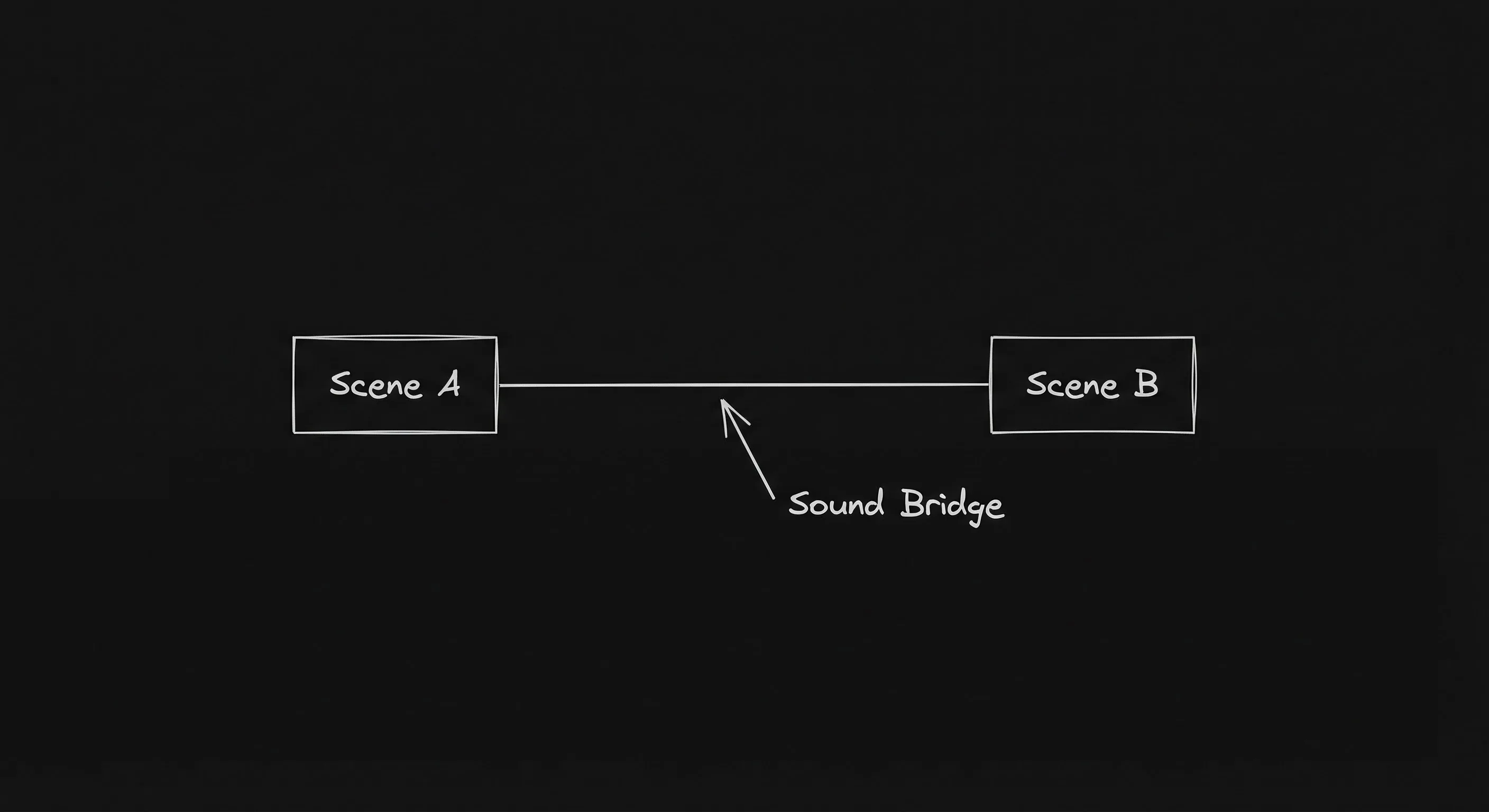
Sound can set up something that pays off later. A character hears a train in the distance. Later, they're at the tracks. The same whistle. Now it means something. Or: we hear a child's laugh in the first act. In the third act, we're in the same place. No laugh. The absence is the payoff. When you have a sound that will return, script it clearly the first time. "The TRAIN WHISTLE, distant." When it comes back, the sound designer and the audience will make the connection.
Layering Sound with Dialogue and Action
Sound doesn't sit in a vacuum. It shares the page with dialogue and action. So you have to layer. A character is talking. Under the dialogue, in the action block, you might add "The SIREN grows closer." The reader gets the dialogue and the sound at once. Or the action might read: "She keeps talking. Doesn't notice the DOOR CREAK open behind her." The sound is the threat. The dialogue is the misdirection. When you layer, you're not writing a separate "sound design" section. You're weaving the sound into the same action lines that describe what we see. That keeps the read fluid. The sound designer will still see the cue. The reader will feel the moment without stopping to decode a technical note. Practice on a few scenes: add one or two sound cues that sit inside the action. Read the scene again. If the sound feels integrated, you're doing it right. If it feels like an add-on, trim or rephrase until it sits in the flow.
The Perspective
Sound in a screenplay is not decoration. It's story. Name the sounds that matter. Use caps for the beats. Use silence when silence is the point. Stay out of the mix. When you do that, the script reads like a movie,and the movie has a chance to sound like what you heard in your head.
Final Step
Build your next script with Screenweaver
Move from ideas to production-ready pages faster with timeline-native writing and AI-assisted story flow.
Try Screenweaver