Dust motesTime made visible in a beam
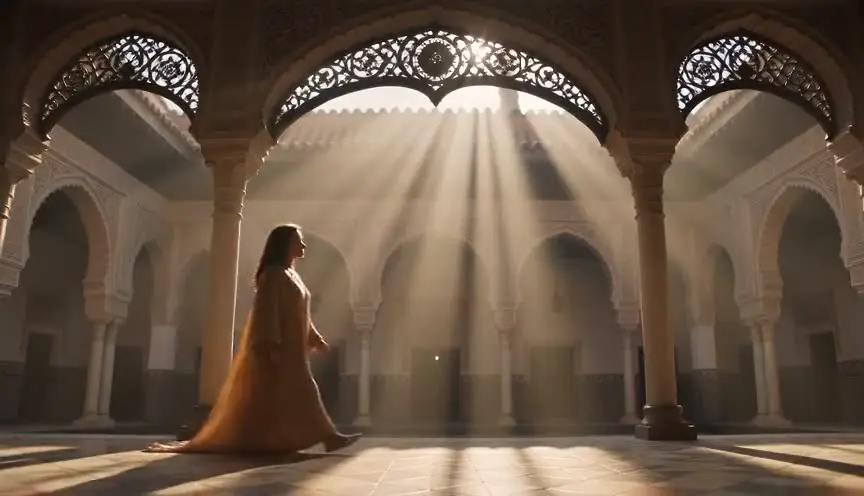
Dust motes are tiny particles floating in a shaft of light, glowing against a darker room. They tell the audience that time has settled on this place, and they make stillness feel alive.
Also calledFloating dustDust particles in lightLight beam dust
Atmosphere and weather
Why it works on screen
Dust in a beam says a room has been left alone. It serves memory, neglect, discovery and quiet reverence: an heir opening a sealed bedroom, a teacher returning to a closed school, a child finding a parent's old workshop. It also slows the audience down, because the eye follows the particles and the pace of the scene drops to their speed. A scene earns it when the past is about to be touched, when a character crosses a threshold into something kept. Disturb the dust, with a sheet lifted or a door opened, and the past literally rises into the light.
The shot list line
- Size
- Wide to medium, with the beam crossing the frame
- Angle
- Eye level or slightly low to catch the beam against a dark wall
- Movement
- Static or a very slow push in
- Lens
- 35mm to 50mm; a macro or 100mm insert for the particles themselves
- Duration
- 5 to 10 s
Use one hard source through a small opening, keep the background dark, and add a light haze plus a pinch of dust just before each take.
Screenplay
On the page
You can write dust motes when they are part of the discovery, because they tell the reader the room is old and untouched. Keep it to one image: the light from a single window, the dust hanging in it, and a character's action that stirs it. Do not describe the beam angle, the haze or the backlight. Those choices belong to the cinematographer and the shot list, where the crew can plan the window, the sun position and the dust itself.
INT. CLOSED CLASSROOM, VILLAGE SCHOOL - ALENTEJO - DAY
One shutter hangs open. A single blade of sun lies across rows of empty desks.
Dust turns slowly inside it, the only thing moving in the room.
IRENE LOBO (70s, cardigan, a key ring in her fist) walks to the front desk.
She lays her palm on the wood. When she lifts it, a small cloud rises and glitters in the light.
IRENE
Forty-one years, and it still sticks.
Storyboard
In the storyboard
Draw the room dark with dense shading and leave one clean diagonal band of light from the window to the floor. Dot the band with small specks, and add a few swirl marks where the character disturbs it. Draw the sun symbol outside the window with an arrow following the beam. Under the panel, note the hour so the sun position can be planned, and add an optional insert panel of particles in close-up.
Pairs well with

The beam needs a source the audience can place. Establish the window first in a wider frame, so the shaft of dust that follows reads as sunlight entering a real room, not an effect.
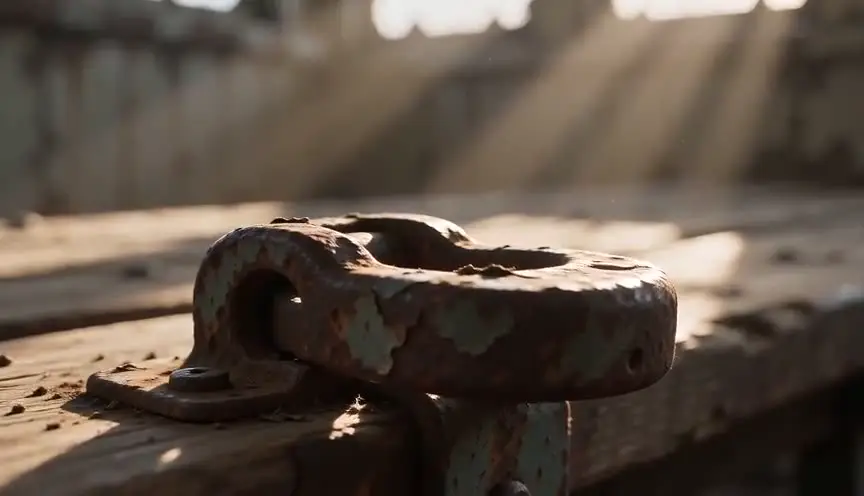
After the wide beam, cut to a macro insert of the particles turning in the light. The shift in scale stretches the moment and lets the audience feel the stillness at the level of a grain.
Reference
Watch it in
There Will Be Blood (2007)
Robert Elswit lets dust float through sun-filled windows and oil sheds, so the frontier rooms feel dry, hot and almost touchable.
Days of Heaven (1978)
Nestor Almendros and Haskell Wexler light the harvest dust and chaff from behind, so the late-day air glows around the field workers.
ScreenWeaver
Set it up in ScreenWeaver
Write the single light source and the moment the dust is disturbed in your action lines, and ScreenWeaver breaks the scene down into shots automatically. Open the discovery shot and set a wide or medium framing, an eye-level or slightly low angle, a static or slow push-in movement, and a longer duration. Add the insert as its own shot. The location carries across the sequence, and the AI previsualization shows whether the beam and the dark background read before you plan the shoot.
Start writing for freeThe prompt behind this clip
This is the exact prompt that rendered the clip at the top of the page. Keep the description of the camera and the light, change the subject and the place.
Dust motes. In a dark old attic, one strong beam of sunlight comes through a small window, and thousands of tiny glowing dust particles float slowly and sparkle inside the beam. An old man in the shadow lifts a sheet off a trunk and a new cloud of glittering dust rises into the light. Macro detail on the particles, slow push in. No text.
Common mistakes
- 01
Lighting the whole room
Dust only shows against darkness. If fill light brightens the background, the particles vanish and the beam turns into a flat patch. Keep the room dim and let one source do the work.
- 02
Too much dust
A cloud that thick reads as smoke or a demolition site. The effect is delicate. Add small amounts, let them settle, and look at the monitor, not the set, before rolling.
- 03
A beam that comes from nowhere
A shaft of light in a room with no window or opening feels theatrical. Motivate it with a shutter, a crack in a roof or a high window seen earlier in the scene.