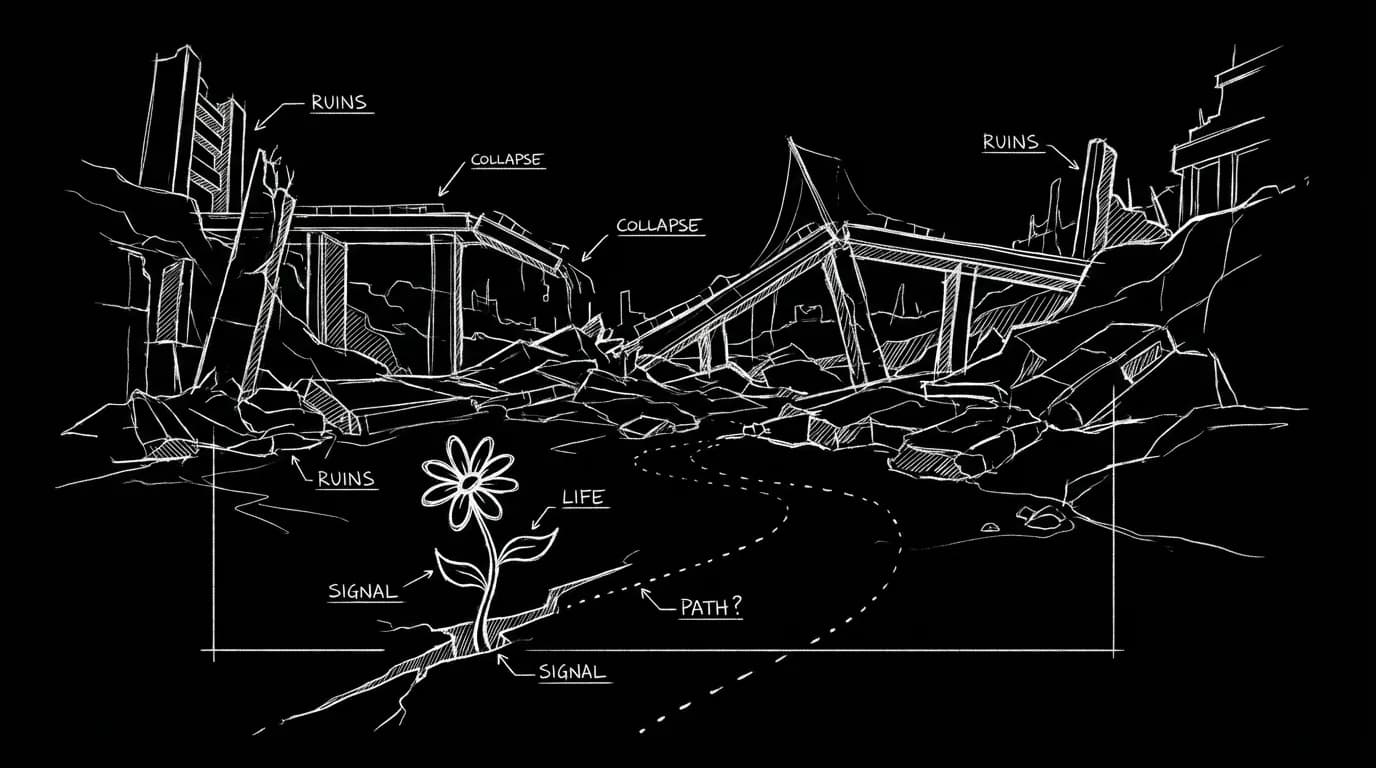
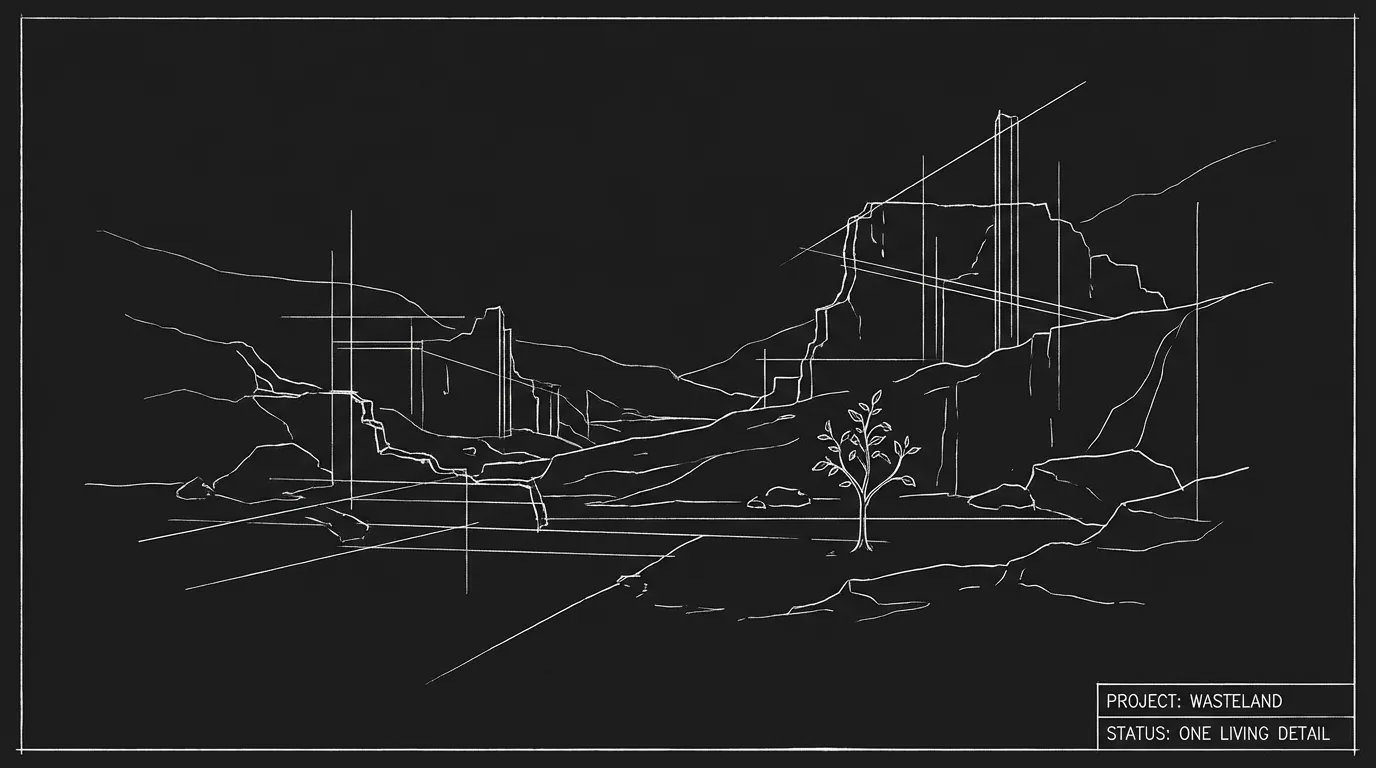
Hero image prompt: Dark mode technical sketch. Solid black background, thin white hand-drawn lines. A ruined landscape with one unexpected detail, a flower, a signal, a path that doesn’t match the usual wasteland. Minimalist, high-contrast.
Another wasteland. Another rebellion. Another chosen one. The audience has seen it. Post-apocalyptic and dystopian stories have been so successful that the genre has worn grooves. To feel fresh, the story has to do something the audience doesn’t expect, without abandoning what they came for. Here’s how to find a new angle on collapse, survival, and hope.
Fresh doesn’t mean “no apocalypse.” It means “we haven’t seen this version.” The collapse can be the same. The angle, who we follow, what they want, what the world does to them, has to be yours.
Think about The Last of Us. The apocalypse is familiar. Fungus. Collapse. Survival. What’s fresh is the focus: it’s not about saving the world. It’s about one person choosing to save one other person, and the cost. The genre is there. The story is specific. Or Station Eleven: the apocalypse is backdrop. The story is about art, memory, and what we carry. The angle is different. So the audience doesn’t feel like they’re in the same movie again. Our guide on elevated horror and metaphor applies when the apocalypse is doing double work, literal collapse and a metaphor for something we recognize. For more on making the world feel specific, see worldbuilding 101, even in collapse, the world has rules and history.
Why the Genre Feels Tired
We’ve seen the rubble. The leather. The scavenger. The dictator in the compound. The rebellion. The chosen one. The audience can predict the beats. So the writer’s job isn’t to avoid the genre. It’s to find the entry point that’s new. Who is the protagonist? What do they want? What’s the question the story is asking? When the answer is “the same as every other dystopia,” the script feels like a cover. When the answer is specific, a relationship, a moral choice, a small community, a different kind of survival, the script can feel like its own thing. For more on character and want, see want vs need and the character engine, the post-apocalyptic protagonist still needs a want that’s theirs.
Finding the New Angle
Change who we follow. Not the rebel. Not the chosen one. The person who’s just trying to get by. The person who works for the system. The person who’s too old, too young, or too broken to be a hero. When the protagonist is someone we haven’t followed before, the same world feels different. For more on protagonist choice, see protagonist vs main character.
Change what the story is about. Not “overthrow the regime.” Maybe “keep this family alive.” Maybe “deliver this package.” Maybe “find out what happened to one person.” The stakes can be small. The world can be big. The small stakes in a big world often feel more real than another revolution. For more on stakes and scale, see the “all is lost” moment.
Change the nature of the collapse. Not a virus. Not a war. Maybe it’s slow, climate, decay, silence. Maybe it’s specific, one thing failed and the rest followed. The collapse doesn’t have to be new. The way it affects the characters can be. For more on building the world after collapse, see worldbuilding 101.
Change the tone. Not grim and gritty. Maybe there’s humor. Maybe there’s tenderness. Maybe the story is about what we keep, art, love, ritual, not just what we lose. Station Eleven and The Last of Us both have warmth in the wreckage. The warmth is what makes them stick. For more on tone in dark material, see dark comedy and humor in trauma.
| Angle | What It Does |
|---|---|
| Who we follow | Not the rebel or chosen one; the ordinary, the complicit, the broken |
| What the story is about | Not the revolution; the relationship, the delivery, the small survival |
| Nature of collapse | Slow, specific, or different consequence; not the same disaster again |
| Tone | Warmth, humor, tenderness in the wreckage; not only grim |
Relatable Scenario: The Script That Feels Like Every Other Dystopia
You’ve got the wasteland. The rebellion. The evil leader. The hero who rises. The reader has seen it. So you change one thing. The hero isn’t rising. They’re trying to get out. Or the hero is the evil leader’s kid, and they’re not sure they want to rebel. Or the story isn’t about winning. It’s about what one person is willing to do to keep one other person alive. One shift. The genre stays. The story becomes yours. Our piece on subverting three acts and A24-style structure applies when you want to keep the genre but change the shape.
Try it free
Try Screenweaver for free on your script
It is free. Import your existing project, get a clearer view of your outline, and regain control of your story structure in minutes.
Start FreeRelatable Scenario: The Script That Abandons the Genre
You’re so eager to be fresh that you’ve left the genre behind. There’s no collapse. No survival. No cost. The audience that came for post-apocalyptic feels cheated. Fix: keep the genre. The world is broken. The stakes are real. What’s new is the angle, who we follow, what they want, what the story is asking. Fresh isn’t “not post-apocalyptic.” It’s “post-apocalyptic in a way we haven’t seen.” For more on genre and audience contract, see hard sci-fi vs space opera, the same principle of “honor the contract, find the new angle” applies.
The Trench Warfare Section: What Beginners Get Wrong
Repeating the same protagonist. Another young rebel. Another chosen one. Fix: pick someone else. The bureaucrat. The medic. The person who’s given up. The person who benefits from the system. When the protagonist is new, the story can feel new. For more on character variety, see designing character foils and support cast.
Repeating the same stakes. Save the world. Overthrow the regime. Fix: shrink the stakes. Save one person. Get home. Deliver the thing. The world is still broken. The small stakes in that world can be more moving than another revolution. For more on stakes, see the “all is lost” moment.
No hope (or too much). Either the story is so grim we don’t want to stay, or the hope is unearned. Fix: find one thing that’s worth keeping. A relationship. A ritual. A choice to be kind. The hope doesn’t have to be big. It has to be there. For more on balance, see the whiff of death in comedies, in dystopia, the whiff of life matters.
Generic world. The wasteland could be anywhere. Fix: give the world specifics. What failed? What’s left? What do people eat? How do they live? When the world is specific, the story feels specific. For more on building the world, see worldbuilding 101 and the fantasy map, geography and resources still matter after the end.
Step-by-Step: Finding Your Angle
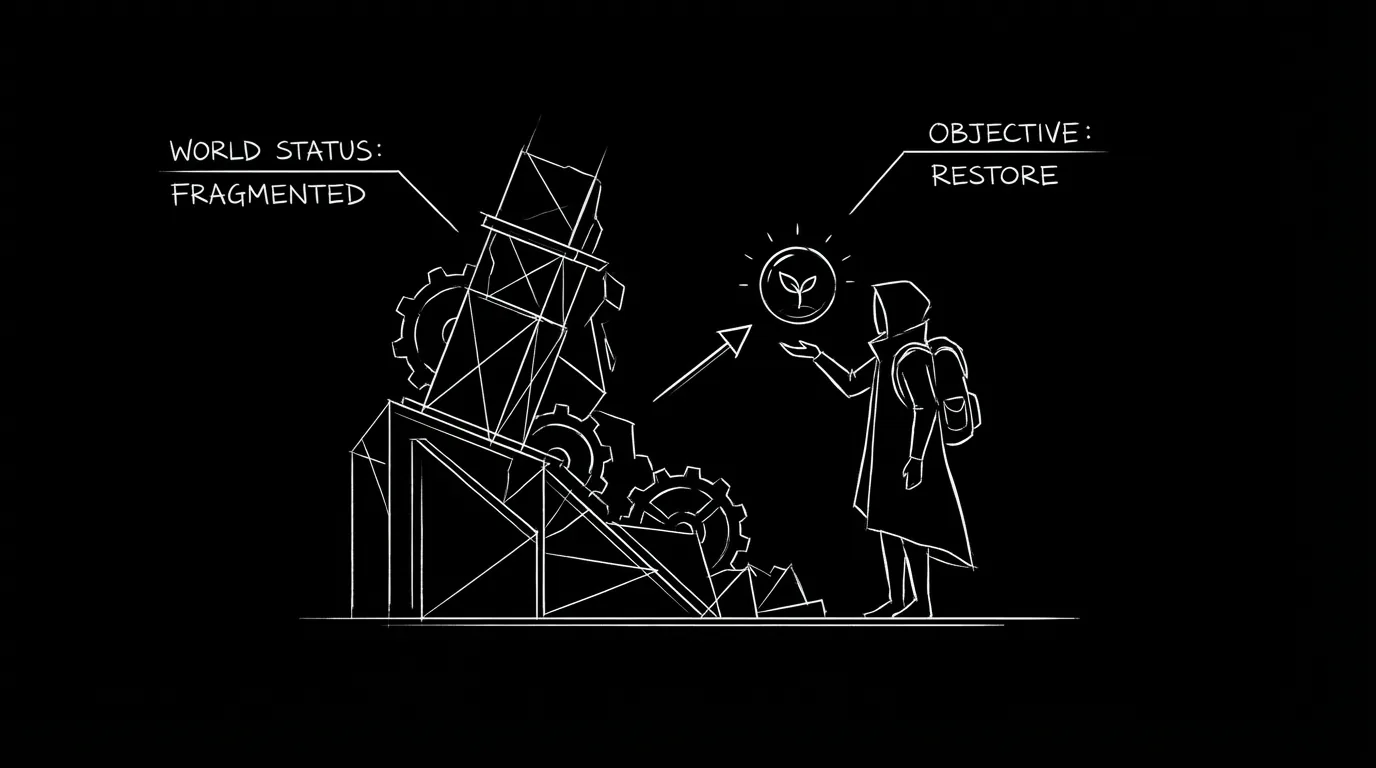
Before you write, answer: what’s the one thing that’s different? Who is the protagonist? What do they want? What is the story about (one sentence)? If the answer is “the same as every other dystopia,” push. Change the who. Change the what. Change the question. The apocalypse can stay. The angle has to be yours. For more on structure that supports a clear throughline, see theme vs plot, the post-apocalyptic story often has a theme about what we keep, what we lose, or what we become. When that theme is specific, the story feels specific. For more on the world they’re surviving in, see worldbuilding 101.
One External Resource
For a short overview of post-apocalyptic fiction and its conventions, see Post-apocalyptic fiction on Wikipedia. Reference only; not affiliated.
The Perspective
Dystopian fatigue is real. The audience has seen the rubble. The way through is not to avoid the genre. It’s to find the angle they haven’t seen. Who we follow. What we’re asking. What we keep. When that’s specific, the same apocalypse feels new.
Final Step
Build your next script with Screenweaver
Move from ideas to production-ready pages faster with timeline-native writing and AI-assisted story flow.
Try Screenweaver